Reshipping Scams Explained: How Mystery Shopper Fraud Actually Works
The job posting looks legitimate. Work from home. No experience necessary. Earn $300-500 per week as a quality control inspector or shipping coordinator. You'll receive packages at your address, inspect them, repack them, and forward them to another location. The company covers all shipping costs. You keep the payment.
It's a reshipping scam, and if you take the job, you become part of a criminal network that moves stolen goods across international borders.
The Underlying Mechanism
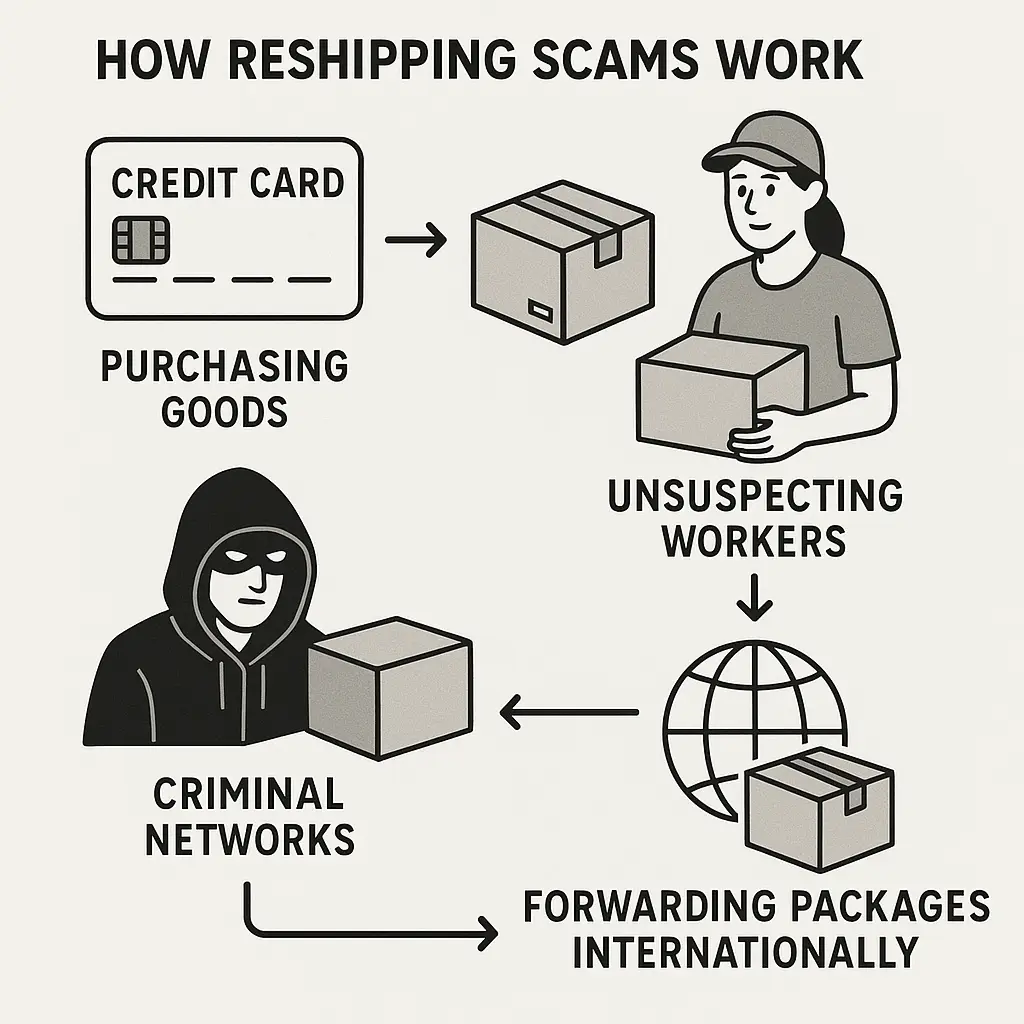
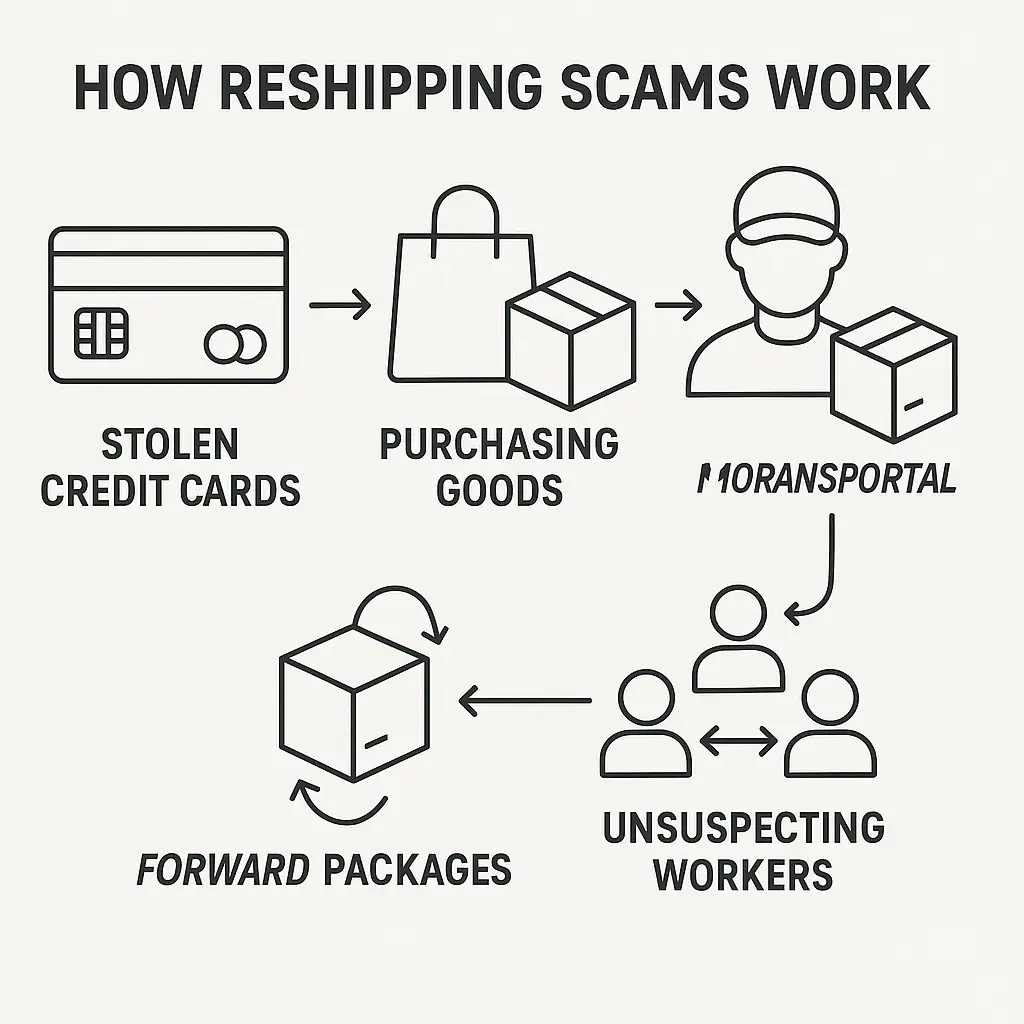
Reshipping scams operate as logistics networks for fraud. Here's how the system works:
Step 1: Recruitment. Operators post job listings on legitimate employment sites, social media, or send unsolicited emails. The positions have titles like mystery shopper, package inspector, shipping coordinator, or warehouse associate. The job descriptions emphasize flexibility, no commute, and easy money. Some postings mimic real companies by using similar names or copying branding.
Step 2: Onboarding. After you apply, you receive an offer with minimal vetting. No formal interview. No background check. Sometimes no video call at all. The "employer" sends you a contract that looks official, complete with company letterhead and legal language. You provide your address, banking information for direct deposit, and identification documents.
Step 3: Package arrival. Within days, packages begin arriving at your home. The return addresses show major retailers like Amazon, Best Buy, or department stores. The items inside are consumer electronics, designer clothing, jewelry, or other high-value merchandise. Your instructions are to inspect the contents, verify they match the packing slip, repack them in new boxes, and ship them to addresses the company provides, usually international destinations.
Step 4: Payment. You receive payment for each package processed, typically via check, wire transfer, or peer-to-peer payment app. Early payments clear without issue. The work feels legitimate. You're handling real merchandise from real retailers, following clear instructions, and getting paid on schedule.
Step 5: The fraud surfaces. The merchandise was purchased with stolen credit card numbers. The original cardholders report the fraudulent charges. Retailers and banks begin investigating. Law enforcement traces the shipping addresses. Your name appears on shipping labels as the sender. Your address appears in transaction records as the delivery location. The checks you deposited bounce. The wire transfers reverse. The payment app freezes your account.
The scam works because it separates the purchase from the destination. Shipping high-value items directly from a U.S. retailer to an address in Romania or Nigeria triggers fraud detection systems. Shipping to a residential address in Ohio first, then having that resident forward the package internationally, looks like a legitimate personal shipment. The intermediate step, you, provides cover.
According to the FTC's Consumer Sentinel Network Data Book, job scams generated over $367 million in reported losses in 2024. Reshipping operations represent a significant portion of employment fraud because they scale easily and recruit continuously.
Why People Fall for Reshipping Scams
The appeal is straightforward: legitimate-looking work that requires minimal effort and pays quickly. Several factors make these scams succeed:
The job feels real. You receive actual packages from recognizable retailers. The merchandise is genuine. The shipping labels have real tracking numbers. The company provides detailed instructions and responds to questions. Nothing about the day-to-day work signals fraud until law enforcement contacts you.
Financial pressure makes people vulnerable. Reshipping scams target people looking for supplemental income or full-time remote work. The postings appear during economic downturns, after layoffs, or in regions with high unemployment. The promise of steady pay for simple tasks feels like a lifeline.
The recruitment process mimics legitimate hiring. You fill out an application. You receive a contract. You provide tax forms. The employer sets expectations, establishes communication channels, and follows through on initial payments. The structure mirrors real remote work arrangements.
Social proof validates the opportunity. Some operations create fake testimonials, post positive reviews on job boards, or use social media profiles that appear established. Victims see other people discussing the work online and assume it's legitimate.
The consequences aren't immediately obvious. Most people don't realize that forwarding packages purchased with stolen credit cards makes them accomplices to fraud. The legal risk doesn't register until investigators arrive.
In The Sting (1973), con artists build elaborate operations that feel authentic at every touchpoint until the mark realizes they've been played. Reshipping scams work the same way: every interaction reinforces legitimacy until the moment law enforcement shows up at your door.
The Legal Consequences for Workers
Even if you didn't know the merchandise was stolen, handling and shipping it creates criminal liability. Here's what happens when the fraud surfaces:
Criminal charges. Depending on jurisdiction and the value of goods moved, you can face charges for trafficking in stolen property, wire fraud, mail fraud, or conspiracy. These are federal crimes when the scheme crosses state or international borders. Convictions carry prison time, fines, and a permanent criminal record.
Civil liability. Retailers and credit card companies can sue to recover losses. You may be held responsible for the value of merchandise you forwarded, even if you never profited from the underlying fraud.
Financial damage. Banks freeze accounts associated with fraudulent transactions. Checks you deposited bounce, triggering overdraft fees and account closures. Payment apps suspend your access. Your credit score drops when unpaid fees go to collections.
Immigration consequences. For non-citizens, criminal convictions related to fraud can result in deportation, denial of citizenship applications, or bars to reentry.
The FBI's Internet Crime Complaint Center receives thousands of reports annually involving work-from-home scams that turn victims into money mules or package mules. Law enforcement distinguishes between knowing participants and deceived workers, but proving you were deceived requires documentation, cooperation, and often legal representation.
How Reshipping Scams Evolve
Operators adapt to enforcement and awareness campaigns. Recent variations include:
Hybrid scams that combine reshipping with other fraud. Some operations recruit workers as mystery shoppers first, then transition them to package forwarding. The initial mystery shopping assignments feel legitimate and build trust before the reshipping requests begin.
Cryptocurrency payment to obscure money trails. Instead of checks or wire transfers, some operators pay workers in cryptocurrency. This makes it harder for victims to recover funds and complicates law enforcement tracing.
Use of legitimate business entities. Sophisticated operations register LLCs, create professional websites, and obtain business licenses. The legal structure provides a veneer of legitimacy that makes the scam harder to identify during the recruitment phase.
Targeting specific demographics. Some reshipping scams focus on college students, retirees, or immigrants, groups that may be less familiar with employment fraud patterns or more financially vulnerable.
Short-term operations that disappear quickly. Operators run the scam for weeks or months, then shut down and rebrand before law enforcement can build cases. Workers are left holding liability while the organizers move to new identities.
The FTC warns about work-from-home scams that promise easy money for minimal work. Reshipping operations fit this pattern precisely: they offer payment that seems too good to be true because it is.
Red Flags That Signal a Reshipping Scam
Certain patterns appear consistently across reshipping fraud:
No formal interview process. Legitimate employers conduct interviews, even for entry-level remote positions. Reshipping scams skip this step because they need volume recruitment, not qualified candidates.
Payment before work starts. If a company sends you a check or asks you to cash a money order before you've completed any work, it's a scam. Legitimate employers don't front money to new hires.
Requests to use your own funds temporarily. Some reshipping scams ask workers to purchase shipping supplies or pay forwarding costs upfront, promising reimbursement later. This is a variation of the advance-fee scam.
Vague company information. The employer's website is new, lacks detail, or uses stock photos. The business address is a mailbox or doesn't match corporate registration records. The company name is similar to but not identical to a legitimate business.
Job duties involve receiving and forwarding packages. Any position where your primary responsibility is to accept deliveries at your home and ship them elsewhere should raise immediate suspicion.
International shipping destinations. If you're forwarding packages to addresses in Eastern Europe, West Africa, Southeast Asia, or other regions known for organized fraud, the operation is almost certainly criminal.
Communication only through email or messaging apps. Legitimate employers provide phone numbers, video call options, and multiple contact methods. Scammers stick to text-based communication to avoid revealing their location or identity.
Pressure to start immediately. Reshipping scams push for fast onboarding because they operate on short timelines. Legitimate employers have structured hiring processes that take days or weeks.
The FBI warns about employment scams that recruit people into criminal activity without their knowledge. Reshipping operations are a prime example: the work feels legitimate until the consequences arrive.
What to Do If You're Already Involved
If you've accepted a reshipping job and now suspect it's fraudulent, take immediate action:
Stop forwarding packages. Cease all activity related to the job. Do not ship any more merchandise. Do not accept new deliveries.
Document everything. Save all emails, contracts, payment records, shipping labels, and communication with the employer. Photograph packages and contents before you stopped forwarding them. This documentation proves you were deceived, not a knowing participant.
Contact retailers. If you still have packages in your possession, contact the retailers whose names appear on the shipping labels. Explain the situation and ask how to return the merchandise. Some retailers have fraud departments that handle these cases.
Report to law enforcement. File a report with local police and submit a complaint to the FBI's IC3. Provide all documentation. Cooperation with investigators demonstrates you were a victim, not a willing accomplice.
Report to the FTC. Submit a report at ReportFraud.ftc.gov. The FTC tracks scam patterns and uses reports to build cases against operators.
Freeze your credit. If you provided your Social Security number or other identity documents during onboarding, freeze your credit at all three bureaus to prevent identity theft.
Monitor your accounts. Watch for unauthorized transactions, bounced checks, or account freezes. If the scam involved depositing checks, expect them to bounce and prepare for overdraft fees.
Consult a lawyer. If law enforcement contacts you or you receive legal notices, get representation immediately. An attorney can help you navigate the investigation and minimize criminal or civil liability.
The sooner you act, the better your position. Victims who report quickly and cooperate fully face better outcomes than those who continue the activity or try to hide involvement.
How to Verify a Work-From-Home Job Offer
Before accepting any remote position, especially one that involves handling merchandise or payments, verify legitimacy:
Research the company. Search the business name plus "scam" or "fraud." Check the Better Business Bureau, state business registries, and corporate databases. Verify the company address matches registration records.
Demand a formal interview. Legitimate employers want to assess candidates. If a company offers you a job without a video interview or phone call, walk away.
Never pay upfront. Real employers don't ask you to buy equipment, pay training fees, or cover business expenses before your first paycheck. Any request for money is a scam.
Verify contact information. Call the company's main number (not the number in the job posting). Ask to speak with HR or the hiring manager. If the number doesn't work or no one has heard of the position, it's fake.
Check for a physical presence. Legitimate companies have offices, employees, and a verifiable history. If the business exists only online and launched recently, proceed with extreme caution.
Ask specific questions. Request details about the company's products, customer base, and operations. Scammers provide vague answers or dodge questions.
Trust your instincts. If the job feels too easy, pays too well for the work required, or involves activities that seem unusual, it probably is.
The FTC's guidance on avoiding job scams emphasizes verification and skepticism. Work-from-home opportunities exist, but they require the same scrutiny as any employment offer.
Why Reshipping Scams Persist
Despite law enforcement efforts and public awareness campaigns, reshipping operations continue because they're profitable and difficult to dismantle. Several factors sustain the fraud:
Low barrier to entry. Operators don't need technical skills or infrastructure. They post job ads, collect addresses, and coordinate shipments. The entire operation runs through email and shipping services.
Victims are plentiful. Economic pressure creates a steady supply of people looking for remote work. Scammers recruit continuously and replace workers who quit or get caught.
International jurisdictions complicate enforcement. The operators are often overseas. The stolen goods cross borders. Prosecuting these cases requires international cooperation, which is slow and resource-intensive.
The fraud is hard to trace. By the time retailers and banks identify the fraudulent purchases, the merchandise has moved through multiple hands and crossed international borders. Tracking it back to the organizers is difficult.
Workers absorb the risk. The people who face criminal charges and financial losses are the reshippers, not the operators. This insulates the scam's architects from direct consequences.
According to the FBI's Internet Crime Report, employment scams consistently rank among the top fraud categories by victim count. Reshipping operations exploit the same vulnerabilities as other job scams: financial need, trust in familiar platforms, and the difficulty of distinguishing legitimate opportunities from fraud.
The Broader Impact
Reshipping scams create ripple effects beyond individual victims:
Retailers lose merchandise and absorb chargeback costs. When cardholders dispute fraudulent charges, banks reverse the transactions. Retailers lose both the merchandise and the payment.
Credit card fraud increases. Reshipping networks provide a monetization channel for stolen card data. The existence of these networks makes card theft more profitable, which incentivizes more data breaches and card skimming.
Legitimate work-from-home opportunities become harder to find. As scams proliferate, job seekers become skeptical of all remote positions. Legitimate employers face higher recruitment costs and longer hiring timelines.
Communities suffer when residents face criminal charges. Reshipping scams disproportionately affect economically vulnerable areas. When workers in these communities get caught up in fraud, the criminal records create long-term barriers to employment and housing.
The scam's persistence reflects a broader problem: the gap between the ease of committing fraud online and the difficulty of prosecuting it across borders.
Final Thoughts
Reshipping scams succeed because they disguise criminal activity as legitimate work. The packages are real. The retailers are real. The payment arrives on schedule. Everything feels normal until law enforcement traces the stolen goods back to your address.
If a job offer involves receiving packages at home and forwarding them elsewhere, especially internationally, it's almost certainly a scam. Legitimate businesses don't operate this way. They use commercial logistics, not residential addresses.
The red flags are consistent: no interview, vague company details, payment before work, and job duties centered on package handling. Any one of these should trigger skepticism. All of them together signal fraud.
If you're already involved, stop immediately, document everything, and report to law enforcement. The faster you act, the better your chances of avoiding criminal charges.
The promise of easy money from home is appealing, but reshipping scams turn that promise into criminal liability. Verify the employer, research the company, and trust your instincts. If it feels too easy, it probably is.