Job scams: when the offer is too good to be true
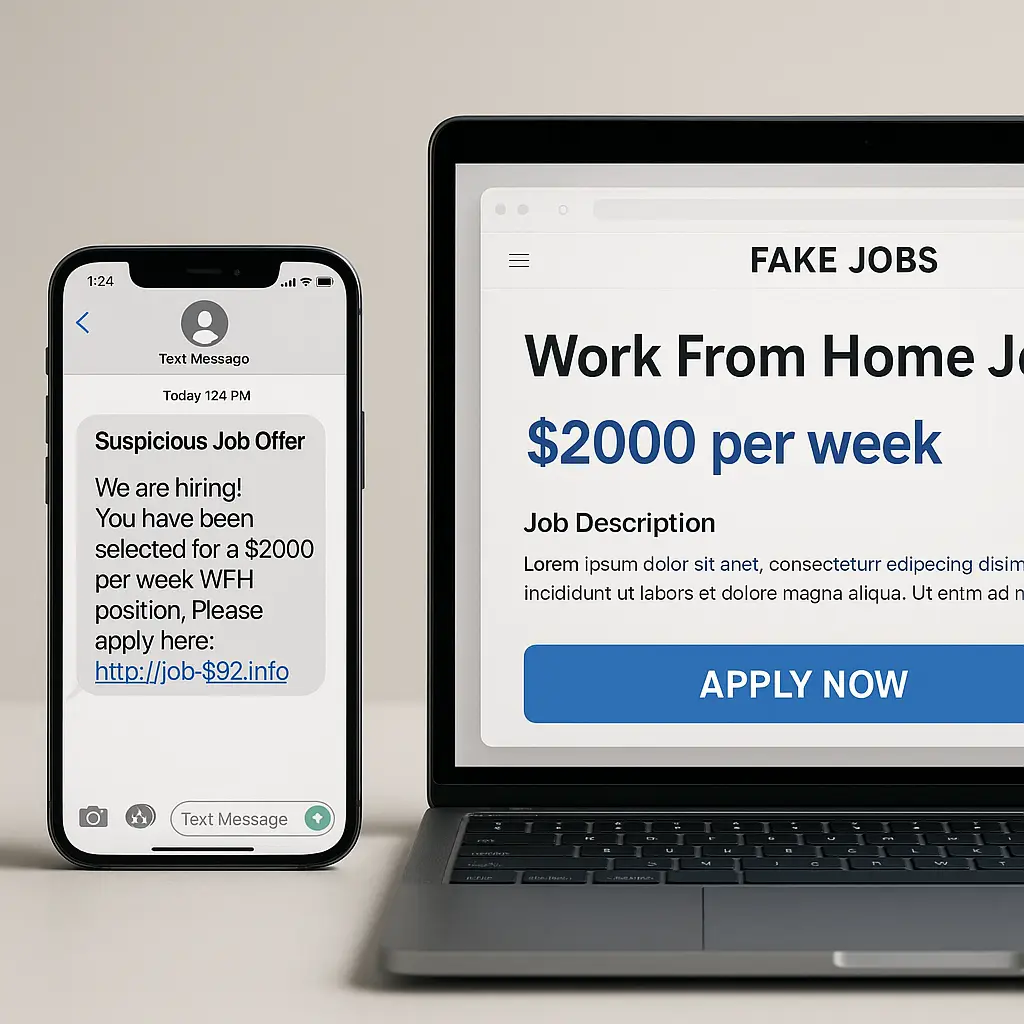
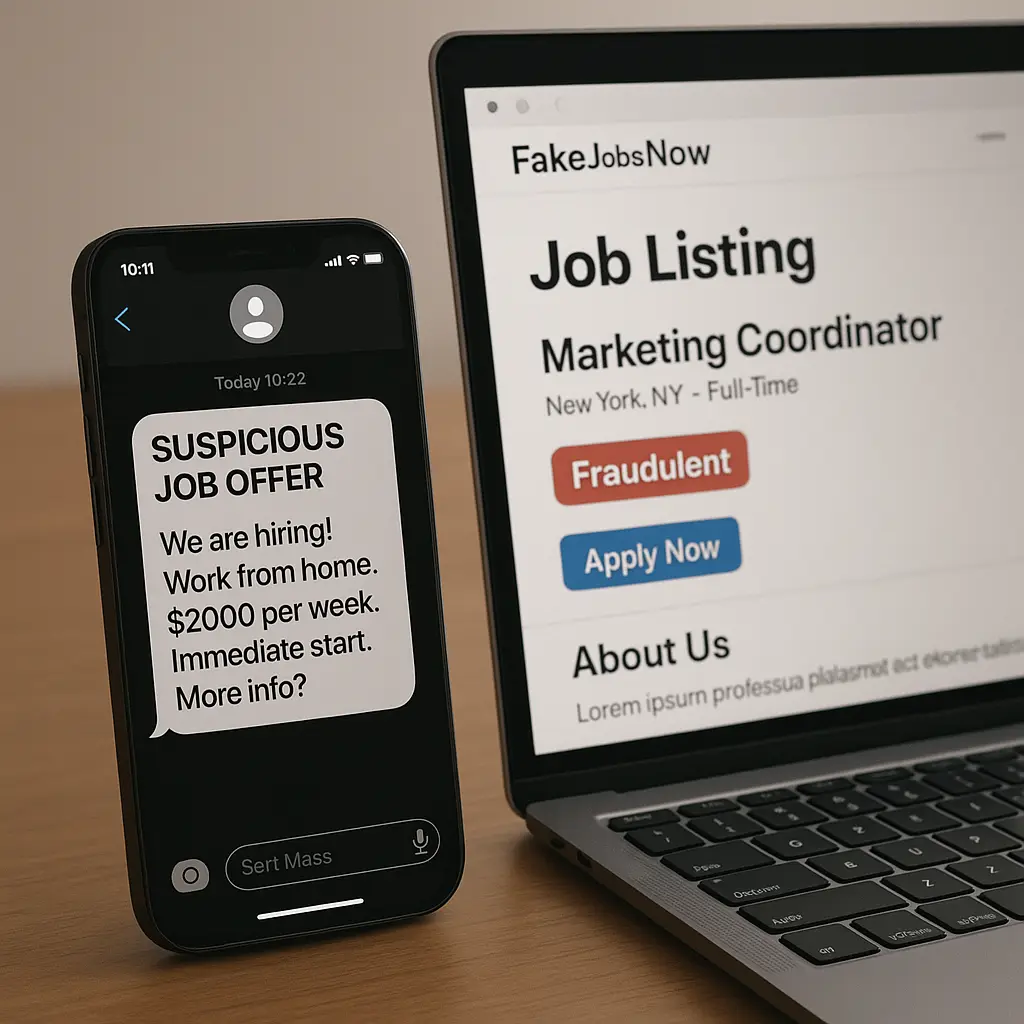
The text arrives out of nowhere. A company you've heard of needs remote workers. The pay is excellent. The hours are flexible. You just need to complete a quick application process.
You didn't apply for this job. You might not even be job hunting. But the message knows your name, mentions your city, and promises exactly what you need right now.
This is how modern job scams work. They don't wait for you to search. They find you.
The basic mechanism
Fake job offers follow a predictable sequence. The FTC reports that job scams increasingly start with unsolicited text messages, not emails or phone calls. The shift to text creates urgency and bypasses traditional spam filters.
The message impersonates a real company. Amazon, FedEx, UPS, major retailers, work-from-home platforms. The operators choose brands people recognize and trust. They scrape your name and location from data broker sites, social media, or previous breaches. The personalization makes the contact feel legitimate.
The initial offer promises high pay for minimal work. Package inspection, data entry, customer service, mystery shopping. The job descriptions are vague but appealing. No experience required. Flexible hours. Work from home. Start immediately.
The hook is the combination of familiarity and opportunity. You recognize the company name. The job sounds real. The timing feels like luck.
Then the process starts.
The fake hiring sequence
Legitimate hiring takes time. Fake hiring moves fast.
After you respond to the initial text, the conversation shifts to a messaging app. WhatsApp, Telegram, sometimes Signal. The operators claim this is company protocol for remote workers. It's not. The shift to encrypted messaging moves the conversation away from carrier records and platform monitoring.
The fake recruiter sends you an application. The form asks for personal information that real employers request: full name, address, Social Security number, date of birth, bank account details for direct deposit. The data collection is the first extraction point. Your information goes into criminal databases for identity theft, tax fraud, or account takeover attempts.
Some scams skip straight to payment requests. You need to buy equipment. You need to pay for training materials. You need to cover a background check fee. The amounts start small, around $50 to $200, to stay below the threshold where most people walk away. Payment happens through gift cards, cryptocurrency, wire transfer, or payment apps set to friends and family. All irreversible methods.
Other scams use a different model. They send you a check to buy supplies or equipment. The check is fake, but it takes banks days or weeks to discover that. You're instructed to deposit the check, purchase items from a specific vendor (controlled by the scammers), and keep the difference as your first paycheck. By the time the check bounces, you've sent real money to the operators. The bank holds you responsible for the fraudulent deposit.
The entire sequence from first contact to money extraction can happen in 24 to 48 hours. The speed is intentional. It prevents you from researching, verifying, or talking to someone who might recognize the scam.
Why these scams succeed
Job scams exploit specific vulnerabilities that have nothing to do with technical sophistication.
Financial pressure makes people more susceptible. If you're unemployed, underemployed, or facing unexpected expenses, the promise of immediate income creates urgency that overrides skepticism. The operators know this. They target job seekers, gig workers, students, and retirees, groups facing economic uncertainty.
The impersonation of real companies provides false credibility. When a message claims to be from Amazon or FedEx, you assume the company's reputation validates the offer. You're less likely to question details because the brand itself feels trustworthy. The operators don't need to build credibility from scratch. They borrow it.
The shift to text messaging changes how people evaluate legitimacy. Email phishing has been widely discussed for two decades. People know to check sender addresses, hover over links, and verify unexpected messages. Text message fraud is newer and less familiar. The format feels more personal and immediate. The lack of obvious technical indicators (no sender address to inspect, no links to hover over) makes verification harder.
The use of messaging apps creates isolation. Once the conversation moves to WhatsApp or Telegram, you're communicating one-on-one with the scammer. There's no company website to check, no HR department to call, no public record of the interaction. The operators control the entire information environment.
The request for personal information before payment feels normal. Real jobs require Social Security numbers for tax forms, bank details for direct deposit, addresses for background checks. The scam mimics legitimate hiring processes closely enough that the data collection doesn't trigger immediate alarm.
The cultural reference that fits
In The Office, Michael Scott falls for every scam that crosses his desk. The Nigerian prince email. The fake lottery win. The pyramid scheme disguised as a business opportunity. The show plays this for comedy, but the underlying dynamic is real: Michael wants to believe. The promise of easy money, recognition, or opportunity overrides the obvious red flags because the emotional appeal is stronger than the logical warning signs.
Job scams work the same way. The offer arrives when you need it most. The company name is familiar. The job sounds achievable. The recruiter is friendly and responsive. You want it to be real, so you ignore the details that don't add up. The pressure to act quickly prevents you from stepping back and examining the offer with the skepticism it deserves.
The difference between Michael's fictional scams and real job fraud is that Michael's losses are played for laughs. Real victims lose money they can't afford, have their identities stolen, and face the psychological impact of being deceived when they were trying to improve their situation.
What real job offers look like
Legitimate employers don't cold-contact you through text messages with immediate job offers. Real hiring follows a different pattern.
You apply for a posted position through the company's official website or a verified job board. The application goes to a real person in HR or a hiring manager. You receive a response through official company email, not a personal Gmail account or a messaging app.
The interview process involves multiple steps. Phone screening, video interview, sometimes in-person meetings. You talk to actual employees who can answer questions about the role, the team, and the company. The conversation is two-way. They assess you, and you assess them.
Background checks and verification happen after a conditional offer, not before initial contact. The company pays for background checks. You never send money to get a job.
Direct deposit setup happens after you're hired, through official onboarding paperwork, not through a text message conversation with someone claiming to be a recruiter.
If you receive an unsolicited job offer, verify it independently. Go to the company's official website. Search for the job posting. Call the main company number and ask to be transferred to HR. Don't use contact information provided in the suspicious message. Don't click links in the text. Don't respond to confirm your interest.
Real opportunities don't disappear if you take time to verify them. Scams do.
The payment request patterns
The moment someone asks you to send money to get a job, you're dealing with fraud. Real employers never require payment from applicants.
Gift cards are the most common payment method in job scams. The operators claim you need to purchase equipment, training materials, or software through specific retailers. They instruct you to buy gift cards, photograph the redemption codes, and send the images. Gift cards are untraceable and irreversible. Once you send the codes, the money is gone.
Cryptocurrency requests are increasing. The operators claim the company uses Bitcoin or other currencies for international payments. They provide a wallet address and instruct you to purchase crypto through an exchange, then transfer it. Cryptocurrency transactions are irreversible and difficult to trace.
Wire transfers through services like Western Union or MoneyGram follow the same pattern. The scammer claims you need to send money for equipment, licensing fees, or background checks. Once the transfer completes, recovery is nearly impossible.
Payment apps set to friends and family mode bypass fraud protections. Venmo, Cash App, and Zelle all offer different protections for goods and services versus personal payments. The operators instruct you to mark the payment as personal to avoid fees. This removes your ability to dispute the transaction.
The fake check scam uses a different mechanism but achieves the same result. You receive a check, deposit it, and send money before the check bounces. The bank holds you responsible for the fraudulent deposit. You lose whatever you sent, plus potential overdraft fees.
No legitimate employer asks you to handle money this way. If the hiring process involves you sending funds anywhere, for any reason, it's fraud.
The information they're really after
Some job scams prioritize data collection over immediate payment. The information you provide during the fake hiring process has value in criminal markets.
Your Social Security number enables tax fraud. Criminals file fraudulent tax returns in your name, claim refunds, and disappear before you discover the theft. The IRS receives hundreds of thousands of identity theft reports annually, many originating from data collected through employment scams.
Bank account details enable account takeover. With your account number and routing number, attackers can set up fraudulent ACH transfers, create fake checks, or link your account to payment services for money laundering.
Your full name, date of birth, address, and phone number combine to create a complete identity theft profile. This data sells in criminal markets or gets used to open credit accounts, apply for loans, or commit fraud in your name.
Employment history and references provide social engineering ammunition. Scammers use this information to impersonate you to your previous employers, extract additional data, or target your professional network with similar scams.
The fake job application collects everything needed for comprehensive identity theft, wrapped in a context where providing detailed personal information feels normal and necessary.
How to verify a job offer
When you receive an unexpected job offer, verification follows a specific sequence.
First, go directly to the company's official website. Don't click links in the message. Type the company name into a search engine or navigate to their known URL. Look for a careers or jobs section. Search for the position mentioned in the offer. If the job isn't posted on the official site, it doesn't exist.
Second, contact the company through publicly listed channels. Find the main phone number on their website. Call and ask to speak with human resources. Describe the contact you received. Ask if the company is currently hiring for that position. Ask if they use text messages or messaging apps for recruitment. Most don't.
Third, research the recruiter's name. If the message includes a recruiter's name, search for that person on LinkedIn. Check if they work for the company. Look at their profile history. Real recruiters have established professional networks and detailed work histories. Fake recruiters have new accounts with minimal connections.
Fourth, examine the communication method. Legitimate companies use official email addresses (name@company.com), not Gmail, Yahoo, or Outlook personal accounts. They don't conduct entire hiring processes through WhatsApp or Telegram. They don't ask you to switch communication platforms to continue the conversation.
Fifth, trust the timeline. Real hiring takes time. If someone offers you a job within hours of first contact, without an interview, without verifying your qualifications, without checking references, it's not real.
Sixth, watch for pressure tactics. Scammers create artificial urgency. "We need to fill this position today." "This offer expires in two hours." "We have other candidates waiting." Real employers give you time to consider offers, ask questions, and make informed decisions.
If any part of the verification fails, stop communicating. Don't try to negotiate or ask for clarification. Block the number and report the scam.
What to do if you've already responded
If you've engaged with a fake job offer but haven't sent money or provided sensitive information, stop all communication immediately. Block the number. Delete the messaging app conversation. Don't respond to follow-up messages claiming there's been a misunderstanding or offering to prove legitimacy.
If you provided personal information but haven't sent money, assume your data is compromised. Place a fraud alert on your credit reports through one of the three major bureaus (Equifax, Experian, TransUnion). The bureau you contact is required to notify the other two. Consider freezing your credit to prevent new accounts from being opened in your name.
Monitor your bank accounts and credit cards for unauthorized transactions. Set up account alerts for any activity. Check your credit reports for new accounts or inquiries you didn't authorize. You can access free credit reports weekly at annualcreditreport.com.
If you sent money, contact your bank or payment service immediately. Explain that you were defrauded. Ask if the transaction can be reversed. For gift cards, contact the retailer's fraud department with the card numbers and purchase receipts. Recovery is unlikely, but reporting creates a record.
File a report with the FTC at reportfraud.ftc.gov. The FTC doesn't investigate individual cases, but the data helps track fraud patterns and supports law enforcement investigations. File a complaint with the FBI's Internet Crime Complaint Center (IC3). Include all details: the phone number that contacted you, the messaging app used, the company name they claimed to represent, the amount of money requested or sent, and copies of all communications.
If you provided your Social Security number, consider filing an identity theft report with the IRS to prevent tax fraud. Request an Identity Protection PIN, which adds a layer of verification to your tax returns.
If you deposited a fake check and sent money, contact your bank immediately. Explain the situation. You're still responsible for the fraudulent deposit, but early reporting may limit additional fees or legal complications.
Document everything. Save screenshots of messages, emails, and any websites involved. Keep records of all reports filed and any communication with banks or law enforcement. This documentation supports potential recovery efforts and helps if the fraud affects your credit or leads to identity theft.
The larger pattern
Job scams are part of a broader shift in how fraud reaches victims. The FTC's Consumer Sentinel Network data shows that imposter scams, where criminals pretend to be trusted entities, have increased significantly over the past five years. Employment fraud is one category within that pattern.
The operators adapt quickly to platform changes and public awareness. When email phishing becomes too recognizable, they shift to text messages. When people learn to verify company email addresses, they move to messaging apps. When one payment method gets scrutinized, they switch to another.
The underlying mechanism stays consistent: create false trust, rush the victim, extract money or data before verification happens. The specific tactics evolve, but the social engineering foundation remains the same.
Job scams succeed because they exploit real needs during vulnerable moments. The promise of income, the appearance of opportunity, and the pressure to act quickly combine to override the skepticism that would normally prevent someone from sending money to a stranger.
The defense is the same as it's always been: slow down, verify independently, and remember that real opportunities don't require you to pay to participate.