Romance scams: the patterns to watch for
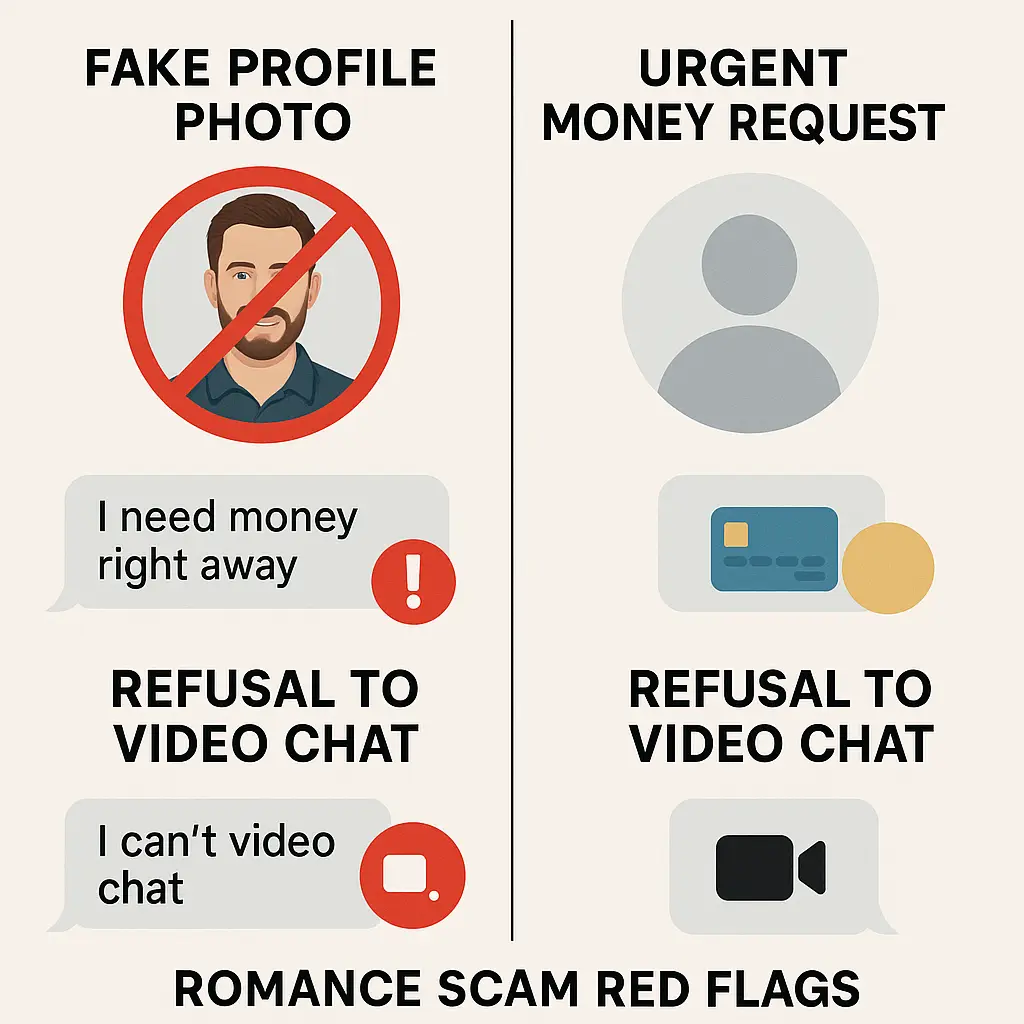
Romance scams cost Americans more than any other fraud category tracked by the FTC. In 2024, reported losses exceeded $1.14 billion, up from $547 million in 2021. The real number is higher. Most victims don't report.
The scam works because it exploits predictable human responses to romantic attention. Scammers follow scripts refined over thousands of attempts. The patterns repeat. Here's the underlying mechanism, what makes these scams succeed, and the specific behaviors that give them away.
The basic structure
Romance scams follow a three-phase pattern: contact, grooming, and extraction.
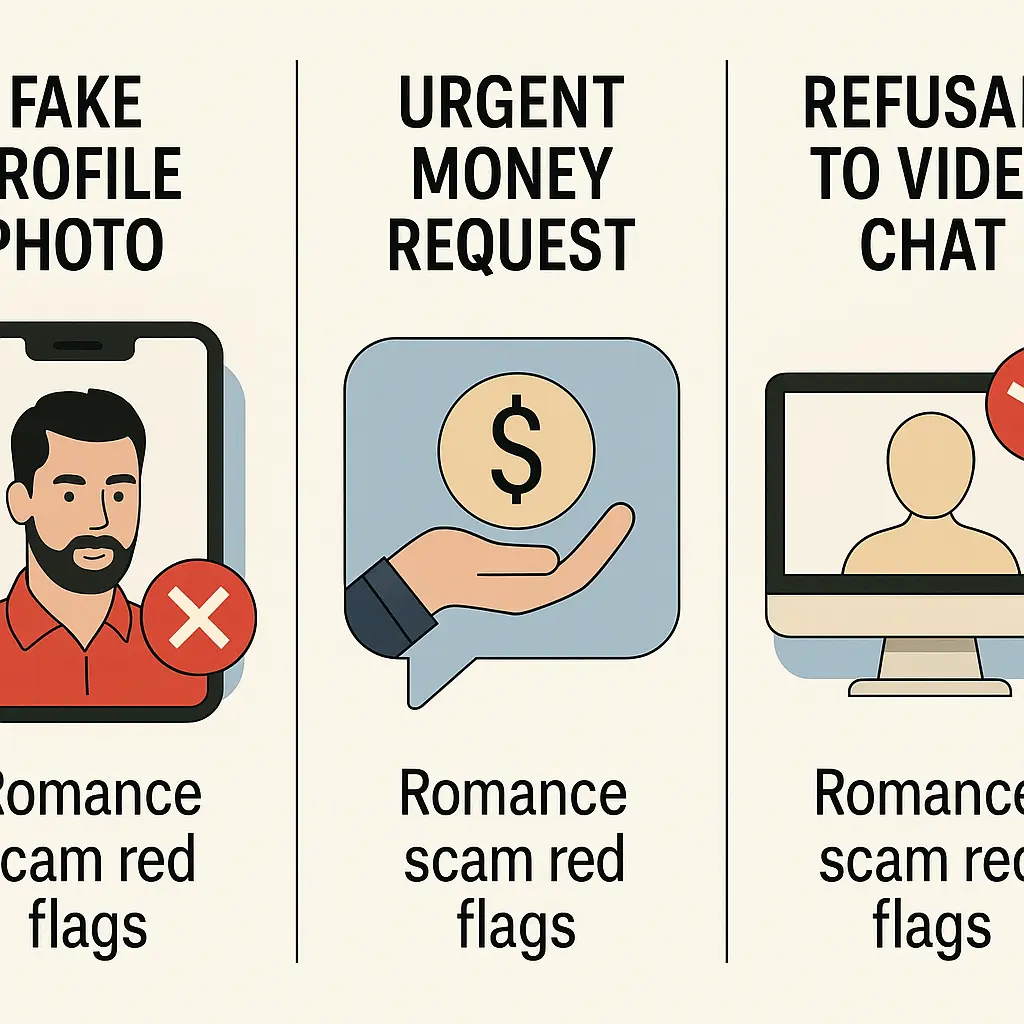
Contact. The scammer initiates on a dating app, social media platform, or through direct message. The profile uses photos stolen from real people, often military personnel, medical professionals, or engineers working overseas. The initial message is personalized enough to seem genuine but generic enough to work on multiple targets simultaneously.
Grooming. The scammer builds emotional connection over weeks or months. Messages arrive consistently. They ask about your day, remember details you mentioned, express interest in your life. The relationship intensifies quickly, declarations of love within days or weeks, talk of meeting in person, plans for a shared future. The speed feels flattering. It's designed that way.
Extraction. Once emotional investment is established, the financial requests begin. The scammer introduces a crisis: a medical emergency, travel complications, business deal gone wrong, legal trouble. They need money urgently. The amount starts small, a few hundred dollars to fix a problem. If you send it, the requests escalate. Thousands for plane tickets. Tens of thousands for hospital bills or customs fees. The crisis never resolves. There's always another problem.
The FBI's Internet Crime Complaint Center reports that victims over 60 lost $1.1 billion to romance scams in 2023 alone. But the demographic spread is wider than the "lonely senior" stereotype suggests. People in their 30s and 40s report substantial losses. The scam works on anyone seeking connection.
Why the scam succeeds
Romance scams exploit the gap between what we know intellectually and how we respond emotionally.
You know, in the abstract, that strangers on the internet might lie. But when someone messages you consistently for three months, remembers your dog's name, asks how your presentation went, sends you a song that reminds them of you, your brain stops categorizing them as "stranger on the internet." They become a person you know. The emotional connection feels real because, in a sense, it is real. You're experiencing genuine feelings. The other person is performing them.
The scammer's advantage is patience. They're running this operation as a job. You're experiencing it as a relationship. They can afford to invest weeks or months in grooming because the eventual payout justifies the time. A victim who sends $50,000 over three months represents a return that makes the initial investment trivial.
The financial requests escalate gradually. The first ask is small enough that refusing feels petty. A few hundred dollars to help someone you care about isn't unreasonable. Once you've sent that first payment, you've crossed a psychological threshold. Subsequent requests feel like continuation, not escalation. You've already committed. Backing out now means admitting you were wrong earlier. The sunk cost fallacy takes over.
Scammers also create urgency. The crisis is always immediate. The hospital won't wait. The flight leaves tomorrow. The business partner needs payment today or the deal collapses. Urgency prevents you from stepping back and evaluating the pattern. It forces decision-making in the moment, when emotional investment overrides skepticism.
The patterns that give them away
Romance scammers follow scripts. Individual operators vary the details, but the underlying patterns repeat because they work. Here's what to watch for.
Rapid escalation. Professing love within days or weeks. Talk of marriage or moving in together before you've met in person. Plans for a shared future that skip the normal stages of getting to know someone. Real relationships develop over time. Scammers compress the timeline because they need emotional investment before introducing financial requests.
Refusal to video call. The camera is always broken. The internet connection is too slow. Work restrictions prevent video. They're in a remote location without reliable service. These excuses persist across weeks or months. Video calls reveal the mismatch between profile photos and reality. Scammers avoid them.
Vague or inconsistent details. The scammer's story shifts. They're a doctor, but they don't know basic medical terminology. They're stationed overseas with the military, but the base name doesn't match real installations. They work on an oil rig, but the company name returns no search results. The details don't hold up under casual questioning because the scammer is managing multiple conversations and can't keep every story straight.
Overseas location with travel complications. The scammer is always somewhere else, working abroad, deployed with the military, on a business trip that keeps extending. They want to visit, but complications arise. Visa problems. Flight cancellations. Customs holds. The distance prevents in-person meeting while justifying why they need money for travel expenses that never result in actual travel.
Financial requests that escalate. The pattern starts small. A hundred dollars for a phone bill. A few hundred for car repairs. Then thousands for a medical emergency. Tens of thousands for a business investment or legal fees. Each request comes with urgency and a promise that this is the last time. It's never the last time.
Payment methods that can't be reversed. Wire transfers. Cryptocurrency. Gift cards. These methods move money quickly and irreversibly. Banks can reverse credit card charges. They can't reverse a Western Union transfer to someone in another country. Scammers push for payment methods that eliminate your ability to dispute the transaction later.
Isolation from friends and family. The scammer discourages you from discussing the relationship with others. Your friends wouldn't understand. Your family is too judgmental. This relationship is special and private. Isolation prevents outside perspective that might recognize the pattern.
The military impersonation variant
A subset of romance scams specifically impersonates military personnel. The scammer claims to be deployed overseas, often in a conflict zone or on a peacekeeping mission. The military context provides built-in explanations for communication restrictions, travel complications, and financial needs.
Common claims in military romance scams:
- Can't video call because of operational security
- Needs money to pay for leave or travel home
- Requires funds to ship personal items or gifts
- Facing emergency medical expenses not covered by military insurance
- Needs help with retirement paperwork or pension access
These claims are false. U.S. military personnel don't pay for their own leave. They don't need money to travel home from deployment. Medical care is provided. Retirement processing doesn't require civilian financial assistance.
The FTC warns specifically about military romance scams because they combine romantic manipulation with the cultural reverence many Americans hold for service members. Questioning someone who claims to be serving overseas feels unpatriotic. Scammers exploit that hesitation.
The cryptocurrency investment variant
A newer variant combines romance scam structure with cryptocurrency investment fraud. The scammer builds the relationship, then introduces an investment opportunity. They claim to have expertise in crypto trading or access to a special platform with guaranteed returns.
The victim is encouraged to create an account on a fraudulent exchange (controlled by the scammer) and deposit funds. The platform shows fabricated gains. The victim sees their investment growing and deposits more. When they try to withdraw, the platform imposes fees, taxes, or minimum balance requirements. The money was never invested. The platform is fake. The gains were numbers on a screen.
The FBI reports that cryptocurrency investment scams, often combined with romance fraud, resulted in $3.96 billion in losses in 2023. The combination is effective because it provides a plausible explanation for why the scammer wants you to send money (investment opportunity) rather than admitting they need it (crisis).
What to do if you're targeted
If you recognize these patterns in a relationship:
Stop sending money immediately. No additional payments. No "last" request. The crisis will escalate. There will always be another emergency. Stopping now limits your loss.
Report to the platform. Dating apps and social media platforms have reporting mechanisms for suspected scams. Reporting flags the account and prevents it from targeting others.
Report to the FTC. File a report at ReportFraud.ftc.gov. The FTC doesn't investigate individual cases, but aggregate data shapes enforcement priorities and public warnings.
Report to IC3. The FBI's Internet Crime Complaint Center tracks romance scam patterns and losses. Reports contribute to law enforcement intelligence even when individual cases can't be prosecuted.
Contact your bank. If you sent money via wire transfer, credit card, or bank transfer, report it as fraud immediately. Recovery is unlikely, but some institutions may be able to stop transactions in progress or flag your account for additional monitoring.
Document everything. Save messages, emails, transaction records, and any other evidence. You likely won't recover the money, but documentation supports law enforcement reporting and may be necessary if you need to file for identity theft protection later.
Don't engage further. The scammer may continue contacting you, expressing hurt or anger that you stopped sending money. They may claim the relationship was real and you've abandoned them. Block all communication. Continued engagement gives them opportunities to manipulate you back into compliance.
What to do if you've already sent money
If you've already sent money to a romance scammer:
Assume the money is gone. Wire transfers, cryptocurrency transactions, and gift card redemptions are nearly impossible to reverse. Focus on preventing additional loss rather than recovering what's already sent.
Freeze your credit. Romance scammers sometimes escalate to identity theft. If you've shared personal information (Social Security number, date of birth, copies of ID documents), freeze your credit at all three bureaus: Equifax, Experian, and TransUnion. This prevents new accounts from being opened in your name.
Monitor your accounts. Check bank statements, credit card activity, and credit reports for unauthorized transactions. Set up fraud alerts with your financial institutions.
Change passwords. If the scammer had access to any of your accounts (email, banking, social media), change those passwords immediately. Use unique passwords for each account. Consider using a password manager to generate and store them.
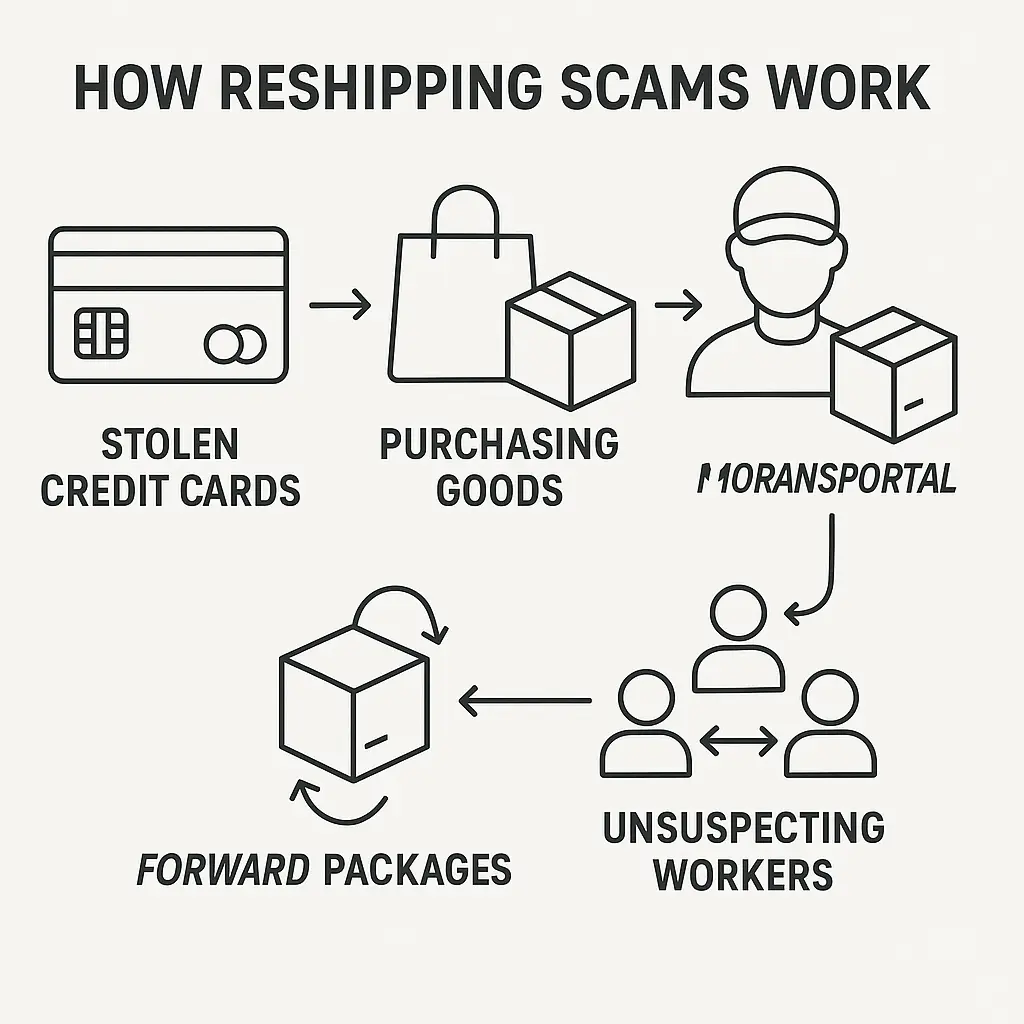
Report to law enforcement. File a report with local police and the FBI's IC3. International prosecution is rare, but domestic accomplices (money mules, package receivers) can sometimes be identified and charged. Your report contributes to that intelligence.
Don't fall for recovery scams. After a romance scam, some victims are targeted by "recovery" scams. Someone contacts you claiming they can get your money back for an upfront fee. This is a second scam targeting the same victim. No legitimate service charges fees before recovering funds.
Why victims don't report
Most romance scam victims don't report to authorities. The FTC estimates that only a fraction of fraud gets reported, and romance scams have particularly low reporting rates.
Reasons victims cite for not reporting:
- Embarrassment about being deceived
- Shame about sending money to someone they never met
- Fear of judgment from family or friends
- Belief that nothing can be done
- Desire to move on without revisiting the experience
This underreporting creates a feedback loop. When victims don't report, the true scale of the problem stays hidden. Law enforcement allocates resources based on reported crime. Public awareness campaigns rely on documented patterns. Silence protects scammers.
If you've been targeted or lost money to a romance scam, reporting serves two purposes: it contributes to aggregate data that shapes enforcement priorities, and it validates the experiences of other victims who search for information and find your report in public databases. You're not alone. The scam worked on you because it's designed to work. Reporting breaks the isolation that keeps victims silent.
The cultural reference that fits
In You've Got Mail, Kathleen Kelly and Joe Fox fall for each other through email before meeting in person. The entire premise rests on the idea that written communication can create genuine emotional connection between strangers. The film treats this as romantic. It is romantic, when both people are who they claim to be.
Romance scammers exploit the same dynamic. Written communication does create real emotional connection. Your feelings are genuine. The scammer's performance of reciprocal feelings is convincing because they've refined it across hundreds of targets. The asymmetry isn't obvious from inside the interaction. You're experiencing a relationship. They're running a script.
The film ends with revelation and resolution. Romance scams end with financial loss and the realization that the person you knew never existed. The emotional connection was real. The other person was not.
Verification before investment
The defense against romance scams is verification before emotional or financial investment.
Reverse image search their photos. Upload profile pictures to Google Images or TinEye. If the photos appear on multiple social media accounts under different names, or if they're stock photos or stolen from someone else's public profile, you're talking to a scammer.
Insist on video calls early. Real people have cameras. Real people can video call. If someone refuses across multiple weeks with escalating excuses, they're hiding something. The most common thing they're hiding is that they're not the person in the photos.
Watch for script patterns. If the relationship follows the structure described above, rapid escalation, vague details, overseas location, refusal to meet, financial crisis, you're dealing with a scam. Individual scammers vary the details, but the underlying pattern repeats.
Discuss the relationship with friends or family. Outside perspective catches patterns you miss from inside the relationship. If everyone you trust thinks something is wrong, consider the possibility that they're seeing something you can't.
Never send money to someone you haven't met in person. This is the hard line. No exceptions. No emergencies justify sending money to someone you've never met face-to-face. If the relationship is real, it will survive your refusal to send money. If it's a scam, your refusal ends it.
Romance scams succeed because they exploit real human needs for connection. The defense isn't cynicism about online relationships. Plenty of real relationships start online. The defense is verification. Confirm that the person you're talking to is who they claim to be before you invest emotionally or financially. Video calls. Reverse image searches. Consistent details that hold up under questioning. Meeting in person.
If someone refuses all forms of verification while asking for your trust, they're not building a relationship. They're running a scam.