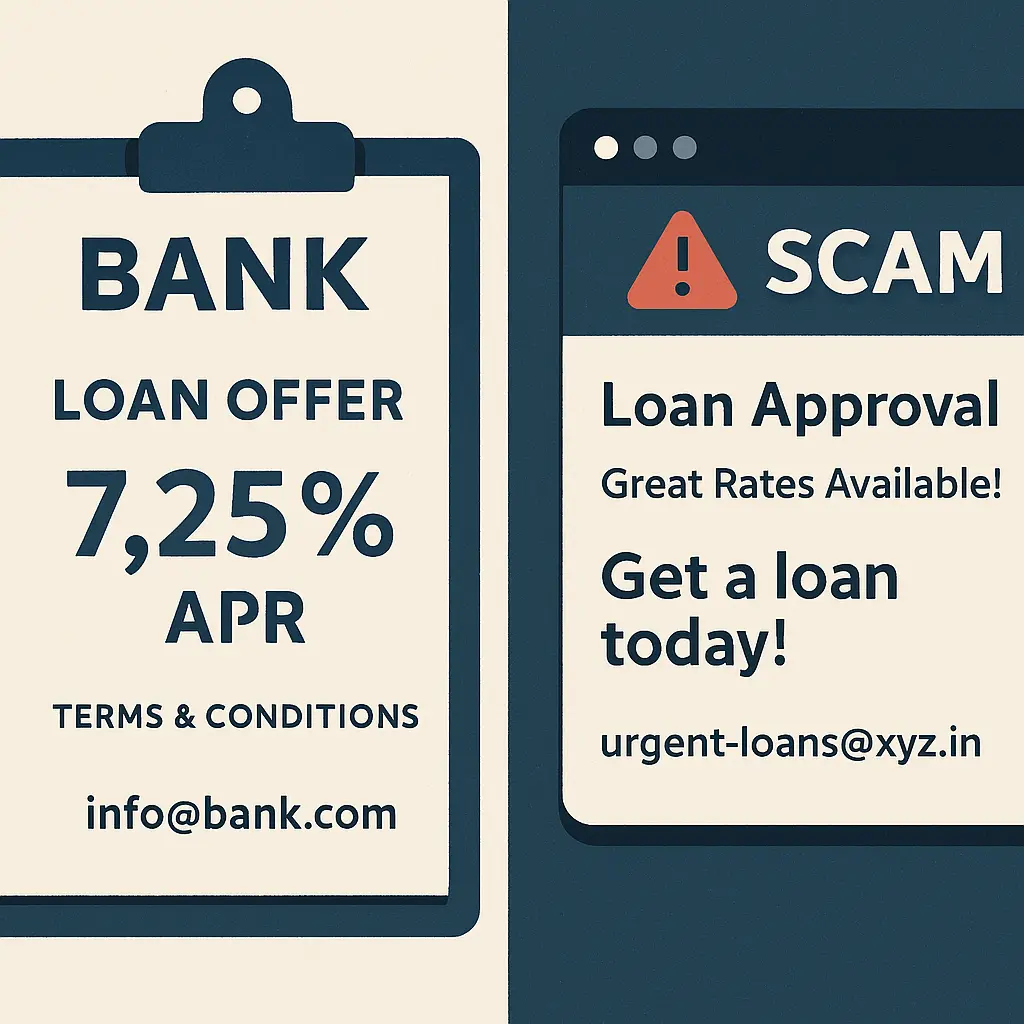
Loan offers in your inbox: real or scam?
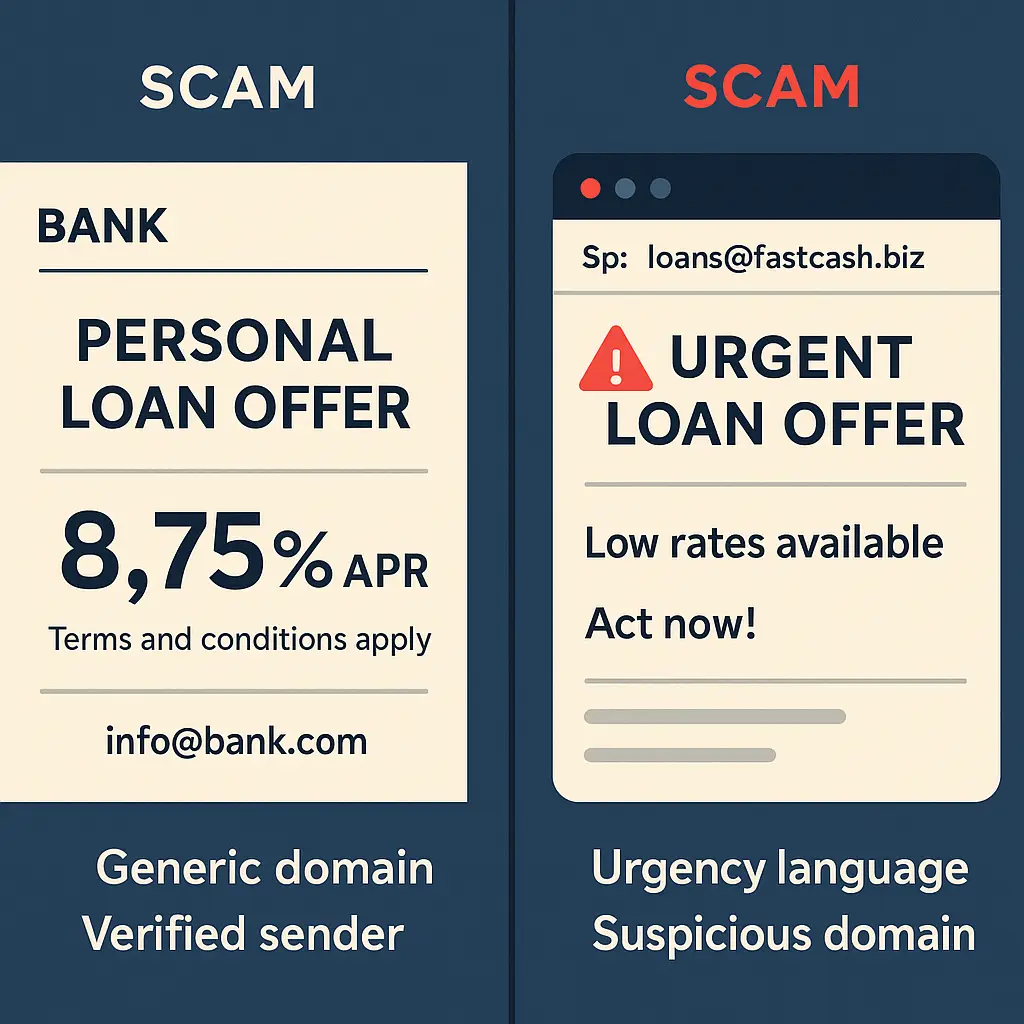
You're checking email. An offer appears: pre-approved for a personal loan, rates lower than anything you've seen, instant approval, no credit check required. The sender looks official. The logo matches a bank you've heard of. The language promises relief from debt, a path to consolidation, or cash for that emergency you've been worrying about.
Is it real?
The short answer: probably not. The longer answer requires understanding how legitimate loan offers work, what scammers exploit, and the step-by-step method to verify before you engage.
The legitimate loan offer mechanism
Real lenders send pre-approved offers through postal mail, not email. The mechanism works like this: a bank or credit union pulls a soft inquiry on your credit file through Equifax, Experian, or TransUnion. The soft pull doesn't affect your credit score. The lender reviews your profile against their underwriting criteria. If you qualify, they mail a physical offer with specific terms, APR disclosures, and regulatory language required by the Truth in Lending Act.
The offer includes your name, a reference number tied to the credit pull, and instructions to apply through a secure portal or phone number. The APR range is disclosed. The fees are listed. The lender's NMLS number (for mortgage lenders) or state licensing information is visible. You can verify the company exists, check their registration status, and confirm the offer matches their current products.
Email and text loan offers bypass this entire process. They arrive unsolicited, claim pre-approval without accessing your credit, and push urgency. That's the first red flag.
Why fake loan offers succeed
Scammers exploit financial stress. If you're carrying debt, facing an unexpected expense, or worried about making rent, a loan offer feels like a solution. The timing doesn't have to be perfect. The offer just has to arrive when you're open to considering options.
The second exploit is trust in familiar branding. Scammers copy logos, mimic official language, and use sender names that resemble real banks. The email looks legitimate at a glance. Most people don't verify the sender domain. Most people don't cross-reference the offer against the lender's actual website. The visual cues trigger trust, and trust bypasses skepticism.
The third exploit is urgency. The offer expires soon. Rates are limited. Approval is guaranteed, but only if you act now. Urgency creates pressure to respond before you verify. That's the mechanism. The scam works because it compresses decision time below the threshold where people check facts.
The step-by-step verification method
When a loan offer arrives by email or text, follow this sequence before you engage:
Step 1: Check the sender domain. The email address should match the lender's official domain exactly. Not a variation. Not a subdomain you've never seen. Exactly. If the offer claims to come from Chase, the sender should end in @chase.com, not @chase-offers.com or @secure-chase.net. Scammers register domains that look close. One character off is enough to fool a quick glance.
Go to the lender's website by typing the URL directly into your browser. Do not click links in the email. Compare the domain in the email header to the domain you typed. If they don't match, it's a scam.
Step 2: Search for the lender independently. Open a new browser tab. Search for the company name plus "scam" or "complaint." Check the FTC's scam alerts and the Consumer Financial Protection Bureau's complaint database. If the lender doesn't appear in search results, or if the only results are scam warnings, walk away.
Legitimate lenders have a digital footprint. They appear in credit bureau databases, have state or federal registration, and show up in consumer finance directories. If the company exists only in the email you received, it's not a company. It's a front.
Step 3: Verify the offer through the lender's official channel. If the sender domain checks out and the company exists, call the lender using a phone number from their website. Do not use the number in the email. Explain that you received an offer and want to confirm it's legitimate. Provide the reference number from the email if one exists.
A real lender will confirm the offer in their system. A scammer can't, because the offer doesn't exist in any system. This step takes five minutes. It's worth it.
Step 4: Evaluate the terms against market reality. If the APR is dramatically lower than rates you've seen elsewhere, question it. If the offer promises approval regardless of credit history, question it. If there's no mention of a credit check, income verification, or documentation requirements, it's not a real loan. It's bait.
Check current personal loan rates on sites like Bankrate or NerdWallet. Compare the offer to the market. If it's too good to be true by a wide margin, it is.
Step 5: Never pay upfront fees. Legitimate lenders deduct fees from the loan disbursement or charge them at closing. They do not ask for payment before you receive funds. If the offer requires a processing fee, an application fee, or an insurance deposit sent via wire transfer, gift card, or cryptocurrency, it's a scam. Full stop.
This is the clearest indicator. Real lenders are regulated. Scammers are not. The regulation prohibits advance fees for personal loans in most contexts. If someone asks for money before you get money, you're being defrauded.
What scammers actually want
Fake loan offers serve three purposes: harvesting personal information, collecting upfront fees, or installing malware.
Information harvesting works like this: you respond to the offer. The scammer sends an application form requesting your Social Security number, date of birth, bank account details, employer information, and income. You fill it out because you think you're applying for a loan. The scammer now has everything needed to open credit accounts in your name, file fraudulent tax returns, or sell your data to other criminals.
The loan never materializes. The scammer stops responding. You realize weeks later that new accounts appeared on your credit report, or that your tax refund was intercepted, or that your bank account was drained through unauthorized ACH transfers.
Fee collection works like this: the scammer approves your loan. They send a congratulations email. But before they disburse the funds, you need to pay a processing fee, insurance deposit, or tax payment. The amount is usually a few hundred dollars, enough to hurt, but not enough to justify the effort of reporting. You send the payment via wire transfer or gift card because that's what they request. The scammer vanishes. No loan. No refund. No recourse.
Malware delivery works like this: the email contains an attachment, a loan agreement, a pre-approval letter, a rate sheet. You open it. The file installs malware that logs your keystrokes, steals saved passwords, or encrypts your files for ransom. The loan was never the point. Access to your device was.
The cultural reference that fits
In Ocean's Eleven, the crew spends half the movie convincing the casino owner that they're someone else, utilities inspectors, health department officials, vendors with legitimate access. The con works because the casino owner doesn't verify credentials against an independent source. He trusts the visual cues: the uniforms, the paperwork, the confidence.
Loan scams work the same way. The email wears a uniform, logos, official language, professional formatting. You're supposed to trust the visual cues without verifying the credentials. The moment you check the sender domain against the real website, the con collapses. The difference between Ocean's Eleven and your inbox is that Danny Ocean had a plan. The scammer sending you a fake loan offer is just betting you won't verify.
What happens if you engage
If you respond to a fake loan offer, the scammer escalates. They ask for documentation: pay stubs, bank statements, tax returns. You send them because you think you're moving through an application process. The scammer now has detailed financial records.
If you provide your Social Security number, they can open credit accounts before you notice. If you send upfront fees, the money is gone. Wire transfers and gift cards are irreversible. If you download an attachment, the malware runs silently in the background, harvesting credentials for weeks or months.
The FBI's Internet Crime Complaint Center reported that advance fee scams, a category that includes fake loan offers, cost victims around $400 million in 2023. The median loss per victim was roughly $800. That's the cost of trusting an email without verification.
When legitimate lenders contact you by email
Real lenders do send email, but the context differs. If you applied for a loan through their website or called them directly, they'll follow up by email with next steps, document requests, or status updates. The email will reference your application number and direct you to log into a secure portal you created during the application process.
They won't ask for sensitive information through email. They won't request upfront fees. They won't pressure immediate action. The communication will be transactional, not promotional.
Pre-approved offers from lenders you have an existing relationship with, your bank, your credit union, arrive by postal mail with clear opt-out instructions and regulatory disclosures. They might send an email alerting you that a mailed offer is coming, but the details live in the physical letter, not the inbox.
Unsolicited email offers from lenders you've never contacted are, in my experience, fraudulent more often than not. The exceptions are rare enough that treating every unsolicited loan email as a scam until proven otherwise is the safer default.
Red flags that indicate a scam
These patterns appear consistently in fake loan offers:
- Guaranteed approval regardless of credit. Real lenders assess risk. Scammers don't care about your credit because they're not lending you money.
- No credit check required. Legitimate lenders pull credit to determine rates and eligibility. If there's no credit check, there's no underwriting, which means there's no loan.
- Urgency language. "Offer expires in 24 hours," "limited spots available," "act now before rates increase." Real loan terms don't expire overnight. Scammers create false deadlines to bypass verification.
- Vague or missing APR. Lenders are required to disclose APR clearly. If the rate is "as low as" without a range, or if it's missing entirely, the offer isn't real.
- Upfront fees. Processing fees, application fees, insurance deposits, if payment is required before loan disbursement, it's fraud.
- Contact via text or social media. Legitimate lenders don't cold-message you on WhatsApp, Instagram, or Facebook Messenger offering loans. If the initial contact happens through a messaging app, it's a scam.
- Generic greetings. "Dear Customer," "Valued Member," or no greeting at all. Real pre-approval offers use your name because they pulled your credit file.
- Misspelled words or awkward phrasing. Professional lenders employ copywriters and legal teams. Scammers don't. Typos and grammatical errors indicate a lack of institutional oversight.
If an offer displays two or more of these flags, delete it. If it displays one, verify through the steps above before responding.
What to do if you already responded
If you provided personal information to a fake loan offer, act immediately:
Place a fraud alert on your credit file. Contact Equifax, Experian, or TransUnion and request a fraud alert. One call alerts all three bureaus. The alert tells lenders to verify your identity before opening new accounts. It lasts one year and is free.
Freeze your credit. A freeze blocks new credit applications entirely. It's stronger than a fraud alert. You can freeze and unfreeze your credit at each bureau online. This prevents the scammer from opening accounts using your stolen information.
Monitor your accounts. Check bank statements, credit card transactions, and credit reports for unauthorized activity. Set up alerts for new account openings, hard inquiries, and large transactions.
Report the scam. File a report with the FTC at ReportFraud.ftc.gov. Submit a complaint to the FBI's Internet Crime Complaint Center. Reporting helps law enforcement track patterns and warn others.
If you sent money, contact your bank immediately. Wire transfers are usually irreversible, but your bank might be able to halt the transaction if you report it fast enough. If you paid with a gift card, contact the card issuer and report the fraud. Recovery is unlikely, but the attempt is worth making.
If you downloaded an attachment, scan your device for malware. Use antivirus software to run a full system scan. Change passwords for sensitive accounts, email, banking, tax filing, from a clean device. If the scan finds malware, consider professional remediation or a full system wipe and reinstall.
How to protect yourself going forward
The best defense against fake loan offers is skepticism toward unsolicited financial communication. If you didn't apply for a loan, you shouldn't receive a loan offer by email or text. If you did apply, the lender will contact you through the channel you provided during the application, usually a secure portal login, not an inbox.
When you need a loan, initiate contact yourself. Research lenders, compare rates, and apply through their official websites. Don't respond to offers that find you. This inverts the scammer's advantage. They rely on you reacting to their message. If you ignore unsolicited offers and seek loans proactively, you control the relationship from the start.
Use a password manager to store credentials for financial accounts. Enable two-factor authentication on email, banking, and credit monitoring services. These layers don't prevent scammers from sending fake offers, but they reduce the damage if you accidentally engage.
Review your credit report regularly. You're entitled to one free report per year from each bureau through AnnualCreditReport.com. Spread them out, pull one every four months, to maintain year-round visibility into new accounts, inquiries, and address changes.
The reality behind the inbox
Loan offers in your inbox are almost never what they claim to be. The legitimate lending process involves credit checks, documentation, regulatory disclosures, and institutional oversight. Scammers skip all of that because they're not offering loans. They're offering a convincing illusion designed to extract information, fees, or access.
The verification process, checking the sender domain, searching for the lender independently, calling through official channels, takes less time than filling out a fake application. It's worth the five minutes. The alternative is months of credit repair, identity theft recovery, and financial loss that compounds the stress you were trying to relieve.
If you're looking for a loan, start with your bank or credit union. Check rates at established lenders. Use comparison tools from reputable financial sites. Apply directly through official channels. Ignore the inbox. The real opportunities don't arrive unsolicited. The scams do.