Pump and dump schemes on social media: How manufactured hype drains your wallet
You see it in your feed. A stock ticker you've never heard of. Sudden, urgent posts from multiple accounts. Price charts showing dramatic upward movement. Claims of insider knowledge. Promises that this is the moment, the opportunity, the rocket ship to financial freedom. Buy now before it's too late.
Then, within hours or days, the price collapses. The accounts go quiet. The people who bought at the peak, the ones who believed the hype, are left holding worthless shares while the operators who manufactured the excitement have already sold and moved on.
This is a pump and dump scheme, and social media has made it easier to execute, harder to detect, and more profitable than ever before.
The basic mechanism
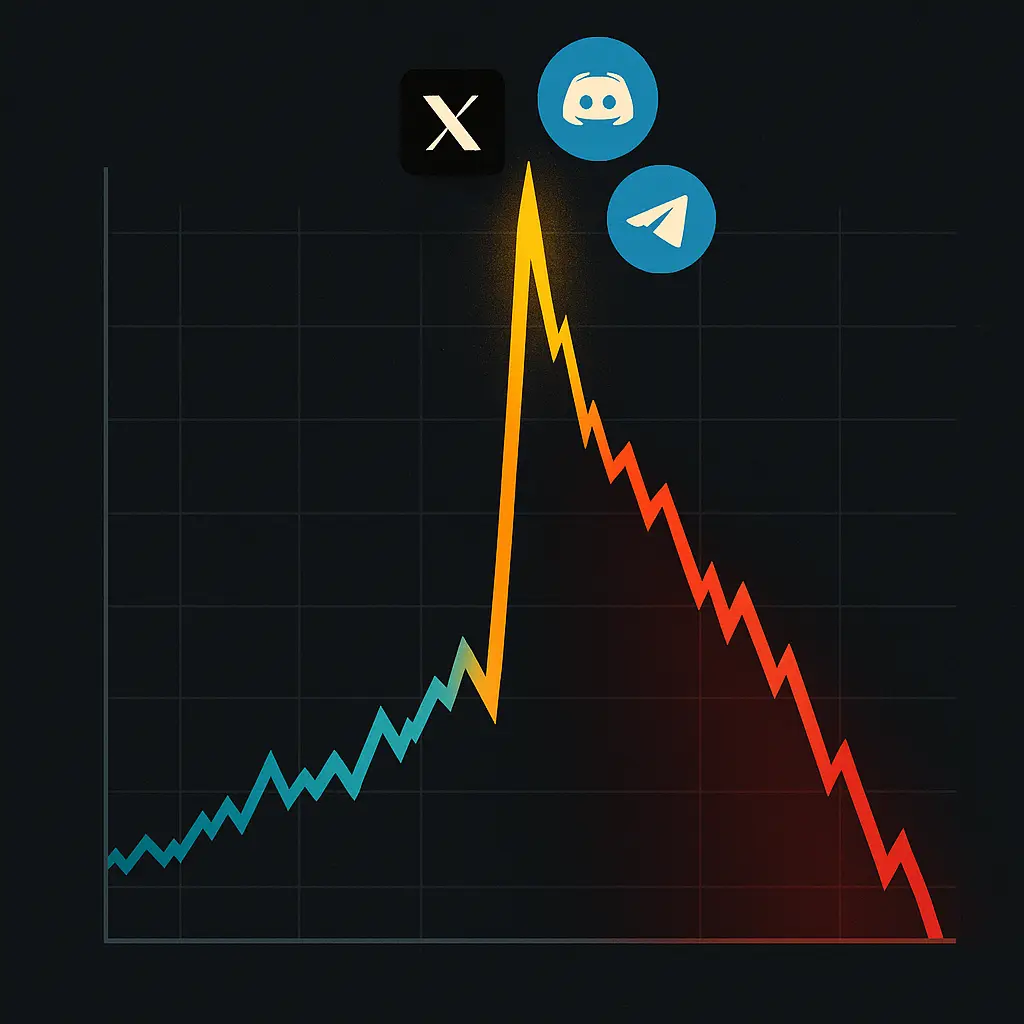
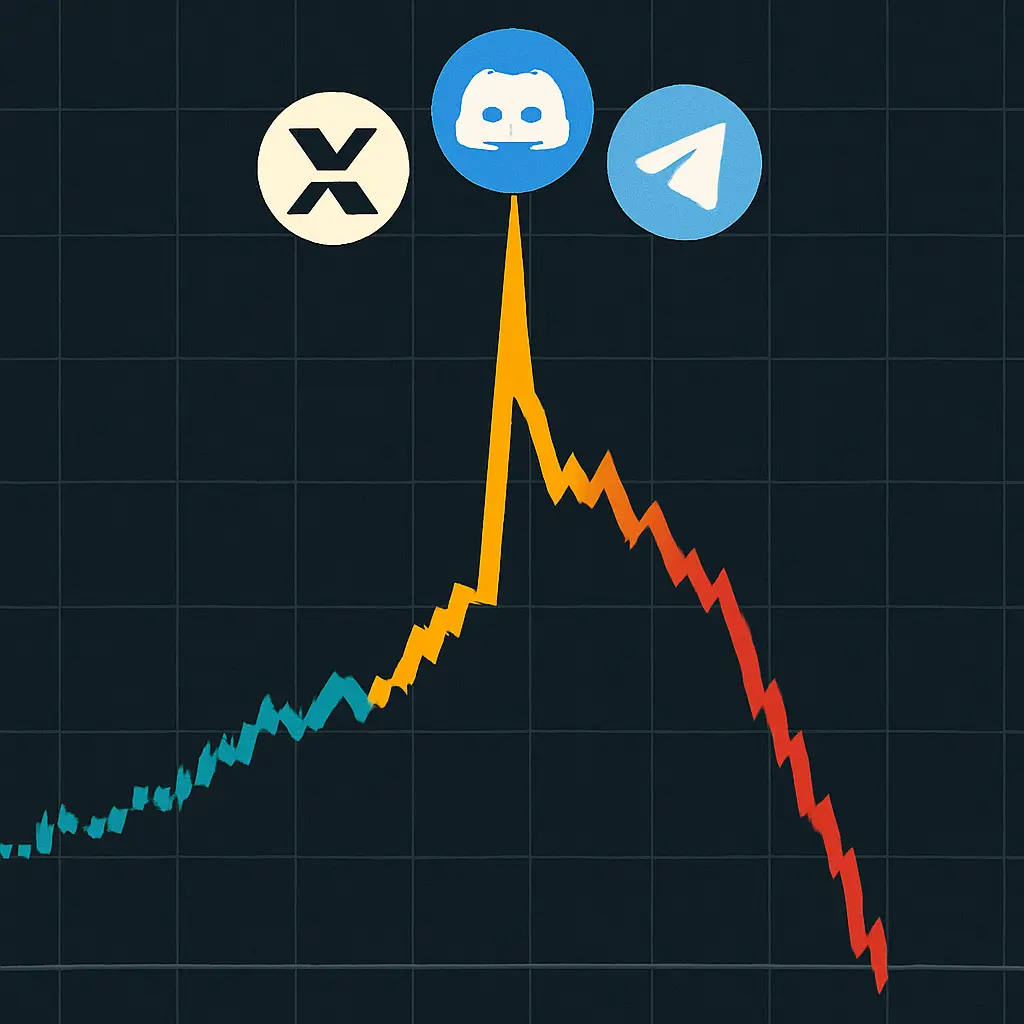
A pump and dump scheme has three phases: accumulation, promotion, and distribution.
Accumulation. The operators buy shares of a low-volume stock or obscure cryptocurrency when the price is low. They need something with thin trading volume, because a small amount of buying activity will create dramatic price movement. Penny stocks, microcap companies, and newly launched cryptocurrencies are common targets. The operators accumulate their position quietly, often over days or weeks, without drawing attention.
Promotion. Once they hold enough shares, the operators launch coordinated promotion across social media platforms. Twitter threads with urgent calls to action. Discord channels with fabricated analysis. Telegram groups with fake insider tips. Reddit posts claiming to have discovered the next big thing. The goal is to create the appearance of organic excitement and broad interest. Multiple accounts post simultaneously. Fake screenshots show fabricated gains. Bots amplify the message. The promotion uses urgency, scarcity, and FOMO to pressure people into buying immediately.
Distribution. As new buyers drive the price up, the operators sell their holdings at the peak. They exit before the momentum fades, often within hours. Once they've sold, the promotion stops. The coordinated accounts go silent or delete their posts. New buyers, who purchased at inflated prices, watch the value collapse as selling pressure overwhelms the artificial demand. The operators walk away with profit. The victims are left with losses.
The FBI's Internet Crime Complaint Center documented investment fraud losses exceeding $4.57 billion in 2023, with pump and dump schemes representing a significant portion of that total. The mechanism is not new, pump and dump fraud predates the internet, but social media has changed the scale, speed, and accessibility of the attack.
Why social media amplifies the scheme
Social media platforms provide three advantages that make pump and dump schemes more effective than traditional methods.
Reach. A single coordinated campaign can reach millions of users across Twitter, Discord, Telegram, Reddit, and YouTube within hours. Operators don't need access to traditional media or expensive advertising. They create accounts, post content, and let algorithmic amplification do the rest. Viral mechanics reward sensational claims and urgent language, which aligns perfectly with pump and dump promotion tactics.
Anonymity. Operators use pseudonymous accounts, burner emails, and VPNs to hide their identity. When the scheme collapses, they delete accounts, abandon profiles, and vanish. Victims have no way to identify who ran the scheme or where they operated from. Law enforcement faces significant challenges tracking operators across jurisdictional boundaries and pseudonymous platforms.
Credibility through volume. Coordinated posting creates the illusion of consensus. When dozens of accounts post similar messages within minutes, it looks like organic enthusiasm rather than manipulation. Fake engagement metrics, likes, retweets, upvotes, add apparent legitimacy. New users, unfamiliar with coordination tactics, interpret volume as validation. The scheme exploits the social proof heuristic: if many people are saying it, it must be true.
In Ocean's Eleven, Danny Ocean's crew uses misdirection and coordinated timing to manipulate the casino's security systems. The casino sees what looks like normal activity, gamblers winning, employees working, systems functioning, but every visible action is part of a carefully orchestrated plan designed to hide the real theft. Pump and dump schemes work the same way. The social media activity looks like organic excitement, genuine discovery, and legitimate investment discussion. But every post, every coordinated message, every fabricated screenshot is part of a plan to create artificial demand so the operators can sell at a profit. The victims think they're participating in a real opportunity. They're actually funding someone else's exit.
Common promotion tactics
Pump and dump operators use predictable patterns. Recognizing these tactics reduces your exposure.
Urgent language. Posts use phrases like "buy now before it's too late," "this is the last chance," "price is about to explode," and "don't miss out." The urgency is artificial. Legitimate investment opportunities don't require immediate action based on social media posts.
Fabricated insider knowledge. Operators claim to have access to non-public information, upcoming announcements, or insider connections. They frame themselves as doing you a favor by sharing this knowledge. In reality, they're creating a false sense of exclusivity to pressure you into buying. Actual insider trading is illegal, and anyone genuinely possessing material non-public information would face serious legal consequences for sharing it.
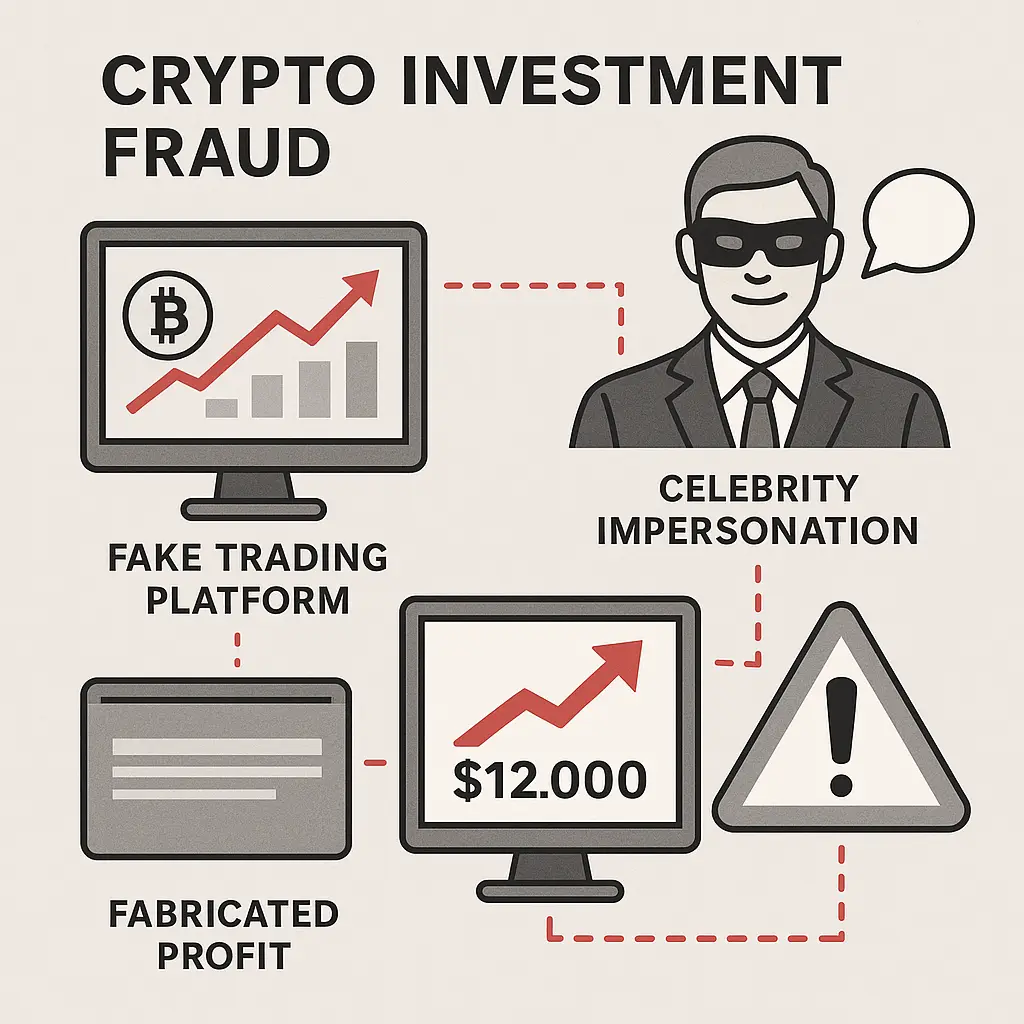
Fake proof of gains. Screenshots showing massive returns, doctored transaction histories, and fabricated account balances create the appearance that others are profiting. These images are either manipulated or show gains from the early accumulation phase before the scheme goes public. By the time you see the screenshot, the opportunity (if it ever existed) is gone.
Coordinated amplification. Multiple accounts post identical or similar messages within minutes. Bots retweet, like, and upvote the content to create artificial engagement. The coordination is visible if you look for it, check post timestamps, compare phrasing across accounts, and examine the profiles of the most vocal promoters. New accounts with minimal post history and sudden focus on a single ticker are red flags.
Promises of guaranteed returns. Any claim that an investment is guaranteed, risk-free, or certain to deliver specific returns is fraudulent. Securities law requires disclosure of risk. Operators ignore this because they're not selling a legitimate investment, they're selling hype to create exit liquidity for their own holdings.
Cryptocurrency pump and dumps
Cryptocurrency markets are particularly vulnerable to pump and dump schemes because of low liquidity, minimal regulation, and 24/7 trading.
Operators target newly launched tokens, obscure altcoins, and low-volume assets listed on decentralized exchanges. The promotion follows the same pattern as stock schemes: coordinated social media campaigns, fake analysis, and urgent calls to buy. But cryptocurrency adds specific advantages for operators.
No trading halts. Stock exchanges can halt trading when unusual activity triggers circuit breakers. Cryptocurrency exchanges operate continuously without regulatory oversight or automatic halts. Operators can execute the entire scheme, accumulation, promotion, distribution, within hours without interruption.
Pseudonymous transactions. Blockchain transactions are public, but wallet addresses are not tied to real identities. Operators move funds through mixers, privacy coins, and decentralized exchanges to obscure the money trail. Victims have no practical way to trace stolen funds or identify the operators.
Unregulated exchanges. Many cryptocurrency exchanges operate outside U.S. jurisdiction and have minimal customer verification requirements. Operators can create accounts, execute trades, and withdraw funds without providing identifying information. When law enforcement investigates, the exchange may be offshore, uncooperative, or defunct.
The FBI has warned that cryptocurrency investment fraud is growing faster than traditional securities fraud, with billions in losses reported annually. The decentralized, pseudonymous nature of cryptocurrency makes it an ideal vehicle for pump and dump schemes.
How to recognize a pump and dump before you buy
You can protect yourself by evaluating the promotion rather than the asset.
Check the source. Who is promoting this investment? Are they using a real name and verifiable identity, or hiding behind a pseudonymous account? Do they have a history of accurate analysis, or did the account appear recently with a single focus? Legitimate analysts disclose their credentials, methodology, and conflicts of interest. Pump and dump operators hide behind anonymity.
Look for coordination. Search the ticker or token name on Twitter, Reddit, and Discord. If you see dozens of accounts posting identical or similar messages within a short time window, that's coordination, not organic interest. Check the accounts themselves, new profiles, minimal post history, and sudden focus on a single asset are warning signs.
Evaluate the urgency. Legitimate investment opportunities don't require immediate action based on social media posts. If the promotion emphasizes urgency, scarcity, or limited-time windows, ask why. The answer is usually that the operators need you to buy quickly, before the artificial momentum fades and the price collapses.
Verify claims. Operators often cite upcoming announcements, partnerships, or product launches to justify the hype. Check the company's official channels, website, press releases, SEC filings. If the claimed catalyst doesn't appear in official sources, it's fabricated. Even if the claim is real, ask whether the current price already reflects that information. Markets are generally efficient at pricing in publicly known information.
Assess liquidity. Low-volume assets are easier to manipulate. Check the trading volume and market capitalization. If the asset trades only a few thousand dollars per day, a small amount of coordinated buying can create dramatic price movement. When the operators sell, there won't be enough buyers to absorb the selling pressure, and the price will collapse.
Question guaranteed returns. No legitimate investment offers guaranteed returns without risk. If the promotion promises specific gains, risk-free profits, or certain outcomes, it's fraud. Securities law requires risk disclosure. Operators skip this because they're not offering a legitimate investment, they're creating a narrative to justify the price movement they've manufactured.
What to do if you've been targeted
If you've already bought into a pump and dump scheme, your options are limited, but you should still act.
Document everything. Take screenshots of the promotional posts, account names, timestamps, and any direct messages. Save transaction records, wallet addresses, and exchange confirmations. This documentation won't recover your money, but it helps law enforcement identify patterns and pursue operators.
Report to law enforcement. File a complaint with the FBI's Internet Crime Complaint Center and the FTC. Include all documentation. Individual reports rarely lead to immediate action, but aggregated data helps investigators identify large-scale schemes and repeat operators.
Report to the platform. Twitter, Reddit, Discord, and Telegram all have mechanisms for reporting fraud and coordinated inauthentic behavior. Reporting won't recover your losses, but it can get the accounts removed and disrupt future schemes.
Don't chase losses. After a pump and dump collapses, operators sometimes launch a second round of promotion claiming the price will recover. This is a secondary scam targeting people who lost money in the first round. The price will not recover. The operators have already exited. Any new promotion is designed to extract additional funds from victims who are desperate to break even.
Accept the loss. Recovery is unlikely. Cryptocurrency transactions are irreversible. Pseudonymous operators are difficult to identify and prosecute. Offshore exchanges are uncooperative. The money is gone. Focus on preventing future losses by understanding the mechanism and recognizing the patterns.
Why enforcement is difficult
Pump and dump schemes are illegal under securities fraud statutes, but enforcement faces significant obstacles.
Jurisdictional complexity. Operators often work from countries with weak enforcement, minimal extradition treaties, and uncooperative legal systems. U.S. law enforcement can investigate domestic activity, but prosecuting operators abroad requires international cooperation that may not exist.
Pseudonymity. Operators use fake names, burner accounts, and VPNs to hide their identity. Even when law enforcement identifies a scheme, tracing it back to real individuals requires significant resources and technical expertise. Many cases remain unsolved because the operators successfully obscured their identity.
Resource constraints. The FBI and FTC receive hundreds of thousands of fraud complaints annually. Individual pump and dump schemes, especially those involving small dollar amounts, may not receive investigative resources unless they're part of a larger pattern.
Victim reluctance. Many victims don't report because they feel embarrassed, believe recovery is impossible, or don't know where to file a complaint. Underreporting makes it harder for law enforcement to identify large-scale operations and allocate resources effectively.
Despite these challenges, some operators are prosecuted. In recent years, the FBI has pursued cases involving cryptocurrency pump and dump schemes, resulting in arrests and convictions. But the majority of schemes go unpunished, and the operators continue running new scams under different names.
The broader pattern
Pump and dump schemes are a specific example of a broader category of fraud: manufactured consensus.
Operators create the appearance of widespread belief, enthusiasm, or validation to manipulate behavior. The same mechanism appears in fake reviews, astroturfing campaigns, and coordinated disinformation. Social media amplifies these tactics because platforms reward engagement, virality, and volume without verifying authenticity.
The defense is the same across all forms of manufactured consensus: evaluate the source, look for coordination, question urgency, and verify claims independently. When something looks too good to be true, ask who benefits from you believing it. In pump and dump schemes, the answer is always the operators who accumulated shares before the hype began.
What you can actually control
You can't stop pump and dump schemes from existing, but you can choose not to participate.
Ignore social media investment advice. Legitimate investment analysis comes from credible sources with verifiable track records, disclosed methodologies, and transparent conflicts of interest. Anonymous accounts on Twitter and Discord are not credible sources. Treat unsolicited investment advice on social media as fraud until proven otherwise.
Verify independently. If you're genuinely interested in an investment, research it through official channels, company filings, regulatory disclosures, financial statements. Don't rely on social media posts, screenshots, or claims from anonymous accounts. If the investment can't be verified through official sources, it's not legitimate.
Understand liquidity. Low-volume assets are easier to manipulate. If an investment doesn't have sufficient trading volume to support the price movement being promoted, the price is artificial and will collapse once the operators exit.
Recognize urgency as manipulation. Legitimate opportunities don't require immediate action based on social media hype. Urgency is a tactic designed to bypass your rational evaluation and pressure you into acting before you have time to verify claims.
Report suspicious activity. Even if you don't fall for the scheme, reporting coordinated promotion helps platforms identify and remove fraudulent accounts. File reports with the FBI, FTC, and the platform itself.
Pump and dump schemes succeed because they exploit predictable human responses to social proof, urgency, and FOMO. The operators know you'll see coordinated posts and interpret them as validation. They know you'll feel pressure to act before the opportunity disappears. They know you'll trust volume over verification.
The defense is to recognize the pattern, question the source, and verify independently. When the hype is manufactured, the only people who profit are the ones who created it.