What Digital Privacy Actually Means in 2026
Digital privacy is control over who sees your data and how they use it. That's the definition. The mechanism is more complicated.
In 2026, privacy is not a binary state. You don't have it or lack it. You have different levels of privacy with different entities in different contexts. Your bank knows your account balance. Your email provider can read your messages if they want to. Your phone carrier knows where you are. Your browser knows every site you visit. Your search engine knows what you're looking for. The question is not whether these entities have access, but what they do with that access and whether you agreed to it.
Privacy is also not the same thing as security. Security protects data from unauthorized access. Privacy determines who is authorized. A service can encrypt your data end-to-end (strong security) while also scanning it for ad targeting (zero privacy). A service can store your data in plaintext (weak security) but never share it with third parties (strong privacy). The two concepts overlap but they solve different problems.
The FTC's privacy enforcement work focuses on whether companies follow their stated privacy policies and whether those policies are deceptive. The Electronic Frontier Foundation's privacy advocacy focuses on whether laws and technologies give individuals meaningful control. Both perspectives matter. A company that honors its privacy policy but collects everything by default is legal but not private. A company that collects nothing but lies about it is private but illegal.
This article explains the mechanism of digital privacy in 2026. What gets collected, how it gets used, where control exists, and where it doesn't. No marketing. No panic. Just the explainer.
What Data Collection Actually Looks Like
Every service you use collects data. The question is what kind and for what purpose.
First-party data collection is when the service you're interacting with collects information about that interaction. You search for "password manager" on Google, and Google records that query. You buy shoes on a retailer's site, and the retailer records the purchase. You open an app, and the app records that you opened it. This is direct collection. You know who's collecting because you're on their platform.
Third-party data collection is when entities you're not directly interacting with collect information about you. You visit a news site, and that site loads trackers from ad networks, analytics companies, and data brokers. Those trackers record your visit, your device, your location, and your browsing history across every other site that uses the same trackers. You didn't agree to share data with those third parties. You agreed to visit the news site. The news site agreed to let the third parties in.
In The Left Hand of Darkness, Le Guin writes about a planet where trust is built through ritual exchange of information. You tell me something true, I tell you something true, and we establish a bond. That's first-party collection. It's reciprocal. You give a service your email address, the service gives you an account. Third-party collection is different. You tell the news site you want to read an article, and the news site tells 47 other companies everything about you without asking. There's no ritual. There's no reciprocity. There's just surveillance.
Mozilla's privacy principles describe this as the difference between necessary data and opportunistic data. Necessary data is what the service needs to function. Opportunistic data is what the service or its partners want for other purposes. A weather app needs your location to show local weather. A weather app does not need your contact list, your browsing history, or your device identifier. But many weather apps collect all of it anyway, because the data has value independent of the weather forecast.
The scale of opportunistic collection is hard to overstate. Researchers have found that the average news article loads trackers from around 20 different third-party domains. Some load over 100. Each tracker collects data. Each tracker shares data with other trackers. The result is that visiting one page can generate data flows to dozens of companies you've never heard of, operating in jurisdictions you've never visited, subject to privacy laws you've never read.
And that's just web browsing. Mobile apps collect location data continuously, even when you're not using them. Smart home devices record voice commands and upload them for processing. Fitness trackers log your heart rate, sleep patterns, and exercise routes. Cars record your driving habits and send them to manufacturers and insurers. Streaming services track what you watch, when you pause, and when you rewind. Email providers scan your messages for calendar events and shopping receipts. Every interaction generates data. Every piece of data gets stored, analyzed, and often sold.
How Your Data Gets Used
Data collection serves multiple purposes. Some benefit you. Some benefit the service. Some benefit neither.
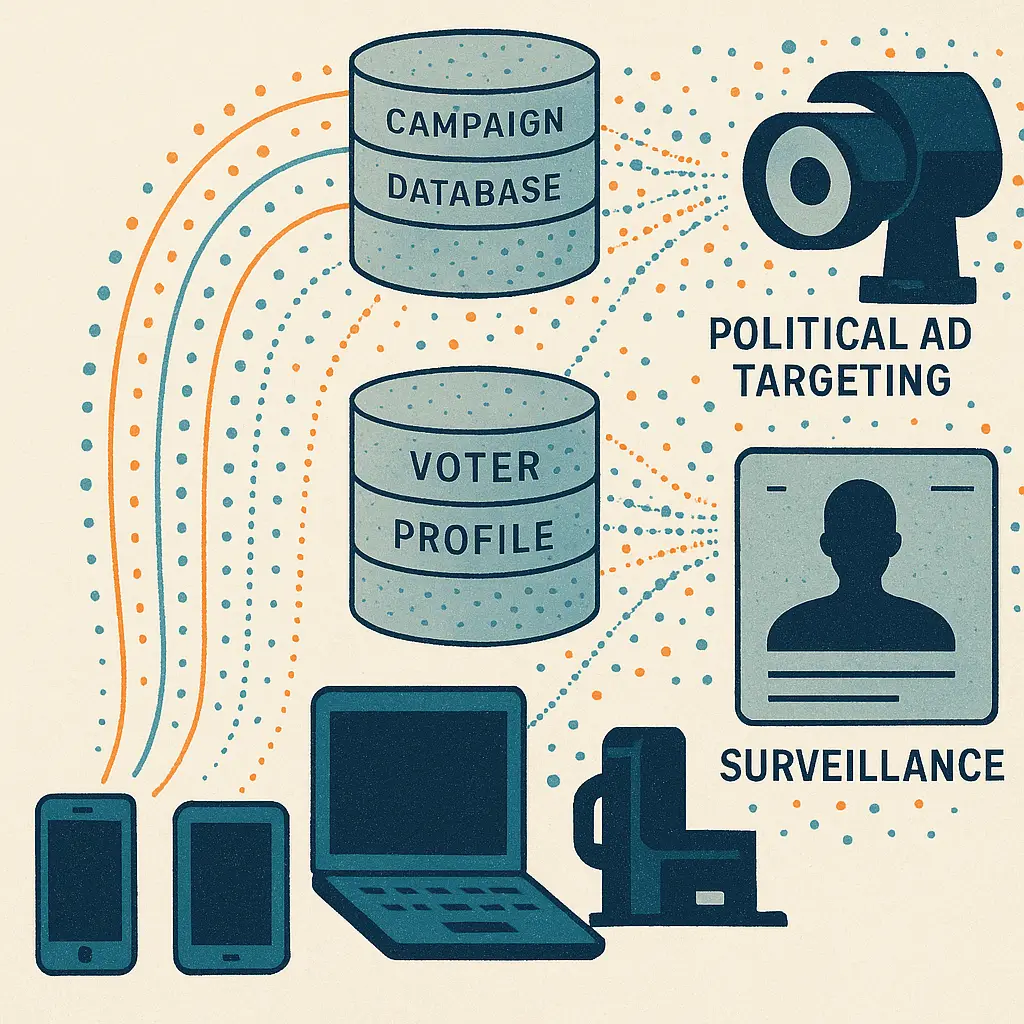
The most common use is advertising. Ad networks build profiles based on your browsing history, search queries, location, and purchases. They categorize you into demographic and behavioral segments. Then they sell access to those segments to advertisers. You see ads for running shoes because you visited running blogs, searched for marathon training plans, and bought running socks. The ad network doesn't know your name, but it knows you're interested in running. That's enough.
This is called behavioral advertising. It works by tracking you across sites and apps, building a profile of your interests, and serving ads based on that profile. The alternative is contextual advertising, which shows ads based on the content you're currently viewing, not your history. If you're reading an article about running, you see running ads. If you're reading an article about cooking, you see cooking ads. No tracking required. Contextual advertising was the norm before behavioral advertising became technically feasible. It still works. It just generates less revenue for ad networks, so most services don't use it.
The second use is analytics. Services track how you use their product to understand what works and what doesn't. Which features get used? Where do users get stuck? What causes people to leave? This is product development. It's also surveillance. The line between "understanding user behavior to improve the product" and "monitoring everything users do to maximize engagement" is blurry. Both involve the same data collection. The difference is intent and restraint.
The third use is personalization. Streaming services recommend shows based on what you've watched. Search engines adjust results based on your history. Social media feeds show posts based on what you've engaged with. Personalization requires tracking. You can't personalize an experience without knowing what the person has done before. Some people value personalization. Some people find it creepy. Both reactions are reasonable.
The fourth use is data brokerage. Data brokers aggregate information from multiple sources, build detailed profiles, and sell access to those profiles. They collect data from public records, loyalty programs, surveys, and other brokers. They infer additional attributes using statistical models. They sell to marketers, insurers, employers, landlords, and anyone else willing to pay. You have no direct relationship with data brokers. You didn't sign up for their service. You didn't agree to their terms. But they have files on you anyway.
The FTC's 2023 privacy and data security update describes enforcement actions against companies that misused consumer data, sold data without consent, or failed to secure data adequately. The cases involve health apps sharing medical information with advertisers, retailers selling purchase history to data brokers, and platforms using personal data for purposes beyond what users agreed to. The common thread is that companies collect more data than they need, use it for purposes users don't expect, and share it with parties users don't know about.
Where Privacy Law Actually Applies
Privacy law varies by jurisdiction. In the United States, there is no comprehensive federal privacy law. Instead, there are sector-specific laws (health, finance, education, children) and state laws (California, Virginia, Colorado, and others). In Europe, the General Data Protection Regulation (GDPR) sets baseline requirements for any service that processes data of EU residents. Other countries have their own frameworks.
The European Data Protection Board issues guidance on GDPR interpretation and enforcement. Their guidelines on data processing clarify what counts as consent, what constitutes legitimate interest, and when data transfers to third countries are allowed. The key principle is that data collection must have a lawful basis. You can't just collect data because you want to. You need either explicit consent, a contractual necessity, a legal obligation, or a legitimate interest that doesn't override the individual's rights.
In practice, most services rely on consent. They present a privacy policy and terms of service during signup. By clicking "I agree," you consent to the data practices described. The problem is that privacy policies are long, dense, and written in legal language. Research suggests that reading every privacy policy you encounter would take around 200 hours per year. No one does this. So consent becomes a legal fiction. You didn't read the policy. The service knows you didn't read it. But you clicked the button, so legally you consented.
Some jurisdictions require opt-in consent for certain types of data collection. You must actively agree before the collection happens. Other jurisdictions allow opt-out consent. The collection happens by default, but you can disable it in settings. Opt-in protects privacy better, but opt-out is more common because it generates more data.
The FTC's privacy guidance for businesses emphasizes transparency, choice, and security. Companies should clearly disclose what data they collect and how they use it. They should give consumers meaningful choices about data collection. They should secure data against unauthorized access. These are principles, not requirements. The FTC enforces them through case-by-case actions against companies that engage in deceptive or unfair practices. But the baseline expectation is disclosure, not restraint.
What You Can Actually Control
You have more control over your digital privacy than most people realize, but less than privacy advocates want you to believe. The control exists in layers.
At the device layer, you control permissions. Your phone asks whether an app can access your location, camera, microphone, contacts, and photos. You can grant or deny each permission. You can revoke permissions later. This works. An app that doesn't have location permission cannot access your location. The catch is that denying permissions can break functionality. A navigation app needs location. A video call app needs camera and microphone. A contacts app needs contacts. You can say no, but the app might not work.
At the browser layer, you control cookies and tracking. Modern browsers let you block third-party cookies, which prevents many forms of cross-site tracking. You can install extensions like Privacy Badger, which automatically blocks trackers. You can use privacy-focused browsers like Firefox or Brave, which block trackers by default. You can browse in private mode, which doesn't save history or cookies. These tools work, but they break some sites. Sites that rely on third-party cookies for login, payment, or content delivery will fail. You have to decide which is worse: the tracking or the broken functionality.
At the account layer, you control what you share with services. You can review app permissions in your Google or Apple account settings. You can revoke access to third-party apps. You can delete old accounts you no longer use. You can limit what information you provide during signup. Services often ask for more information than they need. You don't have to give it. Use a separate email address for signups. Use fake answers for security questions. Use a privacy-focused email provider. These are all choices you can make.
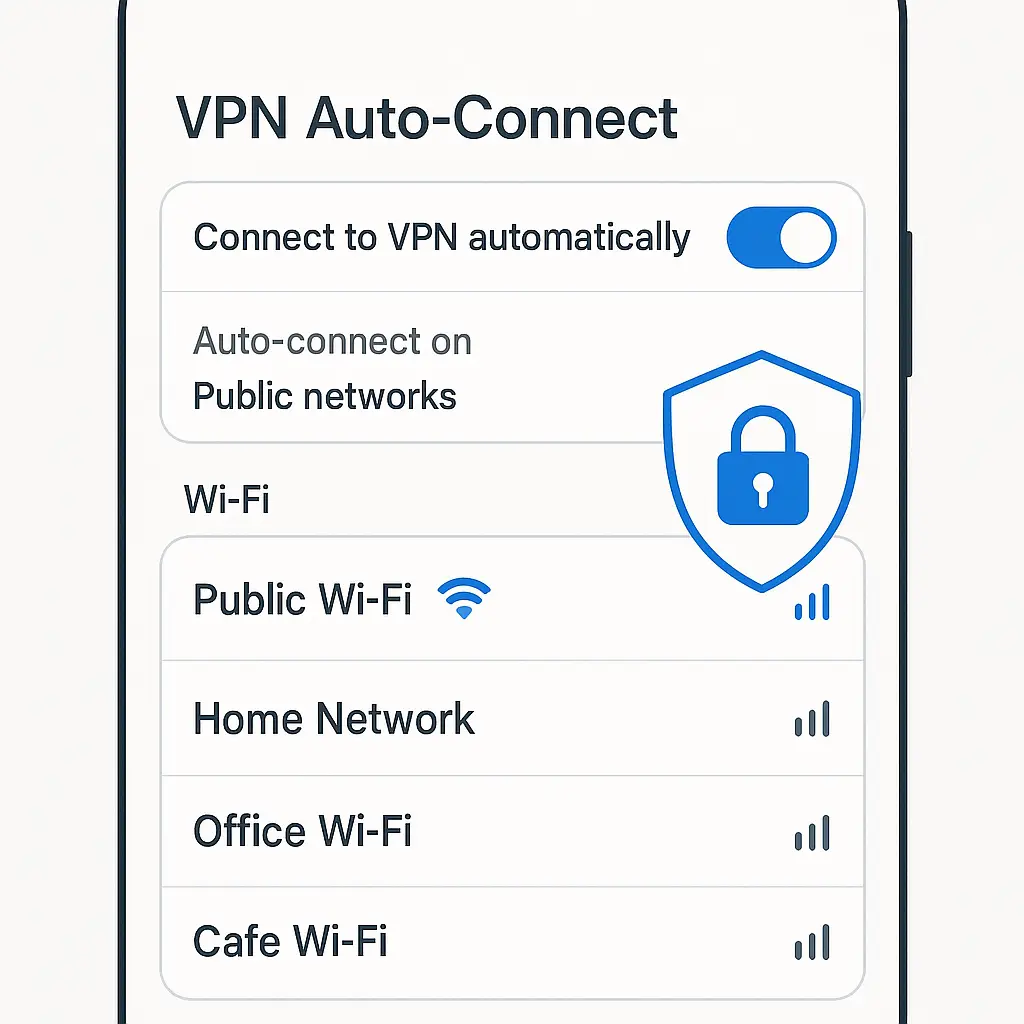
At the network layer, you control who sees your traffic. A VPN encrypts your connection and routes it through a server in another location. This hides your IP address from the sites you visit and hides your browsing activity from your internet provider. It does not hide your activity from the VPN provider, so you're shifting trust from your ISP to the VPN company. That might be an improvement, depending on the jurisdiction and logging policy. It's not a magic privacy solution. It's a trade-off.
At the legal layer, you have rights that vary by jurisdiction. If you live in California, the California Consumer Privacy Act (CCPA) gives you the right to know what data companies collect, the right to delete that data, and the right to opt out of data sales. If you live in Europe, GDPR gives you similar rights plus the right to data portability and the right to object to certain types of processing. Exercising these rights requires effort. You have to identify which companies have your data, submit requests, verify your identity, and follow up if they don't comply. But the rights exist.
The EFF's guide on online tracking describes tracking as an arms race. Companies develop new tracking techniques. Privacy tools block them. Companies develop countermeasures. Privacy tools adapt. The cycle continues. You can participate in this arms race by using privacy tools, staying informed, and adjusting your settings. Or you can accept the default level of tracking and focus your energy elsewhere. Both are rational choices.
The Practical Reality of Privacy Trade-offs
Privacy is not free. It costs convenience, functionality, and sometimes money.
Using a privacy-focused email provider means losing integration with other services. Using a privacy-focused browser means some sites won't load correctly. Using a VPN means slower connection speeds. Using end-to-end encrypted messaging means your messages don't sync across devices unless the app implements sync carefully. Using a password manager with zero-knowledge encryption means you can't recover your account if you forget your master password. Every privacy gain comes with a trade-off.
The question is which trade-offs you're willing to make. If you value convenience over privacy, you'll use the default settings and the mainstream services. If you value privacy over convenience, you'll use privacy-focused alternatives and accept the friction. Most people fall somewhere in the middle. They want privacy, but not at the cost of making their daily life harder.
The same tension exists in digital privacy. You want services to work seamlessly across devices. That requires data sync, which requires the service to have access to your data. You want personalized recommendations. That requires tracking your behavior. You want free services. That requires advertising, which requires behavioral data. You want to stay connected with friends. That requires a social network, which requires sharing your social graph. Every feature you value has a privacy cost.
The realistic approach is to prioritize. Identify which data you care about most and protect that. Accept more exposure for data you care about less. I use end-to-end encryption for private conversations. I don't care if my streaming service knows what I watch. I use a password manager with zero-knowledge encryption. I don't care if my grocery store tracks my purchases. I block third-party trackers on news sites. I accept first-party analytics on services I trust. These are my trade-offs. Yours will be different.
What Privacy Actually Requires From You
Improving your digital privacy requires three things: knowledge, effort, and ongoing maintenance.
Knowledge means understanding what data gets collected and how it gets used. You can't make informed decisions without information. Read privacy policies for services you care about. Not every word, but enough to understand the basics. What data do they collect? Who do they share it with? What are your rights? If the policy is incomprehensible, that's a red flag. Services that respect privacy explain it clearly.
Effort means taking action. Review your device permissions. Audit your connected accounts. Delete accounts you don't use. Enable two-factor authentication. Use a password manager. Install a tracker blocker. Switch to a privacy-focused browser or search engine. These steps take time. Some require learning new tools. But they work.
Ongoing maintenance means revisiting your settings periodically. Services change their privacy policies. Apps request new permissions. New tracking techniques emerge. What worked last year might not work this year. I audit my Google account settings every few months using their Security Checkup tool. It takes 15 minutes. I review app permissions on my phone twice a year. I check which third-party apps have access to my accounts annually. These are habits, not one-time fixes.
Consumer guidance from the FTC emphasizes the basics: use strong passwords, enable two-factor authentication, review privacy settings, be cautious about what you share, and know your rights. These are not revolutionary steps. They're foundational. Privacy doesn't require technical expertise. It requires attention and follow-through.
The Things You Cannot Control
Some aspects of digital privacy are outside your control entirely.
You cannot control what data brokers collect about you from public records. You cannot control what data your employer collects from your work devices. You cannot control what data your internet provider collects about your household's aggregate traffic. You cannot control what data your phone carrier collects about your location. You cannot control what data third parties collect when someone else tags you in a photo or mentions you in a message. You cannot control what data gets inferred about you from statistical models trained on other people's data.
You also cannot control breaches. Services get hacked. Databases get leaked. Insider threats exist. A service can have perfect privacy policies, strong encryption, and minimal data collection, and still get breached. When that happens, your data is exposed regardless of what you did. Security failures create privacy failures.
You cannot control legal access. Governments can compel services to turn over data through warrants, subpoenas, or national security letters. Services can challenge these requests, but they don't always win. If a government wants your data and the service has it, the government will probably get it. The only defense is for the service not to have the data in the first place. That's why end-to-end encryption matters. If the service can't read your messages, they can't turn them over.
You cannot control what other people share about you. If your friend posts a photo of you on social media, that photo is now in the social network's database. If your family member uses a DNA testing service, that service now has genetic information that partially describes you. If your coworker mentions you in a work chat, that chat is now part of your employer's records. Privacy is not purely individual. It's social. Your privacy depends partly on other people's choices.
Where Privacy Actually Matters Most
Not all privacy violations are equal. Some data is more sensitive than other data.
Health data is sensitive. It reveals medical conditions, treatments, and genetic predispositions. It can affect insurance, employment, and social relationships. Protecting health data matters. Use services that comply with HIPAA if you're in the US, or equivalent regulations elsewhere. Avoid health apps that share data with advertisers. Don't post medical details on social media.
Financial data is sensitive. It reveals income, spending patterns, debts, and assets. It enables fraud. Protecting financial data matters. Use strong passwords for financial accounts. Enable two-factor authentication. Monitor your accounts for unauthorized transactions. Don't share account numbers or PINs.
Location data is sensitive. It reveals where you live, work, and spend time. It can expose routines, relationships, and vulnerabilities. Protecting location data matters. Disable location access for apps that don't need it. Turn off location history in your Google or Apple account. Don't post real-time location on social media.
Communication data is sensitive. It reveals who you talk to, what you say, and when you say it. It exposes relationships, opinions, and plans. Protecting communication data matters. Use end-to-end encrypted messaging for private conversations. Don't assume email is private. Be aware that metadata (who, when, how often) is often more revealing than content.
Browsing history is less sensitive than the above, but still revealing. It shows your interests, concerns, and questions. It can expose things you're not ready to share. Protecting browsing history matters if you're researching sensitive topics, exploring identity, or dealing with personal crises. Use private browsing mode. Use a VPN. Use a search engine that doesn't track queries.
Purchase history is less sensitive still, but can reveal lifestyle, beliefs, and habits. Protecting purchase history matters if you're buying things you'd rather keep private. Use cash for in-person purchases. Use privacy-focused payment methods for online purchases. Be aware that loyalty programs track everything.
The Four Decisions You Actually Need to Make
You don't need to optimize every aspect of your digital privacy. You need to make four decisions and act on them.
Decision one: Which services do you trust with your data?
Some services have strong privacy practices. Some don't. Some are transparent. Some aren't. Decide which services you trust and consolidate your activity there. I trust Proton for email. I trust Signal for messaging. I trust Bitwarden for password management. I don't trust most free services that monetize through advertising. These are my trust decisions. Make yours.
Decision two: What data are you willing to trade for convenience?
You can't have zero data collection and full functionality. Decide where the line is. I'm willing to let my streaming service track what I watch. I'm not willing to let my browser share my history with advertisers. I'm willing to let my maps app know my location while I'm using it. I'm not willing to let it track my location continuously. Draw your own lines.
Decision three: How much effort will you invest in privacy?
Privacy requires ongoing effort. Decide how much you're willing to invest. I spend around 30 minutes per month on privacy maintenance. That's my budget. Some people spend more. Some spend less. Both are fine. The key is to be realistic. Don't set expectations you won't meet.
Decision four: What will you do when a service violates your privacy expectations?
Services change policies. They get acquired. They introduce new features that collect more data. Decide in advance what your response will be. Will you adjust your settings? Will you switch services? Will you accept the change? I have a threshold: if a service starts sharing data with third parties in ways I didn't agree to, I leave. That's my line. Know yours.
What Privacy Looks Like in Practice
Here's what realistic digital privacy looks like in 2026 for someone who cares but isn't paranoid.
You use a password manager. Every account has a unique password. You enable two-factor authentication on important accounts. You use end-to-end encrypted messaging for private conversations. You use a privacy-focused browser or install a tracker blocker in your regular browser. You review app permissions on your phone and revoke access for apps that don't need it. You disable location history. You use a VPN on public WiFi. You check your account settings a few times a year. You delete old accounts. You're cautious about what you post on social media.
You don't use Tor for everyday browsing. You don't run your own email server. You don't avoid all mainstream services. You don't read every privacy policy. You don't obsess over every data point. You make informed trade-offs. You accept that perfect privacy is impossible. You focus on protecting the data that matters most.
That's realistic privacy. It's not perfect. It's not paranoid. It's practical.
Every privacy tool creates new trade-offs. Every privacy decision has downstream effects. You can't optimize for privacy alone. You have to optimize for privacy within the context of your actual life.
The goal is not to achieve perfect privacy. The goal is to understand what data you're sharing, make deliberate choices about it, and maintain enough control that you're not surprised when you find out what companies know about you.