AI voice cloning scams: how synthetic audio turns family emergencies into fraud
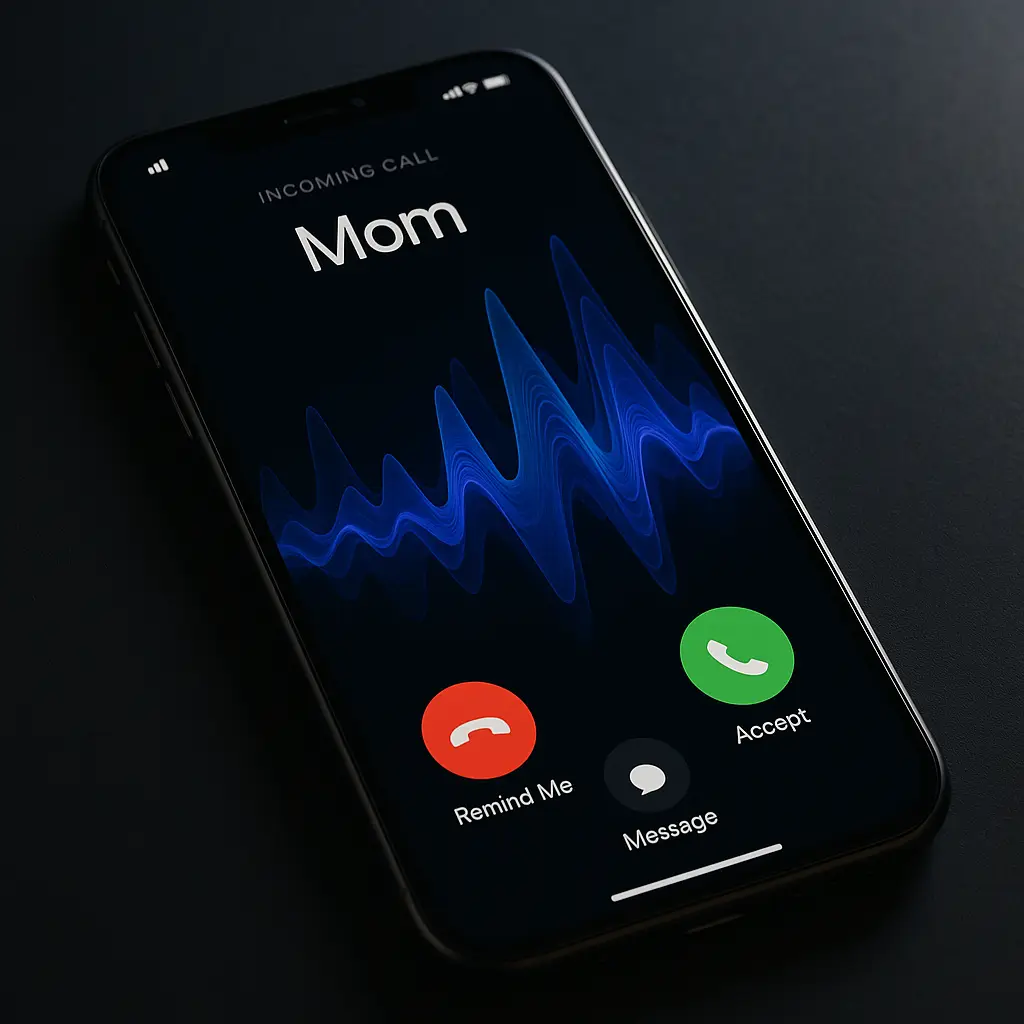
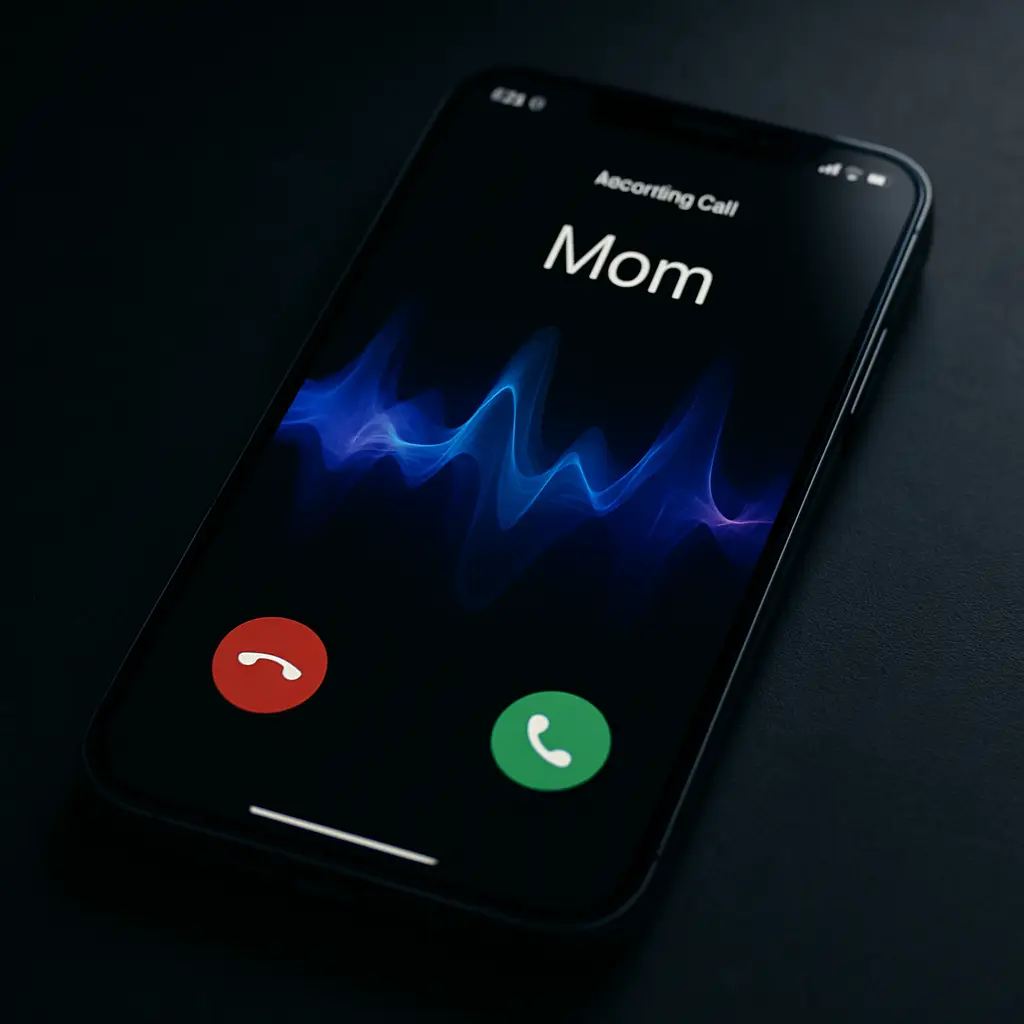
Your phone rings at 2 a.m. It's your daughter. She's crying. There's been an accident. She needs bail money wired immediately or she'll spend the night in jail. The voice is hers, the slight rasp when she's upset, the way she says "Mom" when she's scared. You're awake, disoriented, terrified. You ask where she is. She gives you an address. You ask how much. She says $8,000. You're already opening your banking app.
Except your daughter is asleep in the next room. The voice on the phone is synthetic audio generated by AI, trained on three seconds of speech harvested from an Instagram story she posted last week. The scammer is in another country. The money, once sent, is gone.
This is how AI voice cloning scams work in 2026. They exploit the same emotional triggers that powered grandparent scams for decades, but the technology removes the single weakness that used to give victims a chance: the voice sounds wrong. Now it sounds right. Perfectly right. And that changes everything.
The mechanism behind AI voice cloning
Voice cloning uses machine learning models trained on human speech patterns. You feed the model a voice sample, a recording of someone talking, and it learns to generate new speech in that voice. The model analyzes pitch, rhythm, accent, breathing patterns, and the subtle acoustic signatures that make each voice unique. Once trained, it can produce synthetic audio of that person saying anything, in any emotional register, with convincing fidelity.
The barrier to entry has collapsed. Commercial voice cloning services exist for legitimate purposes, audiobook narration, accessibility tools, voice preservation for people losing their voices to illness. But the same technology is available to anyone with a laptop. Open-source voice cloning tools run on consumer hardware. Some require as little as three seconds of clear audio to generate usable output. Others work with longer samples, thirty seconds, a minute, to capture more nuance, but the threshold for "good enough to fool a family member under stress" is lower than most people assume.
The audio quality matters less than you'd think. A panicked phone call at 2 a.m. doesn't need studio-grade fidelity. It needs to sound like your kid, scared and in trouble, over a cell connection. That's a much easier bar to clear. The emotional context does most of the work. The synthetic voice just has to be close enough that your brain, flooded with adrenaline, fills in the gaps.
Scammers harvest voice samples from social media. TikTok videos. Instagram stories. YouTube clips. Zoom calls recorded without permission. Voicemail greetings. Conference presentations posted online. Any public recording where someone speaks for a few seconds is potential training data. If your voice is online, it's available. If your child's voice is online, it's available. The assumption that your voice is too obscure to matter stopped being true around 2023.
The synthesis happens in real time or near real time. Some scammers pre-generate the audio, script the call, synthesize the speech, play it back during the call. Others use live voice conversion tools that take the scammer's speech and transform it into the target voice on the fly. Both methods work. Both produce audio convincing enough to pass as the real person in a high-stress, low-information scenario.
The FBI's Internet Crime Complaint Center tracks these attacks under AI-enhanced fraud. Losses are climbing. The technology is getting cheaper, easier, and more accessible. The scams are getting more sophisticated. And the defense most people rely on, "I'll know my kid's voice", no longer holds.
How the scam unfolds
The call comes at a time when you're least prepared to think critically. Early morning. Late night. During work when you're distracted. The timing isn't random. Scammers know that cognitive load and emotional state affect decision-making. A 2 a.m. call from your daughter bypasses your rational filters. You're in crisis mode before you're fully awake.
The voice is hers. That's the hook. Not close enough, exactly right. The slight hesitation before certain words. The way she pronounces your name. The vocal fry when she's tired. The scammer's AI model captured those details from her social media presence. Three TikTok videos and an Instagram story were enough. She posted them publicly. The model trained on them. Now the synthetic voice sounds like her because it learned from her.
The story is urgent and plausible. She's been in an accident. She's been arrested. She's in the hospital. She needs money immediately, for bail, for medical bills, for a lawyer, for a tow truck, for a flight home. The details vary, but the structure is consistent: immediate need, high stakes, time pressure, and a reason she can't handle it herself. She's in custody. Her phone is about to die. She's not allowed to make more calls. You have to act now.
The request is specific. Wire $8,000 to this account. Buy gift cards and read the numbers over the phone. Send cryptocurrency to this wallet. Use Zelle or Venmo or Cash App. The payment method is always something fast, irreversible, and hard to trace. The scammer knows you won't send money to a stranger, but you will send it to your daughter in crisis. The voice makes you believe it's her. The urgency prevents you from verifying. The payment method ensures you can't get it back.
The scammer may hand off to a second voice, a police officer, a lawyer, a hospital administrator. This voice isn't cloned. It's just another person in the scam operation, playing a role. The second voice adds legitimacy. It makes the scenario feel real. You're not just talking to your panicked daughter. You're talking to the authority figure handling her case. That authority figure confirms the story, repeats the urgency, and walks you through the payment process.
If you hesitate, the scammer applies pressure. Your daughter is crying. The officer is impatient. The situation is getting worse. If you don't send the money right now, she'll be stuck in jail overnight. The hospital won't treat her without payment. The lawyer can't file the paperwork. The consequences of delay are immediate and severe. The scammer is counting on you to act before you think.
The FTC documents these tactics in their reporting on AI-enhanced family emergency scams. The pattern is consistent. The voice is the breakthrough. Everything else, the story, the urgency, the payment method, follows the same playbook scammers have used for years. But the voice makes the playbook work better. Much better.
Why traditional verification fails
You might think you'd catch it. You might think you'd ask a question only your daughter would know. But the scam doesn't give you time to think. It floods you with emotion and urgency. Your brain is in fight-or-flight mode. You're not interrogating. You're responding.
And even if you do ask a verification question, the scammer has options. They can deflect: "Mom, I don't have time for this, I need help right now." They can fake ignorance: "I don't remember, I hit my head, everything's fuzzy." They can hand off to the authority figure: "Ma'am, your daughter is very upset, we need to keep this brief." They can hang up and call back in five minutes with a different approach. The scam is flexible. Your verification attempt is predictable.
The voice itself undermines verification. You hear your daughter's voice, and your brain treats it as confirmation. The voice is the verification. That's the whole point of voice cloning. The technology exploits the fact that humans trust voices as identity markers. We've spent our entire lives using voice to identify people. The scammer is weaponizing that trust.
Calling back doesn't always help. If you call your daughter's real number and she doesn't answer, because she's asleep, or in a meeting, or her phone is dead, you're left with uncertainty. The scammer is still on the other line, pressuring you. You can't reach her. The voice you heard sounded exactly like her. The situation feels real. Under that pressure, some people send the money anyway, planning to sort it out later. Later is too late.
Even if you do reach your daughter and confirm she's fine, the emotional toll is real. You spent ten minutes believing your child was in crisis. That fear doesn't evaporate just because the call was fake. And if you didn't send money, the scammer moves on to the next target. If you did send money, you're reporting it to your bank, filing a police report, and realizing there's no meaningful recourse. The money is gone. The scammer is untraceable. The voice sample is still out there, ready to be used again.
The FBI warns that voice cloning scams succeed because they bypass the cognitive defenses people rely on. You can't out-think a scam when your brain is in panic mode. You need a defense that works even when you're not thinking clearly. That defense is a family password.
The family password defense
A family password is a shared secret that only your household knows. It's a word or short phrase that you establish in advance, in person, and never say aloud in public or post online. When someone calls claiming to be a family member in crisis, you ask for the password. If they can't provide it, you hang up and verify through another channel.
The password works because AI can only clone what it's heard. If the password has never been spoken in a recording, the scammer can't synthesize it. The model has no training data. The synthetic voice can say anything the scammer types, except the one thing that proves identity.
The password should be simple enough to remember under stress but specific enough that you won't accidentally say it in public. "Banana" works. "The eagle flies at midnight" works. Your childhood dog's name works if you've never mentioned that dog online. What doesn't work: anything you've ever said in a video, posted in text, or discussed on a recorded call. The password's security comes from the fact that it exists only in your family's memory.
You establish the password in a face-to-face conversation. You explain why you're doing it: AI voice cloning scams are real, and this is the defense. You practice using it. You role-play a fake emergency call where one person asks for the password and the other provides it. You make it routine enough that it won't feel strange to ask for it at 2 a.m. when you're half-awake and terrified.
You use the password every time there's an unexpected request for money or urgent action, regardless of how convincing the voice sounds. If your daughter calls asking for bail money, you ask for the password. If your son calls saying he's stranded and needs a wire transfer, you ask for the password. If your spouse calls with an emergency that requires you to move money immediately, you ask for the password. No exceptions. The rule is simple: no password, no action.
If the caller can't provide the password, you hang up. You don't argue. You don't explain. You don't give them another chance. You hang up and you call your family member back using a number you already have saved. Not the number that just called you, that's controlled by the scammer. The number you've always used. If they don't answer, you call someone else in the family to verify. If you still can't reach anyone, you wait. Real emergencies leave evidence. Fake emergencies evaporate the moment you stop engaging.
The password isn't foolproof. A scammer who knows about the password defense might claim your family member is too injured or distressed to remember it. They might hand off to an authority figure who says the password requirement is delaying critical help. They might try to social-engineer the password out of you by asking leading questions. But those tactics require more effort, more time, and more risk of you catching on. The password raises the bar. It forces the scammer to work harder. And most scammers will move on to an easier target.
The FTC recommends establishing a family code word as one of the few defenses that works against AI-enhanced impersonation. It's low-tech. It's simple. It requires no special tools or training. And it defeats the core mechanism of the scam: the synthetic voice can't produce information it's never heard.
What to do if you get the call
You're on the phone. The voice sounds exactly like your daughter. She's crying. She says she needs $8,000 wired immediately. What do you do?
Ask for the family password. Say it calmly: "What's our family password?" If she provides it correctly, you can proceed, but even then, verify through another channel before sending money. If she can't provide it, or deflects, or gets angry, you hang up.
Hang up and call her back. Use the number you have saved. Not the number that just called. If she answers and she's fine, the call was a scam. If she doesn't answer, call another family member. Call her roommate. Call her partner. Call someone who can physically verify she's okay. Do not send money until you have independent confirmation that the emergency is real.
If you can't reach anyone and you're genuinely unsure, wait. Real emergencies don't evaporate in 20 minutes. If your daughter is actually in jail, she'll still be there an hour from now. If she's actually in the hospital, the hospital will still treat her. If she's actually stranded, she'll find another way to reach you. Scammers create artificial time pressure because delay breaks the scam. Delay is your friend.
If you already sent money, act fast. Contact your bank immediately. If you used a wire transfer, call the receiving bank and request a recall. If you used a payment app, report the transaction as fraud. If you bought gift cards, contact the card issuer and report the scam. Some of these actions might recover your money. Most won't. But you need to try, and you need to document the loss for law enforcement.
Report the scam. File a report with the FBI's Internet Crime Complaint Center. File a report with the FTC. Contact your local police. The reports probably won't recover your money, but they create a record. Aggregate reports help law enforcement identify patterns, track scam operations, and potentially disrupt them. Your report contributes to that.
Tell your family what happened. If a scammer has a voice sample of your daughter, they might use it again, on you, on another family member, on her friends. Everyone who might receive a call from her needs to know that voice cloning scams are real and that a family password is the defense. The scam works because people don't expect it. Once you expect it, it's easier to catch.
The broader pattern
Voice cloning scams are a subset of AI-enhanced social engineering. The technology makes impersonation more convincing, but the underlying structure is the same: create urgency, exploit emotion, extract payment. We've covered AI phishing emails and grandchild emergency scams elsewhere on this site. Voice cloning is the next iteration. It won't be the last.
The technology will get better. Voice models will require less training data. Synthesis will become more real-time. Emotional inflection will improve. The gap between synthetic and real will keep shrinking. The defense won't change: verify through an independent channel, use a shared secret the AI can't access, and resist urgency.
The scam will evolve. Scammers will target different relationships, parents, spouses, business partners. They'll use voice cloning in combination with other tactics, fake video calls, spoofed caller ID, fabricated documents. They'll adapt to defenses as those defenses become common. The core mechanism will remain: exploit trust, create pressure, extract money.
The voice samples are already out there. If you've posted a video online, your voice is in the dataset. If your kids have posted videos, their voices are in the dataset. You can't un-post them. You can't scrub the internet. The samples exist. The models exist. The scammers exist. The question isn't whether your voice could be cloned. The question is what you do when someone uses it.
The cultural reference that fits
In The Sting, the 1973 film about con artists running an elaborate revenge scheme, the entire operation hinges on the mark believing what he sees and hears. The con works because every detail is designed to confirm the mark's expectations. The fake betting parlor looks real. The fake employees act real. The fake phone calls sound real. The mark's own greed does the rest. He's so convinced by the surface details that he never questions the underlying structure.
AI voice cloning scams work the same way. The synthetic voice is the fake betting parlor. It's the detail that makes everything else believable. You hear your daughter's voice, and your brain stops questioning. The urgency, the story, the payment request, all of it feels real because the voice sounds real. The scam doesn't need to be perfect. It just needs to be convincing enough that you act before you think.
The defense in The Sting would have been simple: verify through an independent channel. Call the real FBI. Check the real betting records. Walk away and think for five minutes. But the mark doesn't do that, because the con is designed to keep him moving forward. The same applies here. The family password is your independent channel. It's the one thing the scammer can't fake. It's the question that breaks the con.
What this means for you
If you have family members whose voices exist in public recordings, and you probably do, you need a family password. Establish it today. Have the conversation. Practice using it. Make it routine. The scam works because people don't expect it. Once you expect it, the defense is straightforward.
If you receive an unexpected call from a family member requesting money, ask for the password. If they can't provide it, hang up and verify. If you can't verify immediately, wait. Real emergencies leave evidence. Fake emergencies evaporate under scrutiny.
If you've already been targeted, report it. The scam is growing. Law enforcement needs data. Your report helps. And tell your family. If a scammer has a voice sample of you or your loved ones, they'll use it again. Everyone who might receive a call needs to know the defense.
The technology isn't going away. Voice cloning will get easier, cheaper, and more convincing. The scams will adapt. But the core defense remains: verify identity through a channel the scammer can't access, resist urgency, and trust systems over voices. Your daughter's voice can be faked. Your family password can't.