Deepfake video calls and the family password defense
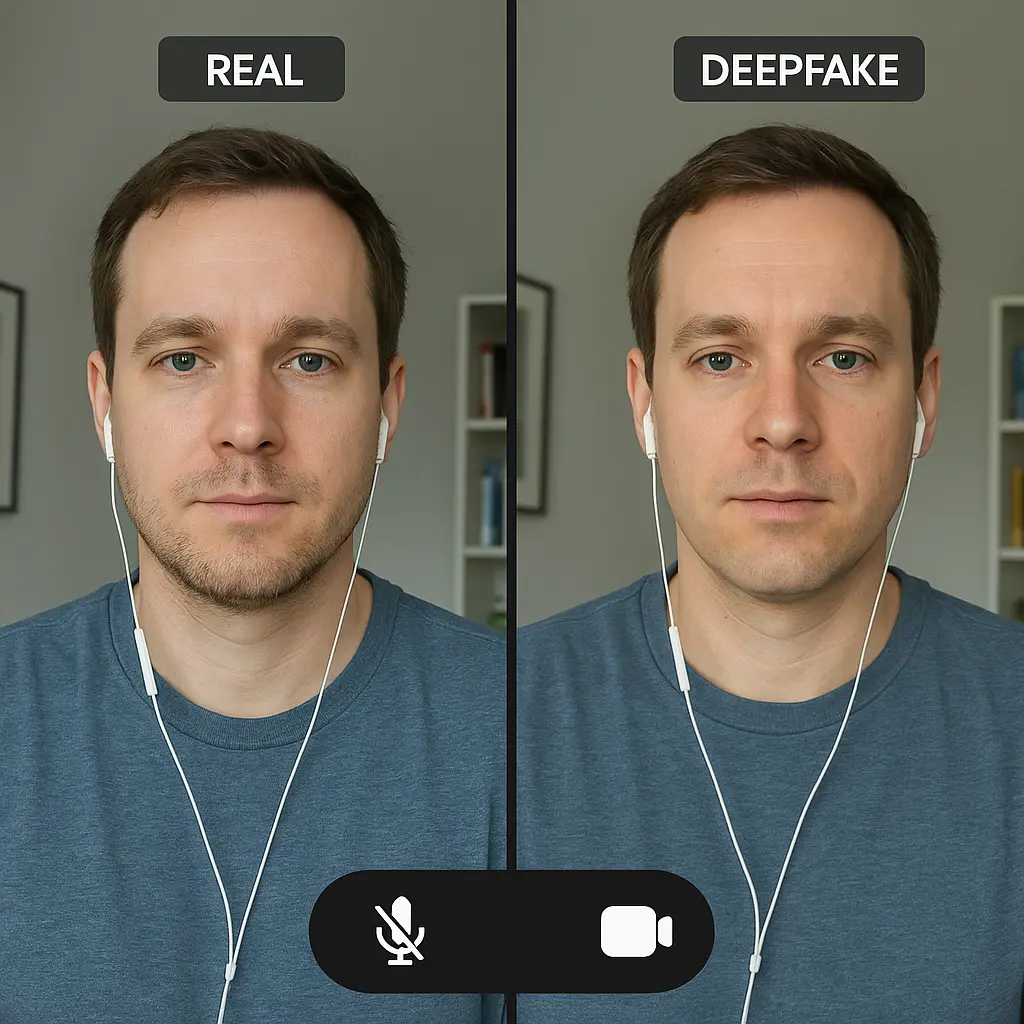
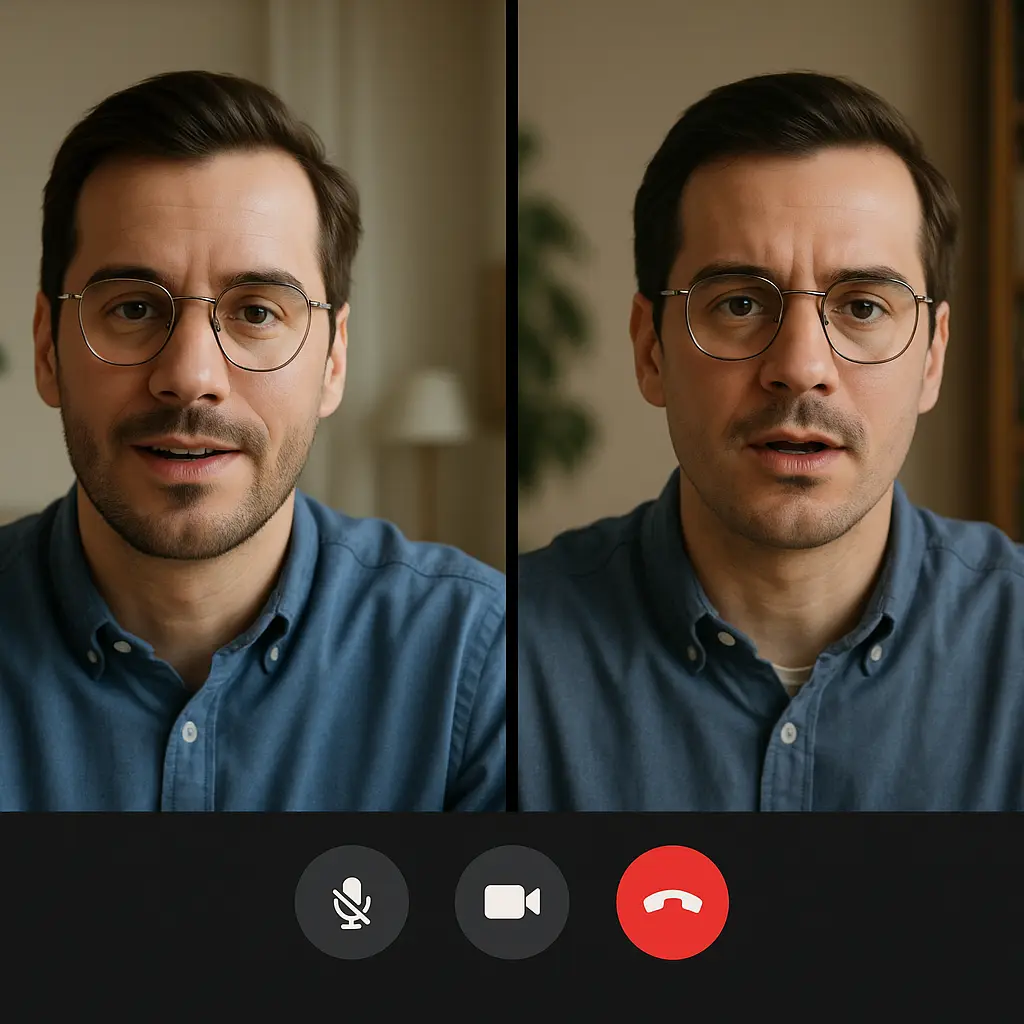
Your daughter appears on your screen. Same face, same voice, same mannerisms. She's in distress. There's been an accident, or an arrest, or a medical emergency. She needs money wired immediately. You see her crying. You hear the panic in her voice. Every instinct tells you this is real.
It's not.
Deepfake video calls represent a new category of impersonation scam. The technology synthesizes both voice and video in real time, creating a moving, talking, apparently live version of someone you know. The attack exploits the same social engineering principles that have always worked, but it defeats the verification methods people have relied on for decades. Seeing is no longer believing.
Here's how the mechanism works, why it succeeds, and what you can do about it before the call comes.
The technology behind real-time deepfakes
Deepfake video calls use generative AI models trained on existing footage of a target. The attacker needs source material: social media videos, YouTube clips, TikTok posts, Zoom recordings, anything that captures the target's face and voice. The more footage available, the better the model performs.
The AI learns facial structure, movement patterns, speech cadence, and vocal characteristics. During a live call, the attacker's own video feed becomes the input. The model processes that input in real time and outputs a synthetic version where the attacker's face is replaced with the target's face, and the attacker's voice is replaced with the target's voice.
Current commercial tools can achieve this with around 30 seconds of clear source video and a few minutes of audio. Some tools require more. Some require less. The quality varies, but the threshold for fooling a distressed family member is lower than the threshold for fooling a forensic analyst.
The attacker doesn't need Hollywood-level production. They need good enough. In a high-stress moment, when someone you love appears to be in crisis, good enough is usually sufficient.
CISA has documented social engineering attacks that exploit emotional manipulation. Deepfake video calls are the same attack pattern with better props.
Why video calls feel more trustworthy than phone calls
Phone-based impersonation scams have been around for years. Voice cloning is not new. I've written about how AI voice cloning works and how to defend against it. But video adds a second layer of perceived verification.
When you hear a voice that sounds like your daughter, you might still hesitate. When you see her face, watch her lips move in sync with the words, observe her familiar gestures, the hesitation evaporates. Your brain processes visual information as more reliable than audio alone. That's not irrational. For most of human history, it was correct.
Deepfakes exploit that trust. The attacker knows you'll scrutinize a voice more carefully than you'll scrutinize a face you recognize. They know that seeing someone cry on camera triggers a stronger emotional response than hearing them cry over the phone. They know that video calls feel modern and secure, which makes people drop their guard.
The attack works because it aligns with how people naturally assess credibility. You trust your eyes. The technology has made your eyes unreliable.
How attackers gather the source material
Deepfake creation requires training data. For a targeted attack against a specific individual, the attacker needs video and audio of that person. Social media provides most of it.
A public Instagram account with video posts, a TikTok profile, a YouTube channel, LinkedIn video introductions, Facebook live streams, all of these are source material. The attacker downloads the clips, extracts the audio, and feeds both into the AI model. The model learns.
Family members often appear in each other's content. A parent posts a video of their adult child. A sibling tags a brother in a vacation clip. A grandparent shares a video call recording. Each post expands the dataset available to an attacker who wants to impersonate someone in that family.
Some attacks are opportunistic. The attacker scrapes social media for targets with substantial public video content, builds a model, and runs the scam against multiple families using the same synthetic persona. Other attacks are targeted. The attacker researches a specific family, identifies relationships, and tailors the crisis scenario to exploit those relationships.
Either way, the raw material comes from content people posted voluntarily, often years ago, with no awareness that it could be weaponized this way.
The anatomy of a deepfake video call scam
The call comes through a video platform: FaceTime, Zoom, WhatsApp, Signal, whatever the family normally uses. The caller ID shows a name you recognize, or a number that looks plausible, or nothing at all if the attacker is spoofing.
You answer. You see your daughter. She's upset. She explains the crisis. There's been a car accident and she needs money for a tow truck. She's been arrested and needs bail. She's traveling abroad and her wallet was stolen. She's in the hospital and insurance won't cover the bill. The details vary, but the structure is consistent: immediate problem, urgent need, request for money.
She asks you to wire funds, send cryptocurrency, buy gift cards, or provide account information. She emphasizes the time pressure. She might say she's embarrassed, or scared, or that she'll explain everything later but right now she just needs your help.
If you hesitate, she escalates the emotion. She cries harder. She begs. She says she's in danger. She reminds you of past moments when you helped her. She leverages your relationship.
You see her face. You hear her voice. The video quality might be slightly degraded, but that's normal for a call from a stressful location with bad wifi. The lighting might be off, but she's in a crisis, not a studio. The lip sync might be slightly delayed, but video calls glitch all the time.
You believe her. You send the money. The call ends. Later, you reach your actual daughter. She has no idea what you're talking about.
The FTC has documented impersonation scams that use similar emotional manipulation tactics. Deepfakes make those tactics more effective by adding visual confirmation.
Current technical tells and why they're disappearing
As of mid-2026, deepfake video calls still show artifacts. The technology is improving rapidly, but it's not perfect. Some tells include:
Unnatural blinking patterns. Real people blink around 15 to 20 times per minute, with irregular intervals. Early deepfakes blinked too little or with mechanical regularity. Current models do better, but the timing can still feel off.
Lighting inconsistencies. The synthetic face might not match the lighting of the background. Shadows fall in the wrong direction. Skin tone doesn't shift correctly when the person moves closer to or farther from a light source.
Lip sync errors. The mouth movements might lag slightly behind the audio, or the shape of the mouth might not quite match the phoneme being spoken. This is less noticeable in a live call than in a recorded video you can rewatch.
Artifacts around the eyes and mouth. The AI struggles with fine details in areas of high movement. You might see blurring, distortion, or unnatural smoothness around the eyes, teeth, or hairline.
Stiff or repetitive head movements. The model might generate a limited range of gestures, or the head might move in ways that don't quite align with the emotional content of the speech.
These tells exist now. They won't exist in two years. The technology is advancing faster than most people's ability to recognize the artifacts. Even if you train yourself to spot current-generation deepfakes, the next generation will defeat that training.
Relying on visual inspection is a losing strategy. The solution is not better detection. The solution is better verification.
Why traditional verification questions fail
You might think you can verify a caller by asking questions only the real person would know. What's your middle name? Where did we go on vacation in 2018? What's your favorite food?
This doesn't work. The attacker has access to the same social media content you do. They've researched the target. They know the answers to obvious questions. They might even have access to breached data that includes more personal details.
Even private information isn't safe. If the attacker has compromised the target's email or social media accounts, they can read old messages, view private photos, and learn details that aren't publicly available. If they've run the scam successfully against other family members, they've gathered information from those conversations.
Some families use security questions for account recovery. Those questions are often based on information that's either public or guessable. Mother's maiden name? Searchable. First pet's name? Posted on Facebook a decade ago. Street you grew up on? In property records.
The verification question needs to be something that exists only in the shared memory of the people on the call, never written down, never posted, never stored digitally. That's a high bar. Most families don't have a system for that.
But they can build one.
The family password: a pre-shared secret
A family password is a phrase or word agreed upon in advance by household members and stored only in memory. It's not written in a password manager. It's not texted. It's not in an email. It's not in a note on your phone. It exists only in the heads of the people who need to know it.
When someone calls claiming to be a family member and asks for money, sensitive information, or urgent action, you ask for the password. If they can't provide it, you don't comply. No exceptions.
The password doesn't need to be complex. It needs to be memorable and unguessable. It can be a phrase from a private family joke, a reference to an event only you experienced, a nonsense word you made up together. The content matters less than the secrecy.
You establish the password during a calm, face-to-face conversation. You agree that this is the system. You practice using it. You don't use it for routine calls, only for situations where verification matters: urgent requests for money, sensitive information, or actions that feel out of character.
You update the password if someone outside the family learns it, or if a family member's account is compromised, or periodically just to maintain security. You treat it like the critical defense it is.
This is not a perfect system. If an attacker has compromised a family member's device and is reading their messages in real time, they might intercept the password during the verification exchange. But that requires a level of access and sophistication far beyond what most deepfake scammers are deploying. The family password stops the vast majority of attacks.
CISA's phishing guidance emphasizes verification through out-of-band communication. A family password is the same principle applied to voice and video calls.
How to implement a family password today
Sit down with your household. Explain the threat. Show them examples if that helps. Make it clear that this is not theoretical. These scams are happening now, and the technology is only getting better.
Choose a password together. Make it something everyone can remember without writing it down. Test yourselves. A week later, ask each person to recall the password. If someone forgets, practice again until it sticks.
Establish the protocol. The password is only used in high-stakes situations. If someone calls and asks for money, you ask for the password. If they hesitate, or claim they forgot it, or say they'll tell you later, you end the call and reach out to them through a different channel. You call their regular number. You text them. You contact another family member who can verify their location.
If you have children, adapt the system to their age. Young kids might not be able to keep a secret reliably. Teenagers can. Elderly parents might need reminders, or a simplified version of the protocol. Tailor it to your family's needs, but don't skip it.
Document the existence of the system, but not the password itself. You can write a note that says "We have a family password for emergency verification" and store that note somewhere you'll see it. You cannot write the password down. The moment it exists in digital or physical form, it's vulnerable.
Update the password if circumstances change. If a family member's phone is stolen, change the password. If someone outside the family overhears it, change it. If you just want to refresh it periodically, change it. Treat it like you'd treat the master password for your password manager.
What to do if you receive a suspicious video call
You see a family member on the screen. They're in distress. They need help. Before you do anything else, ask for the family password.
If they provide it correctly, you proceed with caution. Verify through a second channel if possible. Call them back on their regular number. Text them. Reach out to another family member. The password is strong evidence, but it's not absolute proof if the attacker has somehow compromised their device.
If they don't provide the password, or they provide it incorrectly, or they deflect or get angry or claim they forgot it, you end the call immediately. You do not send money. You do not provide information. You do not take any action they requested.
Then you verify through an independent channel. Call the person's regular phone number. Text them. Contact someone else who can confirm their location and status. Do not use contact information provided during the suspicious call. Use the numbers and accounts you already have saved.
If the call was a scam, you report it. The FTC accepts reports of impersonation scams. Local law enforcement might investigate, depending on the jurisdiction and the amount of money involved. The report probably won't lead to an arrest, but it contributes to the data that helps authorities track these operations.
If the call was real and your family member genuinely forgot the password, you help them anyway, but you verify first. The inconvenience of verification is worth the protection it provides.
The limits of detection and the necessity of verification
Some people will tell you to look for the technical tells. Watch for unnatural blinking. Check the lighting. Listen for audio glitches. Notice if the lip sync is off.
This advice is not useless, but it's not sufficient. The technical tells are disappearing. The models are improving. Within a few years, the visual and audio quality of real-time deepfakes will be indistinguishable from legitimate video calls for the average person in a high-stress moment.
Even now, the tells are subtle. You need training to spot them. You need to be calm and analytical. You need to be willing to scrutinize the face of someone you love while they're begging for help. Most people can't do that. Most people shouldn't have to.
Detection is a stopgap. Verification is the solution. You don't need to become an expert in deepfake forensics. You need a system that works regardless of how good the fake is. A pre-shared secret that exists only in memory is that system.
The family password doesn't care how realistic the video looks. It doesn't care how accurate the voice is. It doesn't care if the attacker has perfect lip sync and natural lighting and flawless micro-expressions. If they don't have the password, they don't get compliance.
Why this matters now, not later
Deepfake video call scams are not widespread yet. As of mid-2026, the FBI's Internet Crime Complaint Center reports show these attacks are still emerging. Most impersonation scams still use voice-only calls or text-based phishing.
But the technology is accessible. The tools are cheap. The source material is abundant. The success rate, when the scam works, is high enough to make it profitable. The barrier to entry is dropping every month.
Waiting until these scams become common is waiting too long. By the time you hear about a friend or neighbor getting hit, the attackers will have refined their techniques. The models will be better. The success rate will be higher. The window for easy prevention will have closed.
You establish the family password now, while the threat is still abstract, because establishing it during a crisis is nearly impossible. You can't have the conversation about verification protocols while someone is crying on your screen asking for money. You have it now, in a calm moment, when everyone can think clearly.
The family password is not complicated. It doesn't require technical skill. It doesn't cost money. It just requires a conversation and a commitment. That's a small investment for a defense that works regardless of how sophisticated the attack becomes.
The broader context: social engineering in the age of AI
Deepfake video calls are one application of a broader shift. AI is lowering the cost and skill requirement for social engineering attacks. Voice cloning, video synthesis, text generation, all of these tools make it easier for attackers to impersonate trusted figures and manipulate targets.
The same dynamics apply across attack vectors. Phishing emails are more convincing when AI writes them. Voice calls are more effective when AI clones a familiar voice. Video calls are more persuasive when AI generates a familiar face.
The defenses don't change. Verification through out-of-band channels. Pre-shared secrets. Skepticism toward urgent requests. Awareness that what you see and hear might not be real.
CISA's guidance on avoiding social engineering emphasizes these principles. The technology changes. The principles don't.
The family password is one implementation of those principles. It's not the only defense you need, but it's one of the most effective for this specific threat. It works because it's simple, memorable, and impossible for an attacker to obtain without access to the live brains of your family members.
What happens when the password leaks
No system is perfect. If an attacker compromises a family member's device and monitors their communications in real time, they might intercept the password during a verification exchange. If a family member writes the password down despite instructions not to, and that note is photographed or stolen, the password is compromised.
If you suspect the password has leaked, you change it immediately. You have another in-person conversation. You establish a new password. You make sure everyone knows the old one is no longer valid.
You don't panic. The leak of a family password is not a catastrophic security failure. It's a reason to update your defense, the same way you'd update a password for an online account after a breach.
The system remains effective as long as you maintain it. The password is not a magic talisman. It's a protocol. Protocols require upkeep. You review it periodically. You make sure everyone still remembers it. You adjust it if your family structure changes.
If someone new joins the household, you bring them into the system. If someone leaves, you consider whether to change the password. If a family member develops memory issues that make the system impractical, you adapt. The goal is not perfection. The goal is a functional defense that works for your specific situation.
The cultural shift required
Asking for a password when your daughter calls crying feels cold. It feels like you're doubting her. It feels like you're prioritizing security over compassion.
That discomfort is the point. The attacker is counting on your compassion to override your skepticism. They're counting on you to feel guilty for hesitating. They're counting on you to prioritize the emotional connection over the verification step.
The family password reframes that dynamic. It's not about doubting your daughter. It's about protecting both of you from an attacker who's exploiting your relationship. The password is not a barrier between you. It's a barrier between you and the person pretending to be her.
This requires a cultural shift. We're used to trusting what we see and hear. We're used to responding immediately to people in distress. We're used to thinking of verification as something that happens in banks and airports, not in family conversations.
That has to change. The technology has changed. The threat landscape has changed. The defenses have to change with it.
The family password is not paranoia. It's adaptation. It's recognizing that the tools available to attackers have improved, and adjusting your behavior accordingly. It's the same reason you lock your front door even though most people are not burglars. The risk is real, the defense is simple, and the cost of not using it is too high.
In Sherlock Holmes, the detective famously observes details others miss. He notices the dog that didn't bark, the mud on a shoe, the inconsistency in a story. The family password is your version of that. It's the question that shouldn't need asking, but does. It's the detail that reveals the truth. It's the verification that stops the scam before it starts.
You don't need to be Sherlock Holmes to use it. You just need to agree on a word, remember it, and ask for it when it matters. That's the defense. That's what works.