WhatsApp Privacy in 2026: What End-to-End Encryption Actually Protects
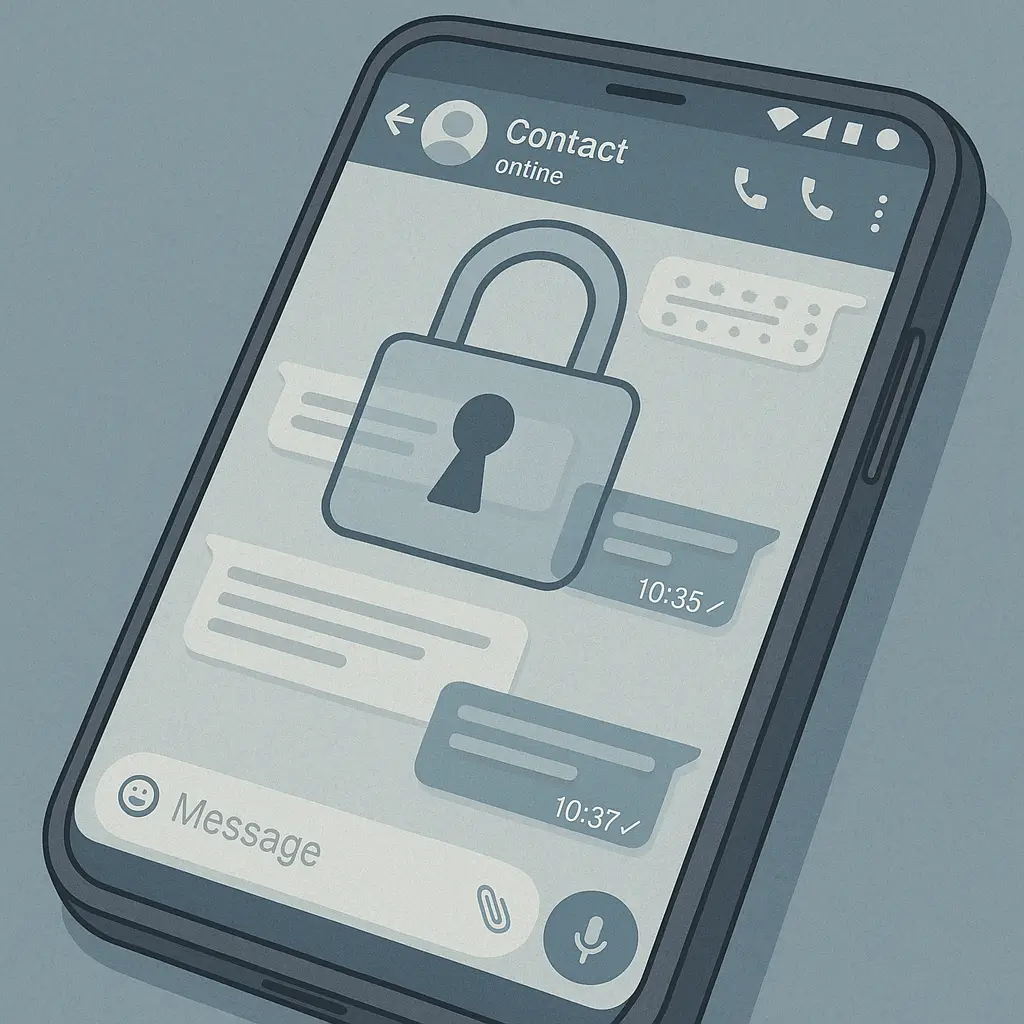
WhatsApp uses end-to-end encryption. The company says this in every privacy explainer, every press release, every response to criticism. It's true. Your message content is encrypted from your device to your recipient's device, and WhatsApp cannot read it.
That fact creates a widespread assumption: WhatsApp is private. If the messages are encrypted, the conversation is private. If WhatsApp can't read the content, WhatsApp doesn't know what you're doing.
That assumption is wrong in ways that matter. End-to-end encryption protects message content, but message content is not the only thing that reveals information about you. Metadata, who you talk to, when, how often, from where, flows to WhatsApp in plaintext. Your contact list uploads to their servers. Your backups, unless you configure otherwise, live unencrypted in iCloud or Google Drive. WhatsApp is owned by Meta, and Meta's business model is behavioral advertising.
WhatsApp is more private than SMS. It is more private than Facebook Messenger's default mode. It is not a privacy tool in the way Signal is a privacy tool. The encryption is real, but the privacy gaps around that encryption are also real.
Here's what WhatsApp actually protects, what it doesn't, and how to think about the difference.
What End-to-End Encryption Actually Does
End-to-end encryption means that your message is encrypted on your device before it leaves, travels encrypted across WhatsApp's servers, and decrypts only on your recipient's device. WhatsApp cannot read the content. Neither can anyone intercepting the message in transit. Neither can a government agency demanding access to WhatsApp's servers.
This is not marketing language. WhatsApp uses the Signal Protocol, the same cryptographic protocol that powers Signal. The encryption is strong, well-reviewed, and implemented correctly. When you send a text message, photo, video, voice note, or file through WhatsApp, the content of that message is protected.
What this means in practice: if someone hacks WhatsApp's servers, they get encrypted blobs, not readable messages. If a government agency subpoenas WhatsApp for your message history, WhatsApp cannot provide the content. If your internet service provider is logging your traffic, they see encrypted data, not your conversation.
This is a meaningful improvement over SMS, which has no encryption by default. Your carrier can read every SMS you send. Anyone with access to the carrier's systems can read it. Anyone intercepting the radio signal between your phone and the tower can read it. WhatsApp's encryption closes that exposure.
But encryption protects content, not context. Context is metadata.
Metadata: The Privacy Gap That Matters
Metadata is data about data. In the context of messaging, metadata includes who you talk to, when you talk to them, how often, how long the conversation lasts, the size of the messages, the type of content (text, image, video, voice), your location when you send the message, and which groups you belong to.
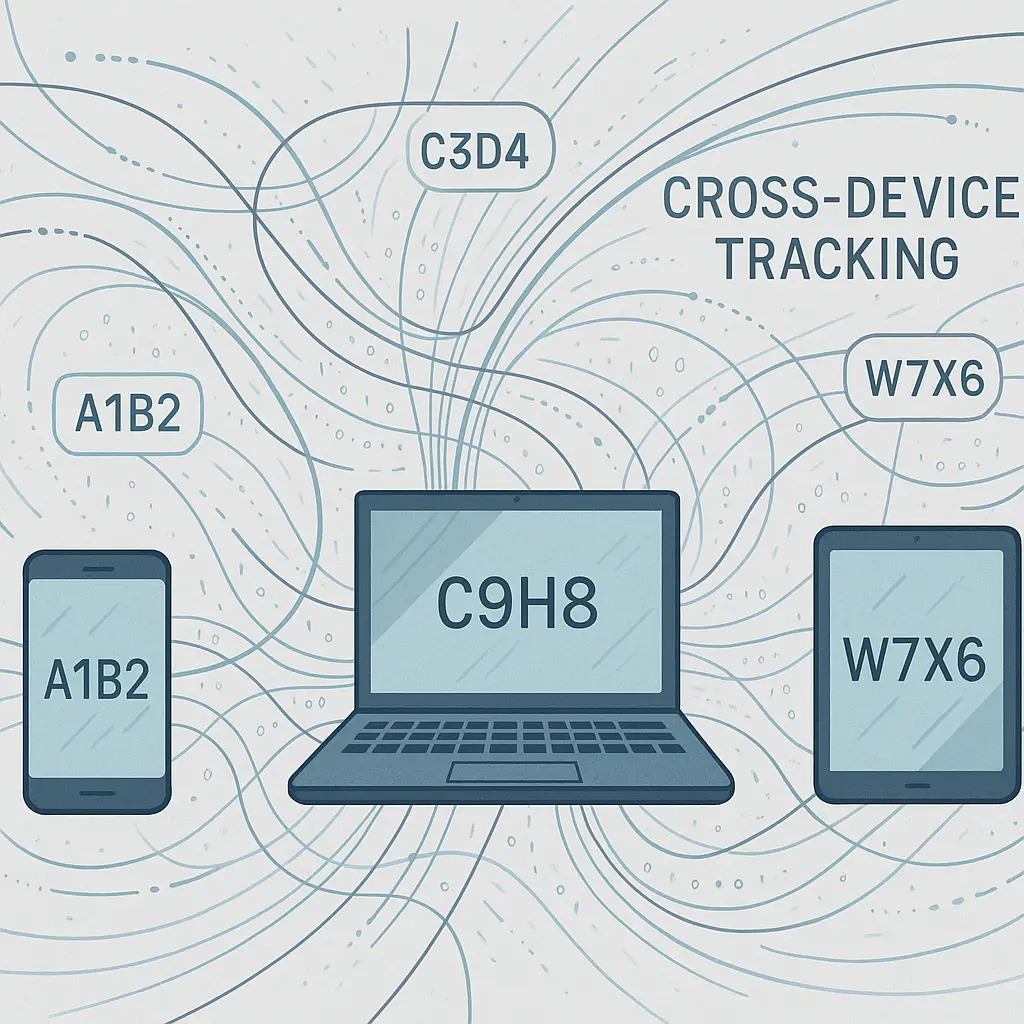
WhatsApp collects all of this. The company's privacy policy states this plainly. Your phone number, your contact list, your device identifiers, your IP address, your usage patterns, and your communication metadata all flow to WhatsApp's servers.
Some of this metadata is necessary for the service to function. WhatsApp needs to know who you're messaging in order to route the message. It needs to know when you're online to deliver messages in real time. It needs your phone number to identify your account.
But WhatsApp also shares metadata with Meta for advertising and analytics. The privacy policy describes this sharing in detail. Your phone number, device identifiers, and usage data feed into Meta's advertising systems. WhatsApp does not read your message content to target ads, but it does use metadata about your behavior to build a profile.
Metadata reveals more than most people expect. If I know you messaged someone at 2 a.m. every night for a week, I don't need to read the messages to infer what's happening. If I know you're in a group chat with twelve people who all work at the same company, I can infer your professional network. If I know you sent a 45-second voice note to someone you message once a year, I can infer urgency or significance.
Security researchers and privacy advocates have been saying this for years: metadata is surveillance. The EFF and similar organizations emphasize that protecting content without protecting metadata leaves significant privacy gaps. WhatsApp's encryption is real, but it does not make the service private in the way Signal is private, because Signal collects almost no metadata.
Backups: The Unencrypted Copy You Might Not Know About
WhatsApp offers automatic backups to iCloud (on iPhone) or Google Drive (on Android). This feature is on by default for many users. The backup includes your message history, photos, videos, and voice notes.
Until recently, these backups were not end-to-end encrypted. Apple and Google could access them. Law enforcement could subpoena them. If your iCloud or Google account was compromised, your WhatsApp history was exposed.
WhatsApp now offers end-to-end encrypted backups as an option. You enable it in settings, create a password or encryption key, and your backups encrypt before they leave your device. This is a real improvement. If you enable encrypted backups, your message history is protected even if Apple or Google complies with a legal request.
But the feature is optional, and many users don't enable it. The default backup is still unencrypted. If you're using WhatsApp and you've never configured your backup settings, there's a good chance your message history is sitting in iCloud or Google Drive in a form that Apple, Google, or a government agency with a subpoena can access.
This is not a theoretical risk. Law enforcement agencies routinely request iCloud and Google Drive data. Apple and Google comply with lawful requests. If your WhatsApp backup is in iCloud or Google Drive and is not end-to-end encrypted, that backup is accessible.
To check: open WhatsApp, go to Settings > Chats > Chat Backup, and look for the option to enable end-to-end encrypted backups. If it's not enabled, your backups are not protected by the same encryption that protects your messages in transit.
Platform Control: WhatsApp Is Owned by Meta
WhatsApp is owned by Meta, the company formerly known as Facebook. Meta's business model is advertising. The company collects behavioral data across its platforms, Facebook, Instagram, WhatsApp, Threads, and uses that data to target ads.
Meta has stated repeatedly that it does not use WhatsApp message content for advertising. This is plausible, because the messages are end-to-end encrypted and Meta cannot read them. But Meta does use WhatsApp metadata. Your phone number, device identifiers, usage patterns, and communication metadata feed into Meta's systems.
The privacy policy describes this sharing. WhatsApp shares "account information" with Meta to improve products, provide integrations, and show relevant ads across Meta's platforms. The policy states that WhatsApp does not share message content, but it does share information about how you use the service.
This creates a tension. WhatsApp markets itself as a private messaging app. Meta markets itself as a company that delivers personalized experiences through data collection. Both statements are true within their own framing, but they point in opposite directions.
If your threat model includes Meta as an adversary, if you do not want Meta to have data about your communication patterns, WhatsApp is not the right tool. Signal, which is run by a nonprofit and collects almost no metadata, is a better fit. If your threat model is government surveillance of message content or interception by third parties, WhatsApp's encryption is sufficient.
The question is not whether WhatsApp is secure. It is. The question is what you're trying to protect and from whom.
Group Chats and Contact Discovery
WhatsApp group chats introduce additional metadata exposure. When you join a group, WhatsApp knows who else is in that group. It knows when the group was created, who created it, who joined when, and who left when. It knows how often the group is active and which members are most active.
Group metadata can reveal networks. If you're in a group with twelve people who all work at the same company, WhatsApp knows you're connected to those people. If you're in a group with people who live in different countries, WhatsApp knows you have international contacts. If you're in a group that becomes very active during a specific time period, WhatsApp knows something significant is happening.
Contact discovery is another metadata exposure. WhatsApp accesses your phone's contact list to show you which of your contacts use WhatsApp. This is convenient, but it means WhatsApp has a copy of your contact list. The company states that contact information is hashed and deleted from their servers after matching, but the matching process itself reveals your social graph.
Signal handles this differently. Signal uses a technique called Private Contact Discovery, which allows the app to check which of your contacts use Signal without uploading your entire contact list to Signal's servers. The technical details are complex, but the outcome is that Signal learns less about your social graph than WhatsApp does.
Comparing WhatsApp to Signal and SMS
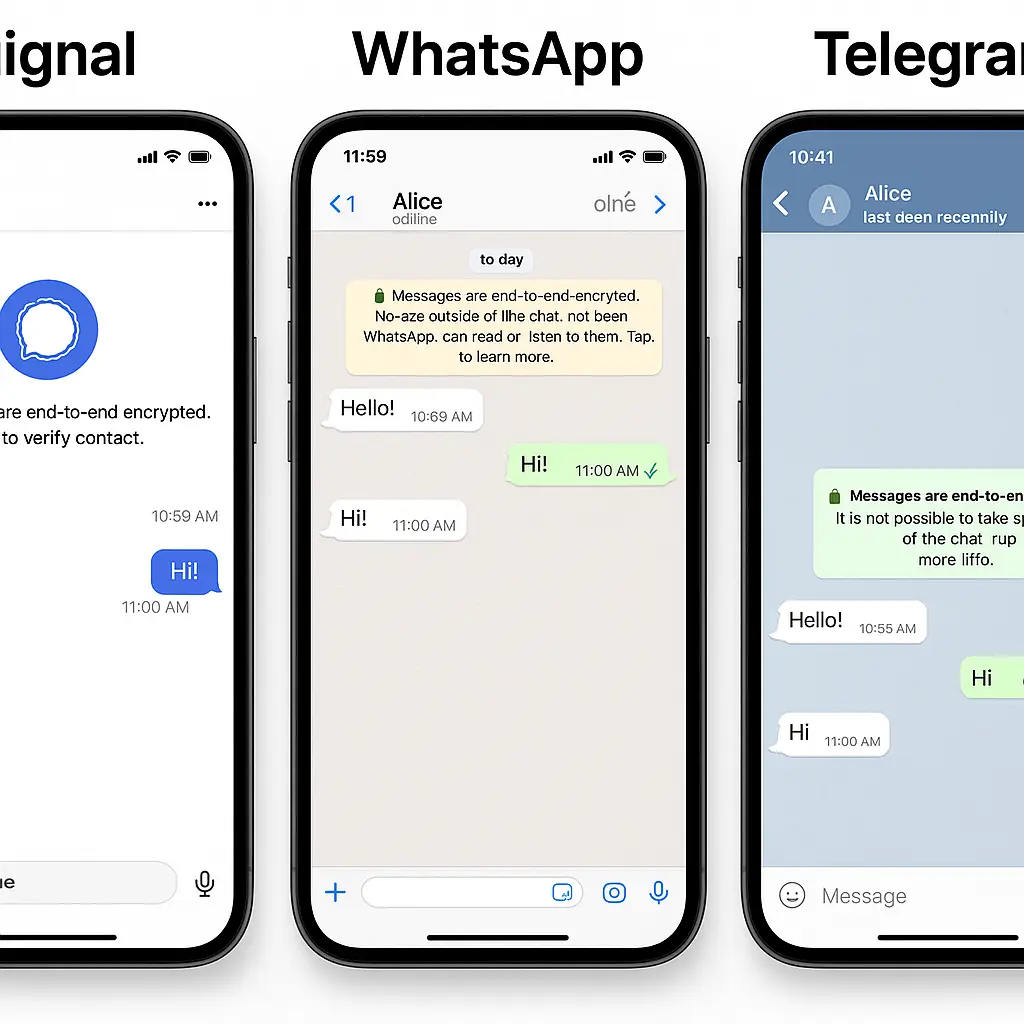
WhatsApp sits between SMS and Signal on the privacy spectrum.
SMS has no encryption by default. Your carrier can read every message. Anyone with access to the carrier's systems can read it. Anyone intercepting the radio signal can read it. SMS is not private in any meaningful sense.
WhatsApp encrypts message content. This is a real improvement. Your carrier cannot read your messages. Neither can anyone intercepting the signal. Neither can WhatsApp. But WhatsApp collects metadata, shares it with Meta, and stores unencrypted backups by default.
Signal encrypts message content and collects almost no metadata. Signal does not know who you talk to, when, or how often. Signal does not share data with an advertising company. Signal does not store your message history on its servers. Signal's backups are end-to-end encrypted by default.
If privacy is your priority, Signal is the better tool. If convenience and network effects are your priority, if everyone you know uses WhatsApp and you need to reach them where they are, WhatsApp is a reasonable compromise. It's more private than SMS, less private than Signal.
The choice depends on your threat model. If you're worried about your internet service provider reading your messages, WhatsApp is sufficient. If you're worried about Meta building a profile of your communication patterns, WhatsApp is not sufficient.
What You Can Do to Improve WhatsApp Privacy
If you use WhatsApp and want to reduce metadata exposure, here are the steps that matter:
Enable end-to-end encrypted backups. Go to Settings > Chats > Chat Backup and turn on end-to-end encrypted backups. Create a strong password or save the encryption key somewhere secure. This prevents Apple, Google, and anyone with access to their systems from reading your message history.
Disable read receipts and last seen. Go to Settings > Privacy and turn off read receipts and last seen. This reduces the amount of usage metadata WhatsApp collects about when you're active.
Limit contact list access. WhatsApp asks for access to your phone's contact list to show you which contacts use the app. You can deny this permission and add contacts manually. This reduces the amount of social graph data WhatsApp collects.
Review group memberships. Leave groups you no longer need. Every group you're in is metadata WhatsApp collects about your network.
Use disappearing messages for sensitive conversations. WhatsApp offers disappearing messages that delete after a set time period. This does not prevent WhatsApp from collecting metadata about the conversation, but it reduces the window during which message content exists on your device and your recipient's device.
These steps reduce metadata exposure, but they do not eliminate it. WhatsApp still knows your phone number, your IP address, who you message, and when. The service requires this information to function. If you need stronger privacy guarantees, use Signal.
When WhatsApp Privacy Matters and When It Doesn't
WhatsApp's encryption protects you from specific threats: interception by third parties, carrier surveillance, and government access to message content stored on WhatsApp's servers. If these are your concerns, WhatsApp delivers.
WhatsApp's encryption does not protect you from Meta's data collection, metadata surveillance, or access to unencrypted backups. If these are your concerns, WhatsApp does not deliver.
The distinction matters because privacy means different things to different people. For someone worried about their ex-partner reading their messages, WhatsApp's encryption is sufficient. For someone worried about a government agency mapping their social network, WhatsApp's metadata collection is a problem.
In Magic: The Gathering, you build a deck to counter the threats you expect to face. If the meta is full of aggressive creature decks, you play board wipes. If the meta is full of combo decks, you play disruption. You don't play the same deck against every opponent. The same logic applies to privacy tools. You choose the tool that counters the threat you're facing.
WhatsApp counters content interception. It does not counter metadata surveillance. If your threat model includes both, you need a different tool.
The Reality Check
WhatsApp is not a privacy tool in the way Signal is a privacy tool. It is a messaging app owned by an advertising company, and it collects metadata to support that business model. The encryption is real, but the privacy gaps around that encryption are also real.
If you use WhatsApp because everyone you know uses WhatsApp, that's a reasonable choice. The encryption protects your message content from a wide range of threats. But if you believe WhatsApp is private because the messages are encrypted, you're missing the metadata exposure, the backup vulnerability, and the platform control.
Privacy is not binary. WhatsApp is more private than SMS, less private than Signal. It protects some things and exposes others. The question is whether what it protects aligns with what you need protected.
If it does, use it. If it doesn't, use Signal.