The IRS Does Not Call You: How Government Imposter Scams Actually Work
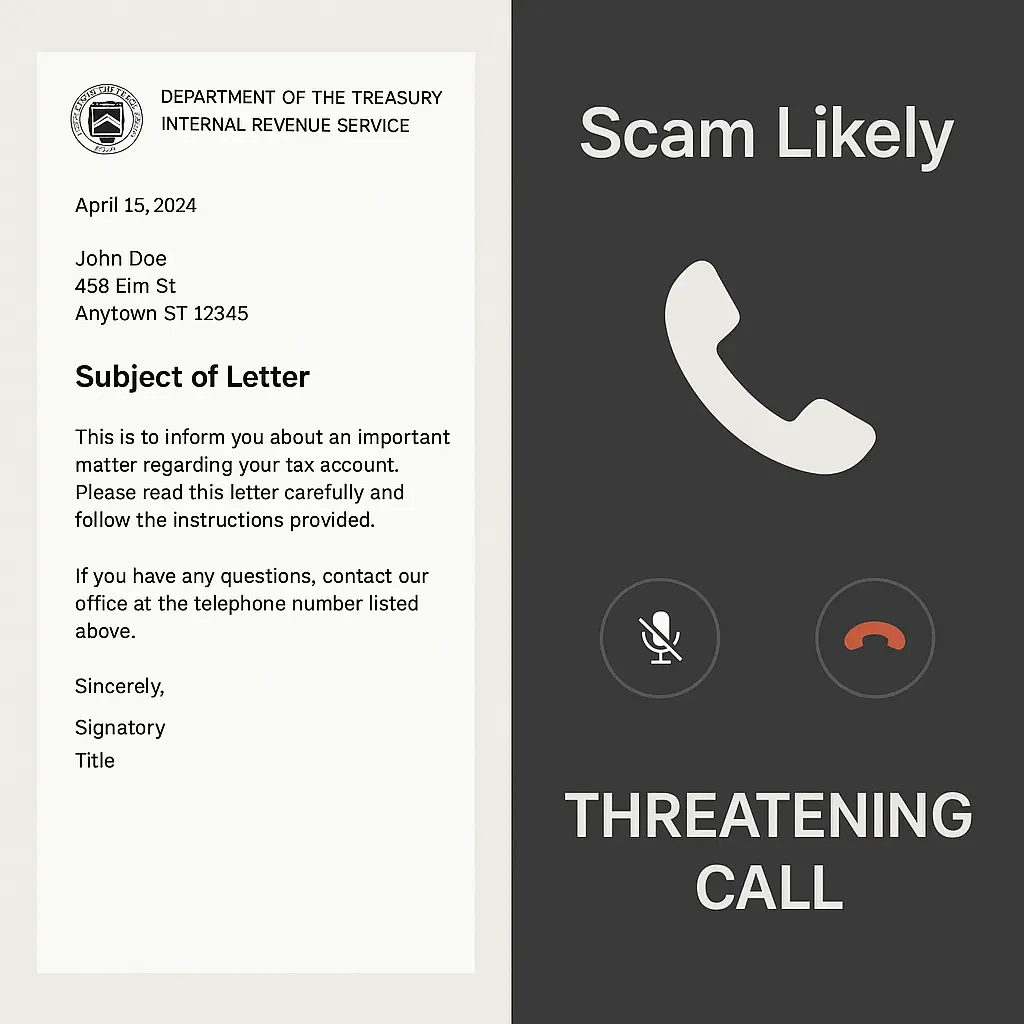
The IRS does not call you to demand immediate payment. The Social Security Administration does not threaten to suspend your benefits over the phone. Immigration enforcement does not demand wire transfers to avoid deportation. Medicare does not call about your prescription card needing urgent verification.
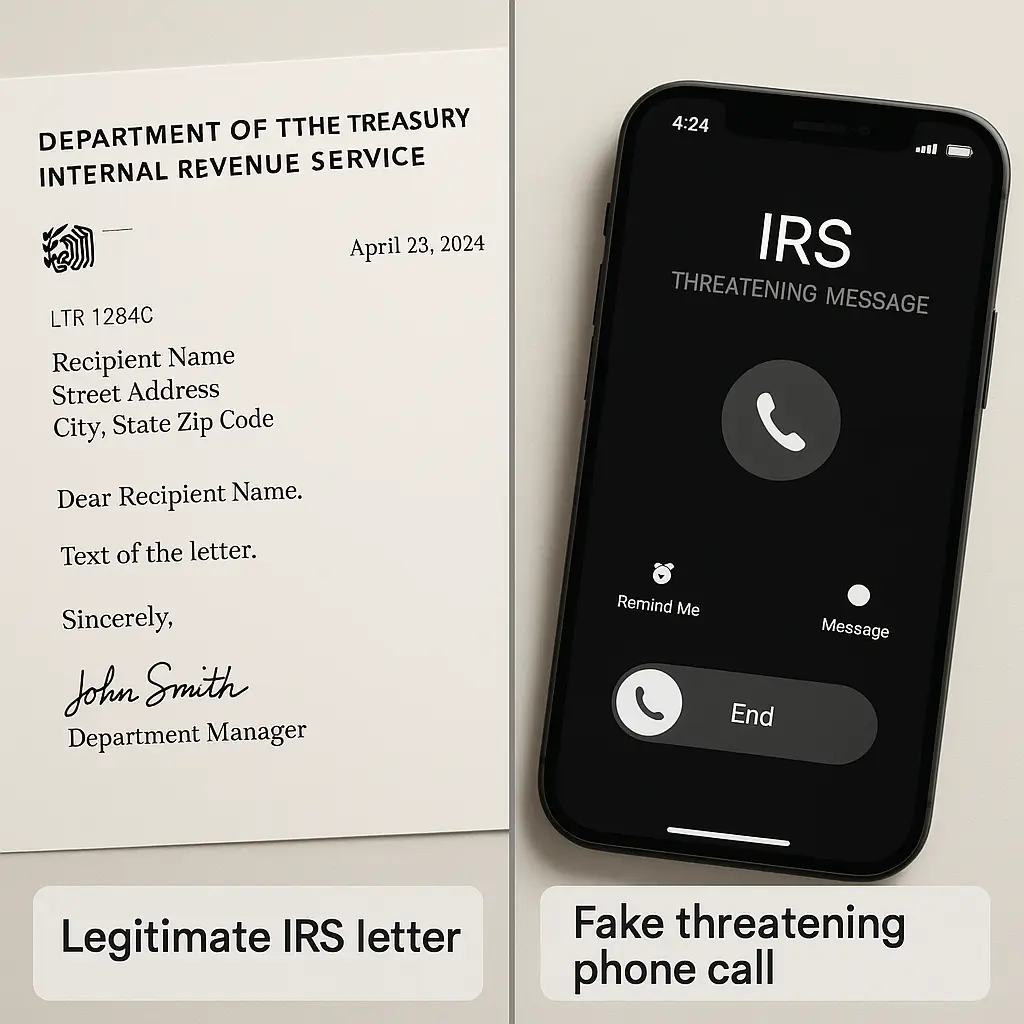
Government agencies initiate contact by mail. When they need payment, they send a bill. When they need information, they send a letter. When enforcement action is necessary, they follow formal procedures with documentation and legal process. They do not call out of nowhere with threats and deadlines measured in hours.
Government imposter scams work because they exploit one reliable human response: fear of authority combined with artificial urgency. The call comes from someone who sounds official, uses the right terminology, knows some of your information, and presents a crisis that demands immediate action. The threat is arrest, deportation, financial penalty, or loss of benefits. The deadline is today, right now, before the end of this call. The payment method is irreversible. And the instruction is always the same: do not hang up, do not verify, do not tell anyone, just comply.
Here's how these scams actually work, why they succeed, and how to recognize them before you lose money.
The Basic Mechanism: Authority Plus Urgency
Government imposter scams follow a consistent structure. The caller claims to represent a government agency. They present a problem that requires immediate resolution. They create urgency through threats of serious consequences. They demand payment through a specific, irreversible method. And they instruct you not to verify their identity through independent channels.
The FTC tracks imposter scams as one of the top fraud categories. In 2024, government imposters accounted for around 30% of imposter scam reports, with median individual losses in the thousands of dollars. The operators use variations of the same script, adjusted for the agency being impersonated and the target demographic.
The IRS version typically claims you owe back taxes, that criminal charges are pending, and that immediate payment will resolve the matter. The Social Security version claims your benefits are suspended due to suspicious activity or identity theft. The immigration version claims documentation problems that can be resolved with a fee. The Medicare version claims your card is compromised and needs replacement. The underlying pattern is identical: problem, threat, urgency, payment, compliance.
The scam works because it hijacks normal risk assessment. When someone claiming to be from a government agency tells you that you're facing arrest or financial penalty, your brain prioritizes threat response over verification. The urgency compounds this effect. "You have two hours to pay or a warrant will be issued" does not give you time to research, consult, or think. That's intentional. The scam requires you to act before you think.
Why These Calls Feel Legitimate
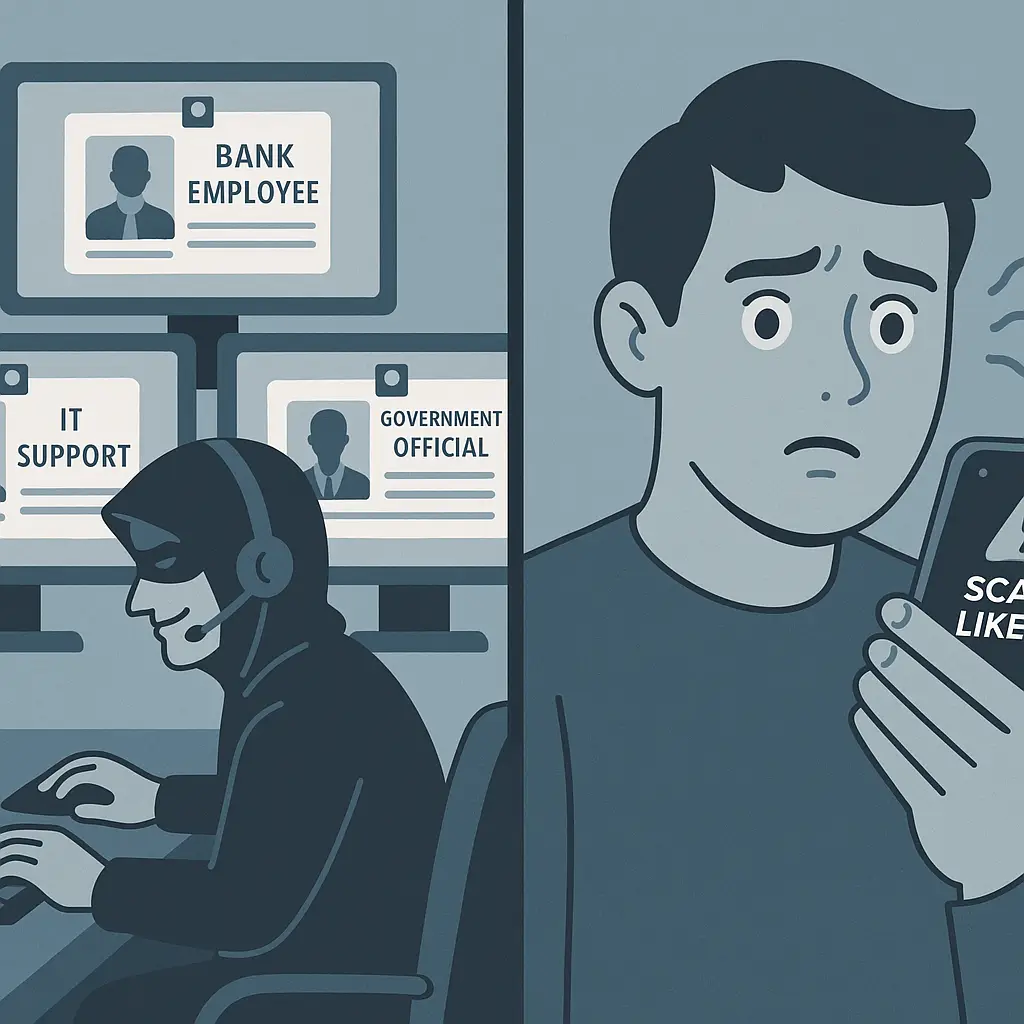
The operators do not sound like stereotypical scammers. They sound professional. They use official terminology. They reference real agency procedures. They may know your name, address, partial Social Security number, or other information that suggests legitimacy. They may spoof caller ID to display what appears to be an official agency number. They may provide badge numbers, case numbers, and callback numbers that sound plausible.
This is social engineering. The goal is to establish credibility quickly enough that you do not question the premise of the call. Real government agencies have bureaucratic procedures, specific terminology, and formal communication patterns. The scammers mimic these patterns. They sound like what you expect a government official to sound like, which is enough to bypass initial skepticism.
The information they cite often comes from data breaches, public records, or prior scams. Your name, address, and partial Social Security number are not secret. They appear in dozens of databases that have been breached over the years. The operators use this information to create the impression that they have access to your full file, which reinforces the claim that they represent the agency they're impersonating.
Caller ID spoofing is trivial. The displayed number means nothing. Operators can make any number appear on your screen. When the caller ID shows what looks like an IRS number, that does not mean the call originated from the IRS. It means someone configured their system to display that number. The technical barrier to spoofing caller ID is effectively zero.
The callback numbers they provide typically route to the same operation. If you hang up and call the number they gave you, you reach another member of the same group, who will confirm the story and escalate the urgency. This creates the illusion of verification without actually verifying anything. Real verification means looking up the agency's official number yourself, from a source you trust, and calling that number to ask if they actually need to reach you.
The Payment Demand: Why the Method Matters
The payment method is the clearest signal that the call is fraudulent. Government agencies accept checks, money orders, credit cards through official payment portals, and electronic transfers through official systems. They do not demand payment via gift cards, wire transfers to individuals, cryptocurrency, prepaid debit cards, or cash sent by mail.
Gift cards are the most common demand in these scams because they are irreversible and untraceable. The caller instructs you to purchase gift cards from a specific retailer, then read the card numbers and PINs over the phone. Once you provide those numbers, the money is gone. The operators convert the card value to cryptocurrency or resell the cards through underground markets. There is no recovery mechanism. Gift cards are designed for gifts, not for paying debts to government agencies, and no legitimate agency will ask for them.
Wire transfers and cryptocurrency serve the same function. They move money quickly and irreversibly to accounts that are difficult to trace and easy to abandon. A wire transfer sent to an individual account, especially one outside the United States, is functionally unrecoverable. Cryptocurrency transactions are permanent. Once confirmed on the blockchain, there is no reversal process. These methods exist in legitimate contexts, but government agencies do not use them for collecting taxes, fees, or fines.
The IRS explicitly states that it does not demand immediate payment over the phone, does not require specific payment methods, and does not threaten arrest or legal action without prior written notice. The Social Security Administration, Medicare, immigration agencies, and other federal entities follow similar protocols. If someone claiming to represent these agencies demands payment through an irreversible method during a phone call, that person does not represent the agency. They represent a criminal operation.
Common Variations and Target Demographics
The scam adapts to the target. Older adults receive Social Security and Medicare versions, often with threats of benefit suspension or medical coverage loss. Working adults receive IRS versions, especially during tax season, with threats of back taxes and arrest. Immigrants receive immigration enforcement versions, with threats of deportation or visa revocation. Small business owners receive versions claiming payroll tax issues or business license problems. The script changes, but the structure remains the same.
The FTC reports that older adults report higher median losses in these scams, likely because they are more familiar with receiving legitimate government correspondence and less familiar with the specific tactics used in phone scams. The operators know this and adjust their approach accordingly. Calls targeting older adults tend to emphasize procedural compliance and official-sounding language. Calls targeting younger adults tend to emphasize immediate consequences and financial penalties.
Tax season sees a spike in IRS imposter scams. The operators know that many people are already thinking about taxes, have some level of anxiety about whether they filed correctly, and may be expecting communication from the IRS. This environmental context makes the scam more plausible. A call claiming you owe back taxes feels less absurd in April than it does in September, even though the IRS still does not initiate contact by phone in either month.
Immigration-related scams target both documented and undocumented immigrants. The threat is deportation, visa revocation, or denial of pending applications. The urgency is that enforcement action is imminent unless a fee is paid immediately. The operators exploit the fact that immigration systems are genuinely complex, often slow, and legitimately intimidating. A call claiming there is a problem with your paperwork feels plausible when you have actually been navigating immigration bureaucracy. The scam works because it mimics a real fear.
The Cultural Reference: Succession and the Illusion of Control
In Succession, Logan Roy's children spend four seasons trying to anticipate his next move, reading signals that often do not exist, and acting on incomplete information under artificial deadlines. The urgency is manufactured. The information is asymmetric. The power dynamic is deliberately unbalanced. And the characters consistently make worse decisions when they believe they are running out of time.
Government imposter scams operate on the same principle. The caller creates an asymmetric information environment where they claim to know more about your situation than you do, and they set a deadline that prevents you from closing that information gap. You are told you owe money, that enforcement is imminent, and that you have hours to comply. The natural response is to try to resolve the crisis within the artificial timeframe, which is exactly what the scam requires. The urgency is the mechanism. Without it, you would verify. With it, you comply.
The parallel is not perfect, but the dynamic is similar. In both cases, acting under pressure with incomplete information produces worse outcomes than stepping back, verifying independently, and refusing to accept someone else's timeline. The scam works because it denies you the time to think. The solution is to reclaim that time by hanging up.
What to Do When You Receive One of These Calls
Hang up. That is the entire first step. Do not engage, do not argue, do not ask questions, do not try to verify their identity during the call. Just hang up. The call itself is the attack. Continuing the conversation gives the operator more time to refine the approach, gather information, and escalate the pressure. Hanging up immediately terminates the attack.
After you hang up, look up the agency's official contact number yourself. Use the agency's official website, not a search engine result, not a number the caller provided, not a number from an email. Go directly to irs.gov, ssa.gov, uscis.gov, or the relevant agency site, find the contact page, and call that number. Ask if the agency has been trying to reach you. In the overwhelming majority of cases, they have not.
If the agency confirms that they do need to reach you, they will tell you how to proceed through official channels. They will not ask for payment over the phone. They will not demand immediate action. They will send documentation. They will provide time to respond. They will use formal procedures. If what they describe does not match what the caller demanded, you received a scam call.
Do not call back the number that called you, even if it appears to be an official number. Caller ID is spoofed. The callback number they provide routes to the same operation. Real verification requires you to initiate contact through a channel you control, using a number you looked up independently.
If you already provided information or made a payment, act immediately. If you gave financial account information, contact your bank or credit card company to report fraud and freeze the account. If you sent money via wire transfer, contact the transfer company (Western Union, MoneyGram, etc.) to report the fraud, though recovery is unlikely. If you provided Social Security number or other identity information, place a fraud alert on your credit reports and monitor for identity theft. The FTC's identity theft recovery guide provides step-by-step instructions.
Report the scam to the FTC at ReportFraud.ftc.gov, the FBI's Internet Crime Complaint Center, and the agency being impersonated. For IRS scams, forward details to phishing@irs.gov. For Social Security scams, report to the Office of the Inspector General. Reporting does not recover lost money, but it provides data that law enforcement and consumer protection agencies use to track these operations and pursue enforcement actions.
Why Law Enforcement Struggles with These Operations
Government imposter scams are difficult to prosecute because the operators are often located outside the United States, use anonymizing technology, and move quickly between communication channels and payment methods. The IC3's 2024 report shows that government imposter scams generated hundreds of millions in reported losses, but the arrest and prosecution rate remains low.
The operators use Voice over IP (VoIP) services that obscure their physical location. They route calls through multiple countries. They use prepaid phones, disposable accounts, and encrypted messaging. They receive payments through methods that are difficult to trace and easy to convert to other forms of value. By the time a victim reports the scam, the phone number is disconnected, the payment account is closed, and the operators have moved to new infrastructure.
Even when law enforcement identifies the operators, extradition is complicated. Many of these operations run from countries with limited extradition treaties, weak enforcement of fraud laws, or both. The operators face minimal legal risk in their home jurisdictions and operate with relative impunity. This does not mean enforcement never happens, but it means that individual victims are unlikely to see arrests, prosecutions, or restitution.
The most effective defense is prevention. These scams succeed because people comply before verifying. They fail when people hang up, verify independently, and refuse to accept artificial urgency. Law enforcement can disrupt some operations, but the underlying model is too profitable and too geographically distributed to eliminate through arrests alone. The defense is individual skepticism applied consistently.
The Broader Pattern: Imposter Scams Beyond Government Agencies
Government imposter scams are one category within a larger pattern. The same operators run tech support scams (claiming to be from Microsoft or Apple), utility scams (claiming to be from the electric company threatening shutoff), bank scams (claiming to be from your bank's fraud department), and business imposter scams (claiming to be from Amazon, PayPal, or other services). The structure is identical: impersonation, problem, urgency, payment, compliance.
The FTC's data shows that imposter scams collectively account for billions in annual losses. Government imposters are the largest single category, but business imposters are growing faster, particularly scams impersonating Amazon and other e-commerce platforms. The operators follow the same playbook across all categories because the playbook works.
The common thread is that legitimate organizations do not operate this way. They do not call out of nowhere with urgent demands. They do not require immediate payment through irreversible methods. They do not threaten consequences if you hang up to verify. They do not instruct you to keep the call secret. These behaviors are specific to scams, and they appear consistently across every variation of imposter fraud.
If someone calls claiming to represent any organization and demands immediate action, immediate payment, or immediate compliance, hang up and verify independently. It does not matter if they claim to be from the IRS, Social Security, your bank, Microsoft, Amazon, or your utility company. The procedure is the same. Hang up. Look up the official number. Call back. Verify. Do not accept urgency as a substitute for verification.
Protecting Yourself and Others
You can reduce your exposure to these scams by limiting the personal information available in public databases, using call-blocking features on your phone, and registering with the National Do Not Call Registry, though scammers ignore the registry. These measures reduce volume but do not eliminate risk. The primary defense is behavioral: hang up when you receive unsolicited calls demanding immediate action.
If you have older relatives, talk to them about these scams. Many older adults grew up in an era when phone calls from official-sounding people were generally legitimate, and they may not have updated their threat model to account for widespread phone fraud. The conversation does not need to be condescending. It can be factual: government agencies send letters, not phone calls. If someone calls claiming to be from a government agency and demanding payment, it is a scam. Hang up and call the agency directly to verify.
If you run a small business, brief your employees on these scams. Business-targeted versions often claim to be from the IRS regarding payroll taxes, from state agencies regarding business licenses, or from utility companies threatening service shutoff. Employees who answer phones should know that these calls are scams and should not provide information or make payments without verification through official channels.
The scam persists because it works often enough to remain profitable. It works because people comply under pressure. It stops working when people refuse to comply without verification. The defense is simple but requires discipline: hang up, verify independently, do not accept artificial urgency. Apply this consistently and you eliminate the attack surface.
Final Thoughts
The IRS does not call you. Neither does Social Security, Medicare, immigration enforcement, or any other government agency when they need payment or information. They send letters. They follow formal procedures. They provide documentation and time to respond. A phone call demanding immediate payment is not how government agencies operate. It is how scammers operate.
The scam works because it exploits fear and urgency. The defense works because it removes urgency from the equation. Hang up. Verify independently. Refuse to act on someone else's timeline. These three steps eliminate the mechanism that makes the scam effective.
If you receive one of these calls, you are not alone. Millions of people receive them every year. The operators are persistent, professional, and convincing. Hanging up is not rude. It is the correct response to an attack. Verification is not paranoia. It is basic operational security. And refusing to comply with artificial urgency is not overthinking. It is thinking at the appropriate speed for decisions that involve money, personal information, or legal consequences.
The scam will continue as long as it remains profitable. It stops being profitable when people stop complying. Hang up. Verify. Protect yourself and the people you care about by refusing to accept urgency as a substitute for verification.