Facebook Messenger encryption: what's actually protected and what isn't
Facebook Messenger has over 2 billion users. When you open the app and send a message, you're probably not thinking about encryption. The chat bubble appears, the message sends, your friend replies. It feels private.
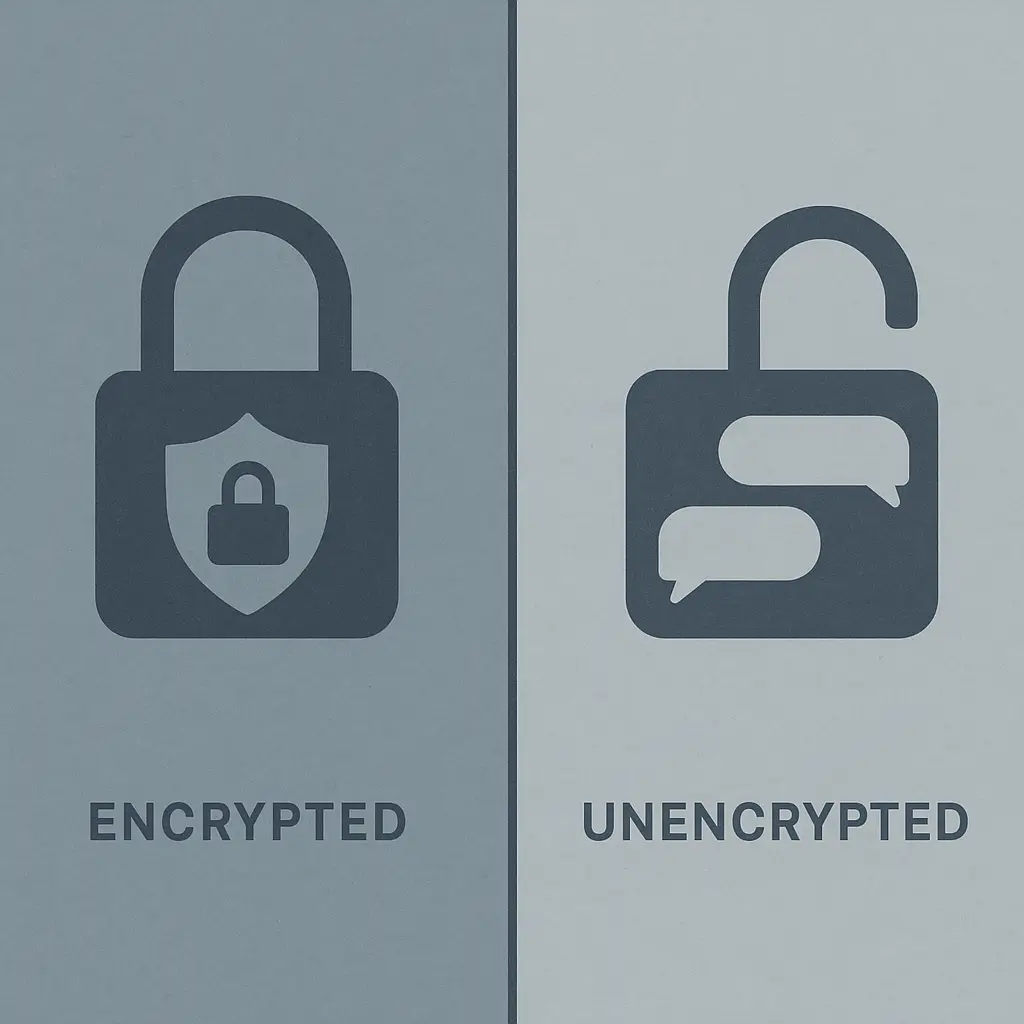
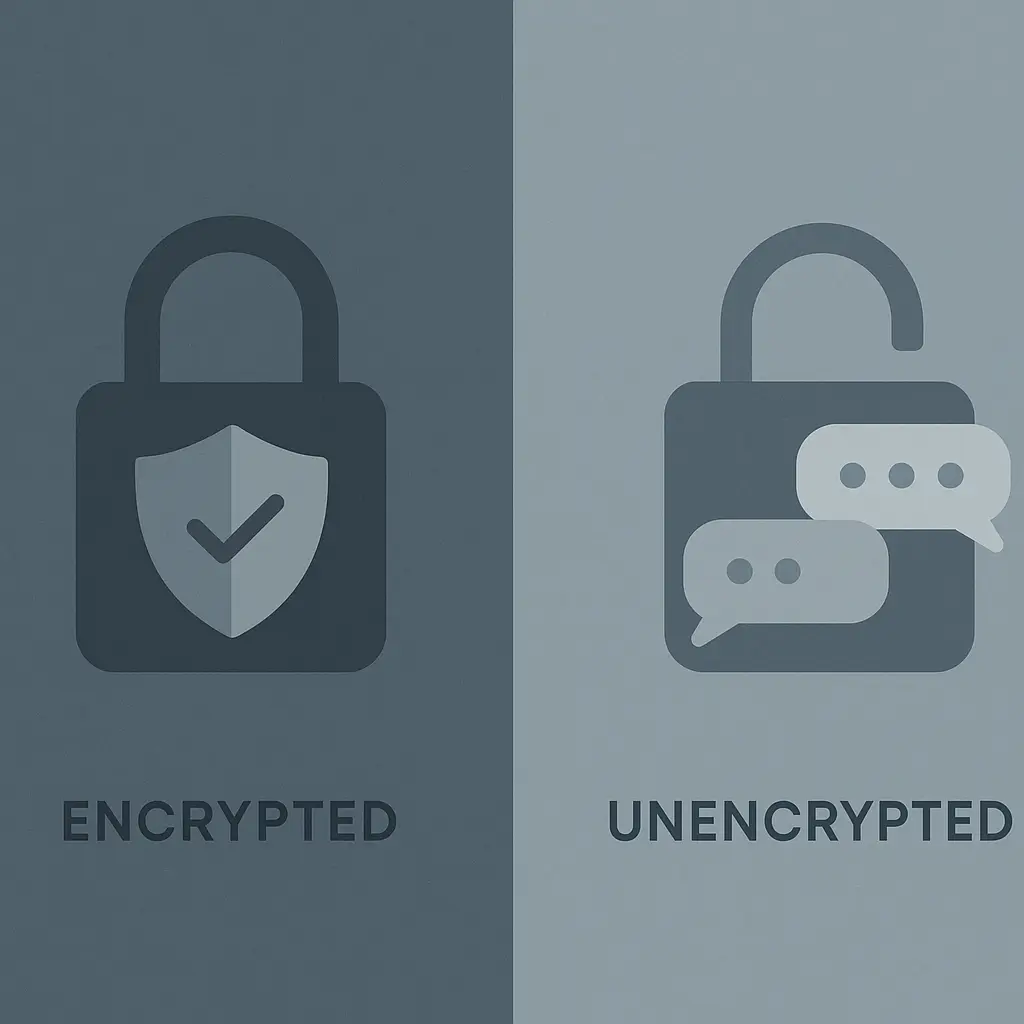
But here's the reality: most Facebook Messenger conversations are not end-to-end encrypted. Meta can read your messages. They're stored on Meta's servers, accessible to the company, and subject to law enforcement requests. The encryption exists, but it's not the kind that keeps your messages private from Meta itself.
This isn't a secret. Meta has been clear about how Messenger works. But the gap between what people assume and what actually happens is wide enough to matter. You might think your messages are private. The technical reality says otherwise.
Here's what's actually protected, what isn't, and what you need to understand about Facebook Messenger encryption in 2026.
Standard Messenger conversations are encrypted, but Meta holds the keys
When you send a message in Facebook Messenger, it's encrypted in transit. That means the message travels from your device to Meta's servers in an encrypted form, protecting it from interception along the way. Once it arrives, Meta decrypts it, stores it on their servers, and re-encrypts it for delivery to your recipient.
This is called encryption in transit and at rest. It protects your messages from outside attackers who might try to intercept them while they're moving across the internet. It does not protect your messages from Meta.
Meta holds the decryption keys. That means Meta can read your messages whenever they need to. They use message content for ad targeting, content moderation, and compliance with legal requests. When law enforcement asks for your Messenger history, Meta can hand it over, because they have access to the plaintext.
This is not a flaw. It's how standard Messenger was designed. The encryption protects you from hackers. It does not protect you from Meta.
Secret Conversations use end-to-end encryption, but they're opt-in
Facebook Messenger does offer end-to-end encryption, but only in a specific mode called Secret Conversations. In a Secret Conversation, messages are encrypted on your device and can only be decrypted on the recipient's device. Meta does not hold the decryption keys. They cannot read the message content.
Secret Conversations use the Signal Protocol, the same cryptographic system that powers Signal and WhatsApp's encrypted chats. The mechanism is solid. When you send a message in a Secret Conversation, it's encrypted with a key that only you and your recipient possess. Meta's servers relay the encrypted message, but they can't decrypt it.
Here's the catch: Secret Conversations are not the default. You have to enable them manually for each conversation. Most people don't. They open Messenger, start typing, and assume their messages are private. They're not.
To start a Secret Conversation, you open Messenger, tap the compose icon, select "Secret" from the top-right menu, choose a contact, and send your first message. The conversation is now end-to-end encrypted. But only that conversation. Your other chats remain unencrypted unless you manually switch them to Secret Conversations as well.
This design choice matters. WhatsApp, also owned by Meta, uses end-to-end encryption by default for all messages. You don't opt in. It's just on. Messenger makes you choose, and most people don't realize there's a choice to make.
Secret Conversations are device-specific and don't sync everywhere
Secret Conversations have another limitation: they're tied to a single device. When you start a Secret Conversation on your phone, it exists only on that phone. If you log into Messenger on your laptop, you won't see the Secret Conversation there. It doesn't sync.
This is a deliberate security tradeoff. End-to-end encryption works by generating keys on your device. If the conversation synced across devices, Meta would need to manage those keys in a way that allowed decryption on multiple devices. That creates additional complexity and potential vulnerabilities. By keeping Secret Conversations device-specific, Meta avoids those risks.
But the tradeoff is inconvenience. If you switch phones, you lose access to your Secret Conversations unless you manually export them first. If you want to continue a Secret Conversation on a different device, you have to start a new one.
Standard Messenger conversations, by contrast, sync seamlessly across all your devices. You can start a chat on your phone, continue it on your laptop, and pick it up on your tablet. That's possible because Meta holds the decryption keys and can deliver the plaintext to any device you're logged into.
The convenience of syncing comes at the cost of privacy. The privacy of Secret Conversations comes at the cost of convenience. You choose.
Metadata is not protected, even in Secret Conversations
Even when you use Secret Conversations, Meta still collects metadata. Metadata is information about your messages, not the content of the messages themselves. It includes who you message, when you message them, how often, and from what device.
Metadata is powerful. It reveals patterns. If you message someone every day at 3 PM, that's a pattern. If you message them only late at night, that's a different pattern. If you suddenly start messaging someone you've never contacted before, that's notable. Metadata doesn't tell Meta what you said, but it tells them a lot about your behavior and relationships.
In The Two Towers, Gandalf tells Théoden, "The treacherous are ever distrustful." The same principle applies to surveillance. Even without reading your words, an observer who knows who you talk to, when, and how often can infer a great deal about your life. Metadata builds a map of your social connections and habits.
Meta uses metadata for ad targeting, friend suggestions, and content recommendations. Law enforcement can request metadata even when they can't access message content. Courts have ruled that metadata is less protected than content under U.S. law, because it's considered less intrusive. But in practice, metadata can be just as revealing.
Secret Conversations encrypt your message content. They do not encrypt your metadata. Meta still knows who you're talking to.
Group chats are never end-to-end encrypted on Messenger
Secret Conversations only work for one-on-one chats. Group chats on Facebook Messenger are never end-to-end encrypted, even if you manually enable encryption.
This is a technical limitation. End-to-end encryption in group settings is complex. Each member needs a copy of the encryption keys, and those keys need to update whenever someone joins or leaves the group. WhatsApp handles this with the Signal Protocol's group messaging extensions. Messenger does not.
If you're in a group chat on Messenger, your messages are encrypted in transit and at rest, but Meta holds the keys. Meta can read every message in the group. So can anyone with access to Meta's servers, whether through a legal request, a compliance audit, or a breach.
Group chats are common. You might use them to coordinate with coworkers, plan events with friends, or communicate with family. If those conversations happen on Messenger, they're not end-to-end encrypted. Meta has access.
Voice and video calls are encrypted, but Meta sees the metadata
Facebook Messenger supports voice and video calls, and those calls are encrypted. The encryption is end-to-end for one-on-one calls, meaning Meta cannot listen to the audio or video content.
But Meta still collects metadata about the calls. They know who you called, when, how long the call lasted, and what device you used. They know your IP address, which can reveal your location. They know whether the call was voice-only or included video.
This metadata serves the same purposes as messaging metadata: ad targeting, behavioral analysis, and compliance with legal requests. The call content is private. The fact that the call happened is not.
Group calls on Messenger are also encrypted, but the encryption is not end-to-end. Meta's servers handle the mixing and routing of audio and video streams, which means Meta has access to the content during the call. The content is encrypted in transit, but Meta can decrypt it while processing.
Meta's business model depends on data access
Meta is an advertising company. In 2025, advertising accounted for around 98 percent of Meta's revenue. The business model depends on collecting data about users, analyzing that data to build detailed profiles, and using those profiles to sell targeted ad placements.
Messenger is part of that ecosystem. When Meta can read your messages, they learn what you're interested in, what you're planning, what you're buying, and who you're talking to. That information feeds into the ad targeting system.
End-to-end encryption, by design, prevents Meta from reading message content. That's why it's opt-in. If Secret Conversations were the default, Meta would lose access to a significant data stream. The current design preserves Meta's ability to monetize your conversations while offering encryption as an option for users who prioritize privacy.
This is not speculation. Meta has stated publicly that end-to-end encryption limits their ability to detect harmful content and comply with law enforcement requests. They've resisted making encryption the default in Messenger, even as they've rolled it out by default in WhatsApp.
The difference is business strategy. WhatsApp's encryption was already in place when Meta acquired the company, and changing it would have alienated WhatsApp's privacy-conscious user base. Messenger, by contrast, has always been part of the Facebook ecosystem, where data collection is the norm.
Law enforcement can request your Messenger data
When law enforcement wants access to your Facebook Messenger conversations, they can request it from Meta. If the conversations are standard (not Secret Conversations), Meta can provide the message content, because they hold the decryption keys.
Meta publishes a transparency report that details how many government requests they receive and how often they comply. In the first half of 2025, Meta reported receiving over 200,000 requests for user data globally, with a compliance rate around 70 percent for requests that included legal process.
Those requests include Messenger data. If you're involved in a legal case, a criminal investigation, or even a civil dispute, your Messenger history can be subpoenaed. Meta will hand over what they have access to.
Secret Conversations are different. Because Meta doesn't hold the decryption keys, they can't provide the message content even if they're legally required to. They can provide metadata (who you messaged, when, how often), but not the words you exchanged.
This is the practical difference between encryption that protects you from hackers and encryption that protects you from the service provider. Standard Messenger encryption stops outside attackers. Secret Conversations stop Meta.
What about disappearing messages?
Facebook Messenger offers a disappearing messages feature in Secret Conversations. You can set a timer, and the messages delete themselves after a set period (anywhere from 5 seconds to 24 hours).
Disappearing messages are not the same as encryption. They control how long a message is visible on your device and the recipient's device. They do not control whether Meta has access to the message while it exists.
In a Secret Conversation, disappearing messages add an extra layer of privacy. The message is end-to-end encrypted, and it deletes itself after the timer expires. Meta never had access to the content, and the message is gone from both devices.
In a standard Messenger conversation, disappearing messages delete from your device and the recipient's device, but Meta's servers may still have a copy. The message was never end-to-end encrypted, so Meta had access when it was sent. Whether they retain a copy after the disappearing timer expires depends on their data retention policies, which are not fully transparent.
Disappearing messages reduce the risk of someone scrolling through your chat history later. They do not prevent Meta from accessing the message when it's sent.
Backups can expose Secret Conversations
Even if you use Secret Conversations, your messages might not stay private if you back up your device to the cloud. Facebook Messenger on iOS can back up to iCloud. On Android, it can back up to Google Drive.
If your Secret Conversations are included in a device backup, they're stored in plaintext on Apple's or Google's servers. The end-to-end encryption protects the messages in transit between you and your recipient. It does not protect the messages if they're copied to a cloud backup.
This is a common gap in encrypted messaging. Signal handles this differently: Signal allows encrypted backups, so even if your backup is stored in the cloud, it's encrypted with a key only you control. Messenger does not offer encrypted backups. If you back up your device, your Secret Conversations may be exposed.
You can disable cloud backups for Messenger, but most people don't. They enable automatic backups for their entire device and assume everything is protected. It's not.
Comparing Messenger to other encrypted messaging apps
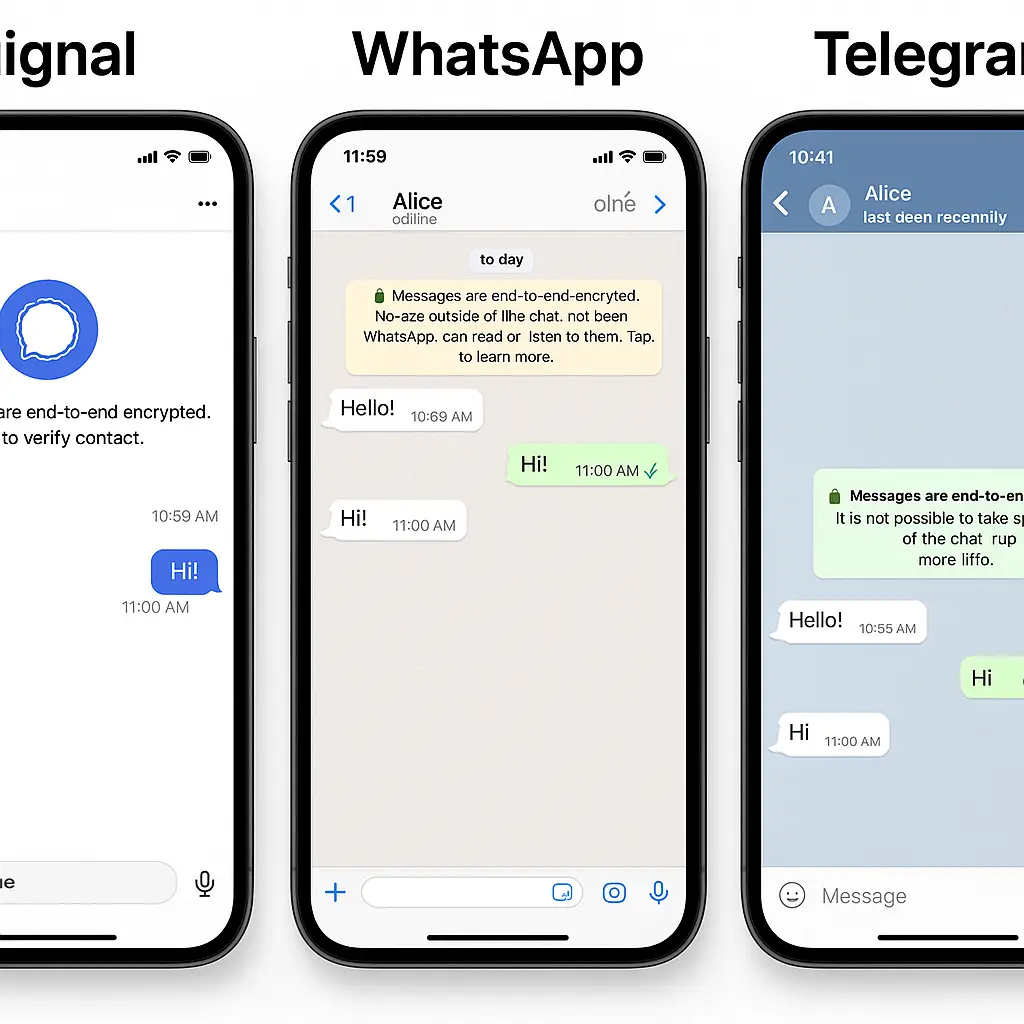
If you want end-to-end encryption by default, Messenger is not your best option. Signal and WhatsApp both encrypt all messages, voice calls, and video calls by default. You don't opt in. It's just on.
Signal is the privacy-focused choice. It's open-source, collects minimal metadata, and is built by a nonprofit with no advertising business model. Signal does not have access to your message content or your contact list. It knows your phone number and roughly when you last connected, and that's about it.
WhatsApp, also owned by Meta, uses the Signal Protocol for end-to-end encryption, but it collects more metadata than Signal. WhatsApp shares some metadata with Meta for ad targeting and analytics, though message content remains encrypted. WhatsApp is more private than standard Messenger, but less private than Signal.
iMessage, Apple's messaging platform, uses end-to-end encryption by default for messages between Apple users. But if you message someone on Android, the conversation falls back to SMS, which is not encrypted. iMessage vs SMS is a real privacy gap.
Telegram offers Secret Chats with end-to-end encryption, but like Messenger, they're opt-in. Standard Telegram chats are encrypted in transit but not end-to-end. Telegram is less private than people think.
If you're choosing a messaging app based on privacy, Signal is the strongest option. WhatsApp is second. Messenger with Secret Conversations enabled is better than standard Messenger, but it's still opt-in and device-specific.
Should you use Secret Conversations?
If you're already using Facebook Messenger and you want your conversations to be private from Meta, yes, use Secret Conversations. Enable them for the people you message most. Accept the tradeoff that they won't sync across devices.
But if privacy is your primary concern, consider switching to an app where encryption is the default. Signal is free, easy to use, and designed from the ground up for privacy. WhatsApp is nearly as private and has a larger user base, making it easier to convince your contacts to use it.
The reality is that most people won't switch. They use Messenger because their friends and family use Messenger. The network effect is powerful. If that's your situation, enabling Secret Conversations is better than doing nothing.
Just understand what you're getting. Secret Conversations encrypt your message content. They do not encrypt your metadata. They do not sync across devices. They do not protect you if your device is backed up to the cloud without encryption. They are better than standard Messenger, but they are not a replacement for a messaging app built for privacy.
What Meta sees, even with encryption
Even when you use Secret Conversations, Meta still sees:
- Who you message
- When you message them
- How often you message them
- What device you're using
- Your IP address (which reveals your approximate location)
- Whether you're using voice, video, or text
- How long your calls last
- What groups you're in (even if individual messages in one-on-one chats are encrypted)
Metadata builds a profile. It shows your social network, your habits, your routines. It's not the same as reading your messages, but it's not nothing.
Researchers have found that metadata analysis can reveal sensitive information like political affiliations, health conditions, and personal relationships. You don't need to read someone's messages to know a lot about their life if you know who they talk to and when.
Meta uses this metadata for ad targeting and behavioral analysis. Law enforcement can request it. It's part of the data stream that makes Meta's business model work.
The gap between perception and reality
Most people assume their Facebook Messenger conversations are private. They're not, unless you manually enable Secret Conversations for each chat. The encryption exists, but it's not the default.
This gap between perception and reality is not an accident. Messenger's design encourages you to use the standard, unencrypted mode. Secret Conversations are buried in the interface. They don't sync. They're limited to one-on-one chats. The friction is intentional.
Meta benefits when you use standard Messenger. They get access to your message content, which feeds their ad targeting system. They lose that access when you use Secret Conversations. The current design maximizes data collection while offering encryption as an option for users who know to look for it.
If you care about privacy, you need to understand how Messenger actually works. The app is not lying to you. The information is available. But the design nudges you toward the less private option, and most people follow the nudge.
What to do if privacy matters
If you're using Facebook Messenger and privacy matters to you, here's what to do:
-
Enable Secret Conversations for your most sensitive contacts. Open Messenger, tap compose, select "Secret," and start a new chat. Do this for anyone you message about personal, financial, or sensitive topics.
-
Understand that Secret Conversations are device-specific. If you switch devices, you'll lose access unless you export them first. Accept this tradeoff or use a different app.
-
Disable cloud backups for Messenger, or accept that your Secret Conversations might be stored in plaintext on Apple's or Google's servers.
-
Consider switching to Signal for conversations where privacy is the priority. Signal encrypts everything by default, collects minimal metadata, and has no advertising business model.
-
Remember that even Secret Conversations expose metadata. Meta knows who you're talking to, even if they can't read what you're saying.
-
If you stay on Messenger, assume that anything you send in a standard conversation is accessible to Meta and could be shared with law enforcement if requested.
The choice is yours. Messenger offers encryption, but you have to enable it, and it comes with limitations. If privacy is your priority, there are better tools. If convenience and network effects matter more, Messenger works, but understand what you're giving up.