Telegram: Why It's Not as Private as People Think
Telegram has around 900 million users who believe they're using a private messaging platform. Many of them are wrong about what that privacy actually covers.
The confusion is understandable. Telegram markets itself heavily on security and privacy. The app's description mentions encryption. The interface looks secure. The company has a reputation for resisting government data requests. But the technical reality behind those claims is more complicated than the marketing suggests.
Here's what actually protects your Telegram messages, what doesn't, and why the distinction matters.
The Two Telegrams: Regular Chats vs. Secret Chats
Telegram operates two completely different messaging systems under one interface. Most people use the first system without realizing the second exists.
Regular Telegram chats use what researchers call client-server encryption. When you send a message, your device encrypts it before transmission. The encrypted data travels to Telegram's servers, where Telegram decrypts it, stores it, and re-encrypts it for delivery to your recipient. Your message lives on Telegram's servers in a form Telegram can read.
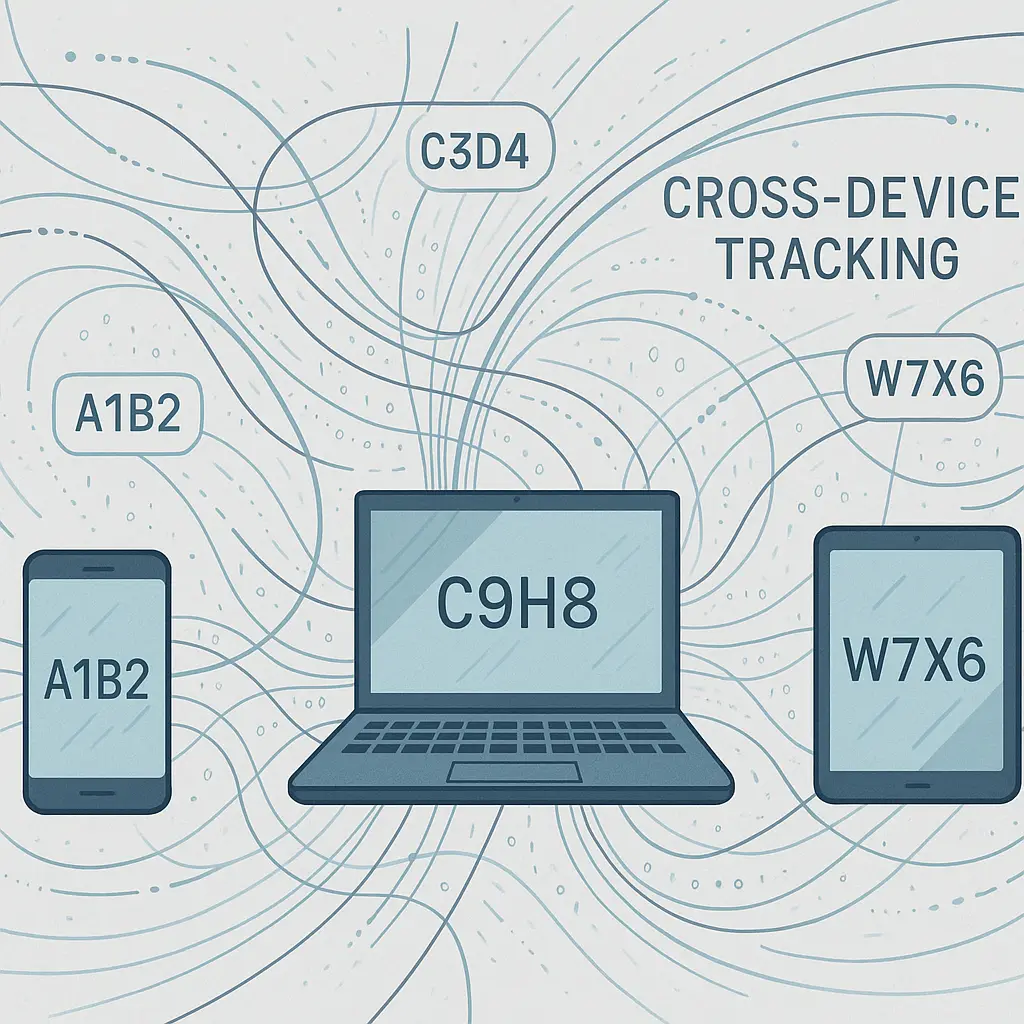
This architecture enables Telegram's most popular features. You can access the same conversation from your phone, tablet, laptop, and web browser simultaneously. Messages sync instantly across devices. You can search your entire message history from any device. Groups scale to hundreds of thousands of members. File sharing works smoothly.
But it means Telegram holds the keys. The company can technically access your message content. So can anyone who compromises Telegram's servers or compels the company to provide access.
Secret Chats work differently. They use end-to-end encryption, where only you and your recipient hold the decryption keys. Messages exist only on the two devices in the conversation. Telegram's servers relay encrypted data they cannot read.
Secret Chats sacrifice convenience for privacy. They don't sync across devices. You can't access them from your laptop if you started the conversation on your phone. They only work for one-on-one conversations, not groups. There's no message search. But the privacy guarantee is stronger.
The problem is that Secret Chats are opt-in. When you open Telegram and start a new conversation, you get a regular chat by default. You have to navigate through menus to initiate a Secret Chat. Most users never do.
What Telegram Can See Even in Secret Chats
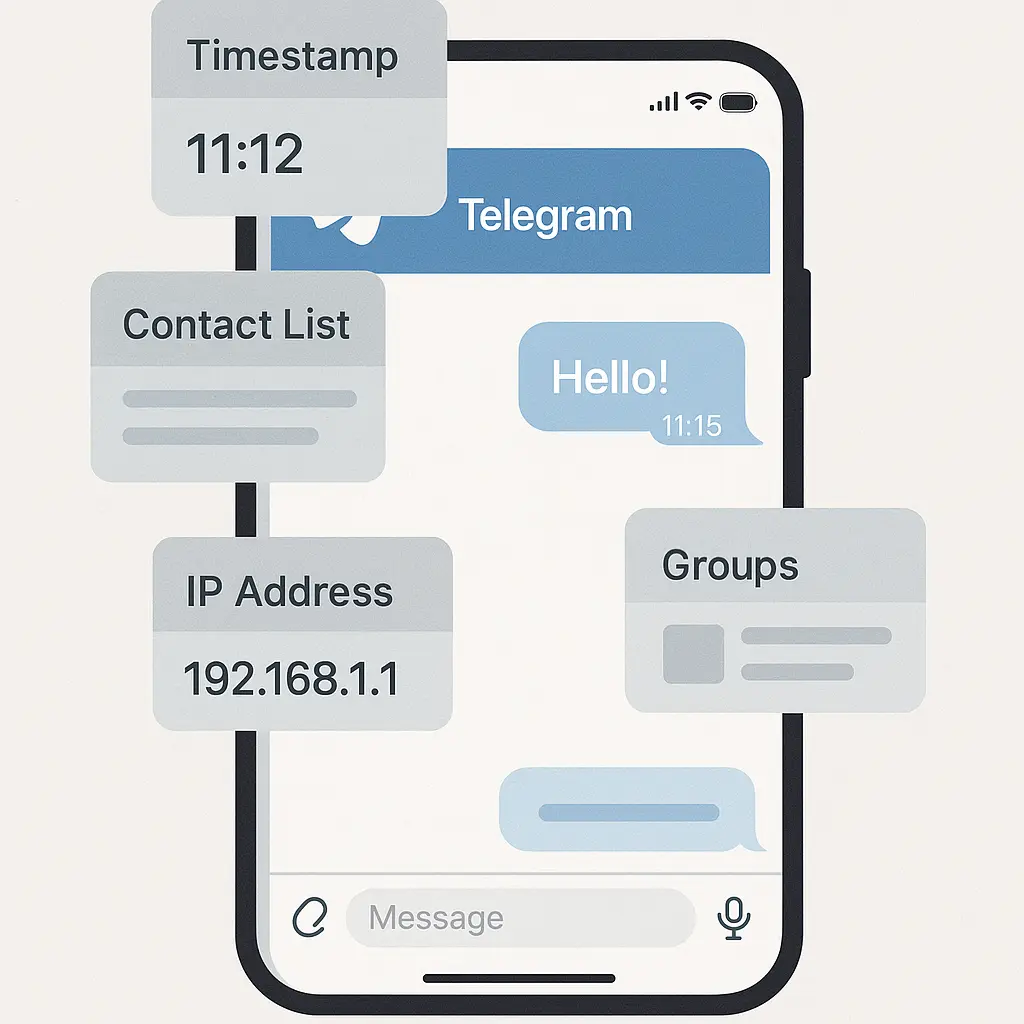
Even when you use Secret Chats, Telegram sees metadata. Metadata is information about your communications rather than the content itself.
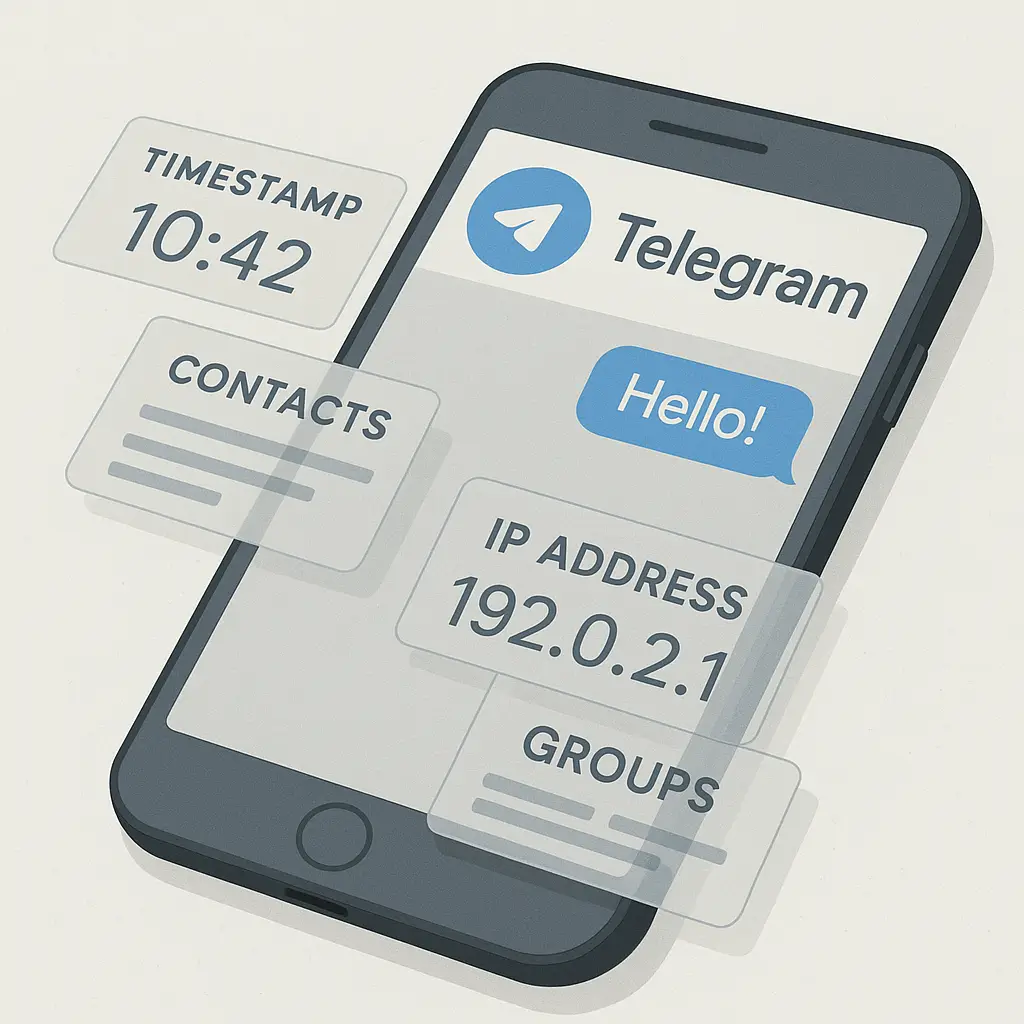
Telegram knows who you talk to, when you talk to them, how often, and for how long. It knows your contact list. It knows which groups you join. It knows your IP address, which can reveal your approximate location. It knows your phone number.
This matters because metadata tells a story. Security researchers have found that communication patterns often reveal as much as content. Knowing you messaged someone at 2 AM tells a different story than knowing you messaged them at 2 PM. Knowing you're in a group with 47 other people whose names and numbers Telegram also knows creates a social graph.
Surveillance Self-Defense guidance from the Electronic Frontier Foundation emphasizes that protecting message content is only part of the privacy equation. Who you talk to, when, and from where can be just as sensitive as what you say.
Telegram's privacy policy acknowledges this. The company states it may disclose IP addresses and phone numbers in response to valid legal requests. Content of Secret Chats cannot be disclosed because Telegram doesn't have it. But metadata can.
The MTProto Protocol: Telegram's Custom Encryption
Telegram uses a proprietary encryption protocol called MTProto. The company designed it in-house rather than using established protocols like Signal Protocol.
This is unusual. The cryptography community generally recommends using well-studied, peer-reviewed protocols rather than inventing new ones. Encryption is difficult to get right. Subtle implementation errors can create vulnerabilities that take years to discover.
MTProto has been analyzed by independent researchers. Some have found theoretical weaknesses. Others argue the protocol is sound. The debate continues. What's clear is that MTProto is less thoroughly vetted than alternatives that have been scrutinized by the broader security community for longer periods.
Telegram defends the choice by pointing to its encryption contests, where the company offers money to anyone who can break MTProto. No one has publicly claimed the prize. Critics counter that the contest conditions are artificial and don't reflect real-world attack scenarios.
The practical risk is hard to quantify. MTProto might be perfectly secure. Or it might contain weaknesses that haven't been discovered yet. Using a custom protocol means accepting that uncertainty.
Server Architecture: Centralized and Closed-Source
Telegram's server code is proprietary. The company doesn't publish it. You cannot audit what happens to your data on Telegram's servers. You have to trust Telegram's claims about its practices.
The client apps are open source. Security researchers can examine the code that runs on your device. But the server-side code that processes, stores, and routes your messages is a black box.
This creates an asymmetry. In regular chats, your messages pass through closed-source servers that could theoretically log, analyze, or retain them in ways you cannot verify. The company says it doesn't. You cannot check.
Compare this to Signal, which publishes both client and server code. Or to Matrix, which is fully decentralized and allows anyone to run their own server. Telegram's architecture concentrates control and requires trust in a single entity.
Telegram is also centralized. All messages route through Telegram's servers. There is no federation, no ability to run your own Telegram server that communicates with the main network. If Telegram's infrastructure goes down, the entire network stops working. If a government pressures Telegram, there's one point of leverage.
The company has historically resisted government requests. It has moved operations to avoid jurisdiction. But the centralized architecture means that resistance depends entirely on Telegram's willingness and ability to maintain it.
The Cloud Storage Trade-Off
Regular Telegram chats store everything in the cloud indefinitely by default. Every message, photo, video, and file you send lives on Telegram's servers until you manually delete it.
This is convenient. You never lose message history. You can search years of conversations instantly. New devices get full access to everything. But it means all that data sits on servers you don't control.
The data is encrypted at rest, according to Telegram. But Telegram holds the keys. The company could access it if compelled or compromised. And the longer data persists, the larger the window for something to go wrong.
Secret Chats include self-destruct timers. You can set messages to delete automatically after a specified time. Once the timer expires, messages disappear from both devices. But regular chats have no such mechanism unless you manually delete conversations.
Many users don't realize they're building a permanent archive of their communications on someone else's infrastructure. The convenience is real. So is the exposure.
Group Chats: Where Privacy Breaks Down Further
Telegram groups can contain up to 200,000 members. Channels, which are one-way broadcast mechanisms, have no size limit. This scale is impressive. It's also where privacy claims become hardest to maintain.
In a large group, end-to-end encryption becomes impractical. The cryptographic overhead of encrypting a message for 50,000 recipients individually would be prohibitive. So all Telegram groups use the same client-server encryption as regular chats.
That means every message in every group passes through Telegram's servers in a form Telegram can read. The company knows who's in which groups. It knows who posts what. It knows who reads what and when.
Group administrators have access to member lists, join/leave events, and message history. In public groups, anyone can see this information. In private groups, it's restricted to members, but the group itself might be larger than you realize.
Some groups are effectively public forums. Others feel private but have hundreds of members. The privacy expectation in a three-person group chat should be different from a 3,000-person community, but Telegram's interface doesn't always make that distinction clear.
The Comparison That Matters: Telegram vs. Signal
Signal is the standard for private messaging. It uses the Signal Protocol, which is open-source, peer-reviewed, and widely adopted. WhatsApp, Facebook Messenger's Secret Conversations, and Google Messages all use variants of the Signal Protocol.
Signal encrypts everything end-to-end by default. Every message, every call, every group chat. There is no unencrypted option. Signal's servers are open-source. The company is a nonprofit with no shareholders and no advertising business model. Signal collects minimal metadata and has demonstrated in court that it genuinely doesn't have data to provide when subpoenaed.
Telegram's advantage is features. Cloud sync, massive groups, channels, bots, better media handling, and a more polished interface. These features come at a privacy cost.
The choice depends on your priorities. If you want maximum privacy and are willing to sacrifice convenience, use Signal. If you want Telegram's features and accept the privacy trade-offs, use Telegram but understand what you're accepting.
The mistake is assuming Telegram offers Signal-level privacy with better features. It doesn't.
When Telegram's Privacy Actually Matters
Telegram is more private than SMS, which sends messages in cleartext through carrier networks. It's more private than email, which typically travels unencrypted between servers. It's more private than Facebook Messenger's default mode or Instagram DMs.
For casual conversations, Telegram's regular chats provide reasonable protection against opportunistic eavesdropping. Your ISP can't read your messages. Neither can someone on the same coffee shop WiFi. That's worth something.
For sensitive discussions, the calculation changes. If you're a journalist communicating with a source, an activist organizing in a hostile environment, or anyone whose communications might be targeted, Telegram's regular chats are not sufficient. Secret Chats are better but still expose metadata. Signal is the better choice.
The threat model matters. Telegram protects against casual snooping but not against a determined adversary who can compel the company or compromise its servers. Know which threat you're defending against.
The Marketing vs. the Mechanism
In Foundation, Isaac Asimov wrote about psychohistory, a fictional science that predicts the behavior of large populations by understanding underlying mechanisms rather than surface appearances. The Galactic Empire looked stable on the surface. The mathematics told a different story.
Telegram's marketing emphasizes privacy and security. The underlying mechanism tells a more nuanced story. Client-server encryption protects data in transit but not at rest. Proprietary protocols and closed-source servers require trust. Metadata remains visible. Default settings favor convenience over privacy.
None of this makes Telegram malicious or useless. It makes Telegram a messaging app with specific trade-offs. Understanding those trade-offs lets you use it appropriately.
If you want Telegram's features and accept that the company can technically access your regular chats, that's a reasonable choice. If you believe you're getting Signal-level privacy, you're mistaken.
What You Can Actually Do
If you're going to keep using Telegram, here's what improves your privacy within the platform's constraints:
Use Secret Chats for sensitive one-on-one conversations. The feature exists. Use it. Yes, it's less convenient. That's the trade-off.
Review your privacy settings. Telegram lets you control who can see your phone number, profile photo, and last seen status. Navigate to Settings > Privacy and Security and configure each option.
Be conscious of group size. A group with five people is different from a group with 500. Adjust what you share accordingly.
Delete old conversations. If you don't need a permanent archive, delete chats manually. The data disappears from Telegram's servers.
Understand that Telegram sees metadata. If that matters for your situation, consider whether Telegram is the right tool.
For truly sensitive communications, use Signal. It's free, open-source, and designed from the ground up for privacy. The interface is less polished than Telegram's. The feature set is smaller. The privacy guarantee is stronger.
The Privacy You Think You Have vs. The Privacy You Actually Have
Telegram is secure enough for most everyday use. It's not secure enough for high-stakes privacy needs. The gap between those two statements is where confusion lives.
The app's reputation exceeds its technical privacy protections. That reputation comes from Telegram's resistance to government requests, its association with privacy-focused communities, and effective marketing. The technical architecture tells a more limited story.
You can use Telegram responsibly by understanding what it actually protects. Regular chats protect content in transit but not from Telegram itself. Secret Chats protect content end-to-end but expose metadata. Groups are convenient but inherently less private. Cloud storage is useful but creates a persistent record.
These aren't secrets. Telegram's documentation explains most of this. But documentation and user perception often diverge. Many people use Telegram believing it offers privacy protections it doesn't provide by default.
The reality check is simple: if you wouldn't want Telegram the company to read your message, don't send it in a regular chat. If you wouldn't want anyone to know who you're talking to and when, Telegram isn't the right tool. If you want convenient cloud-synced messaging with reasonable protection against casual threats, Telegram works fine.
Know which category your conversation falls into. Choose accordingly.