Voiceprint Authentication: The Security Theater Behind 'Your Voice Is Your Password'
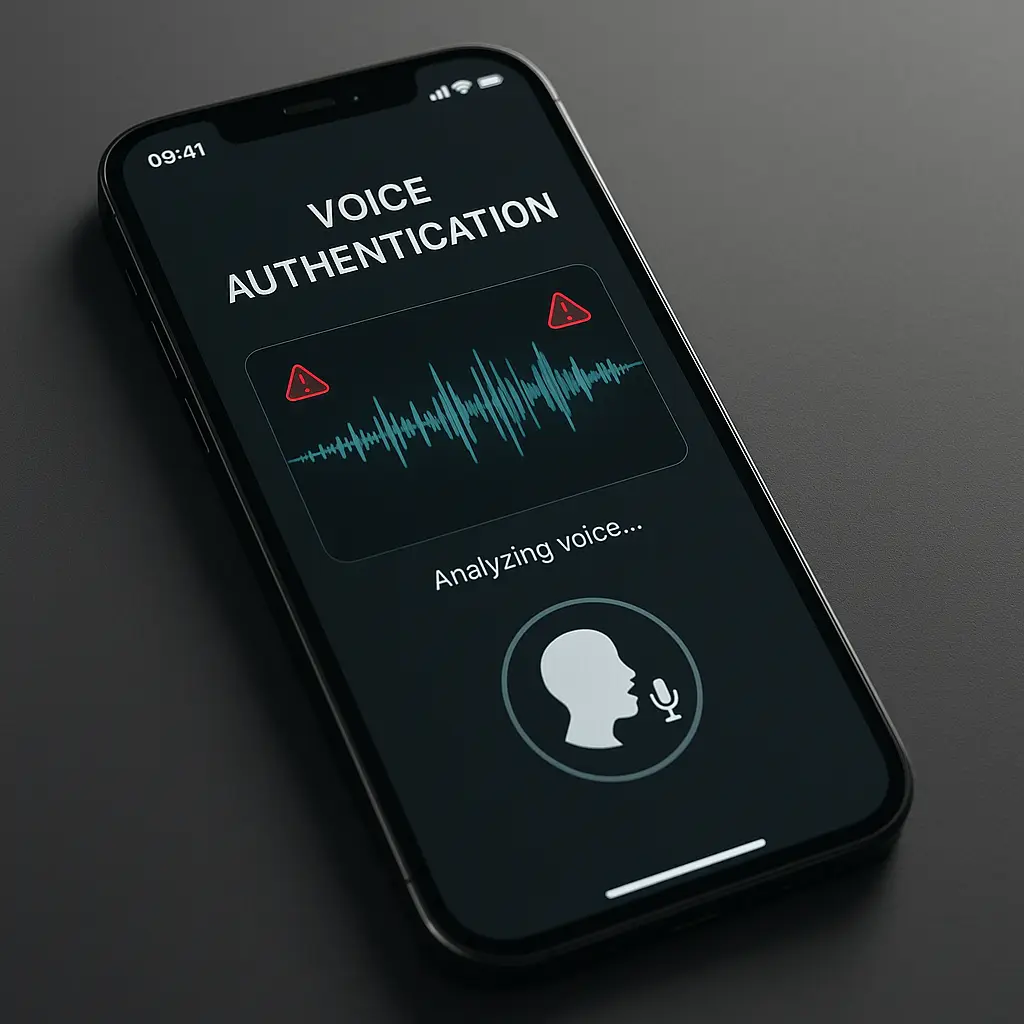
Your bank offers voice authentication. Your phone supports it. Voice assistants use it to recognize you. The promise is simple: your voice is unique, always with you, and harder to steal than a password.
The reality is messier. Voice authentication fails under conditions that don't affect other biometrics. It's vulnerable to attacks that don't require physical proximity. And the convenience that makes it attractive creates the exact conditions where security breaks down.
Here's what actually happens when you authenticate with your voice, where the technology fails, and why treating it as secure creates risks you probably haven't considered.
The Mechanism Behind Voice Authentication
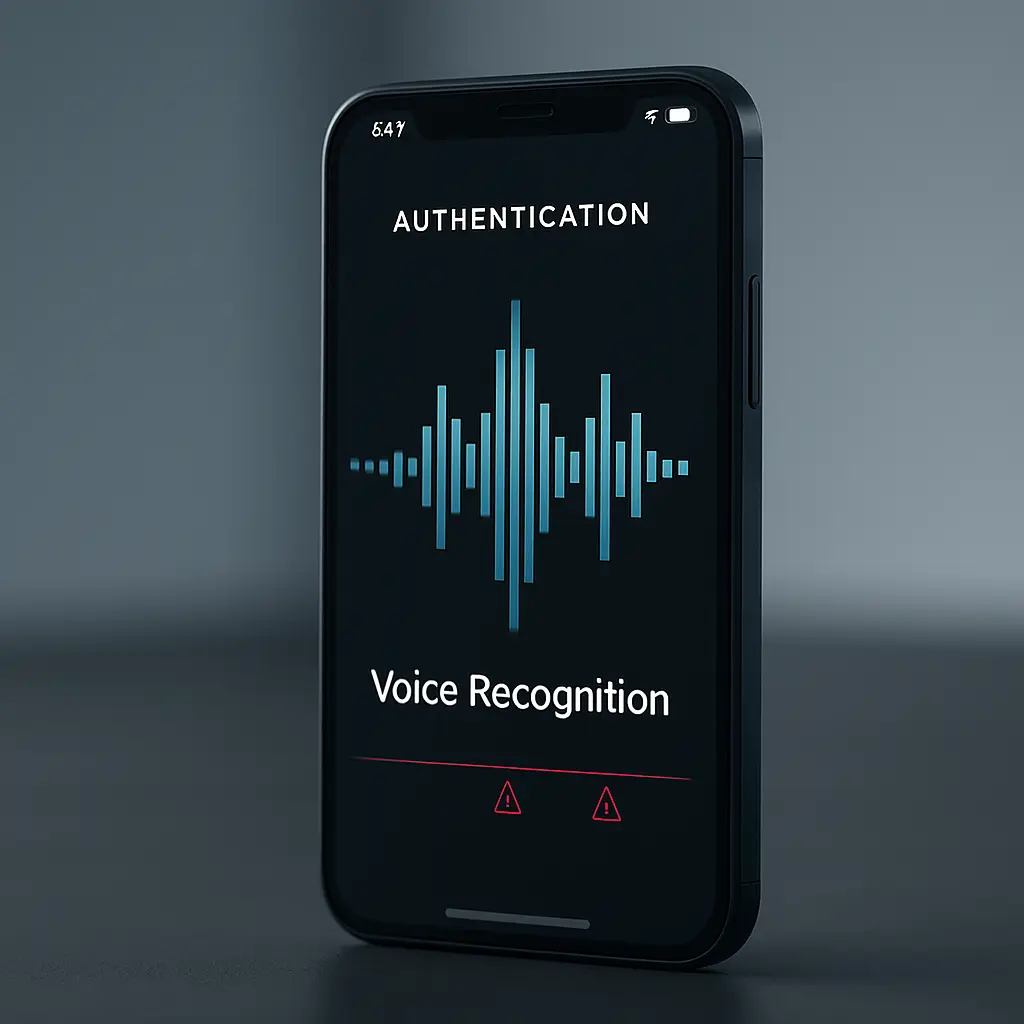
Voice authentication analyzes physical characteristics of your speech: pitch, tone, cadence, vocal tract shape, and the way your mouth and throat produce sound. These features combine into what vendors call a voiceprint, stored as a mathematical model derived from enrollment samples.
When you authenticate, the system captures your speech, extracts the same features, and compares them to the stored model. If the match score exceeds a threshold, you're authenticated. If it falls below, you're rejected.
The threshold is where the tradeoff lives. Set it high, and legitimate users get rejected by normal voice variations. Set it low, and imposters get through. There's no setting that eliminates both false rejections and false acceptances. You're always choosing which failure mode you'll tolerate more often.
CISA's cybersecurity best practices emphasize defense in depth precisely because single-factor authentication of any kind creates a single point of failure. Voice authentication compounds this by introducing failure modes that don't exist with passwords or hardware tokens.
Most implementations use text-dependent verification, where you repeat a specific phrase, or text-independent verification, where you speak naturally. Text-dependent is slightly harder to spoof with recordings but easier to capture if an attacker knows the phrase. Text-independent is more flexible but also more vulnerable to synthetic speech.
The underlying assumption is that your voice is hard enough to replicate that verification provides meaningful security. That assumption held better in 2010 than it does in 2026.
What Makes Voice Authentication Different From Other Biometrics
Fingerprints and face geometry don't change when you have a cold. Your voice does. Stress, illness, aging, medication, time of day, and environmental noise all affect the acoustic features that voice authentication measures.
In The Fellowship of the Ring, Gandalf speaks the password "mellon" to open the Doors of Durin. The door doesn't care if he's hoarse, tired, or speaking from inside a cave. It hears the word and opens. Voice authentication in 2026 works the opposite way: it cares deeply about how you sound, not just what you say. And how you sound changes constantly.
This variability creates false rejection rates higher than fingerprint or face recognition. Industry figures suggest voice authentication rejects legitimate users around 5-10% of the time under normal conditions. Add background noise, a head cold, or a stressful call, and that rate climbs.
False rejections create a worse security problem than false acceptances in practice. When users get locked out repeatedly, they demand workarounds: fallback authentication methods, lowered thresholds, manual overrides. Each workaround weakens the system. The convenience that made voice authentication attractive becomes the reason it fails to protect anything.
Your voice is also easier to capture remotely than other biometrics. Fingerprints require physical contact or high-resolution imaging at close range. Face recognition requires line of sight. Voice samples travel over phone lines, get recorded in meetings, appear in videos, and leak through every conversation you have in public.
An attacker who wants your fingerprint has to get close. An attacker who wants your voice can call you, record a video chat, or clip audio from a presentation you gave. The attack surface is fundamentally larger.
AI Voice Cloning Changes the Threat Model Entirely
Voice cloning tools in 2026 generate synthetic speech that replicates your voice from a few seconds of sample audio. The mechanism is straightforward: a neural network analyzes your voice's acoustic features, builds a model, and generates new speech in your voice saying words you never spoke.
I've tested this with publicly available tools. Three seconds of clear audio is enough to produce a clone convincing enough that I can't reliably distinguish it from my own voice in a blind test. The quality isn't perfect, but it doesn't need to be. It needs to fool an automated system comparing acoustic features, not a human listener who knows me.
Voice authentication systems attempt to detect synthetic speech through liveness checks: asking you to repeat random phrases, analyzing micro-variations in speech that neural networks don't replicate perfectly, checking for artifacts in the audio signal that indicate synthesis.
These defenses work against 2020-era voice cloning. They work less well against 2026 models. And they don't work at all when the attacker combines cloning with a real-time voice conversion tool that processes their speech through your voice model during a live call.
CISA's malware analysis resources document how attackers adapt to defensive measures faster than defenders adapt to attacks. Voice cloning follows the same pattern. Each liveness detection technique gets reverse-engineered, then defeated. The detection arms race favors attackers because they only need to succeed once.
Some voice authentication vendors claim their systems detect AI-generated speech. What they mean is their systems detect the specific artifacts produced by the AI models they've tested against. New models produce different artifacts. The detection is always playing catch-up.
Where Voice Authentication Actually Gets Used
Banks use voice authentication for phone support. You call in, speak a passphrase, and the system verifies your identity before routing you to an agent. This is the highest-stakes deployment, protecting access to financial accounts.
Voice assistants use it for personalization. Alexa, Google Assistant, and Siri recognize your voice to deliver your calendar, your music, your shopping list. This is lower stakes. The worst case is someone else hears your schedule or orders something on your account.
Some enterprise systems use it for physical access control or time tracking. You speak into a microphone to unlock a door or clock in for a shift. Stakes vary depending on what the door protects.
The pattern across all deployments: voice authentication works best when the consequences of failure are low and the user population is cooperative. It works worst when attackers are motivated and the system needs to distinguish between a legitimate user under stress and an attacker with preparation time.
Banking is the worst possible use case by these criteria. Attackers are highly motivated. Users are often stressed when they call. The system needs to work reliably under conditions where voice quality degrades. And the consequences of false acceptance include direct financial loss.
Yet banking is where voice authentication gets deployed most aggressively, because it reduces call center costs. The security tradeoff is real, but the economic incentive is stronger.
The Failure Modes You Don't Expect
Voice authentication fails in ways that aren't obvious until you encounter them. Here's what actually happens in practice.
Background noise defeats verification. Call your bank from a busy street, and the system can't isolate your voice from traffic. You get rejected. Call from a quiet room, and the acoustic environment doesn't match your enrollment samples. You might still get rejected. The system wants your voice in the same conditions where you enrolled, which rarely happens.
Illness changes your voice enough to fail verification. A head cold alters the resonance of your vocal tract. Laryngitis changes your pitch. Allergies affect your breathing patterns. All of these shift the acoustic features the system measures. You sound like yourself to a human listener, but not to the algorithm.
Stress changes your voice. Calling your bank because your card was stolen is inherently stressful. Stress tightens your vocal cords, raises your pitch, and speeds your speech. The system compares this stressed voice to your calm enrollment samples and flags a mismatch.
Aging degrades match scores over time. Your voice changes as you age. Vocal cords lose elasticity, lung capacity decreases, and resonance shifts. Enrollment samples become less accurate over years. Some systems require re-enrollment periodically. Most don't, and match scores drift downward until false rejections become common.
Environmental echo and reverberation matter. Enroll in a small room, authenticate in a large one, and the acoustic reflections differ. The system hears the difference. Same voice, different space, failed authentication.
Each failure mode creates pressure to lower the matching threshold or add fallback methods. Both weaken security. The system that promised to verify your identity with your voice ends up relying on backup PINs, security questions, or agent override, because voice authentication alone fails too often to be usable.
What Attackers Actually Exploit
Attackers don't need to defeat voice authentication perfectly. They need to defeat it well enough, often enough, to make the attack profitable.
Recordings work against basic systems. If the system uses text-dependent verification with a fixed passphrase, recording you saying that passphrase once is enough. Play it back during authentication, and many systems accept it. Liveness detection stops this, but not all systems implement it.
Social engineering gets you to speak the passphrase. An attacker calls, pretends to be from your bank's fraud department, and asks you to verify your identity by speaking your passphrase. You comply. They record it. They use it later. You never know the authentication happened.
AI cloning works when sample quality is high. An attacker with a clean recording of your voice can generate a clone convincing enough to pass automated verification. The success rate isn't 100%, but it's high enough that attackers try it. When it works, they get access. When it fails, they try again with a different sample or technique.
Combining techniques defeats layered defenses. Use a cloned voice for the initial verification, then social engineer the agent if the system flags something suspicious. Or use a recording for the passphrase, then answer security questions gathered from social media. Defense in depth only works if every layer is strong. Voice authentication is often the weakest layer.
The economic calculation for attackers is simple. If voice authentication protects high-value accounts, and the attack success rate is above single-digit percentages, the attack is worth attempting. The cost of trying is low. The payoff from success is high.
The Reality Check: Voice Authentication Is Weak Standalone Security
Voice authentication is not inherently broken. It's weak when deployed as a sole authentication factor, which is how most systems use it.
As one factor in a multi-factor system, voice authentication adds a layer. You need the passphrase, the voice, and maybe a PIN or device. An attacker needs to defeat all three. That's harder than defeating voice alone.
As the only factor, voice authentication creates a single point of failure with multiple attack vectors. Recordings, cloning, social engineering, and environmental failures all bypass it. The false rejection rate forces systems to add fallbacks, which attackers exploit.
The industry knows this. NIST's cybersecurity framework emphasizes multi-factor authentication as a baseline control. Voice-only authentication doesn't meet that baseline. It's single-factor authentication with extra steps.
Banks deploy it anyway because it's cheaper than human verification and faster than other methods. The security tradeoff is acknowledged internally and accepted as a cost of doing business. When fraud happens, the bank absorbs the loss. The customer rarely knows voice authentication was the weak point.
If you're offered voice authentication, use it only when it's paired with another factor. If it's the only option, understand you're accepting risk the vendor isn't advertising. Your voice is not a password. It's an identifier that's easy to capture, increasingly easy to replicate, and unreliable under the conditions where you need it most.
What You Can Actually Do
If voice authentication is enabled on your accounts, here's what changes the risk calculation.
Pair it with another factor. Never use voice as the sole authentication method for accounts containing financial data, personal information, or access to other accounts. Require a PIN, password, or hardware token in addition to voice. Multi-factor authentication where voice is one factor is substantially stronger than voice alone.
Disable it for high-value accounts. If your bank offers voice authentication as optional, and you can authenticate with other methods, disable it. The convenience isn't worth the risk for accounts where loss matters.
Limit public voice samples. Every podcast interview, conference talk, video call, and voice message you leave creates a sample an attacker can use for cloning. You can't eliminate this entirely, but you can avoid posting high-quality voice recordings publicly when it's not necessary.
Know the fallback method. When voice authentication fails, what happens next? If the fallback is a security question or agent override, that's the real authentication method. Voice is just friction before you get there. Know what the fallback is and secure it properly.
Challenge suspicious authentication requests. If someone calls claiming to be from your bank and asks you to speak your passphrase for verification, hang up and call the bank directly using the number on your card. Legitimate banks don't call you and ask you to authenticate to them. That's a social engineering attack.
Monitor account activity. Voice authentication failures leave traces. Check your account for login attempts, location changes, or calls you didn't make. If you see authentication activity you don't recognize, contact the provider immediately.
The goal isn't to make voice authentication perfect. It's to understand its limitations and structure your security around them. Voice is a convenience feature that adds some security when used correctly. It's not a replacement for passwords, PINs, or hardware tokens, no matter what the marketing says.