Travel Credit Cards for International Trips: Which Features Actually Protect You
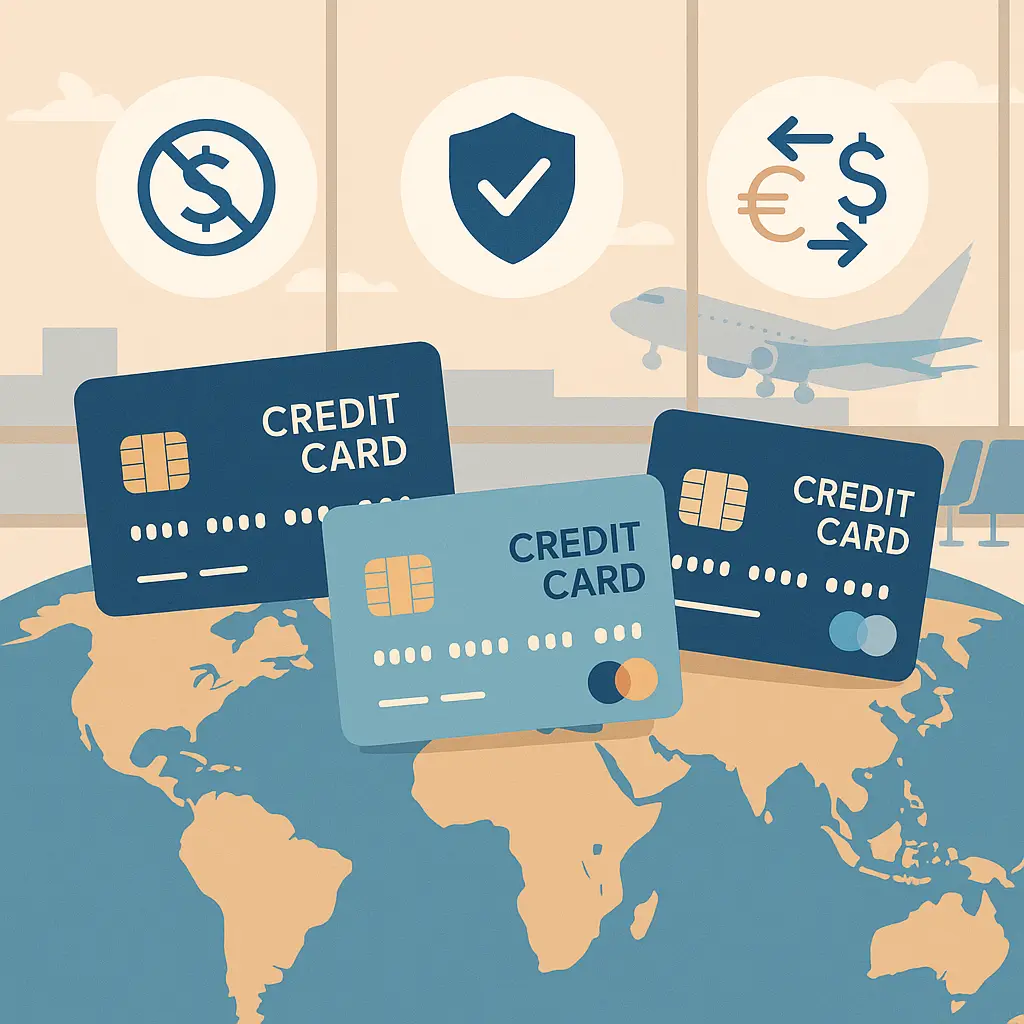
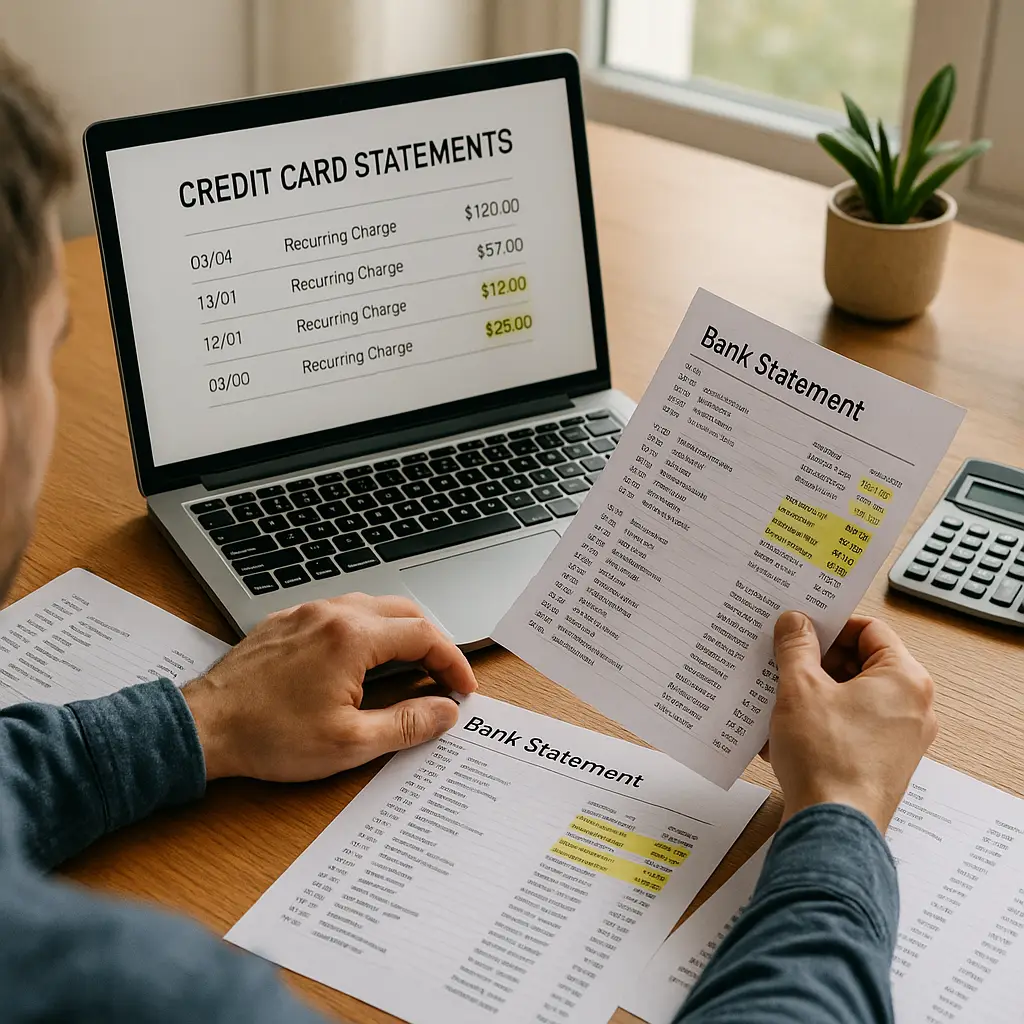
You're standing at a gelato counter in Rome. The vendor asks if you'll pay by card. You hand over your everyday credit card without thinking. Three weeks later, you're home reviewing your statement and discover you paid an extra $47 in foreign transaction fees across your trip.
That's the hidden cost most travelers miss until it's too late. But foreign transaction fees are just one piece of the travel payment puzzle. Fraud protection, acceptance networks, emergency replacement policies, and currency conversion methods all differ dramatically between cards marketed to travelers and the card sitting in your wallet right now.
I've spent two decades writing about financial security for vendors who sell these products. The marketing promises convenience and protection. The fine print tells a different story. Here's what actually matters when you're choosing payment methods for international travel, stripped of the sales pitch.
The Foreign Transaction Fee Reality
Foreign transaction fees appear as a percentage added to every purchase you make outside the United States. The standard rate is 3%. That means a $1,000 hotel bill costs you $1,030. A $50 dinner costs $51.50. The fee applies whether you're physically abroad or buying from an international website while sitting at home.
The fee compensates your card issuer for currency conversion and cross-border processing. Some issuers waive it entirely on specific cards. Others charge it on every card they issue. The fee structure has nothing to do with the card's annual fee, rewards program, or credit limit. A card with a $500 annual fee might charge foreign transaction fees. A no-annual-fee card might waive them.
You find out which category your card falls into by reading the fee disclosure in your account terms or calling the number on the back of your card. "No foreign transaction fees" appears as an explicit statement in marketing materials for cards that waive the charge. If you don't see that phrase, assume the fee applies.
Travel-focused credit cards from major issuers typically waive foreign transaction fees as a standard feature. General-purpose cards from the same issuers often don't. The difference isn't the network (Visa, Mastercard, American Express). It's the specific product you're holding.
Credit Cards vs. Prepaid Travel Cards: The Protection Gap
Credit cards and prepaid travel cards both let you pay abroad without carrying cash, but the fraud protection mechanisms differ in ways that matter when something goes wrong.
Credit cards extend a line of credit. When you dispute a fraudulent charge, federal law limits your liability to $50, and most issuers waive that entirely under their zero-liability policies. The disputed amount doesn't leave your bank account while the investigation proceeds. You file the dispute, the issuer investigates, and you're not out the money during that process.
Prepaid travel cards hold cash you loaded in advance. When fraud occurs, the money is already gone from the card. You file a dispute, but you're waiting for a refund rather than preventing a deduction. The legal protections are weaker. Prepaid cards fall under different regulations than credit cards, and the liability limits and investigation timelines vary by issuer.
The FTC's guidance on payment methods explains these distinctions in detail. Credit cards offer stronger consumer protections because they're governed by the Fair Credit Billing Act. Prepaid cards don't fall under the same framework.
Some travelers prefer prepaid cards because they limit loss exposure to the loaded amount. If the card gets stolen, the thief can't rack up charges beyond what you put on it. That's true. But it also means you're carrying multiple cards to cover your trip expenses, and each card becomes a separate fraud target with weaker protections than a single credit card would provide.
I think the prepaid card advantage is overstated for most travelers. The fraud protection gap outweighs the theoretical benefit of limiting exposure, especially when credit cards already cap your liability at zero for unauthorized charges.
Acceptance Networks: Where Your Card Actually Works
Visa and Mastercard have the widest global acceptance. You'll find them at merchants in nearly every country, from major cities to rural villages. That broad network comes from decades of international infrastructure investment and relationships with local banks.
American Express and Discover work in major tourist areas and chain hotels but face limited acceptance in smaller markets. A restaurant in Paris might take Amex. A family-run trattoria in Sicily might not. The acceptance gap narrows in countries with heavy American tourism and widens everywhere else.
The difference isn't about card quality or security. It's about merchant agreements. Visa and Mastercard charge lower processing fees to merchants in many markets, making them more attractive to small businesses operating on thin margins. Amex and Discover charge higher fees in exchange for other benefits to merchants, but those benefits don't always outweigh the cost for a shop owner processing 20 transactions a day.
You solve this by carrying at least two cards on different networks. If your primary card is Visa, bring a Mastercard as backup. If you prefer American Express for the rewards, bring a Visa or Mastercard for places that don't take Amex. The backup card doesn't need to be a premium travel card. It just needs to work when your first choice doesn't.
Some travelers assume chip-and-PIN is required abroad. It's not universal anymore. Chip-and-signature works in most places now, and contactless tap-to-pay is becoming standard in Europe and Asia. But you'll still encounter occasional terminals that expect a PIN, especially at automated kiosks for train tickets or parking. Know your card's PIN before you leave, even if you rarely use it at home.
Dynamic Currency Conversion: The Hidden Fee You Can Refuse
You're paying for a meal in Barcelona. The terminal asks if you want to pay in euros or U.S. dollars. This is dynamic currency conversion, and choosing dollars almost always costs you more.
Here's the mechanism: The merchant's payment processor converts the charge to dollars at their exchange rate, which includes a markup. That markup typically ranges from 3% to 7% above the actual exchange rate. You see the dollar amount on the terminal, which feels convenient because you know exactly what you're paying in familiar currency. But you're paying extra for that convenience.
When you choose to pay in the local currency (euros in this example), your card issuer handles the conversion at their exchange rate. Visa and Mastercard use wholesale exchange rates that are much closer to the actual market rate. Even if your card charges a foreign transaction fee, you'll usually pay less than the dynamic currency conversion markup.
The terminal prompt is designed to nudge you toward the more expensive option. It frames the choice as helpful ("Would you like to see the charge in dollars?") when it's actually offering you a worse deal. Always choose to pay in local currency. Decline the conversion. Let your card issuer handle it.
This applies to ATM withdrawals too. When you're pulling cash from an ATM abroad, the machine might offer to convert the withdrawal to dollars for you. Decline. Take the cash in local currency and let your bank handle the conversion.
Fraud Monitoring and International Travel Notifications
Credit card issuers use fraud detection algorithms that flag unusual spending patterns. A purchase in Rome when your card normally gets used in Cleveland triggers an alert. The issuer might decline the transaction, freeze your card, and send you a fraud alert.
This protection is useful at home. It becomes a problem abroad when a legitimate purchase gets blocked because the algorithm thinks it's fraud.
You prevent this by notifying your card issuer before you travel. Most issuers let you set travel notifications through their mobile app or website. You enter your destination and travel dates. The system notes that international transactions during that window are expected, not suspicious.
Some issuers claim their fraud detection is sophisticated enough that travel notifications are unnecessary. That's sometimes true. But I've seen enough travelers get stranded with a frozen card to recommend setting the notification anyway. It takes two minutes and eliminates a category of risk.
If your card does get declined abroad, you need the issuer's international customer service number. That's different from the number on the back of your card, which might not work from overseas. The international number appears on your issuer's website, usually in the travel or contact section. Save it in your phone before you leave.
Many travel-focused cards offer 24/7 international support with emergency card replacement. If your card gets stolen in Tokyo, they'll overnight a replacement to your hotel. That service costs the issuer money, which is why it's more common on premium cards with annual fees. But some no-annual-fee travel cards include it too. Check your card's benefits guide.
Chip-and-PIN vs. Chip-and-Signature: What Still Matters
U.S. credit cards use chip-and-signature by default. You insert the chip, and the terminal prints a receipt for you to sign. European and Asian cards use chip-and-PIN. You insert the chip and enter a four-digit PIN to authorize the transaction.
This difference used to create real problems for American travelers. Automated kiosks at train stations and gas pumps expected a PIN and wouldn't accept a signature. You'd need to find a staffed counter to complete the purchase.
That gap has narrowed significantly. Most terminals now accept both signature and PIN. Contactless payments (tap-to-pay) bypass the issue entirely for transactions under certain thresholds. But you'll still encounter occasional situations where a PIN is required, especially at unstaffed kiosks.
U.S. issuers will assign a PIN to your credit card if you request one. Call the number on the back of your card and ask. Some issuers set a default PIN automatically. Others require you to choose one. The PIN is different from your debit card PIN, even if both cards are from the same bank.
Know your credit card PIN before you travel. Test it at an ATM at home if you're unsure. The last thing you want is to be standing at a train station kiosk in Munich, trying to remember a PIN you set three years ago and never used.
Emergency Card Replacement Abroad
Your wallet gets stolen in Bangkok. You have no cards, no cash, and a week left on your trip. What happens next depends on which card you were carrying.
Premium travel cards typically offer emergency card replacement within 24 to 48 hours. You call the international support line, report the theft, and the issuer sends a replacement card to your hotel or a nearby bank branch. Some issuers also provide emergency cash advances to tide you over until the card arrives.
Standard cards might replace the card, but the timeline stretches to a week or more. The issuer mails the card to your home address, not your current location. You're stuck using whatever backup payment method you brought or relying on wire transfers from family.
This is why carrying two cards on your trip matters. Keep them in different places. One in your wallet, one in your hotel safe. If your wallet gets stolen, you still have access to funds while you wait for the replacement.
I'd estimate that around 10% of travelers actually do this. Most people carry one card and hope for the best. That works until it doesn't.
Some travel cards also offer virtual card numbers through their mobile app. If your physical card gets stolen, you can generate a virtual card number immediately and use it for online purchases or add it to your phone's digital wallet for contactless payments. That feature won't help you at a cash-only market, but it keeps you functional for hotel bills and restaurant tabs while you wait for the physical replacement.
Rewards Programs and Foreign Spending
Travel credit cards market themselves on rewards: points, miles, or cash back on every purchase. The value of those rewards varies wildly depending on how you use them.
Points and miles programs let you redeem for flights, hotels, or statement credits. The redemption value fluctuates based on when and how you book. A point might be worth 1 cent when redeemed for a statement credit and 2 cents when redeemed for a business-class flight during peak season. The complexity is intentional. It keeps you engaged with the program and makes direct comparisons difficult.
Cash back programs are simpler. You earn a percentage back on every purchase, and that percentage appears as a statement credit or deposit to your bank account. The value is transparent. 2% cash back means you get $2 for every $100 you spend.
Some travel cards offer bonus rewards categories: 3x points on dining, 2x points on travel purchases, 1x points on everything else. Those categories can be lucrative if your spending aligns with them. But they add mental overhead. You're thinking about which card to use for which purchase to maximize points.
I think most travelers overestimate the value of rewards programs and underestimate the value of simplicity. A card with no foreign transaction fees and strong fraud protection delivers guaranteed savings on every international purchase. A card with a complex points program delivers theoretical value that depends on your ability to navigate the redemption system.
That said, if you're already comfortable with points programs and you travel frequently, the rewards can be substantial. Just don't let the rewards structure distract you from the core features that actually protect you abroad: no foreign transaction fees, wide acceptance, solid fraud protection, and responsive customer service.
Annual Fees and the Break-Even Calculation
Travel credit cards with annual fees typically range from $95 to $550. The fee buys you access to benefits: no foreign transaction fees, airport lounge access, travel insurance, priority boarding, and others.
Whether the fee is worth it depends on how much you travel and which benefits you'll actually use.
Here's the math: If your current card charges 3% foreign transaction fees and you spend $3,200 abroad per year, you're paying $96 in fees. A travel card with a $95 annual fee and no foreign transaction fees breaks even. Any spending beyond $3,200 saves you money.
But that calculation assumes foreign transaction fees are your only concern. If you value airport lounge access, travel insurance, or other perks, the break-even point shifts. A $550 annual fee might be worth it if you use the lounge access 20 times a year and the travel insurance saves you $200 on a trip cancellation.
Most travelers don't use the premium benefits enough to justify the premium fee. Research from consumer advocates suggests that around half of premium cardholders don't maximize the benefits they're paying for. They're subsidizing the minority who do.
No-annual-fee travel cards exist. They waive foreign transaction fees, offer basic fraud protection, and work on major networks. They don't include lounge access or premium insurance, but they cover the essentials without the ongoing cost.
If you travel internationally once or twice a year, a no-annual-fee travel card probably makes more sense than a premium card. If you travel monthly and you'll use the premium benefits, the annual fee pays for itself.
Travel Insurance: What's Included and What's Not
Many travel credit cards include some form of travel insurance as a cardholder benefit. The coverage typically includes trip cancellation, trip interruption, lost luggage, and travel accident insurance. The details matter more than the existence of the benefit.
Trip cancellation insurance reimburses you if you have to cancel your trip for a covered reason. Covered reasons usually include illness, injury, death in the family, or severe weather. They don't include "I changed my mind" or "I found a better deal." The reimbursement is typically limited to a percentage of the trip cost, and you need to have purchased the trip using that specific card to qualify.
Trip interruption insurance covers you if your trip gets cut short for a covered reason. If you're hospitalized abroad and need to fly home early, the insurance might cover the change fees and additional airfare. Again, coverage depends on using the card to book the trip.
Lost luggage coverage reimburses you for the value of lost bags, up to a limit. The limit is often lower than you'd expect, sometimes $500 per bag. That's not enough to replace a laptop and camera if they're in the lost luggage, but it covers clothing and toiletries.
Travel accident insurance pays out if you're injured or killed in a covered travel accident. This is the benefit most cardholders never use and never think about until something catastrophic happens.
The catch with all of these benefits is that you need to read the terms carefully and understand what's covered before you rely on them. Some cards require you to decline the rental car company's insurance to activate the card's rental car coverage. Some cards only cover trips up to a certain length. Some cards exclude certain destinations.
I've seen travelers assume they're covered, file a claim, and discover the situation doesn't meet the policy terms. The card's travel insurance is a backup, not a replacement for dedicated travel insurance if you're taking a high-value trip or traveling to a region with significant risks.
Contactless Payments and Digital Wallets Abroad
Contactless payments using your phone's digital wallet (Apple Pay, Google Pay, Samsung Pay) work in most countries that accept contactless cards. You tap your phone instead of inserting your card. The transaction processes the same way, using the same card credentials stored in the wallet.
This adds a layer of security because your physical card never leaves your possession. If someone's watching you pay, they can't skim your card number or see your card details. The digital wallet generates a one-time token for each transaction, so even if the token gets intercepted, it's useless for future purchases.
Contactless payments are standard in Europe, Asia, and Australia. They're less common in parts of Latin America and Africa, but adoption is growing. In practice, if a terminal accepts contactless cards, it'll accept your phone's digital wallet.
The limitation is that your phone needs battery and the merchant needs a compatible terminal. If your phone dies, you're back to using your physical card. If the merchant only accepts chip-and-PIN, your digital wallet won't work.
I use contactless payments as my primary method abroad when possible. It's faster than inserting a card and waiting for chip processing. But I always carry physical cards as backup.
Debit Cards vs. Credit Cards for International ATM Withdrawals
You'll need local currency at some point during international travel. ATMs are the most common way to get it. But the card you use matters.
Credit cards treat ATM withdrawals as cash advances. Cash advances accrue interest immediately, there's no grace period like there is with purchases. The interest rate on cash advances is typically higher than the purchase APR. And many cards charge a cash advance fee on top of the interest, usually 3% to 5% of the withdrawal amount.
Debit cards pull money directly from your checking account. You're not borrowing, so there's no interest. But your bank might charge a foreign ATM fee (typically $3 to $5 per withdrawal) and an international transaction fee (1% to 3% of the withdrawal amount). Some banks waive these fees on specific account types.
The fraud protection difference matters here too. If someone steals your debit card and drains your checking account, you're waiting for the bank to investigate and refund the money. If someone steals your credit card and runs up charges, you're disputing the charges without the money leaving your account.
I prefer using a debit card from a bank that reimburses ATM fees for international withdrawals. That eliminates the per-withdrawal fee. I accept the international transaction fee as the cost of accessing cash. And I use ATMs inside bank branches during business hours when possible, which reduces the risk of skimmers.
The alternative is to bring cash from home and exchange it abroad. Currency exchange counters at airports charge terrible rates, often 5% to 10% above the market rate. You're better off using an ATM, even with the fees.
Setting Up a Travel Payment Strategy Before You Leave
Here's the practical framework I use for international travel:
Primary card: A no-foreign-transaction-fee travel credit card on the Visa or Mastercard network. This handles most purchases.
Backup card: A second credit card on a different network, also with no foreign transaction fees if possible. This stays in the hotel safe and only comes out if the primary card fails or gets stolen.
Debit card: For ATM withdrawals. I use it once or twice per trip to pull local currency, then store it separately from my credit cards.
Digital wallet: I add my primary card to Apple Pay and use contactless when available.
Cash: I bring a small amount of U.S. currency ($100 to $200) as an emergency backup. This is the last resort if all cards fail.
Before I leave, I:
- Set travel notifications on all cards
- Confirm I know the PIN for each card
- Save international customer service numbers in my phone
- Photograph the front and back of each card and store the images in a password-protected note
- Verify that my cards' expiration dates extend past my return date
This setup has worked through two decades of international travel. I've had cards declined, ATMs malfunction, and merchants refuse certain networks. The redundancy keeps me functional when individual pieces fail.
When Prepaid Cards Actually Make Sense
I've spent most of this article explaining why credit cards beat prepaid cards for most travelers. But there are specific situations where prepaid cards serve a purpose.
If you're traveling with kids or teens who need their own spending money, a prepaid card gives them payment flexibility without access to your credit line. You load a fixed amount, they spend it, and they can't exceed the balance. If the card gets lost or stolen, the exposure is limited to what you loaded.
If you're traveling to a country where credit card fraud is rampant and you're worried about your credit card information getting compromised, a prepaid card isolates the risk. You load what you need for the trip, use it, and dispose of it when you return. Your primary credit card stays secure at home.
If you don't qualify for a credit card due to credit history or you prefer not to use credit, a prepaid card gives you card-based payments without a credit check or debt.
In these cases, choose a prepaid card that explicitly states no foreign transaction fees. Many prepaid cards charge the same 3% fee that regular credit cards do. Read the fee schedule before you load money.
The Cultural Reference That Fits
In Ocean's Eleven, Danny Ocean's crew plans a casino heist with elaborate redundancy. They have primary plans, backup plans, and contingencies for when the backups fail. Every team member knows their role, and every piece of equipment has a duplicate.
The same principle applies here. Your primary travel card is the plan. Your backup card is the contingency. Your debit card, digital wallet, and emergency cash are the redundancies that keep you functional when the primary plan hits an obstacle.
You're not planning for everything to go wrong. You're planning so that when one thing goes wrong, and something always goes wrong, you're not stuck at a foreign ATM at midnight with no way to access money.
Making the Decision: Which Card to Pack
If you're traveling internationally once or twice a year and your current credit card charges foreign transaction fees, get a no-annual-fee travel card. The fee savings alone justify the application.
If you travel frequently and you'll use premium benefits like lounge access and travel insurance, a card with an annual fee might make sense. Run the break-even calculation based on your actual spending and benefit usage.
If you're carrying a card that doesn't waive foreign transaction fees and doesn't offer strong fraud protection, you're paying extra and taking on unnecessary risk. That's the easiest decision to fix.
The best travel card is the one you'll actually use, that works where you're going, and that protects you when something goes wrong. Everything else is marketing.