How to Spot Fake Amazon Products: A Step-by-Step Inspection Guide
You're buying a phone charger on Amazon. The price is good. The reviews look fine. The listing says "Amazon's Choice." You click Buy Now.
Two weeks later, your phone overheats during charging. The cable housing melts. You look closer at the packaging. The logo is slightly off. The safety certifications are fake. You just bought a counterfeit that could have started a fire.
Amazon hosts millions of third-party sellers, and a significant percentage sell counterfeit goods. The platform's size and complexity make it difficult to police, and counterfeiters have learned to game the system. They manipulate reviews, copy legitimate listings, and exploit Amazon's commingled inventory system to mix fake products with real ones.
The FTC receives thousands of complaints about counterfeit goods sold through online marketplaces each year. Consumers report receiving fake electronics, cosmetics, medications, and luxury goods that range from ineffective to dangerous. The problem isn't going away. It's getting more sophisticated.
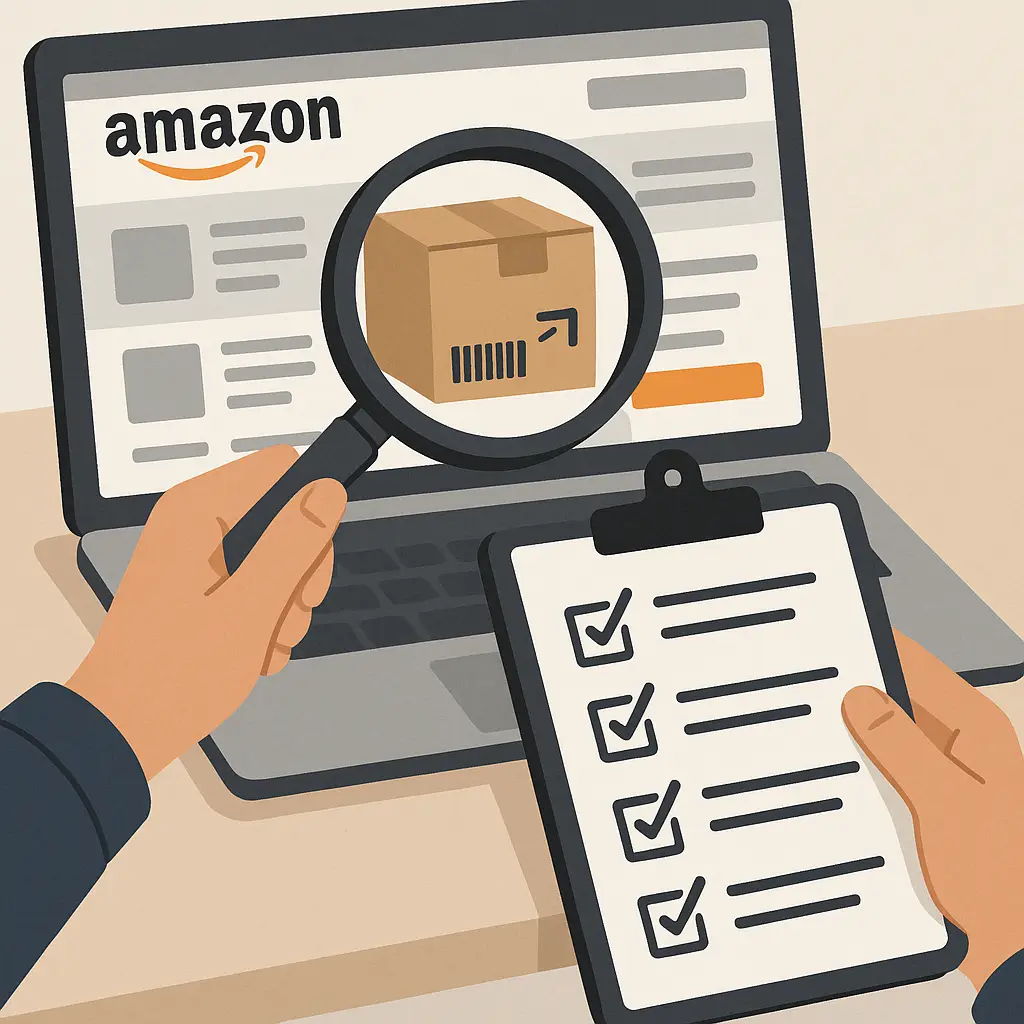
Here's the step-by-step method to verify authenticity before you buy, what each inspection point reveals, and how to protect yourself when counterfeits slip through.
Why Counterfeits Flood Amazon's Marketplace
Amazon operates as both a direct retailer and a marketplace platform. When you search for a product, results include items sold directly by Amazon and items sold by third-party sellers. The distinction matters.
Third-party sellers create storefronts on Amazon with minimal verification. They list products, set prices, and fulfill orders either themselves or through Amazon's Fulfillment by Amazon (FBA) program. Amazon collects a commission on each sale but doesn't inspect products before they're listed or sold.
Counterfeiters exploit this open marketplace structure. They create seller accounts using fake business information, list counterfeit products alongside legitimate ones, and disappear when complaints accumulate. New accounts replace shut-down ones within days.
The commingled inventory problem makes things worse. When multiple sellers offer the same product through FBA, Amazon stores all inventory together in warehouses, identified only by barcode. If one seller sends counterfeit goods into this shared pool, any buyer ordering that product might receive the fake, even if they ordered from a legitimate seller. Amazon's system doesn't track which specific unit came from which seller.
Product categories with high profit margins and low manufacturing costs attract the most counterfeits. Electronics accessories, cosmetics, vitamins and supplements, phone cases, batteries, and luxury goods dominate the counterfeit landscape. These items are easy to produce, hard to distinguish from legitimate products without close inspection, and sell in high volumes.
Brand owners have fought this problem for years. They file trademark complaints, join Amazon's Brand Registry program, and pursue legal action against counterfeiters. The operators adapt faster than enforcement can scale. They create new accounts, slightly alter product names and images, and continue selling.
Step 1: Inspect the Seller Information Before You Look at the Product
Start with the seller, not the product. The listing page shows who's selling the item. Look for the "Ships from and sold by" line near the Buy Now button.
If it says "Amazon.com," you're buying directly from Amazon. This doesn't guarantee authenticity for every product, but it dramatically reduces risk. Amazon handles fulfillment, returns, and customer service directly.
If it says "Fulfilled by Amazon" with a third-party seller name, the seller stores inventory in Amazon warehouses, but Amazon doesn't verify authenticity. The seller could be legitimate or selling counterfeits. You need to investigate further.
If it says "Sold by [Seller Name] and Fulfilled by [Seller Name]," the third-party seller handles everything. Risk increases. You're relying entirely on that seller's legitimacy.
Click the seller's name to view their storefront. Look for these red flags:
Recent account creation: Sellers with storefronts launched in the past few months lack established history. Legitimate businesses typically operate for years. Counterfeiters create new accounts constantly.
Sparse feedback: Check the seller's overall rating and number of reviews. Legitimate sellers accumulate thousands of ratings over time. New accounts with fewer than 100 ratings warrant skepticism, especially if selling high-demand products.
Unrelated product categories: A seller offering phone cases, kitchen gadgets, pet supplies, and beauty products from the same storefront is likely a counterfeit operation or arbitrage reseller. Legitimate brands specialize.
Generic business names: Sellers with names like "Best Quality Store" or random letter combinations often operate temporary storefronts. Legitimate retailers use recognizable business names.
Location mismatches: If the seller claims to be a U.S. business but ships from China, question the listing. Some legitimate businesses operate this way, but it's a common pattern for counterfeit operations.
Read the negative reviews on the seller's storefront, not just the product listing. Patterns of complaints about counterfeit goods, non-delivery, or seller unresponsiveness indicate problems. One or two negative reviews happen to everyone. Dozens of similar complaints reveal systemic issues.
Step 2: Analyze the Product Listing for Counterfeit Patterns
The product listing itself contains clues. Counterfeiters copy legitimate listings but introduce subtle errors and inconsistencies.
Price significantly below market rate: Compare the listing price to the manufacturer's suggested retail price and prices from authorized retailers. If the Amazon listing is 30-50% cheaper, question why. Legitimate sellers occasionally discount products, but deep discounts on in-demand items often signal counterfeits. Counterfeiters undercut legitimate sellers to generate sales volume.
Generic or stolen product images: Legitimate brands use professional product photography with consistent lighting, backgrounds, and angles. Counterfeit listings often use generic stock photos, images stolen from legitimate sellers, or photos showing products without branding. Look for images that seem inconsistent in quality or style across the listing.
Vague or poorly written product descriptions: Legitimate manufacturers provide detailed specifications, materials, dimensions, and usage instructions. Counterfeit listings often contain vague descriptions, grammatical errors, and missing technical details. If the description reads like a rough translation or lacks specifics, be skeptical.
Missing or fake certification claims: Products requiring safety certifications (UL, CE, FCC, FDA) should list them clearly in the description. Counterfeiters either omit certifications or list them without verification. For electronics, look for specific certification numbers you can verify on the certifying body's website. Generic claims like "CE certified" without details are meaningless.
Suspicious brand names or misspellings: Counterfeiters create brands that sound similar to legitimate ones. "Samsang" instead of Samsung. "Appel" instead of Apple. Check the brand name carefully. If you've never heard of the brand and can't find an official website or social media presence, assume it's fake.
Amazon's Choice or Best Seller badges don't guarantee authenticity: These badges are algorithmic recommendations based on sales velocity, price, and ratings. Counterfeit products can earn them if they generate enough sales and manipulate reviews. Don't treat badges as verification.
In Office Space, Peter Gibbons and his friends discover that small, repeated actions compound into significant results. Counterfeiters use the same principle. They make small changes to product names, slightly alter images, and create just enough positive reviews to look legitimate. Each individual change seems minor. Together, they create a convincing facade. Your job is to spot the pattern, not get distracted by individual details that seem plausible.
Step 3: Evaluate Customer Reviews with Skepticism
Customer reviews are the most manipulated part of Amazon's platform. Counterfeiters buy fake reviews, incentivize positive feedback, and report negative reviews to get them removed. You can't trust star ratings alone.
Start by reading the negative reviews, not the positive ones. Sort reviews by "Most recent" or "Top critical reviews." Look for patterns:
Multiple complaints about authenticity: If several reviewers mention receiving counterfeit products, believe them. One person might be mistaken. Five people describing the same issue are probably right.
Reports of quality problems: Legitimate products occasionally have defects, but widespread complaints about poor materials, malfunctioning components, or safety issues suggest counterfeits. Fake electronics fail faster. Fake cosmetics use cheaper ingredients. Fake medications contain wrong dosages or inactive ingredients.
Inconsistent product received: If reviewers report receiving products that don't match the listing description or images, the seller is either shipping counterfeits or engaging in bait-and-switch tactics.
Now check the positive reviews for manipulation signs:
Generic praise without specifics: Reviews that say "Great product!" or "Works perfectly!" without describing actual use or features are often fake. Legitimate reviewers provide details about how they use the product, what they like, and what could be better.
Verified Purchase badge missing: Amazon marks reviews from confirmed purchases with a "Verified Purchase" badge. Reviews without this badge might come from people who didn't buy the product or received it for free in exchange for positive feedback. Not all non-verified reviews are fake, but they warrant extra scrutiny.
Review dates clustered together: If a product has 50 five-star reviews all posted within a few days, question their authenticity. Organic reviews accumulate gradually over weeks or months. Sudden spikes often indicate review manipulation.
Reviewer history shows pattern of five-star reviews: Click on reviewer names to see their other reviews. If someone posts dozens of five-star reviews across unrelated products in a short timeframe, they're likely part of a review farm.
Photos that don't match the product: Some fake reviews include photos of legitimate products to appear authentic. Compare review photos to the listing images. If they show different packaging, branding, or product variations, something's wrong.
Use review analysis tools if you want additional verification. Websites like Fakespot and ReviewMeta analyze Amazon reviews for manipulation patterns. They're not perfect, but they provide another data point.
Step 4: Verify the Product After It Arrives
You've done the research and placed the order. The package arrives. Don't assume it's legitimate just because it came from Amazon. Inspect it.
Check the packaging: Legitimate products come in branded packaging with professional printing, clear logos, and proper spelling. Counterfeit packaging often has blurry printing, color mismatches, grammatical errors, or missing information. Compare the packaging to images from the manufacturer's website.
Examine safety certifications and labels: Electronics should have certification labels (UL, CE, FCC) printed or affixed to the product or packaging. Check that certification numbers match records on the certifying body's website. Fake certifications use real certification marks but with invalid numbers or no numbers at all.
Inspect product quality and materials: Counterfeit products use cheaper materials and lower manufacturing standards. Look for rough edges, uneven seams, flimsy construction, or components that don't fit properly. Compare the product to manufacturer specifications for weight, dimensions, and materials.
Test functionality immediately: Don't wait weeks to test the product. Counterfeit electronics fail faster. Fake cosmetics cause reactions. Fake medications don't work. Test the product within Amazon's return window so you can report problems while you still have recourse.
Verify serial numbers and authenticity codes: Some manufacturers include serial numbers or authenticity verification codes. Check these against the manufacturer's database. If the serial number doesn't exist or shows as already registered to someone else, you have a counterfeit.
Compare to a known authentic product if possible: If you have access to the legitimate version, compare them side by side. Differences in weight, color, texture, or functionality reveal counterfeits.
If you determine the product is counterfeit, document everything. Take photos of the product, packaging, labels, and any defects. Save the seller information and order details. You'll need this documentation to report the problem.
Step 5: Report Counterfeits and Protect Yourself
You've received a counterfeit. Now what?
Report it to Amazon immediately: Use Amazon's A-to-z Guarantee to file a claim. Go to Your Orders, find the purchase, and select "Problem with order." Choose "Item not as described" or "Counterfeit item" as the reason. Upload your documentation photos. Amazon typically issues refunds for counterfeit claims, and repeated complaints trigger seller investigations.
Leave a detailed review warning other buyers: Write a review explaining why you believe the product is counterfeit. Include specific details about packaging inconsistencies, quality problems, or missing certifications. Attach photos. Amazon sometimes removes negative reviews if sellers challenge them, but detailed, factual reviews are harder to dispute.
Report to the FTC: File a complaint at ReportFraud.ftc.gov. The FTC tracks consumer complaints and uses the data to identify patterns and pursue enforcement actions. Your report contributes to broader investigations.
Contact the brand owner: If you bought what you thought was a name-brand product, report the counterfeit to the manufacturer. Most major brands have anti-counterfeiting programs and want to know when their products are being faked. They can pursue legal action against the seller.
Dispute the charge if necessary: If Amazon denies your refund request, dispute the charge with your credit card company. Credit cards offer fraud protection, and counterfeit goods qualify as fraudulent transactions.
Block the seller: After resolving the issue, make sure you never accidentally buy from that seller again. Amazon doesn't offer a direct "block seller" feature, but you can avoid them by checking seller information before every purchase.
What Amazon Could Do (But Doesn't)
Amazon has the technical capability to reduce counterfeits dramatically. The company chooses not to implement certain measures because they would slow down seller onboarding and reduce marketplace growth.
Verification before listing would catch most counterfeit operations. Requiring sellers to provide documentation proving they're authorized to sell branded products would eliminate unauthorized sellers. Amazon implemented this for some categories through Brand Registry, but it's not universal.
Ending commingled inventory would prevent counterfeit products from contaminating legitimate stock. If Amazon tracked inventory by seller instead of by barcode, buyers ordering from legitimate sellers would receive legitimate products. Amazon has resisted this change because it complicates warehouse logistics.
Stricter seller verification would slow down counterfeit account creation. Requiring business licenses, tax documentation, and identity verification for all sellers would make it harder to create disposable accounts. Amazon performs minimal verification to keep seller onboarding fast.
Proactive testing and inspection would catch counterfeits before they reach customers. Amazon could randomly sample products from third-party sellers and verify authenticity. The company does this for some high-risk categories but not broadly.
These changes would cost money and reduce marketplace flexibility. Amazon's business model prioritizes growth and selection over perfect authenticity verification. That's not changing.
Categories Where Counterfeits Are Most Common
Some product categories attract more counterfeits than others. If you're buying in these categories, increase your scrutiny:
Electronics accessories: Phone chargers, cables, batteries, and memory cards are easy to counterfeit and sell in massive volumes. Fake chargers can damage devices or start fires. Fake batteries explode. Fake memory cards fail and corrupt data.
Cosmetics and skincare: Counterfeit cosmetics contain unknown ingredients that cause allergic reactions, infections, or long-term health problems. Packaging looks identical to legitimate products, but formulations differ.
Vitamins and supplements: The supplement industry has minimal regulation, and counterfeits flood the market. Fake supplements contain wrong dosages, inactive ingredients, or contaminants. You're paying for pills that do nothing or cause harm.
Luxury goods and designer items: Handbags, watches, sunglasses, and clothing from luxury brands are heavily counterfeited. If the price seems too good to be true, it is. Legitimate luxury goods rarely appear on Amazon at deep discounts.
Medications and medical devices: Counterfeit medications contain wrong active ingredients, incorrect dosages, or no active ingredients at all. Medical devices like glucose monitors or blood pressure cuffs give inaccurate readings. This category poses serious health risks.
Toys and children's products: Counterfeit toys often fail safety standards and contain lead, phthalates, or small parts that pose choking hazards. Children's products require strict safety certifications. Counterfeits skip those standards.
Auto parts: Fake brake pads, oil filters, and other automotive parts fail under stress and cause accidents. If you're buying safety-critical auto parts, verify the seller carefully or buy from authorized dealers.
When to Skip Amazon Entirely
Sometimes the smart move is not buying from Amazon at all. For certain products, the risk of receiving a counterfeit outweighs the convenience of Prime shipping.
Buy directly from the manufacturer when possible. Apple, Samsung, Sony, and other major brands sell through their own websites. You pay retail price, but you get guaranteed authenticity and full manufacturer warranty.
Use authorized retailers for high-value or safety-critical products. Best Buy, Target, Walmart, and other brick-and-mortar retailers have direct relationships with brands and verify their supply chains. You can inspect products before buying.
Avoid Amazon for medications, supplements, and anything you ingest or apply to your body. The health risks from counterfeits are too high. Buy from pharmacies and established supplement retailers with verified supply chains.
For luxury goods, use brand boutiques or authorized dealers. Amazon isn't the place to buy a Rolex or a Gucci bag. If the price is too good to be true, you're buying a fake.
The Reality of Amazon's Scale
Amazon processes millions of orders daily. Third-party sellers account for more than half of all sales. The platform's scale makes perfect policing impossible.
Counterfeiters know this. They operate in volume, accepting that some accounts will be shut down and some customers will complain. The profit margins on counterfeits are high enough that losing some accounts doesn't matter. They create new ones and continue.
You can't rely on Amazon to protect you. The company has improved enforcement over the years, but the problem persists because the economic incentives favor counterfeiters. They make money faster than Amazon can stop them.
Your defense is skepticism and verification. Treat every third-party seller as potentially illegitimate until proven otherwise. Check seller history, analyze listings, read negative reviews, and inspect products when they arrive. It takes time. It's worth it.
The alternative is receiving counterfeit products that don't work, pose safety risks, or waste your money. That's not a hypothetical. It happens to thousands of Amazon customers every day.
Buy carefully. Verify everything. Report counterfeits when you find them. That's the practical reality of shopping on Amazon in 2026.