Rental scams: fake apartments and landlords
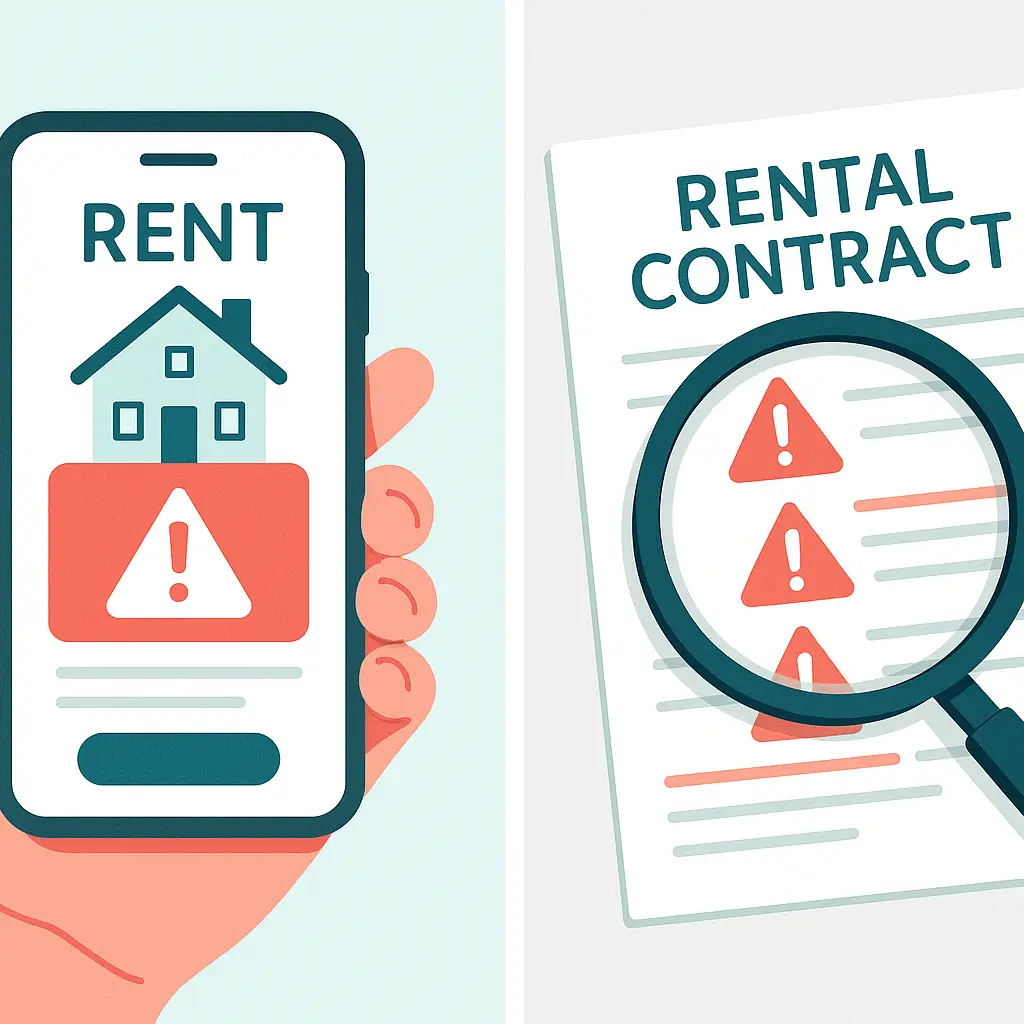
You find the perfect apartment online. Great location, reasonable rent, available immediately. The landlord says they're out of town but you can tour it next week. Just send the deposit now to hold it. You wire the money. The landlord stops responding. The apartment was never theirs to rent.
Rental scams cost Americans hundreds of millions of dollars annually, according to the FTC. The fraud works because it exploits the urgency of housing searches, the trust renters place in online platforms, and the difficulty of verifying ownership from a distance.
Here's the step-by-step method to spot fake listings, verify landlords, and protect yourself before you send money.
How rental scams work
The scammer finds a real rental listing on Zillow, Apartments.com, or a property management site. They copy the photos, description, and address. They repost it on Craigslist, Facebook Marketplace, or a classified site at a slightly lower price to attract attention.
You contact them. They respond quickly, often with a personal story explaining why they can't meet in person. They're overseas for work, caring for a sick relative, or managing the property remotely. They offer to mail you the keys after you send the deposit.
The pressure starts immediately. Other people are interested. The unit won't last. You need to act now. They ask for a wire transfer, Zelle payment, or gift cards because those methods are irreversible and untraceable.
You send the money. They vanish. The real owner never knew their listing was copied. You have no apartment, no deposit, and no way to get your money back.
The FBI's Internet Crime Complaint Center receives thousands of rental fraud reports every year. The median loss is around $1,500, but some victims lose tens of thousands when scammers target high-end properties or corporate relocations.
Red flags that identify fake listings
Certain patterns appear across nearly every rental scam. These aren't subtle. Once you know what to look for, fake listings become obvious.
Below-market rent. If the price is significantly lower than comparable units in the area, investigate why. Scammers price listings to attract volume, not accuracy. Check similar properties on Zillow or Apartments.com to establish a baseline. A studio in downtown Chicago for $800 when comparable units rent for $1,400 is a signal, not a deal.
Out-of-town landlord. The landlord is traveling, deployed overseas, or managing the property from another state. They can't meet in person. They'll mail you the keys after you pay. Legitimate long-distance landlords use property managers or local agents for showings and key exchanges. They don't ask strangers to wire money sight unseen.
Generic or emotional language. The listing uses phrases like "God-fearing family," "looking for trustworthy tenant," or "my beloved home." Scammers add personal details to build trust and discourage scrutiny. Real landlords write functional descriptions focused on square footage, amenities, and lease terms.
Pressure to act immediately. Multiple people are interested. The unit will be gone by tomorrow. You need to secure it now. Urgency is a manipulation tactic. Housing markets move fast, but legitimate landlords don't demand instant wire transfers from applicants they've never met.
Requests for unusual payment methods. Wire transfers, Zelle, Venmo, gift cards, cryptocurrency, or cashier's checks sent before viewing the property. These methods are irreversible. Once you send the money, it's gone. Legitimate landlords accept checks, credit cards, or verified payment platforms after you've signed a lease and toured the unit.
Copied photos. The listing uses professional real estate photos that look identical to other listings. Run a reverse image search on Google Images. If the same photos appear on multiple sites under different addresses or landlords, the listing is fake.
Email-only contact. The landlord refuses to talk on the phone or meet in person. They communicate exclusively through email or text. Scammers avoid voice calls because accents, speech patterns, or background noise can expose the fraud.
Application fees before viewing. You're asked to pay an application fee, background check fee, or holding deposit before seeing the property. Legitimate landlords collect fees after you've toured the unit and decided to apply.
Step-by-step verification process
Don't trust the listing. Verify every claim before you send money.
Step 1: Check public property records. Search the county assessor or recorder's office website for the property address. Public records show who owns the property, when they bought it, and whether it's subject to liens or foreclosure. If the person contacting you isn't listed as the owner, ask for documentation proving they're authorized to rent it.
Many counties provide free online access to property records. Search "[county name] property records" to find the database. Enter the address. The owner's name appears in the deed or tax records. If the name doesn't match the person you're communicating with, stop.
Step 2: Search the landlord's contact information. Copy the email address and phone number into Google. If the same contact info appears in other rental scams, fraud reports, or unrelated listings in different cities, you're dealing with a scammer.
Search the landlord's name. Check LinkedIn, Facebook, or professional directories. Real landlords have digital footprints. Scammers use fake names or hijack real identities. If the person claims to own property but has no online presence, no business registration, and no history, that's a warning.
Step 3: Verify the listing on the original source. If the listing appears on Craigslist but mentions a specific property management company, go directly to that company's website. Search their listings. If the unit isn't there, or if it's listed at a different price, the Craigslist post is fake.
Cross-reference the address on Zillow, Apartments.com, and Trulia. If the same property appears with different landlords, different prices, or conflicting availability, one or more listings are fraudulent.
Step 4: Insist on an in-person tour. Do not send money without seeing the property and meeting the landlord or their authorized agent in person. If they refuse, walk away. No exceptions.
Tour the property during daylight hours. Bring someone with you. Verify that the person showing you the unit has keys and access. Ask to see their ID and proof of ownership or property management authorization.
Step 5: Verify identity at the property. Ask to see the landlord's driver's license or government ID. Compare the name to the property records you pulled in step 1. If they claim to represent a property management company, ask for a business card and verify the company exists through independent research.
Call the property management company using a phone number you found yourself, not one the person gave you. Ask if the person showing you the unit works for them and is authorized to rent this property.
Step 6: Never wire money before signing a lease. Wire transfers, Zelle, Venmo, and gift cards offer zero fraud protection. Once you send the money, it's gone. Legitimate landlords accept checks or payment platforms with buyer protection after you've signed a lease and received keys.
If the landlord insists on wire transfer or refuses to meet in person, end the conversation. You're dealing with a scammer.
Specific scam variations
Rental fraud adapts to local markets and renter demographics. Here are the most common variations.
Vacation rental scams. You book a vacation rental on Craigslist or a third-party site. The landlord asks for full payment upfront via wire transfer. You arrive to find the property doesn't exist, isn't available, or belongs to someone who never authorized the rental. Use established platforms like Airbnb or Vrbo that offer payment protection and verified listings.
Roommate scams. You're looking for a roommate to split rent. Someone responds to your ad, claims they're moving to your city for work, and asks you to send their share of the deposit before they arrive. They never show up. Meet potential roommates in person before signing anything or exchanging money.
Bait-and-switch. The landlord shows you a legitimate unit, you sign a lease, and you send the deposit. When you arrive to move in, the unit isn't available. They offer you a different, lower-quality unit or disappear entirely. Verify the lease matches the unit you toured. Take photos during the tour and compare them to the property when you move in.
Corporate relocation scams. Scammers target employees relocating for work by posing as corporate housing providers. They offer furnished apartments, handle lease signing remotely, and disappear after collecting deposits. Verify corporate housing providers through your employer's relocation department, not through unsolicited emails.
Fake property managers. Someone poses as a property manager for a legitimate building. They show you an empty unit, collect your deposit, and vanish. The real property manager never heard of them. Verify property management companies through independent research. Call the company's main office using a number from their website, not from the person showing you the unit.
What to do if you've been scammed
If you've already sent money to a fake landlord, act immediately. Time matters.
Contact your bank or payment service. If you used a wire transfer, call your bank within minutes of sending the payment. Wire transfers can sometimes be reversed if you catch them before the recipient withdraws the funds. The window is measured in hours, not days.
If you used Zelle, Venmo, or a similar service, contact them immediately. These platforms offer limited fraud protection, but reporting quickly creates a record and may help with recovery efforts.
Report the fraud to the FTC. File a complaint at reportfraud.ftc.gov. The FTC aggregates fraud reports to track patterns and support law enforcement investigations. Your report won't recover your money, but it helps build cases against scammers.
Report to the FBI's Internet Crime Complaint Center. File a report at ic3.gov. The IC3 investigates large-scale fraud operations. Your individual loss may not trigger an investigation, but your report contributes to identifying criminal networks.
Report to local police. File a police report in your jurisdiction. Bring all documentation: emails, text messages, wire transfer receipts, and screenshots of the listing. The police may not recover your money, but the report creates an official record you'll need for insurance claims or legal action.
Report to the platform. If the listing appeared on Craigslist, Facebook Marketplace, or another site, report it to the platform. They can remove the listing and ban the account, limiting the scammer's reach.
Warn others. Post details of the scam on local community forums, social media, or tenant advocacy groups. Include the fake landlord's name, email, phone number, and the property address. Other renters searching for housing may see your warning before they send money.
How platforms enable rental scams
Craigslist, Facebook Marketplace, and classified sites host millions of rental listings. Some are legitimate. Many are scams. The platforms do minimal verification.
Craigslist relies on user reports to flag fraudulent posts. Scammers create new accounts faster than moderators can remove them. The site warns users to avoid wire transfers and meet in person, but the warnings don't stop the fraud.
Facebook Marketplace requires a Facebook account, but fake accounts are trivial to create. The platform's verification process doesn't extend to rental listings. A scammer can copy a legitimate listing, repost it on Marketplace, and reach thousands of renters before anyone reports it.
Zillow and Apartments.com aggregate listings from property managers and landlords, but they also allow individual users to post rentals. Scammers exploit this by copying listings from verified sources and reposting them with altered contact information.
The platforms aren't liable for fraud that happens through their sites. They provide the infrastructure. You provide the vigilance.
Why rental scams succeed
Rental scams work because they exploit predictable human behavior under pressure. You're moving to a new city for work. You need housing by the end of the month. You're competing with other renters in a tight market. The scammer offers you exactly what you need, right when you need it, at a price that feels like luck.
The urgency is real. The housing market is competitive. But legitimate landlords don't ask strangers to wire thousands of dollars before meeting in person. That's the line. When someone crosses it, you're dealing with fraud.
The scammer's story is designed to bypass your skepticism. They're overseas for work. They're helping a sick relative. They're a military family relocating. The details create sympathy and explain why they can't meet in person. But the mechanics of the scam remain the same: send money sight unseen, lose it forever.
In How I Met Your Mother, Marshall and Lily move to New York and face the brutal reality of apartment hunting in a competitive market. They tour dozens of places, deal with sketchy brokers, and eventually find a place by being persistent and cautious. The show played it for laughs, but the underlying dynamic is real: housing searches create pressure, and pressure creates vulnerability. Scammers understand this. They position themselves as the solution to your urgent problem, then disappear the moment you pay.
Protecting yourself long-term
Rental scams aren't going away. The fraud adapts faster than platforms can stop it. Here's what you can control.
Never send money before an in-person tour. This is the single most important rule. No exceptions. If the landlord won't meet in person, they're not a landlord.
Verify ownership through public records. County assessor websites are free and accurate. Use them.
Use platforms with payment protection. Airbnb, Vrbo, and similar services hold your payment until you check in. If the property doesn't exist, you get a refund. Craigslist and Facebook Marketplace offer no such protection.
Trust your instincts. If the listing feels too good to be true, if the landlord's story doesn't add up, if the pressure to act immediately feels manufactured, walk away. Another apartment will come along. Your money won't come back.
Document everything. Save emails, texts, screenshots, and receipts. If you do get scammed, documentation helps with police reports, bank disputes, and warnings to other renters.
Rental scams thrive on urgency, trust, and the difficulty of verifying ownership from a distance. You counter them by slowing down, verifying every claim, and refusing to send money until you've seen the property and confirmed the landlord's identity. That's the defense. It works.