Quantum Computing and Your Passwords: Reality Check
Headlines about quantum computing breaking encryption appear every few months. The threat is real, but the timeline and specifics are wildly misunderstood. Here's what quantum computers actually threaten, when it matters, and what you need to do about your passwords right now.
The Quantum Computing Promise and Problem
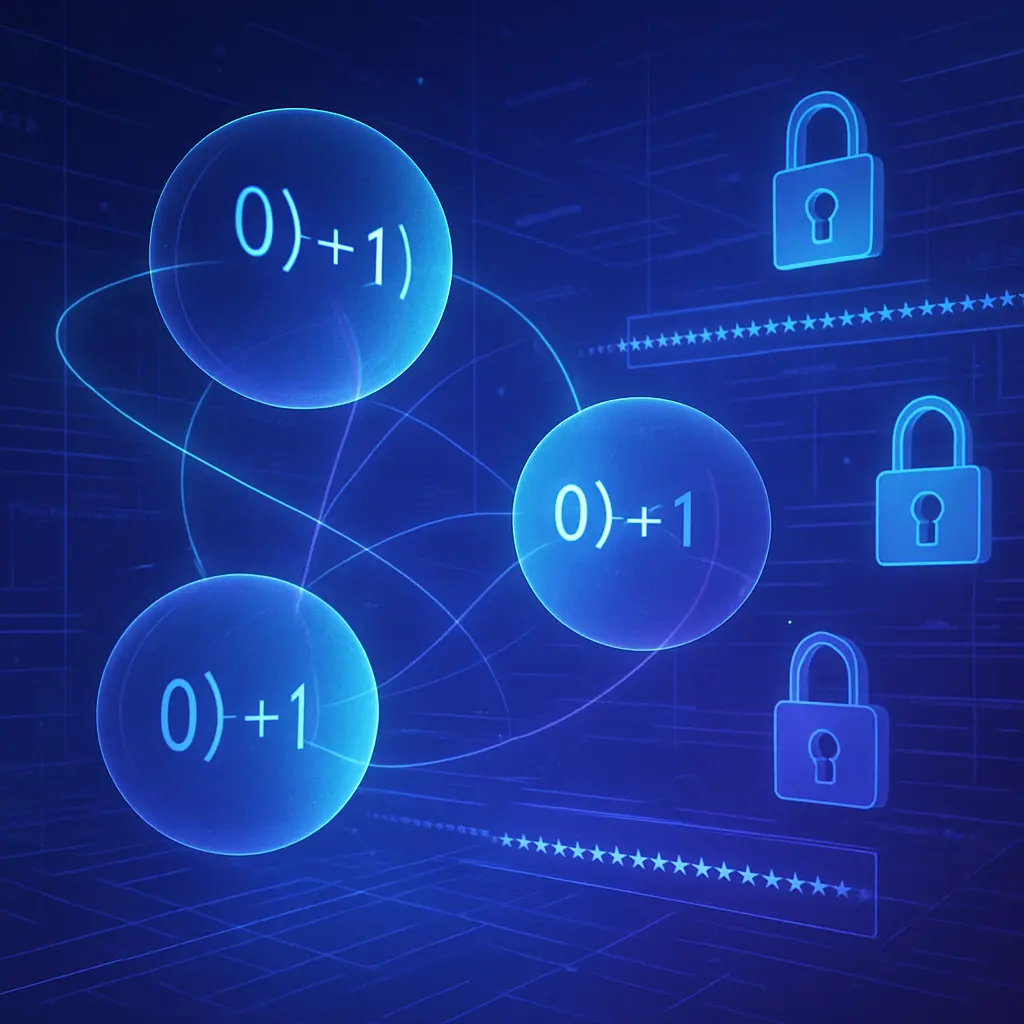
Quantum computers process information differently than the laptop you're reading this on. Classical computers use bits that are either 0 or 1. Quantum computers use qubits that can exist in superposition , representing 0 and 1 simultaneously until measured. This enables certain calculations to run exponentially faster than classical computers can manage.
The catch: building stable, error-corrected quantum computers at the scale needed to break modern encryption remains unsolved. Current quantum computers are noisy, error-prone, and small. They can factor small numbers and run specialized algorithms, but they can't threaten real-world cryptography yet.
NIST has been coordinating the transition to post-quantum cryptography since 2016, working with researchers worldwide to develop and standardize algorithms that resist quantum attacks. The effort exists because the threat is real, but the timeline gives us room to prepare.
What Quantum Computers Actually Break
Not all cryptography is equally vulnerable. Quantum computers threaten specific mathematical problems that underpin public-key cryptography. Here's what breaks and what doesn't.
Public-key cryptography breaks first. RSA encryption, used to secure HTTPS connections and email, relies on the difficulty of factoring large numbers. Elliptic curve cryptography, used in digital signatures and messaging apps, relies on the discrete logarithm problem. Quantum computers running Shor's algorithm can solve both problems exponentially faster than classical computers.
This matters for secure web browsing, encrypted email, digital signatures, and certificate authorities. When you see the padlock in your browser, that connection uses public-key cryptography to establish a secure channel. Quantum computers capable of breaking these systems could intercept and decrypt that traffic.
Symmetric encryption stays strong. AES-256, the encryption standard used to protect data at rest, relies on brute-force resistance. Quantum computers running Grover's algorithm can search through possible keys roughly twice as fast as classical computers, but this only halves the effective key length. AES-256 becomes equivalent to AES-128, which remains computationally infeasible to crack.
Your encrypted files, password manager vaults, and full-disk encryption use symmetric encryption. Quantum computing doesn't break these protections in any practical sense. Doubling the key size restores the original security margin.
Passwords remain passwords. Your password authenticates you by matching a stored hash. The server doesn't decrypt your password; it hashes what you type and compares the result. Quantum computers don't change the fundamental security of password hashing. A strong password is still a strong password. A weak password is still weak.
The threat to passwords comes from breaches exposing hashed databases, which attackers crack using GPUs running billions of guesses per second. Quantum computers don't provide a meaningful advantage in this specific attack. The math that makes passwords vulnerable today is the same math that makes them vulnerable in a quantum future.
The Actual Timeline
Predicting quantum computing breakthroughs is notoriously difficult, but researchers in the field offer rough estimates based on current progress and known obstacles.
Where we are now: Quantum computers with around 1,000 qubits exist in research labs. They can run specialized algorithms and demonstrate quantum advantage on specific problems, but they're noisy, error-prone, and incapable of threatening real-world cryptography. Error correction remains the primary obstacle. Building a quantum computer that can factor a 2048-bit RSA key requires millions of stable, error-corrected qubits.
Cryptographically relevant quantum computers: Researchers generally estimate 10-20 years before quantum computers can break widely used public-key encryption. This timeline depends on breakthroughs in error correction, qubit stability, and scaling that haven't happened yet. Some estimates are more optimistic; some are more conservative. No one knows for certain.
The uncertainty cuts both ways. The timeline could stretch longer if fundamental obstacles prove harder to overcome. It could compress if breakthroughs accelerate progress. Planning for the threat means acting before certainty arrives.
Harvest now, decrypt later: The more immediate concern is data with long secrecy requirements. Adversaries can record encrypted traffic today and store it until quantum computers become available to decrypt it. Medical records, financial data, government communications, and personal information that needs protection beyond 10-20 years face this threat now.
This is why NIST is pushing organizations to begin transitioning to post-quantum cryptography before quantum computers arrive. The data you encrypt today might need protection decades from now.
What Breaks First in Practice
When cryptographically relevant quantum computers arrive, the impact unfolds in stages. Not everything breaks at once.
HTTPS connections become vulnerable. Secure web browsing relies on public-key cryptography to establish encrypted connections. Quantum computers capable of breaking RSA or elliptic curve cryptography can intercept and decrypt traffic in real time. This affects banking, email, shopping, and every other activity conducted over HTTPS.
The transition to post-quantum cryptography will happen gradually. Browsers, servers, and certificate authorities will adopt new algorithms before quantum computers threaten current systems. The window of vulnerability depends on how quickly the ecosystem transitions.
Digital signatures lose integrity. Digital signatures authenticate software updates, financial transactions, legal documents, and code repositories. Breaking public-key cryptography means attackers can forge signatures, impersonate organizations, and inject malicious code into trusted channels.
This is arguably more dangerous than decrypting traffic. Forged signatures undermine trust in software supply chains, financial systems, and legal frameworks. The damage extends beyond confidentiality to authenticity and integrity.
Long-term secrets get exposed. Data encrypted years ago with RSA or elliptic curve cryptography becomes readable. This includes archived emails, stored files, backups, and any encrypted data that wasn't transitioned to quantum-resistant algorithms in time.
Organizations handling sensitive long-term data need to act now. Waiting until quantum computers arrive means accepting that historical data will become readable.
The Post-Quantum Cryptography Transition
NIST finalized its first post-quantum cryptography standards in 2024. These algorithms resist known quantum attacks and run efficiently on classical computers. The transition is underway, but it will take years to complete.
CRYSTALS-Kyber is the primary algorithm for key establishment, replacing RSA and Diffie-Hellman in secure connections. CRYSTALS-Dilithium handles digital signatures, replacing RSA and ECDSA. Both algorithms rely on mathematical problems that quantum computers can't solve efficiently.
The standards exist. Implementation is the challenge. Browsers, operating systems, servers, and applications need to adopt the new algorithms, test compatibility, and deploy updates across billions of devices. The process resembles the transition to HTTPS, which took over a decade and still isn't complete.
Hybrid approaches combine classical and post-quantum algorithms during the transition. A connection might use both RSA and CRYSTALS-Kyber, requiring an attacker to break both systems. This provides defense in depth while post-quantum algorithms undergo real-world testing.
Backward compatibility creates friction. Older devices, embedded systems, and legacy software may never receive post-quantum updates. These systems will remain vulnerable indefinitely, creating pockets of weakness in the broader ecosystem.
What You Should Actually Do About Your Passwords
Nothing changes for individual password security. Quantum computing doesn't alter the fundamental advice.
Use unique passwords for every account. Password reuse remains the single worst security habit. One breach turns into a skeleton key when you use the same password across sites. Quantum computers don't make this worse; it's already catastrophic.
Use a password manager. Generating and storing unique passwords for dozens of accounts is impossible without tools. Password managers handle this automatically. The vault uses symmetric encryption, which quantum computers don't threaten in any practical sense.
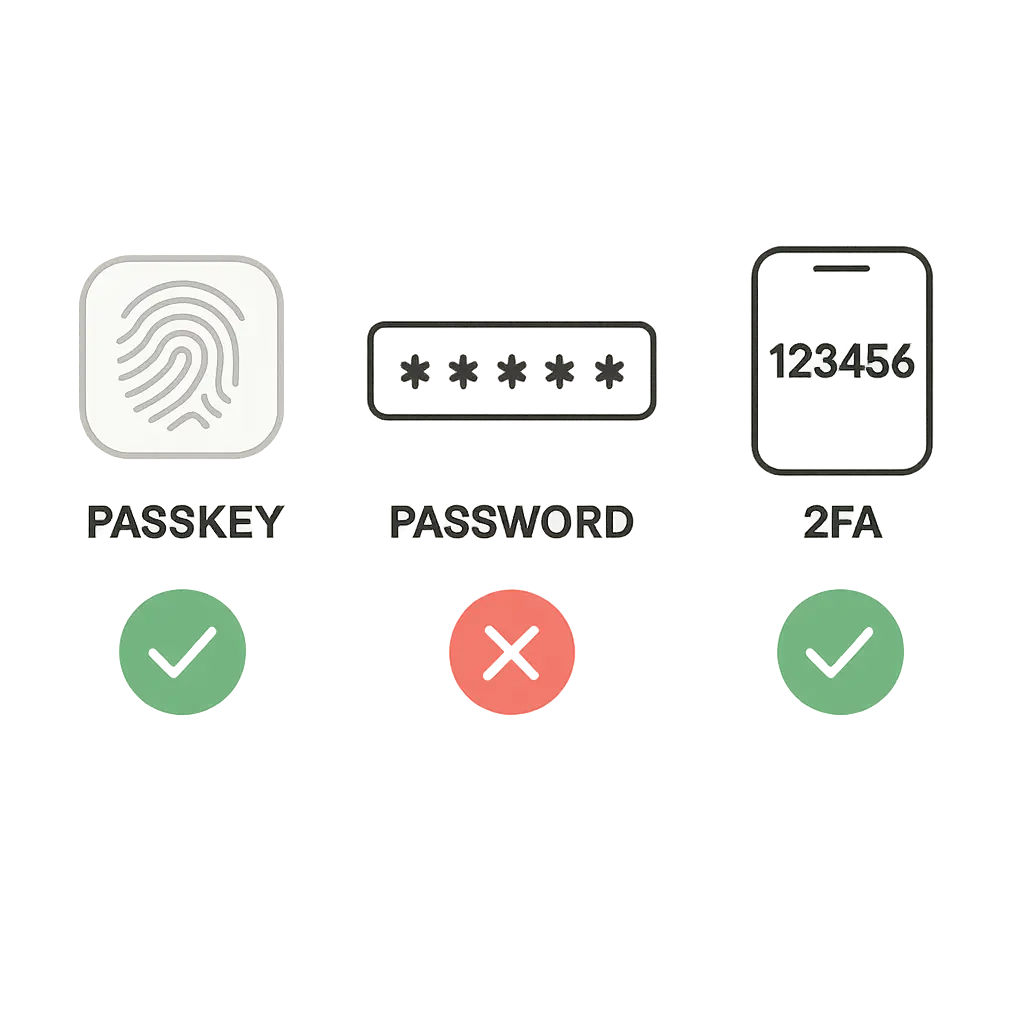
Enable two-factor authentication. 2FA adds a second layer beyond your password. Even if your password leaks in a breach, attackers can't access your account without the second factor. Quantum computing doesn't change this defense.
Prioritize length over complexity. A 16-character passphrase of random words defeats brute-force attacks more effectively than an 8-character password with symbols. The math hasn't changed. Entropy matters more than character variety.
Keep software updated. When post-quantum cryptography becomes standard in browsers and operating systems, updates will deploy it automatically. Staying current means you benefit from the transition without manual intervention.
The threat from quantum computing is real, but it's not a password problem. It's a cryptographic infrastructure problem. Your job is to maintain strong password hygiene using the tools and practices that work today. Organizations and standards bodies handle the quantum transition.
What Organizations Should Do
If you're responsible for security at an organization handling sensitive data, the timeline matters more.
Inventory cryptographic systems. Identify where public-key cryptography is used: HTTPS, VPNs, email encryption, code signing, certificate authorities, and data at rest. Understand what needs to transition and what the dependencies are.
Assess data longevity. If your data needs protection beyond 10-20 years, act now. Medical records, legal documents, financial archives, and government communications fall into this category. Transition to post-quantum algorithms before adversaries harvest encrypted data for future decryption.
Monitor NIST standards and vendor support. Post-quantum cryptography is moving from standards to implementation. Track when your vendors plan to support CRYSTALS-Kyber, CRYSTALS-Dilithium, and other approved algorithms. Plan your transition timeline around vendor readiness.
Test compatibility. Post-quantum algorithms have different performance characteristics and key sizes than classical algorithms. Test them in non-production environments to identify bottlenecks, compatibility issues, and deployment challenges before rolling out broadly.
Adopt hybrid approaches during transition. Combining classical and post-quantum algorithms provides defense in depth while the new standards mature. This buys time without sacrificing security.
The Cultural Reference That Fits
In You've Got Mail, Tom Hanks' character runs a massive bookstore chain that steamrolls Meg Ryan's independent shop. The threat is real, the timeline is clear, but the response isn't panic , it's adaptation. She doesn't close immediately; she prepares, adjusts, and eventually moves on.
Quantum computing is the bookstore chain. It's coming, the impact is real, but the timeline gives us room to adapt. Panicking about your passwords today is like closing your shop the day the chain announces plans to open nearby. The threat is years away, and the tools to handle it are already being built.
The Reality Check
Quantum computers will break public-key cryptography. The timeline is roughly 10-20 years, depending on breakthroughs that haven't happened yet. When it arrives, HTTPS connections, digital signatures, and long-term encrypted data become vulnerable. Symmetric encryption and password security remain strong.
Your job as an individual is to maintain strong password hygiene: unique passwords, two-factor authentication, and a password manager. Quantum computing doesn't change these fundamentals. The infrastructure transition happens at the organizational and standards level, not the individual password level.
If you're responsible for organizational security, start planning now. Inventory cryptographic systems, assess data longevity, and monitor post-quantum standards. The transition will take years, and waiting until quantum computers arrive means accepting that historical data becomes readable.
The threat is real. The timeline gives us room to prepare. Focus on the defenses that matter today, and let the cryptographic community handle the quantum transition.