Online-Only Banks vs. Traditional Banks: Which Is Actually Safer?
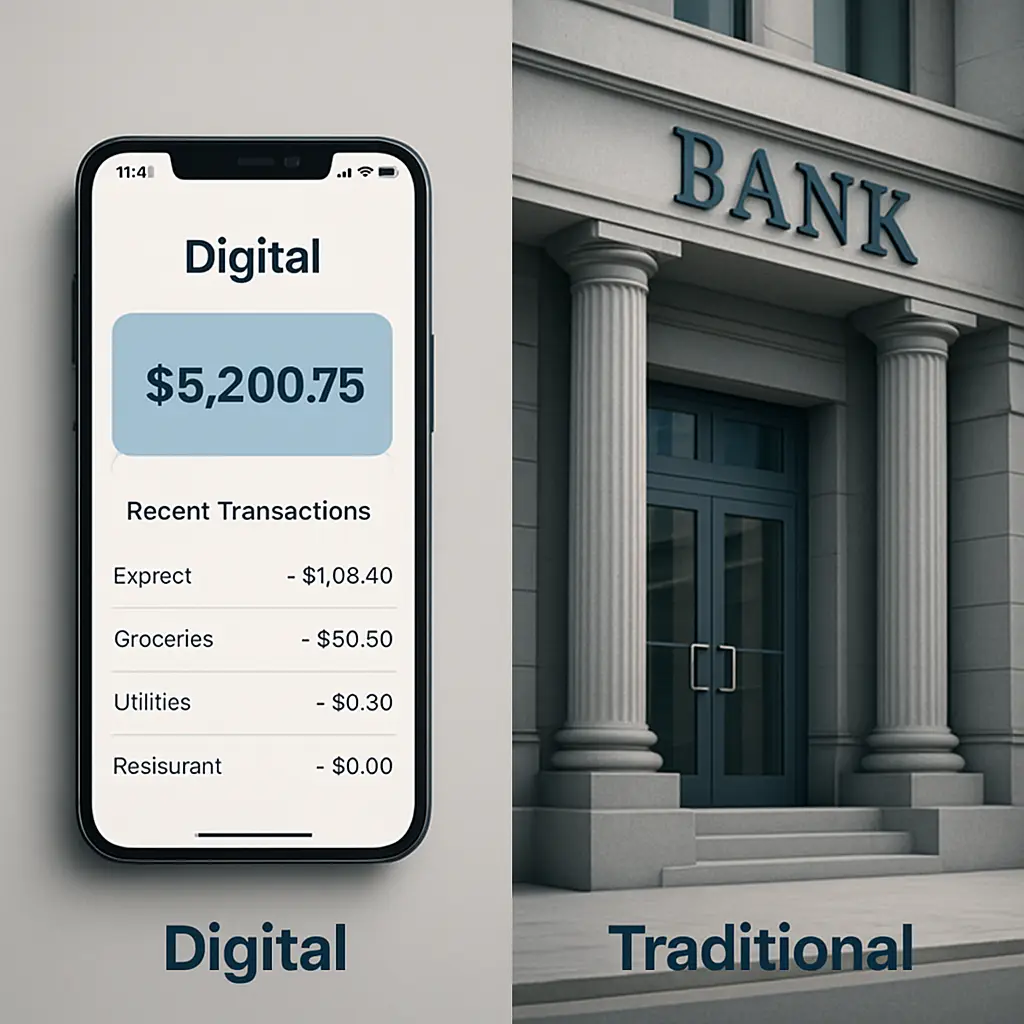
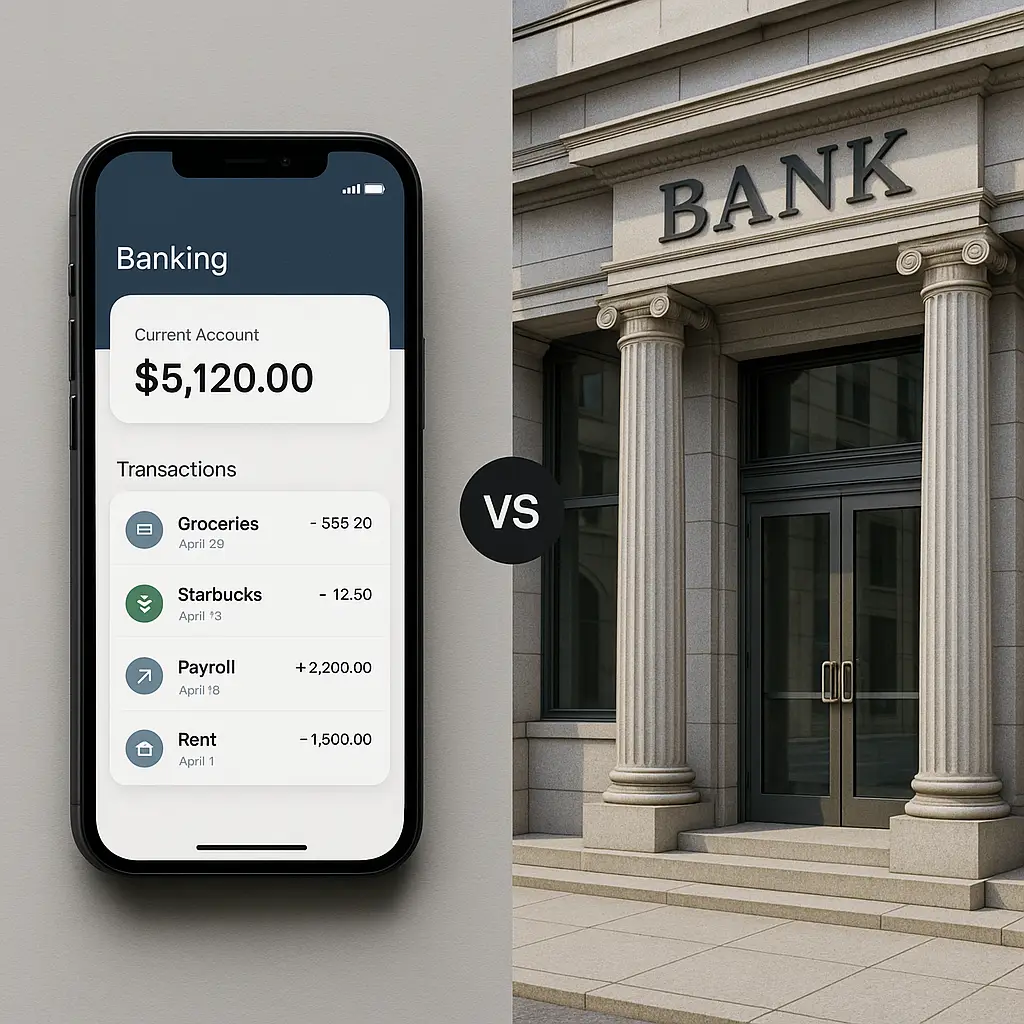
The question isn't whether online-only banks are safe. The question is what kind of safety you're comparing.
Online-only banks and traditional banks protect your money through different mechanisms. One isn't universally safer than the other. They trade off different risks. Understanding those tradeoffs matters more than picking a side.
FDIC Insurance Works the Same Either Way
Your deposits are insured by the Federal Deposit Insurance Corporation up to $250,000 per depositor, per insured bank, per ownership category. That limit applies whether the bank has 500 branches or zero branches.
The insurance mechanism is identical. When a bank fails, the FDIC steps in, takes control of the institution, and either transfers your account to another bank or issues you a check for your insured balance. The process typically completes within a few business days.
Online-only banks like Ally, Marcus, and Discover are FDIC-insured. Traditional banks like Chase, Bank of America, and Wells Fargo are FDIC-insured. The legal protection is the same.
What differs is how you verify that protection before opening an account. With a traditional bank, you can walk into a branch and see the FDIC placard on the wall. With an online bank, you check the FDIC's BankFind tool to confirm the institution's insurance status.
The FDIC maintains a database of every insured institution. You type in the bank's name, and the tool tells you whether it's covered, what its certificate number is, and when it was established. This takes around 30 seconds. If the bank isn't in that database, don't deposit money there.
Some online-only banks are chartered as separate institutions. Others operate as divisions of larger banks. The insurance applies either way, but the structure affects how your deposits are counted toward the $250,000 limit. If you're banking with what appears to be two separate online banks, but they're both divisions of the same chartered institution, your combined deposits at both count toward a single $250,000 limit.
Traditional banks can fail just as easily as online banks. The FDIC has closed hundreds of banks over the past two decades, and the list includes both brick-and-mortar institutions and digital-only operations. The building doesn't make the insurance stronger.
Fraud Detection Uses the Same Systems
Banks monitor transactions for fraud using automated systems that flag unusual patterns. Those systems don't care whether you walked into a branch or tapped a button on your phone. They analyze transaction data the same way.
When you swipe your debit card at a gas station 200 miles from home, the fraud detection system checks whether that transaction fits your normal behavior. If it doesn't, the system may block the transaction and send you an alert. This happens at online banks and traditional banks using similar algorithms.
Federal regulations require banks to investigate unauthorized transactions and reimburse you for fraud under specific conditions. Regulation E governs electronic fund transfers and sets liability limits based on how quickly you report the fraud. If you report an unauthorized transaction within two business days, your liability is capped at $50. If you wait longer, the cap increases.
Those rules apply to all banks, regardless of their physical presence. The Consumer Financial Protection Bureau enforces them uniformly.
What differs is how you report fraud and resolve disputes. With a traditional bank, you can walk into a branch, speak to a person, and hand them documents. With an online bank, you file the report through a web form, upload documents digitally, and communicate via email or phone.
Some people find in-person resolution easier. Others find digital workflows faster. Neither method changes the underlying legal protections or the bank's obligation to investigate.
Online banks often advertise faster fraud alerts because their customers are already using mobile apps and email. Traditional banks send the same alerts, but if you're not checking your phone regularly, you might miss them. The speed of the alert depends more on your notification settings than the bank's infrastructure.
Fraud detection quality varies by institution, not by business model. Some online banks invest heavily in machine learning and behavioral analysis. Some traditional banks use outdated systems. The inverse is also true. You can't assume one category is universally better.
Access Is the Real Tradeoff
Security isn't just about protecting money from theft. It's also about ensuring you can access your money when you need it.
Traditional banks offer in-person access. If you lose your phone, forget your password, or get locked out of your account, you can walk into a branch with your ID and resolve the problem face-to-face. This is a backup mechanism that online-only banks don't provide.
Online-only banks require you to handle everything digitally. If you lose access to your email, can't receive SMS codes, or your phone dies, you're stuck until you regain digital access. Some online banks offer phone support, but phone support can't verify your identity as reliably as an in-person visit with government-issued ID.
This tradeoff matters most in emergencies. If your phone is stolen while you're traveling, a traditional bank lets you visit a branch, prove your identity, and access your funds. An online bank requires you to recover your email or phone number first, which may take days.
On the other hand, online banks let you access your account from anywhere with an internet connection. You don't need to find a branch during business hours. You don't need to drive across town. You log in, and you're done.
For people who rarely need in-person banking, the convenience of digital-only access outweighs the risk of lockout. For people who handle cash regularly, deposit checks from small businesses that don't offer mobile deposit, or travel frequently to areas with limited internet, the physical branch becomes essential.
Cash Handling Is a Practical Constraint
Most online-only banks don't accept cash deposits. Some partner with retail networks like CVS or Walgreens, where you can deposit cash at a register, but this feature isn't universal. If you regularly receive cash, an online-only bank becomes impractical.
Traditional banks accept cash at branches and ATMs. You walk in, hand the teller bills, and the money appears in your account. This is straightforward if you run a small business, work in a cash-heavy industry, or receive gifts in physical currency.
Some online banks reimburse ATM fees and allow withdrawals at any ATM, but withdrawals don't help if you need to deposit. Others partner with ATM networks that accept deposits, but those networks are smaller and less reliable than branch access.
If you never touch cash, this constraint doesn't matter. If you handle cash weekly, it's a dealbreaker.
Interest Rates and Fees Aren't Security, But They Affect Risk
Online-only banks typically offer higher interest rates on savings accounts and lower fees on checking accounts. This isn't a security feature, but it affects your financial risk.
A traditional bank might charge $12 per month for a checking account unless you maintain a minimum balance. An online bank might charge nothing. Over a year, that's $144. Over a decade, it's $1,440. That's money you didn't lose to fraud, but you lost it anyway.
Higher savings rates compound over time. If a traditional bank pays 0.01% annual percentage yield on savings and an online bank pays 4.5%, the difference on $10,000 is around $450 per year. That gap represents opportunity cost, which is a form of financial risk.
Lower fees and higher rates don't make online banks safer in the sense of protecting against fraud or theft. They make them safer in the sense of protecting your money from erosion through fees and low returns.
Traditional banks justify their fees by pointing to branch networks, ATMs, and in-person service. If you use those services regularly, the fees may be worth it. If you don't, you're paying for infrastructure you never touch.
Account Recovery Mechanisms Differ
When you forget your password, the recovery process depends on what the bank can verify.
Traditional banks can verify your identity in person. You bring your driver's license, answer security questions, and reset your password at the branch. This works even if you've lost access to your email and phone.
Online banks verify your identity through email, SMS, or phone calls. If you lose access to the email address on file, you need to prove ownership of that email to the email provider first. If you lose your phone number, you need to recover it from your carrier. These dependencies create a chain of failure points.
Some online banks allow you to set up backup recovery methods, like secondary email addresses or trusted contacts. Others rely entirely on the primary email and phone number. The strength of your account recovery depends on how many backup methods you configure.
Traditional banks have the same dependencies for online access, but the in-person option breaks the chain. You can always walk into a branch and bypass the digital recovery process.
This matters most when you're locked out during a crisis. If your email is compromised, your phone is stolen, and you need to access your bank account immediately, the traditional bank's in-person option becomes the only viable path.
Two-Factor Authentication Is Standard, But Implementation Varies
Most banks now require two-factor authentication for online access. You enter your password, then confirm your identity with a code sent via SMS, email, or an authenticator app.
SMS codes are the weakest method because they're vulnerable to SIM swapping attacks, where an attacker convinces your phone carrier to transfer your number to a new SIM card. Once they control your number, they receive your SMS codes and can access your account.
Authenticator apps like Google Authenticator or Authy generate codes locally on your device, which makes them harder to intercept. Some banks support authenticator apps; others rely entirely on SMS.
Traditional banks and online banks both use two-factor authentication, but the available methods vary by institution. Some online banks offer more advanced options, like hardware security keys. Some traditional banks are still stuck on SMS-only.
The security of your account depends more on which two-factor method you choose than whether the bank has branches. If your bank offers authenticator apps or hardware keys, use them. If it only offers SMS, that's a weakness regardless of the bank's business model.
Customer Service Response Times Matter in Fraud Cases
When fraud occurs, the speed at which your bank responds affects how much money you lose and how quickly you regain access to your account.
Traditional banks offer phone support, online chat, and in-person service. Online banks offer phone support and online chat, but no in-person option. The quality of customer service depends on staffing, training, and internal processes, not the number of branches.
Some online banks pride themselves on 24/7 phone support and fast response times. Some traditional banks route you through automated phone trees and make you wait on hold for 45 minutes. The inverse is also true.
What matters is whether the bank answers your call, investigates your claim promptly, and refunds unauthorized transactions within the timeframe required by law. Federal regulations set those timeframes, but enforcement depends on whether you escalate the issue.
If you report fraud and the bank drags its feet, you can file a complaint with the Consumer Financial Protection Bureau. The CFPB tracks complaints by institution and publishes the data publicly. You can search the database to see how many complaints a bank has received and how it responded.
This data is more useful than guessing based on whether the bank has branches. A traditional bank with a terrible complaint record is worse than an online bank with a strong one.
Mobile App Security Depends on Your Phone, Not the Bank
Banking apps use encryption to protect data in transit and at rest. They require biometric authentication or PINs to access the app. They log you out after inactivity. These features are standard across both online and traditional banks.
The weakest link is your phone's security, not the app. If your phone is compromised by malware, the attacker can intercept your banking activity regardless of which bank you use. If your phone isn't protected by a strong passcode or biometric lock, anyone who picks it up can access your accounts.
Online banks depend entirely on mobile app security because there's no branch to fall back on. Traditional banks offer the same apps, but they also offer in-person access as a backup. This doesn't make the app more secure, but it gives you an alternative if the app fails.
Securing your phone matters more than choosing between online and traditional banks. Use a strong passcode. Enable biometric authentication. Keep your operating system updated. Don't install apps from untrusted sources. These steps protect your banking access regardless of which institution you choose.
Regulatory Oversight Is Identical
Banks are regulated by federal agencies regardless of their business model. National banks are supervised by the Office of the Comptroller of the Currency. State-chartered banks are supervised by state banking regulators and the FDIC. All banks are subject to the same consumer protection laws.
Online-only banks don't operate in a regulatory vacuum. They follow the same rules as traditional banks. They undergo the same examinations. They report the same data to regulators.
The perception that online banks are less regulated is wrong. The perception that traditional banks are inherently safer because they've been around longer is also wrong. Regulatory oversight depends on the bank's charter and the agencies that supervise it, not the number of branches.
You can verify a bank's regulatory status using the FDIC's BankFind tool or the OCC's database. If the bank is federally insured and properly chartered, it's subject to the same oversight as any other bank.
The Cultural Reference: Sherlock Holmes and the Case of the Missing Context
In Arthur Conan Doyle's "The Adventure of the Copper Beeches," Holmes warns Violet Hunter about accepting a job that seems too good to be true. The governess position pays unusually well, but the employer's demands are strange and the context is suspicious. Holmes advises her to investigate before committing.
The same principle applies to choosing a bank. The question isn't whether online banks or traditional banks are safer in the abstract. The question is which one fits your context.
If you handle cash regularly, travel to areas with limited internet, or need in-person verification as a backup, a traditional bank fits your context better. If you never touch cash, value higher interest rates, and manage your digital security carefully, an online bank fits your context better.
Holmes didn't tell Violet to avoid all governess positions. He told her to evaluate the specific offer against her specific needs. The same logic applies here. Evaluate the specific bank against your specific situation.
Hybrid Models Offer a Middle Ground
Some banks operate both physical branches and robust online platforms. These hybrid models give you in-person access when you need it and digital convenience when you don't.
Capital One, for example, offers online banking with competitive rates and a network of physical branches in select cities. You get the higher interest rates of an online bank and the in-person access of a traditional bank, but only if you live near one of their branches.
Credit unions often operate as hybrids, with local branches and strong online platforms. They're member-owned, which changes the incentive structure, but they still offer FDIC-equivalent insurance through the National Credit Union Administration.
Hybrid models cost more to operate than pure online banks, so they may offer slightly lower interest rates or charge slightly higher fees. The tradeoff is access flexibility.
If you value both digital convenience and in-person backup, a hybrid model may be the best fit. If you're willing to sacrifice one for the other, a pure online or pure traditional bank may serve you better.
What to Check Before Opening an Account
Before you open an account at any bank, online or traditional, verify the following:
-
FDIC insurance status. Use the FDIC's BankFind tool to confirm the bank is insured and what its certificate number is. If it's not in the database, don't deposit money there.
-
Fee structure. Read the fee schedule. Look for monthly maintenance fees, overdraft fees, ATM fees, and wire transfer fees. Compare them to other banks.
-
Interest rates. Check the annual percentage yield on savings accounts and the interest rate on checking accounts, if applicable. Compare them to current market rates.
-
Two-factor authentication options. Confirm the bank supports authenticator apps or hardware keys, not just SMS codes.
-
Customer service hours. Check whether the bank offers 24/7 phone support or restricts service to business hours.
-
ATM network. Verify which ATMs you can use without fees and whether the bank reimburses out-of-network ATM fees.
-
Cash deposit options. If you handle cash, confirm the bank accepts cash deposits and how the process works.
-
Complaint record. Search the CFPB's complaint database to see how many complaints the bank has received and how it responded.
These checks apply to both online and traditional banks. The answers tell you more about the bank's safety and suitability than its business model.
The Bottom Line
Online-only banks and traditional banks protect your money through the same federal insurance, the same fraud detection systems, and the same consumer protection laws. The security mechanisms are equivalent.
What differs is access. Online banks require you to handle everything digitally, which makes your phone and email security critical. Traditional banks offer in-person verification as a backup when digital access fails.
If you never handle cash, manage your digital security carefully, and value higher interest rates, an online bank is as safe as a traditional bank and often more cost-effective. If you handle cash regularly, need in-person access for peace of mind, or travel to areas with limited internet, a traditional bank or hybrid model fits your needs better.
The question isn't which type of bank is safer. The question is which type of bank fits your context. Evaluate the specific institution against your specific needs, verify its FDIC insurance status, and choose accordingly.