Life Insurance Applications and Your Medical History: What Gets Shared, What Gets Stored
You're applying for life insurance. The form asks about your health history, medications, doctor visits, and family medical background. You answer honestly because you know insurers verify everything. But where does that information go? Who sees it? How long do they keep it?
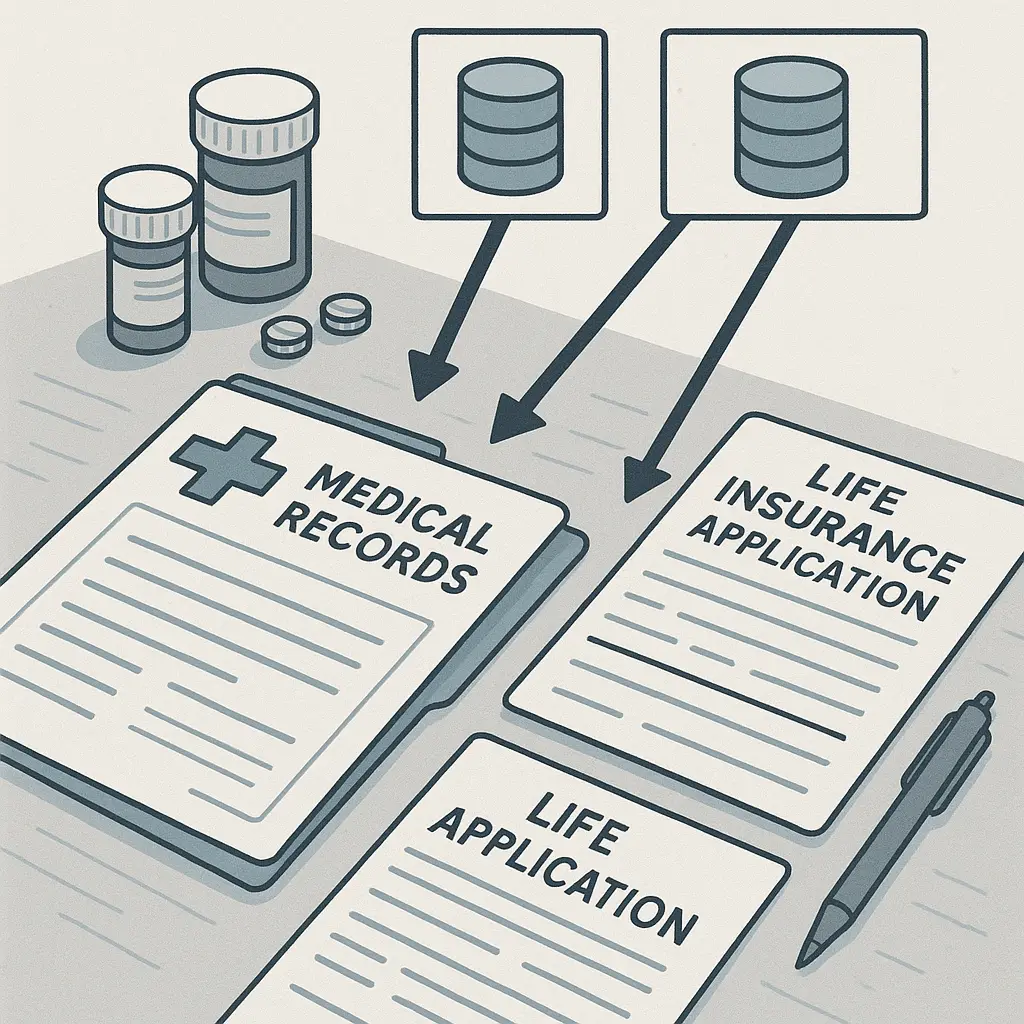
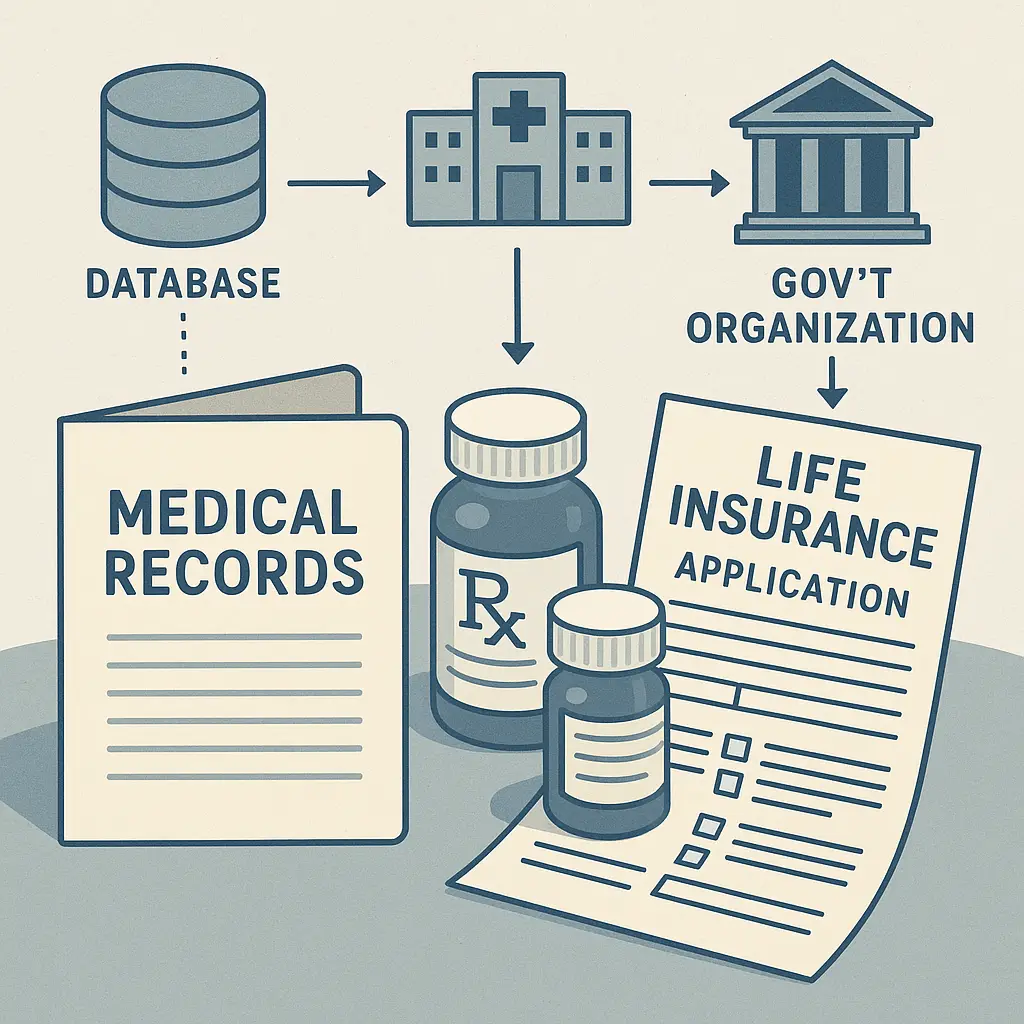
The life insurance industry operates a data-sharing ecosystem most applicants never see. Your medical history doesn't stay with one company. It flows through databases, gets coded and stored, and follows you across applications for years. The authorization you sign on page one gives insurers access to records you might not even remember exist.
Here's the underlying mechanism, what happens to your data after you submit the application, and what you can actually control.
The application authorization: what you're actually signing
Every life insurance application includes an authorization section. The language is dense, the font is small, and most people skim it. That authorization is a legal waiver. You're giving the insurer permission to collect medical information from doctors, hospitals, pharmacies, labs, previous insurers, and the MIB Group.
The authorization overrides HIPAA. HIPAA protects your medical records when they're held by healthcare providers, but it doesn't stop you from giving someone else permission to access them. When you sign that form, you're telling your doctor's office, your pharmacy, and your hospital that it's fine to send your records to the insurance company. HIPAA steps aside.
The authorization typically lasts for the duration of the application process, but some forms include language extending it for as long as your policy remains in force. That means the insurer can request updated medical records years after you're approved, if they need to investigate a claim or review your coverage.
You can't get life insurance without signing the authorization. Refusing to sign means refusing coverage. The insurer won't process your application without access to your medical history.
Prescription drug databases: what pharmacies report
Life insurers don't just ask what medications you take. They check. Most companies query prescription drug monitoring databases maintained by pharmacy benefit managers and data aggregators. These databases track every prescription filled at a retail pharmacy, including the drug name, dosage, prescribing doctor, and fill date.
When you apply for life insurance, the insurer sends your name, date of birth, and sometimes your Social Security number to one of these databases. The database returns a list of prescriptions filled under your name, usually going back several years. The insurer's underwriters review the list and flag medications that indicate medical conditions you didn't disclose on your application.
If you take a statin, the underwriter knows you have high cholesterol. If you take a beta blocker, they know you have a heart condition. If you take an antidepressant, they know you're being treated for depression. Prescription records reveal diagnoses even when you don't list them.
The databases don't include over-the-counter medications, supplements, or prescriptions filled outside the United States. They also don't capture prescriptions you were given but never filled. But for prescriptions you did fill at a U.S. pharmacy, the record is there.
The MIB Group: the industry's shared database
The MIB Group is a nonprofit consortium of around 400 life insurance companies. When you apply for coverage with a member company, that company reports certain information to MIB. Other member companies check MIB when you apply with them. The system exists to detect fraud and verify consistency across applications.
MIB doesn't store your full medical records. It stores coded summaries. If you disclose a heart condition on your application, the insurer reports a code to MIB indicating a cardiovascular issue. If you disclose diabetes, they report a code for metabolic disorders. MIB maintains around 230 medical codes and 30 non-medical codes covering things like hazardous hobbies, driving violations, and aviation activity.
The codes stay in the MIB database for seven years from the date of your last application. If you apply for life insurance again during that window, the new insurer checks MIB and sees the codes from your previous applications. They use that information to verify that you're disclosing the same conditions consistently.
MIB doesn't make underwriting decisions. It flags discrepancies. If you told one insurer you have high blood pressure but you don't mention it on your current application, MIB's records will show a cardiovascular code from the previous application. The current insurer will ask why you left it off.
You can request your MIB file once per year for free. The file shows which companies reported information about you, what codes were reported, and when. If you find an error, you can dispute it, but the correction process requires documentation from your doctor or the reporting insurer.
Attending physician statements: what your doctor sends
For larger policies or applicants with certain medical histories, insurers request an Attending Physician Statement from your primary care doctor or specialists. The APS is a detailed medical summary covering your diagnoses, treatments, test results, and prognosis. Your doctor's office fills out the form and sends it directly to the insurer.
APSs contain more detail than the application form. They include dates of diagnoses, specific lab values, medication dosages, and notes about your compliance with treatment. If your doctor wrote in your chart that you're not taking your blood pressure medication as prescribed, that note goes to the insurer.
The insurer pays for the APS, but you authorized its release when you signed the application. Your doctor's office won't send it without your consent, but that consent is embedded in the authorization you already signed. You don't get to review the APS before it's sent, and you don't get a copy unless you request one separately.
If the APS reveals something you didn't disclose on your application, the underwriter will ask for clarification. If the discrepancy is significant, the insurer may deny your application or adjust your premium.
Paramedical exams and lab tests: what they measure
Many life insurance applications require a paramedical exam. A nurse or paramedic visits your home, takes your blood pressure, measures your height and weight, collects a urine sample, and sometimes draws blood. The samples go to a lab. The lab tests for cholesterol, glucose, liver function, kidney function, nicotine metabolites, and sometimes HIV or hepatitis.
The lab sends the results directly to the insurer. You don't see them unless you ask. If the results show elevated glucose, the underwriter knows you're prediabetic or diabetic, even if you didn't mention it. If the results show nicotine metabolites, the underwriter knows you use tobacco, even if you checked the non-smoker box.
Lab results stay in the insurer's file. They also get reported to MIB if they indicate a medical condition. The results don't go into your medical record unless you request them and share them with your doctor.
What happens to your data if you're denied
If the insurer denies your application, your data doesn't disappear. The insurer keeps the application, the medical records, the lab results, and the underwriting notes in their files. Retention periods vary by company and state law, but seven to ten years is common.
MIB retains the codes from your application for seven years, regardless of whether you were approved or denied. If you apply with a different insurer during that period, they'll see the codes and know you applied before.
Some states require insurers to notify you if they deny your application based on information from MIB or another third-party source. The notice includes instructions for requesting a copy of the report and disputing errors. But the insurer isn't required to delete the data just because you were denied.
Health data beyond the application: ongoing monitoring
Once you're approved and your policy is in force, the data collection doesn't stop. If you file a claim, the insurer investigates. They review your medical records, contact your doctors, and check for inconsistencies between what you disclosed on your application and what your records show.
If you apply for additional coverage or convert a term policy to permanent insurance, the insurer may request updated medical records. The original authorization you signed might still be in effect, or they'll ask you to sign a new one.
Some insurers offer wellness programs that incentivize policyholders to share health data from fitness trackers, apps, or annual checkups. Participation is voluntary, but the data you share goes into the insurer's systems and could be used in future underwriting decisions if you apply for more coverage.
HIPAA's limits: why it doesn't protect you here
HIPAA governs how healthcare providers, insurers, and their business associates handle your medical information. It requires them to protect your privacy, limit disclosures, and give you access to your records. But HIPAA includes an exception for underwriting.
Life insurance companies are allowed to use your medical information for underwriting purposes. When you apply for coverage, you're authorizing the insurer to collect and use your health data to assess risk and set premiums. That's a permitted use under HIPAA.
HIPAA also doesn't apply to organizations that aren't covered entities. The MIB Group isn't a healthcare provider or a health insurer, so HIPAA doesn't regulate how MIB handles your data. MIB operates under its own privacy policies and is subject to state insurance laws, but not HIPAA.
If you want to know what a life insurer has on file about you, HIPAA won't help. You'll need to follow the insurer's own procedures for requesting records, which vary by company and state.
State insurance laws: what rights you have
State insurance departments regulate how life insurers collect, use, and share your information. Most states require insurers to provide a privacy notice explaining what data they collect and how they use it. The notice is usually included with your application or policy documents.
Some states give you the right to request a copy of your underwriting file. The process typically requires a written request, and the insurer has a set number of days to respond. The file includes your application, medical records, lab results, and underwriting notes.
A few states limit how long insurers can retain your data or require them to notify you if they share your information with third parties. But enforcement is inconsistent, and many consumers don't know these rights exist.
If you believe an insurer mishandled your information or denied your application based on inaccurate data, you can file a complaint with your state insurance department. The department may investigate, but outcomes vary.
The cultural reference: Gandalf's memory in The Lord of the Rings
In The Fellowship of the Ring, Gandalf searches his memory and the archives of Minas Tirith to piece together the history of the One Ring. He finds fragments in old scrolls, cross-references them with what he remembers from conversations decades earlier, and connects the dots. The ring's history was never in one place. It was scattered across sources, waiting for someone to assemble it.
Life insurance underwriting works the same way. Your medical history isn't stored in a single file. It's fragmented across your doctor's notes, your pharmacy's records, the MIB database, and the insurer's own files. When you apply for coverage, the underwriter acts like Gandalf, pulling those fragments together to build a complete picture. The difference is that Gandalf was trying to save Middle-earth. The underwriter is trying to price your risk.
What you can control
You can't stop life insurers from collecting your medical history if you want coverage. But you can take steps to understand what they have and correct errors when they occur.
Request your MIB file once a year. It's free, and it shows you what codes have been reported about you. If you see a code that doesn't match your medical history, dispute it. MIB provides a dispute process, and corrections can prevent future application problems.
Ask your doctor for copies of any medical records the insurer requests. You have a right to your own records under HIPAA, even if the insurer doesn't have to give them to you. Reviewing the records yourself helps you spot discrepancies before the underwriter does.
Read the privacy notice the insurer provides. It's long and boring, but it tells you what data they collect, who they share it with, and how long they keep it. If the notice says they share data with third parties, you can ask which ones.
If you're denied coverage, request a copy of your underwriting file from the insurer. State laws vary, but many states require insurers to provide the file if you ask. The file shows you what information the underwriter used to make the decision.
Don't lie on your application. Insurers verify everything. If you omit a diagnosis or understate your medication use, the underwriter will find out. The application will be denied, the denial will be reported to MIB, and future insurers will see it.
What happens to your data after you die
When you die, your life insurance policy pays out to your beneficiaries. The insurer investigates the claim to make sure the policy was in force and that you didn't misrepresent your health when you applied. They review your medical records, contact your doctors, and check for fraud.
If the insurer finds evidence that you lied on your application, they can deny the claim. The policy's contestability period, usually two years from the issue date, gives them the right to investigate and rescind coverage if they find material misrepresentation.
After the claim is paid or denied, the insurer retains your file according to their retention policy. Your data doesn't get deleted just because you're no longer alive. It stays in their systems for as long as state law and company policy require.
Your beneficiaries don't automatically get access to your underwriting file. If they want to see it, they'll need to request it from the insurer, and the insurer may require proof of their legal authority to access your records.
The long-term reality
Life insurance applications create a permanent data trail. The information you disclose, the records your doctors send, the lab results from your paramedical exam, and the codes reported to MIB all persist for years. That data follows you across applications, influences future underwriting decisions, and remains accessible long after your policy is issued or denied.
You can't apply for life insurance without sharing your medical history. The industry's data-sharing infrastructure is designed to verify what you disclose and detect what you omit. The system isn't transparent, and most applicants don't understand how much information gets collected or where it ends up.
What you can do is request your own records, check them for errors, and correct inaccuracies before they affect your coverage. The data is there. You might as well know what it says.