Hotel Room Safes: How Reliable Are They Really?
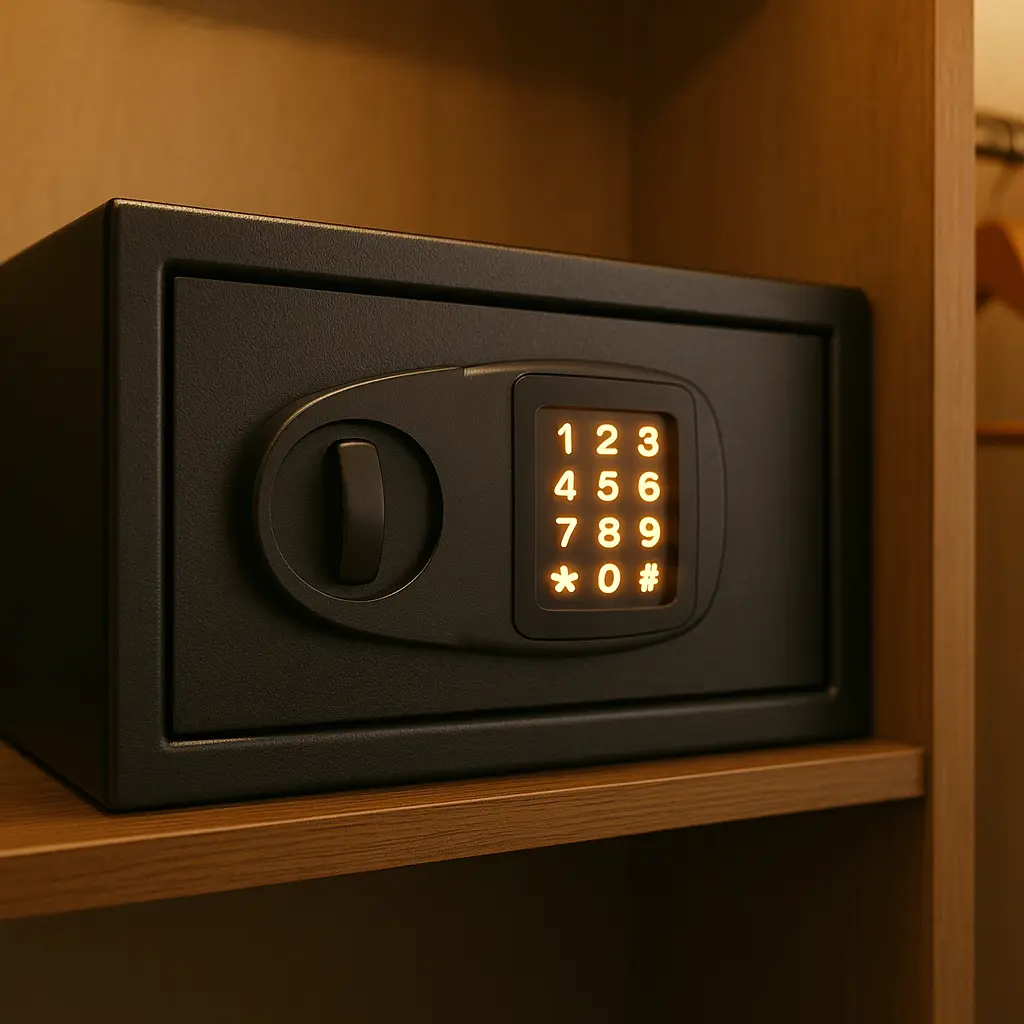
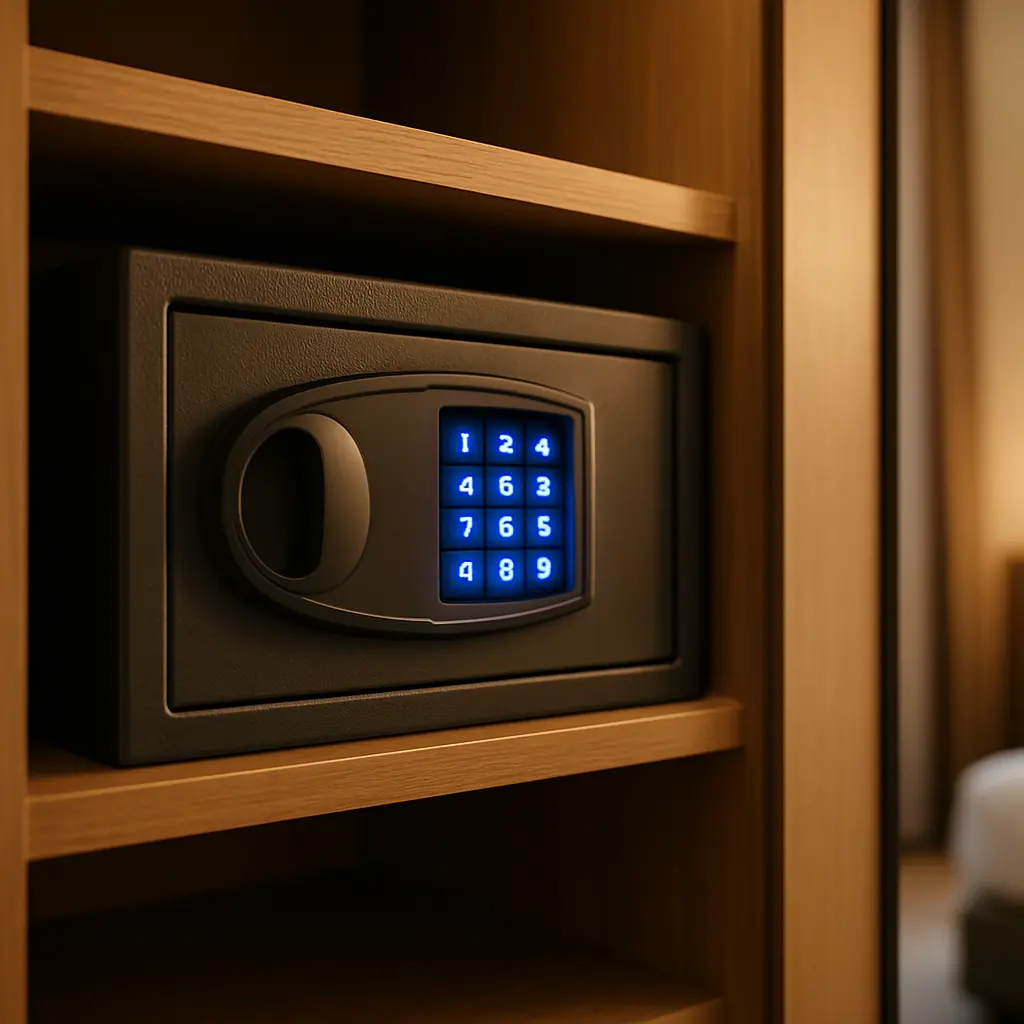
You're standing in a hotel room in a city you don't know, holding your passport, laptop, and the cash you'll need for the next three days. The safe beckons from the closet. Four digits. A metal door. The illusion of security.
Here's what that safe actually protects, what it doesn't, and why the answer matters more than the marketing suggests.
The Override Problem Nobody Mentions
Every hotel safe has a backdoor. It's not a flaw. It's a feature.
Hotels need access when guests forget codes, when safes malfunction, when checkout happens and the safe won't open. That access comes through master override codes or physical override keys. The mechanism varies by manufacturer, but the principle doesn't: someone other than you can open your safe.
In most hotels, housekeeping staff, front desk personnel, and maintenance workers have override access. The number of people who can open your safe ranges from around three to a couple dozen, depending on hotel size and security protocols.
Some hotels maintain audit logs that record when override codes get used. Many don't. Some require two-person authorization for override access. Most don't.
The FTC's guidance on protecting personal information emphasizes controlling access to sensitive data. Hotel safes, by design, give you limited control.
Default Codes and Factory Settings
Hotel safes ship with default master codes. Manufacturers publish these codes in installation manuals. Those manuals circulate online.
A determined thief with internet access can find default override codes for most major safe brands in under five minutes. If the hotel never changed the factory settings, the safe opens.
How often do hotels change default codes? Industry guidance suggests they should. Field evidence suggests many don't. There's no regulatory requirement. There's no enforcement mechanism. There's just a recommendation buried in an installation manual that assumes someone reads it.
I've stayed in hotels where the safe wouldn't lock because the previous guest's code was still active. I've stayed in hotels where the safe opened when I pressed four zeros. These aren't exotic failures. They're routine.
Physical Vulnerabilities
Electronic hotel safes typically mount to a wall or floor with bolts. Those bolts are accessible from inside the safe. A thief with time, privacy, and basic tools can unbolt the safe, carry it out, and open it later.
Hotel room doors have peepholes. Hotel room doors have gaps under them. A camera on a stick can see your code as you enter it. A mirror slid under the door can do the same. These attacks require planning, but they're not theoretical.
Some safes have reset buttons accessible from the outside through small holes in the casing. Press the button with a paperclip, enter a new code, and the safe opens. Not all safes have this vulnerability. Enough do that it's worth checking.
Mechanical hotel safes with physical keys create different problems. Lost keys mean locksmith calls. Spare keys mean more copies floating around. Key control in a hotel environment is a mess.
What Hotel Safes Actually Protect Against
Hotel safes deter opportunistic theft. A housekeeper who finds your laptop sitting on the desk might pocket it. That same housekeeper is less likely to use override access to open your safe, remove your laptop, and create a documented trail.
Hotel safes protect against casual snooping. A maintenance worker fixing the air conditioner won't rifle through your luggage if your valuables are locked away.
Hotel safes create a barrier. Not a wall. Not a vault. A barrier. That barrier matters in specific contexts.
If you're traveling with jewelry you rarely wear, the safe is better than leaving it visible. If you're carrying extra cash you won't need today, the safe is better than your wallet. If you have prescription medication you don't want to carry all day, the safe is better than the bathroom counter.
But "better than leaving it visible" is a low bar.
The Alternatives Are Also Flawed
You could leave your valuables at the front desk. Many hotels offer safe deposit boxes in a central location. These boxes typically have better physical security, more restricted access, and audit trails.
They also require you to retrieve your items during front desk hours. They create a record of what you're storing. They put your valuables in a location accessible to more people than your room.
You could carry everything with you. Your passport stays in your pocket. Your laptop stays in your bag. Your cash stays on your person.
That works until you're at the beach, at the hotel pool, or in a situation where carrying a bag creates risk. It works until you're in a crowded market where pickpockets operate. It works until you want to go for a run without your laptop.
You could use the hotel's main vault. Some properties offer this service. Access is more controlled. Security is typically stronger. But you're dependent on staff availability, you're creating a paper trail, and you're trusting the hotel's procedures.
Every option has tradeoffs. There's no perfect solution.
When Hotel Safes Make Sense
Use the hotel safe for items you don't need constant access to. Extra credit cards. Backup cash. Travel documents you won't use until checkout. Jewelry you're not wearing today.
Use the hotel safe for items that would create inconvenience if stolen, but not catastrophe. Losing your backup credit card is annoying. Losing your only credit card is a crisis. The safe is appropriate for the former, questionable for the latter.
Use the hotel safe when the alternative is leaving items visible in your room. A laptop in a safe is better than a laptop on the desk. But a laptop you're carrying with you is better than either.
Don't use the hotel safe for items you can't afford to lose. Your only passport. Your only credit card. Your only cash. Irreplaceable items. Things that would end your trip if they disappeared.
Don't use the hotel safe as a substitute for awareness. Locking your valuables away doesn't mean you can leave your room unlocked. It doesn't mean you can ignore who has access to your floor. It doesn't mean you can skip basic security practices.
Configuration Matters More Than You Think
When you set your safe code, avoid obvious patterns. Don't use 0000. Don't use 1234. Don't use your room number. Don't use your birthday.
Use a random four-digit code you can remember. Write it down somewhere that isn't in your hotel room. Your phone's notes app works. A text to yourself works. A paper in your wallet works.
Test the safe before you put anything valuable inside. Close it. Open it. Close it again. Make sure the mechanism works. Make sure your code works. Make sure the door actually locks.
When you check out, open the safe one final time. Empty it completely. Check the back corners. Check the top shelf. Hotels charge for items left in safes. More importantly, you don't want to leave your passport behind.
The Cultural Reference That Actually Fits
In Ocean's Eleven, Danny Ocean's crew spends months planning a vault heist. They study the security systems, map the guard rotations, build replicas of the locks. They succeed because they understand that security is a system, not a device.
Hotel safes are devices. They're not systems. They're a single layer of protection with known vulnerabilities, documented override mechanisms, and reliance on hotel procedures you can't verify.
The crew in Ocean's Eleven knew that defeating a safe required understanding the context around it. Who has access. What procedures exist. Where the weaknesses live. The same logic applies here.
A hotel safe isn't worthless. But it's not a vault. It's a deterrent that works when the threat is casual and fails when the threat is determined.
What You Can Actually Control
You can control what you bring. Leave valuable jewelry at home. Leave documents you don't need at home. Bring one credit card instead of five. Bring the cash you'll actually use instead of "just in case" money.
You can control where you stay. Hotels with better security have better safe maintenance. Properties that require two-person authorization for override access are more secure than properties that don't. Front desk staff who can explain their safe procedures are working at hotels with actual procedures.
You can control your awareness. Notice who's on your floor. Notice who's entering rooms. Notice whether your door was left ajar. Notice whether items in your room have moved.
You can control your backup plan. Photocopy your passport. Store credit card numbers separately from the cards. Keep emergency cash in a different location than your main cash. Have a plan for what happens if the safe fails.
The Reality Check
Hotel safes are better than nothing. They're worse than you think. They're appropriate for specific items in specific contexts. They're not appropriate for items you can't afford to lose.
The security industry has better solutions. Portable safes with hardened steel cables. Lockable bags with slash-resistant fabric. RFID-blocking pouches for passports and cards. But those solutions require you to carry extra gear, plan ahead, and accept that you're now responsible for a device instead of trusting the hotel's device.
Most travelers won't do that. Most travelers will use the hotel safe, set a four-digit code, and hope it's enough.
That hope isn't baseless. Most hotel safe theft is opportunistic. Most hotel staff are honest. Most hotels have procedures that work most of the time.
But "most of the time" isn't the same as "secure." And the gap between those two things is where your valuables live when you lock them in that metal box and walk out the door.
I use hotel safes. I use them for items I'd be annoyed to lose but could replace. I don't use them for items that would end my trip. I don't use them for items I can't afford to lose. I don't use them believing they're actually secure.
You're standing in that hotel room again. Passport in hand. Laptop under your arm. Cash in your wallet. The safe is still there. The decision is still yours.
Now you know what that decision actually means.