Gift card scams that keep working: The psychology behind the fraud
Gift card scams drained around $228 million from Americans in 2023, according to the FTC's Consumer Sentinel Network data. That figure represents only reported losses. The actual number is likely higher.
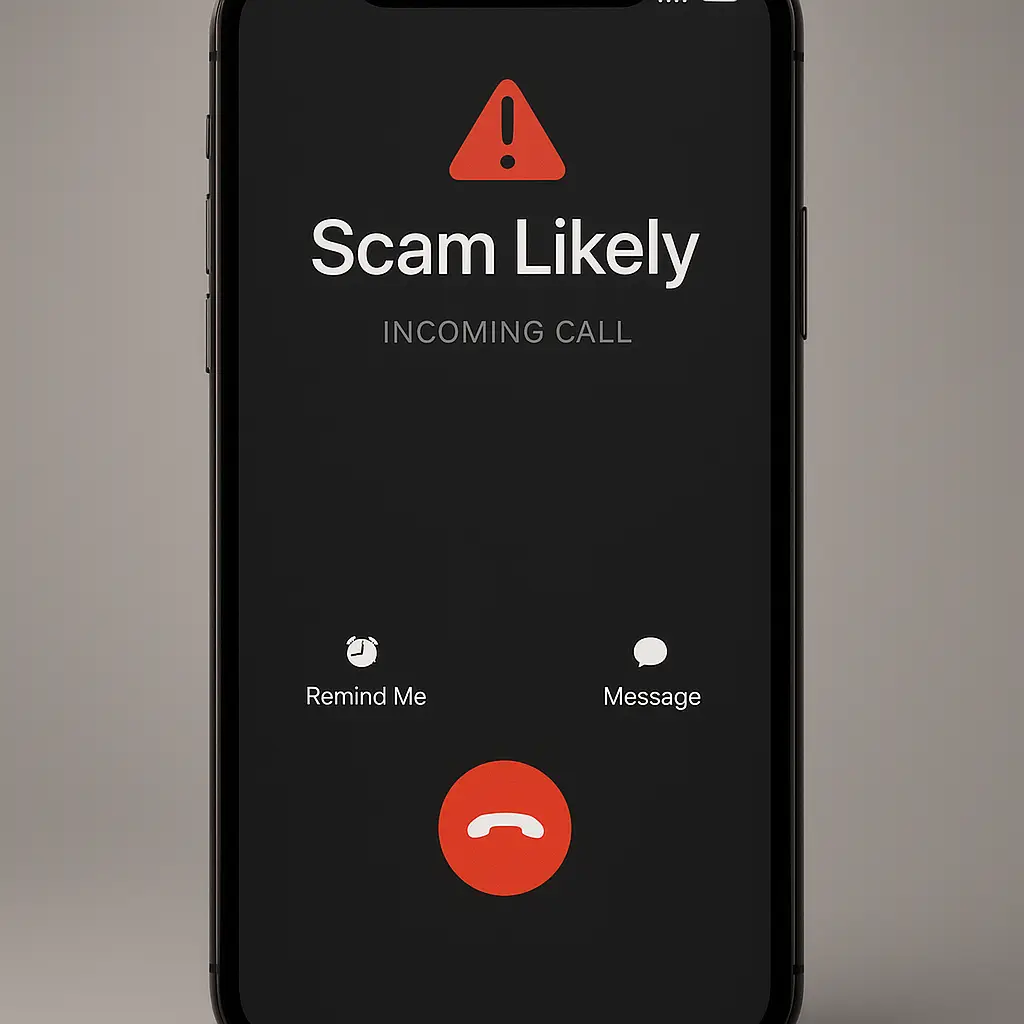
The scam is simple: someone pretends to be your boss, a government agent, tech support, or a family member in crisis. They demand immediate payment via gift cards. You buy the cards, share the codes, and the money vanishes.
This article explains why gift card scams keep working despite widespread awareness, how the fraud mechanism operates, and what makes these attacks succeed where more sophisticated scams fail.
The gift card as untraceable cash
Gift cards function as bearer instruments. Whoever holds the code controls the value. No ID required. No transaction history linking the card to a specific person. Once you share the code, the scammer drains the balance within minutes by purchasing digital goods, reselling the card on underground markets, or converting the value to cryptocurrency.
Banks can reverse fraudulent wire transfers. Credit card companies dispute unauthorized charges. Payment apps investigate fraud claims. Gift cards offer none of these protections. The transaction is final the moment you reveal the code.
Retailers designed gift cards for legitimate gifting, not payment. The lack of buyer protection that makes them convenient for presents makes them perfect for fraud. A scammer who convinces you to buy $500 in iTunes cards gets $500 in untraceable value that no authority can claw back.
This irreversibility creates the scammer's advantage. Traditional payment fraud requires money laundering infrastructure, shell companies, and international wire transfers that leave traces. Gift cards eliminate that complexity. The victim does the work of converting their money into an untraceable asset and hands it directly to the criminal.
The impersonation playbook
Gift card scams succeed through impersonation. The scammer poses as someone with authority, urgency, or emotional leverage over the victim. The FTC reports that impersonation scams accounted for roughly $1.1 billion in reported losses in 2023, with gift cards as the most common payment method.
The impersonation categories follow predictable patterns:
Government agency impersonation: The caller claims to represent the IRS, Social Security Administration, or local law enforcement. You owe back taxes, your Social Security number has been suspended, or there's a warrant for your arrest. Pay immediately via gift cards to resolve the issue. The IRS explicitly states that it never demands immediate payment via gift cards, wire transfers, or cryptocurrency.
Employer impersonation: An email or text arrives from your boss or company executive requesting urgent gift card purchases for client gifts, employee rewards, or vendor payments. The message uses the executive's real name, mimics their communication style, and creates deadline pressure. You're asked to buy the cards and share the codes before the end of the business day.
Tech support impersonation: A pop-up warning or phone call claims your computer is infected with malware or your accounts have been compromised. The supposed tech support agent from Microsoft, Apple, or your antivirus company guides you through purchasing gift cards to pay for security software or protect your accounts. The FTC's tech support scam guidance notes that legitimate tech companies never initiate contact about security problems.
Family emergency impersonation: A caller claims to be your grandchild, child, or other relative in immediate danger. They've been arrested, hospitalized abroad, or stranded without money. They need gift cards to post bail, pay medical bills, or buy a plane ticket home. The urgency and emotional manipulation override skepticism. CISA warns that these scenarios exploit family relationships to bypass rational verification.
Utility or service impersonation: The message claims your electricity, internet, or phone service will be shut off within hours unless you pay an overdue bill immediately via gift cards. The threat of service disruption creates panic that prevents careful verification.
Each scenario follows the same structure: establish authority or emotional pressure, create urgency that prevents verification, and demand payment via gift cards before the victim has time to think.
Why urgency defeats skepticism
The human brain processes threats differently than routine decisions. When someone claims your Social Security number has been suspended, your electricity will shut off in two hours, or your grandchild is in jail, your cognitive response shifts from analytical thinking to threat response.
Urgency creates a mental state where immediate action feels more important than verification. The scammer's deadline, pay within the hour, before the end of the day, before the office closes, activates time pressure that makes pausing to verify feel like accepting the threatened consequence.
This mechanism explains why people who know gift card scams exist still fall for them. Awareness doesn't override the brain's threat response when the scenario feels immediate and consequential. A person who would normally recognize a scam email becomes vulnerable when the same scam arrives as a phone call from someone claiming to be their boss during a stressful workday.
The scammer reinforces urgency through repetition. They stay on the phone while you drive to the store, purchase the cards, and read the codes aloud. This continuous engagement prevents the victim from stepping back, consulting someone else, or researching the claim. The moment you hang up or pause to verify, the spell breaks.
In The Good Place, Eleanor Shellstrop realizes that the points system she's been navigating isn't what it appears to be only after she steps outside the immediate pressure to perform. The same dynamic applies to scam victims. The fraud becomes obvious in retrospect, but urgency prevents that perspective shift while the scam is active.
The authority exploit
People defer to perceived authority figures even when the request seems unusual. This tendency, documented in decades of social psychology research, makes employer and government impersonation particularly effective.
When an email arrives from your boss's account requesting gift card purchases, your default response is compliance, not suspicion. The organizational hierarchy creates a power dynamic where questioning seems risky. You might lose your job, damage your reputation, or appear incompetent if you challenge what turns out to be a legitimate request.
Scammers exploit this hesitation by crafting scenarios where asking for verification feels more dangerous than complying. The fake boss email often includes language like "I'm in a meeting and can't talk" or "This is urgent and confidential" to preemptively block verification attempts.
Government impersonation adds legal threat to authority. The IRS, Social Security Administration, and law enforcement carry the weight of legal consequences. When someone claiming to represent these agencies threatens arrest, account suspension, or legal action, the fear response overrides the knowledge that government agencies don't demand gift card payments.
The scammer's confidence reinforces the authority illusion. They speak with certainty, use official-sounding language, and provide fake badge numbers or case IDs. This performance of authority feels more credible than your own skepticism, especially when you're unfamiliar with how these agencies actually operate.
The payment method misdirection
Legitimate organizations never request payment via gift cards. This fact is simple, widely known, and routinely ignored during active scams.
The misdirection works because the scammer provides a plausible explanation for the unusual payment method. Your boss needs gift cards for client appreciation. The IRS accepts gift cards for back taxes because your account is flagged for fraud. Tech support requires payment via gift cards because your credit card information might be compromised.
These explanations don't withstand scrutiny, but scrutiny requires stepping outside the urgency frame. When you're focused on resolving the immediate problem, keeping your job, avoiding arrest, fixing your computer, the payment method becomes a detail rather than a warning sign.
The scammer also normalizes the request through familiarity. Gift cards are ubiquitous. You've purchased them as gifts, received them as presents, and used them for legitimate transactions. The cards themselves don't trigger fraud alarms the way a request for Bitcoin or wire transfer might. The payment method feels ordinary even when the context is fraudulent.
Some scammers add a verification step to build credibility. They ask you to scratch off the code but not share it yet, then provide additional instructions that make the process feel official. This staged approach mimics legitimate customer service interactions and delays the moment when you realize you've been scammed.
The demographic targeting pattern
Gift card scams target specific demographics based on the impersonation scenario. The FTC's data shows that people over 60 report higher median losses to imposter scams, though younger adults report more total incidents.
Employer impersonation targets office workers who regularly handle purchasing or administrative tasks. The scam exploits workplace hierarchies and the victim's familiarity with handling unusual requests from executives.
Government impersonation targets people who fear legal consequences or have limited experience with how government agencies actually communicate. Recent immigrants, people with language barriers, and individuals who've had previous negative interactions with government agencies show higher vulnerability to these scenarios.
Family emergency scams target grandparents and parents through emotional manipulation. The urgency of a relative in danger overrides skepticism about the payment method or verification of the caller's identity.
Tech support scams target people with limited technical knowledge who rely on external help to resolve computer problems. The victim's existing anxiety about technology makes the fake security threat feel credible.
This targeting isn't random. Scammers test different approaches, track success rates, and refine their scripts based on which demographics respond to which scenarios. The gift card scam ecosystem operates like any other market, optimizing for conversion through experimentation and data analysis.
The retailer's impossible position
Retailers sell gift cards as a product category, not a fraud prevention service. Store employees receive some training to recognize potential scam victims, but they're not fraud investigators. The transaction is legal. The customer is purchasing a legitimate product with their own money. Intervening requires the employee to identify fraud in real time, convince the customer they're being scammed, and refuse a legal sale.
Some retailers post warnings near gift card displays. Some train employees to ask questions when customers purchase large quantities of cards. Some limit the number of cards a single customer can buy in one transaction. These measures help in some cases, but they can't stop a determined scammer who's coached the victim on how to respond to employee questions.
The victim often resists intervention. The scammer has told them that store employees might try to interfere, that they should insist the purchase is for personal use, that any delay will result in the threatened consequence. When an employee asks "Is someone on the phone telling you to buy these cards?", the victim says no because the scammer is listening and has instructed them to deny it.
This dynamic creates an enforcement gap. Law enforcement can investigate gift card scams after the fact, but recovery is nearly impossible. The cards are drained within minutes. The scammer operates from another country. The victim can file a police report and an IC3 complaint, but these reports primarily serve statistical purposes rather than recovery mechanisms.
Retailers could, in theory, implement more aggressive fraud prevention. They could require ID for gift card purchases, limit transaction amounts, or add verification delays. But these measures would inconvenience legitimate customers, slow down checkout lines, and potentially reduce gift card sales. The business incentive pushes toward frictionless transactions, not fraud prevention.
The recovery illusion
Some victims believe they can recover their money by reporting the fraud quickly enough. This belief is mostly false.
Gift cards drain fast. The scammer has a network ready to convert the codes into value within minutes. By the time you realize you've been scammed, call the gift card company, and request a freeze, the balance is gone.
Some retailers offer partial refunds in specific circumstances. If you report the fraud before the card is used, if you have the physical card and receipt, if you file a police report, the company might investigate. These cases are rare. Most victims discover the fraud after the card is already empty.
The FTC's guidance recommends reporting gift card scams to the retailer, the FTC, and local law enforcement. These reports help track fraud patterns and potentially lead to prosecutions, but they rarely result in money recovery for individual victims.
This lack of recourse makes gift card scams particularly devastating. Credit card fraud victims dispute the charge and get their money back. Wire transfer fraud victims might recover funds if they report quickly. Gift card scam victims lose everything with no realistic path to recovery.
The verification defense
The single most effective defense against gift card scams is verification through an independent channel. When someone requests payment via gift cards, stop and verify the request using contact information you find yourself.
Your boss emails asking for gift cards? Call them directly using the number from your company directory, not a number in the email. The IRS calls demanding payment? Hang up and call the IRS directly using the number from their official website. Your grandchild texts from an unknown number saying they're in trouble? Call their regular phone number to verify.
This verification step breaks the scam's urgency mechanism. The scammer can't maintain the pressure if you step outside their controlled communication channel. Legitimate requests can wait for verification. Scams can't.
The verification must use a different communication method than the original request. If the scam arrives via email, don't reply to the email. If it arrives via phone call, don't call back the number that called you. Use a number or contact method you independently verify as legitimate.
Some scammers anticipate this defense and provide fake verification methods. They give you a "callback number" that connects to another scammer. They send you to a fake website that looks official. They tell you that calling the main number will create delays that cause the threatened consequence.
Ignore these instructions. Use only contact information you find through official sources: the company's website, your employee directory, the government agency's official page. If the request is legitimate, the person will be there when you call. If it's a scam, you've saved yourself thousands of dollars.
The gift card as red flag
No legitimate organization requests payment via gift cards. This rule has no exceptions.
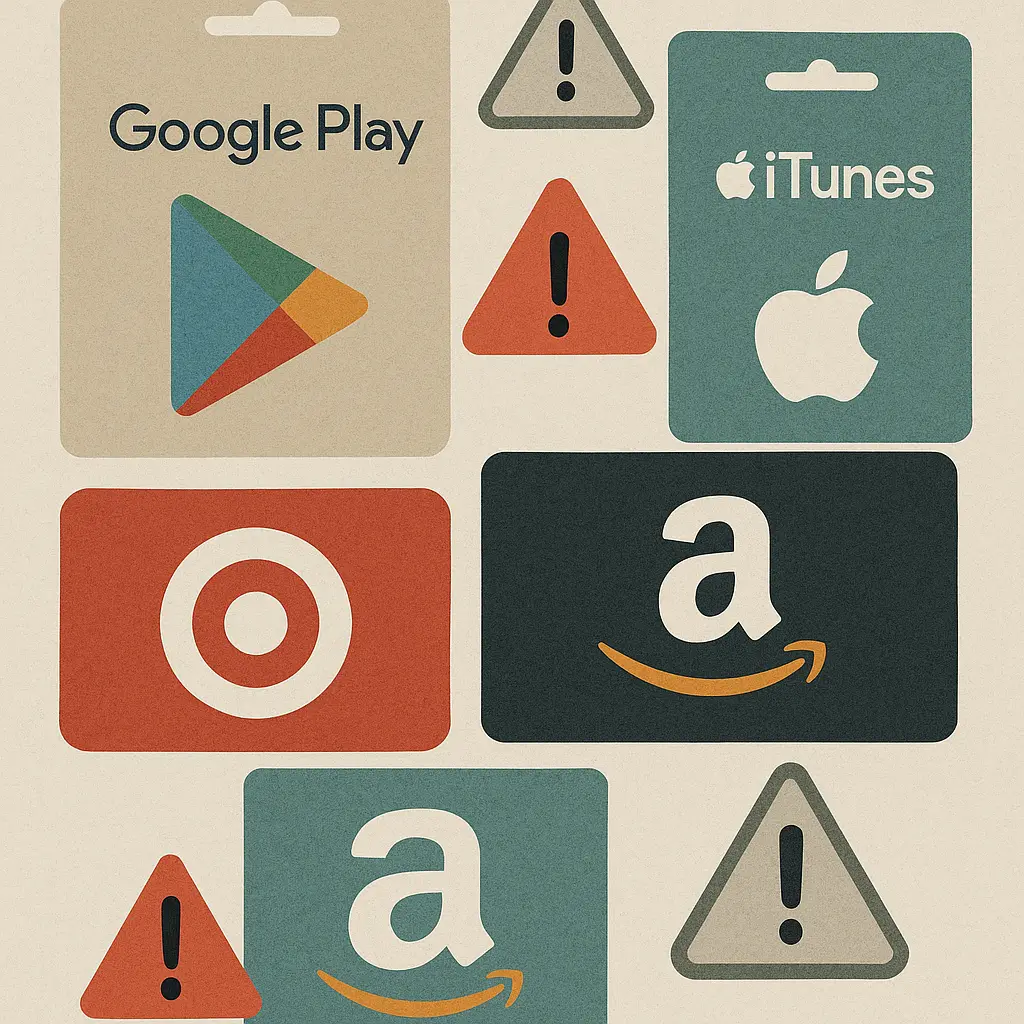
Your employer doesn't pay vendors with iTunes cards. The IRS doesn't accept Google Play cards for back taxes. Tech support companies don't charge for services via Target gift cards. Utility companies don't take Amazon cards for overdue bills.
If someone asks you to pay with gift cards, you're being scammed. The specific scenario doesn't matter. The authority of the requester doesn't matter. The urgency of the situation doesn't matter. The payment method itself is the scam indicator.
This clarity makes gift card scams theoretically easy to avoid. The problem is that urgency, authority, and emotional manipulation override this knowledge in the moment. You know gift cards are a scam payment method, but when your boss is demanding them or the IRS is threatening arrest, that knowledge becomes abstract while the threat feels immediate.
The defense is to make the rule automatic. Gift cards equal scam. No analysis required. No consideration of the scenario. The moment someone requests payment via gift cards, the answer is no, and the next step is verification through an independent channel.
The reporting mechanism
Reporting gift card scams serves two purposes: it helps authorities track fraud patterns, and it might prevent the next victim from falling for the same scammer.
Report to the FTC at ReportFraud.ftc.gov. The FTC aggregates scam reports to identify trends, target enforcement actions, and provide public warnings about emerging threats. Your report becomes part of the data that shapes fraud prevention efforts.
Report to the gift card company. Google, Apple, Amazon, and other retailers have fraud departments that investigate scam reports. While recovery is unlikely, reporting helps them identify compromised accounts and potentially freeze cards before they're fully drained.
Report to local law enforcement and file an IC3 complaint. These reports create official records that support prosecution efforts when authorities identify and arrest scammers. Individual reports rarely lead to arrests, but patterns of reports targeting the same operation can.
Report to your employer if the scam impersonated a company executive. The security team needs to know that scammers are targeting employees with fake executive requests. This information helps them send warnings and potentially identify how the scammer obtained internal information.
Reporting doesn't recover your money, but it contributes to the broader effort to track, prosecute, and prevent gift card scams. The data helps researchers understand how scams evolve, helps law enforcement target operations, and helps consumer protection agencies warn potential victims.
The persistent vulnerability
Gift card scams will continue working as long as the underlying mechanisms remain effective: authority creates compliance, urgency prevents verification, and gift cards offer untraceable value.
Awareness campaigns help. Retailer warnings help. Employee training helps. But these interventions compete against human psychology under pressure. A person who knows about gift card scams can still fall for one when the scenario triggers the right emotional response.
The most effective defense is the simplest: legitimate organizations never request payment via gift cards. When someone asks for gift card payment, you're being scammed. Stop, verify through an independent channel, and report the attempt.
That rule, applied consistently, stops the scam before the money moves. The challenge is remembering it when urgency, authority, or emotion make compliance feel more important than caution.