Connected cars track location, speed, braking, contacts, and voice commands—here's the full surveillance picture
Your car knows where you've been, how fast you drove, how hard you braked, who you called, and what you said to the voice assistant. It knows when you're home, when you're at work, and how often you visit specific addresses. It collects this data continuously, stores it locally, and in many cases transmits it to the manufacturer, your insurance company, and third parties you may not remember authorizing.
This isn't speculation. Modern vehicles contain dozens of sensors, multiple computers, and cellular connectivity that turns every drive into a data collection event. The infotainment system you use for navigation and music is also a surveillance device with a direct view of your behavior, contacts, and location history.
Here's what your car tracks, how the data flows, and what you can actually control.
The sensor network inside your vehicle
A 2020s-era car contains somewhere around 100 electronic control units, small computers that manage everything from engine timing to automatic braking. These ECUs communicate over internal networks, sharing data in real time to coordinate vehicle functions.
The sensors feeding these systems include:
Location tracking: GPS receivers provide continuous position data. This powers navigation, but it also creates a permanent record of everywhere the vehicle has been. Some systems log coordinates every few seconds. Others sample less frequently but still build a detailed movement history over time.
Motion and behavior sensors: Accelerometers measure speed, braking force, and cornering. Gyroscopes track steering angle. These sensors exist primarily for safety systems like electronic stability control and airbag deployment, but the data they generate also describes your driving style in granular detail.
Occupancy and biometric sensors: Weight sensors in seats detect passengers. Some vehicles use cameras to monitor driver attention, tracking head position and eye movement to detect drowsiness. Steering wheel sensors measure grip pressure. Climate control systems log temperature preferences and adjustment patterns.
Connectivity and media: When you pair your phone via Bluetooth or USB, the car often imports your contacts, call logs, and text message metadata. Voice assistants record commands. The infotainment system logs which apps you use, which radio stations you listen to, and which destinations you search for.
Diagnostic and maintenance data: Engine sensors monitor fuel consumption, oil pressure, coolant temperature, and hundreds of other parameters. Tire pressure monitoring systems report inflation levels. Battery management systems track charge cycles and health metrics in electric vehicles.
Each of these systems generates data continuously. Some of it stays local. Some transmits to the manufacturer. Some feeds into insurance telematics programs. The boundaries between these data flows are not always clear, and the controls you have over them vary dramatically by manufacturer and model.
What gets stored locally vs. what transmits
Your car has onboard storage, flash memory in the infotainment system, logging buffers in the ECUs, and temporary caches in various modules. Not all of this data leaves the vehicle immediately, but most of it leaves eventually.
Local storage holds navigation history, paired phone data, saved locations (home, work, favorite destinations), voice command recordings, and recent diagnostic codes. This data persists until you manually delete it or perform a factory reset. If you sell the car without wiping these systems, the next owner inherits your contact list, your frequent destinations, and potentially your garage door opener code if you programmed it into the vehicle.
Transmitted data flows through the car's cellular modem or through your paired phone's data connection. Connected services, remote start, stolen vehicle tracking, automatic crash notification, require this link. So do over-the-air software updates, real-time traffic data, and manufacturer diagnostics.
The manufacturer receives diagnostic reports on a schedule that varies by brand. Some systems transmit daily. Others send data after specific events like a hard brake or an airbag deployment. CISA guidance on connected vehicle security notes that these transmissions often include vehicle identification numbers, location data, and detailed sensor readings, though the specifics depend on what services you've activated.
Insurance telematics programs, where you agree to monitoring in exchange for potential discounts, add another transmission path. These systems track mileage, time of day, speed, acceleration, braking, and cornering. The data goes to the insurer or a third-party analytics firm that scores your driving behavior. You opted in, but the scope of collection often exceeds what the initial pitch suggested.
Third-party apps you connect to the car, whether through the manufacturer's app ecosystem or through integrations like Apple CarPlay and Android Auto, inherit permissions based on what you grant. If you authorize a parking app to access your location, it sees your location continuously while connected, not just when you're looking for parking.
The infotainment system as surveillance hub
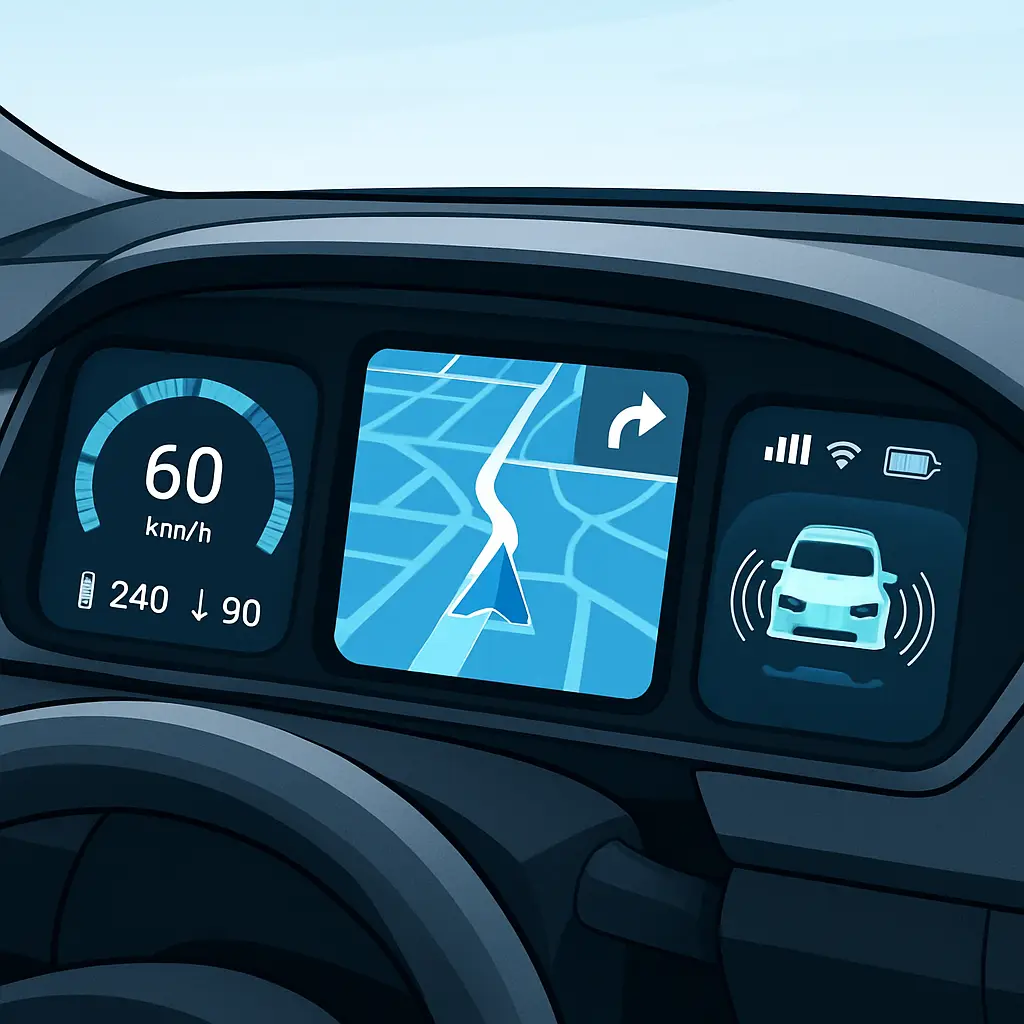
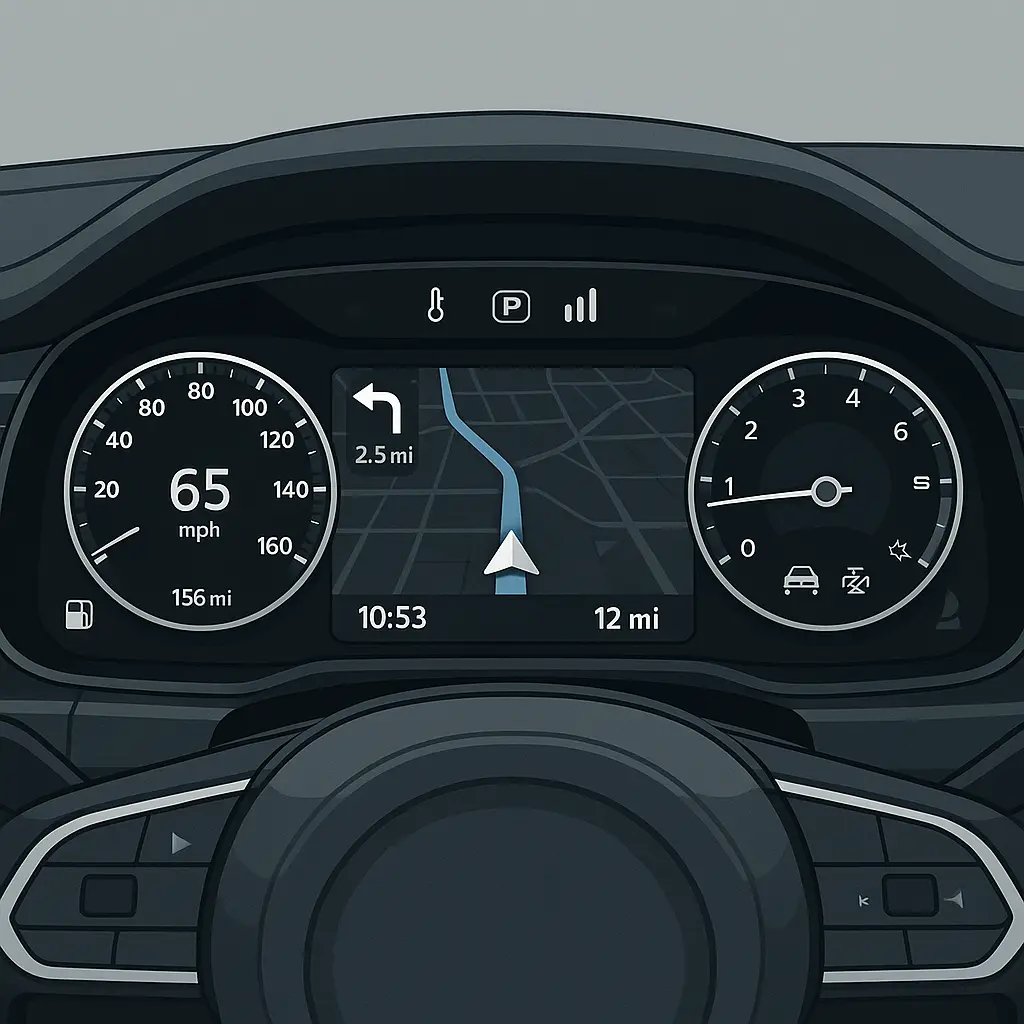
The touchscreen in your dashboard is a computer running an operating system, often a customized version of Linux or Android. It has storage, processing power, network connectivity, and access to nearly every sensor in the vehicle.
When you pair your phone, the system requests permissions. The prompts are often vague, "Allow access to contacts?" without specifying what that means or how long the access persists. In practice, pairing often grants the car permission to copy your entire contact list, read call logs, and in some cases access text message content.
Voice assistants built into the car, whether the manufacturer's proprietary system or a third-party assistant like Alexa, record your commands. Some systems process these locally. Others send audio to cloud servers for transcription and processing. The privacy policies vary, but the default is usually cloud processing, which means your voice commands leave the vehicle.
Navigation history accumulates in the infotainment system's storage. Every address you search for, every route you've taken, every deviation from the suggested path, it's all logged. Some systems let you clear this history manually. Others bury the option deep in settings menus or don't offer it at all.
The infotainment system also logs media consumption. Which radio stations you listen to, which streaming services you use, which podcasts you play, all of this generates behavioral data that can be monetized or shared with advertisers if the manufacturer's privacy policy permits it.
Who sees your car's data
The data your car collects doesn't stay with you. It flows to multiple parties, each with different access levels and different motivations for wanting it.
The manufacturer sees diagnostic data, location history, and usage patterns through connected services. This data supports warranty claims, recall notifications, and software updates, but it also feeds product development, marketing analytics, and in some cases gets sold to third-party data brokers. Manufacturer privacy policies often reserve the right to share anonymized or aggregated data with partners, though the line between "anonymized" and "re-identifiable" is thinner than the policies suggest.
Your insurance company sees whatever you agreed to share when you enrolled in telematics. This typically includes mileage, speed, braking, acceleration, and time-of-day driving patterns. The insurer uses this to adjust your rates, but the data also goes into actuarial models that affect pricing for other customers. Some insurers share telematics data with affiliates or sell it to third parties under terms buried in the enrollment agreement.
Law enforcement can request data with a warrant. This includes location history, speed records, and in some cases audio from voice assistants. Crash data recorders, often called "black boxes", store the seconds before and after a collision, capturing speed, braking, steering angle, and seatbelt status. This data is admissible in court and routinely subpoenaed in accident investigations.
Service centers and mechanics access diagnostic data when you bring the car in for maintenance. This is necessary for repairs, but it also means your driving patterns and vehicle history are visible to technicians and stored in the service center's records.
Third-party apps you connect to the vehicle inherit whatever permissions you grant. A parking app might only need location when you're actively using it, but if you grant continuous location access, it tracks you constantly. Some apps request permissions that exceed their stated functionality, collecting data opportunistically for resale or analytics.
Hackers and unauthorized actors are a risk when vehicle systems have known vulnerabilities. CISA's guidance on connected infrastructure security emphasizes that cellular modems, Bluetooth connections, and over-the-air update mechanisms all present attack surfaces. A compromised vehicle can leak location data, diagnostic information, or even control inputs if the exploit is sophisticated enough.
The insurance telematics mechanism
Insurance telematics programs pitch themselves as a way to save money by proving you're a safe driver. The mechanism is straightforward: install a device or activate an app, drive normally, and the insurer monitors your behavior to calculate a personalized rate.
What you're actually agreeing to is continuous surveillance of your driving. The telematics system tracks:
- Mileage: total distance driven, often broken down by trip
- Time of day: when you drive, with late-night and early-morning trips often flagged as higher risk
- Speed: absolute speed and speed relative to posted limits
- Acceleration and braking: how quickly you speed up and how hard you brake, with "hard braking events" counted against you
- Cornering: how sharply you turn, another proxy for aggressive driving
- Location: where you drive, which can reveal patterns like frequent highway use or urban driving
The data feeds into a scoring algorithm that classifies you as low, medium, or high risk. The score affects your premium, but it also goes into the insurer's broader risk models. Even if you opt out later, the data you generated while enrolled remains in their systems.
Some telematics programs are mandatory for certain customer segments, young drivers, drivers with recent accidents, drivers in high-risk zip codes. In these cases, refusing the program means paying a higher base rate or losing coverage entirely.
The data doesn't always stay with the insurer. Some programs involve third-party telematics providers who collect the data, analyze it, and pass the results to the insurer. These intermediaries have their own privacy policies and data retention practices, and in many cases they reserve the right to use the data for purposes beyond your insurance rate.
What you can actually control
Vehicle data collection operates on an opt-out model at best, and in many cases there's no opt-out at all. Safety systems like airbag sensors and anti-lock brakes collect data by design. You can't disable them without compromising the vehicle's functionality.
But some data flows are controllable:
Connected services: Most manufacturers let you disable remote connectivity features. This stops the transmission of diagnostic data, location updates, and usage reports to the manufacturer's servers. The tradeoff is losing remote start, stolen vehicle tracking, automatic crash notification, and over-the-air updates. You're trading convenience and some safety features for reduced data sharing.
Voice assistants: You can disable built-in voice assistants in the infotainment settings. This stops the recording and transmission of voice commands, but it also disables voice-activated navigation, calling, and media control. Some systems let you switch to local voice processing, which keeps commands on the device instead of sending them to the cloud.
Phone pairing permissions: When you pair your phone, the car requests access to contacts, call logs, and sometimes messages. You can deny these permissions, but doing so often breaks hands-free calling and contact-based navigation. Some systems let you pair for media only, skipping the contact sync entirely.
Navigation history: Many infotainment systems let you clear saved destinations and recent searches. The option is usually buried in privacy or data management settings. Clearing this history doesn't delete location data that's already been transmitted to the manufacturer, but it removes the local record.
Telematics programs: If you enrolled voluntarily, you can usually opt out by contacting your insurer. Your rate may increase when you do. If the program was mandatory, opting out might not be possible without switching insurers.
Factory reset before selling: Performing a factory reset on the infotainment system wipes saved locations, paired phones, contacts, and navigation history. The process varies by manufacturer, some make it easy, others require a service visit. Diagnostic data stored in the ECUs is harder to clear and often persists even after a reset, but the personal data visible to the next owner should be gone.
The cultural reference that fits here
In Ocean's Eleven, Danny Ocean's crew pulls off a casino heist by exploiting the surveillance system. They don't avoid the cameras, they feed the cameras exactly what the security team expects to see, creating a false narrative while the real heist happens elsewhere.
Your car's data collection works the opposite way. You're not feeding the system a false narrative. You're generating a real one, continuously, whether you're aware of it or not. The surveillance isn't something you can trick or bypass. It's embedded in the vehicle's architecture, running by default, and the controls you have are limited to disabling features or accepting the tradeoff.
The heist crew knew they were on camera. You might not realize how much your car is watching.
What happens to the data long-term
Vehicle data doesn't expire. Manufacturers retain diagnostic logs for years, often for the life of the vehicle and sometimes beyond. Insurance telematics data stays in the insurer's systems even after you cancel the program. Location history transmitted to third-party services persists in those companies' databases according to their retention policies, which are rarely transparent and often indefinite.
When you sell the car, the new owner doesn't automatically get access to your historical data stored on manufacturer servers, but they do inherit anything still in the vehicle's local storage if you didn't perform a factory reset. This includes contacts, saved locations, and navigation history.
If the car is totaled and sent to salvage, the infotainment system and ECUs often remain intact. Data recovery from these systems is possible, and in some cases salvage buyers extract and resell the data.
Manufacturers occasionally face breaches. When this happens, vehicle data, location histories, owner information, diagnostic logs, can leak. The scope of these breaches varies, but the risk is non-zero, and the data's value to attackers is real.
The regulatory gap
Vehicle data collection in the U.S. operates in a regulatory gray zone. There's no federal law specifically governing what data cars can collect, how long they can keep it, or who they can share it with. Manufacturers are subject to general consumer protection laws and in some cases state privacy laws like California's CCPA, but these don't address the unique surveillance capabilities of connected vehicles.
CISA's cybersecurity guidance addresses vehicle security from an infrastructure perspective, protecting the systems from attack, but it doesn't regulate data collection practices. The FTC has brought enforcement actions against companies for deceptive privacy practices, but these are reactive, not proactive.
Some states are starting to pass vehicle data privacy laws, but the patchwork of state regulations creates inconsistent protections depending on where you live. Manufacturers often default to the least restrictive standard, collecting as much data as the weakest state law allows.
The result is that vehicle data collection is largely self-regulated by manufacturers, who write their own privacy policies, set their own retention periods, and decide for themselves what constitutes "anonymized" data.
What this means for you
If you drive a car made after around 2018, you're generating detailed behavioral data. The extent of the collection depends on the make, model, and which features you've activated, but the baseline is higher than most people expect.
You can reduce some of the data flow by disabling connected services, opting out of telematics programs, and managing phone pairing permissions. But you can't eliminate it entirely without compromising core functionality.
The tradeoff is real: convenience and safety features on one side, continuous surveillance on the other. There's no neutral middle ground where you get the benefits without the data collection. The systems are designed to extract data as a condition of operation.
If you're buying a car, ask about data collection during the purchase process. Read the privacy policy. Understand what data the manufacturer collects, how long they keep it, and who they share it with. If the answers aren't satisfactory, factor that into your decision.
If you already own a connected car, audit what's enabled. Go through the infotainment settings. Check which services are active. Review what permissions your phone has granted. Clear navigation history periodically. And before you sell the car, perform a factory reset to wipe your personal data from the local systems.
Your car is watching. What it does with the data depends on choices you made when you bought it, choices you make every time you drive it, and choices made by companies whose privacy policies you probably didn't read.