The Caller Knew My Cat's Name: Inside an AI Voice Cloning Attack
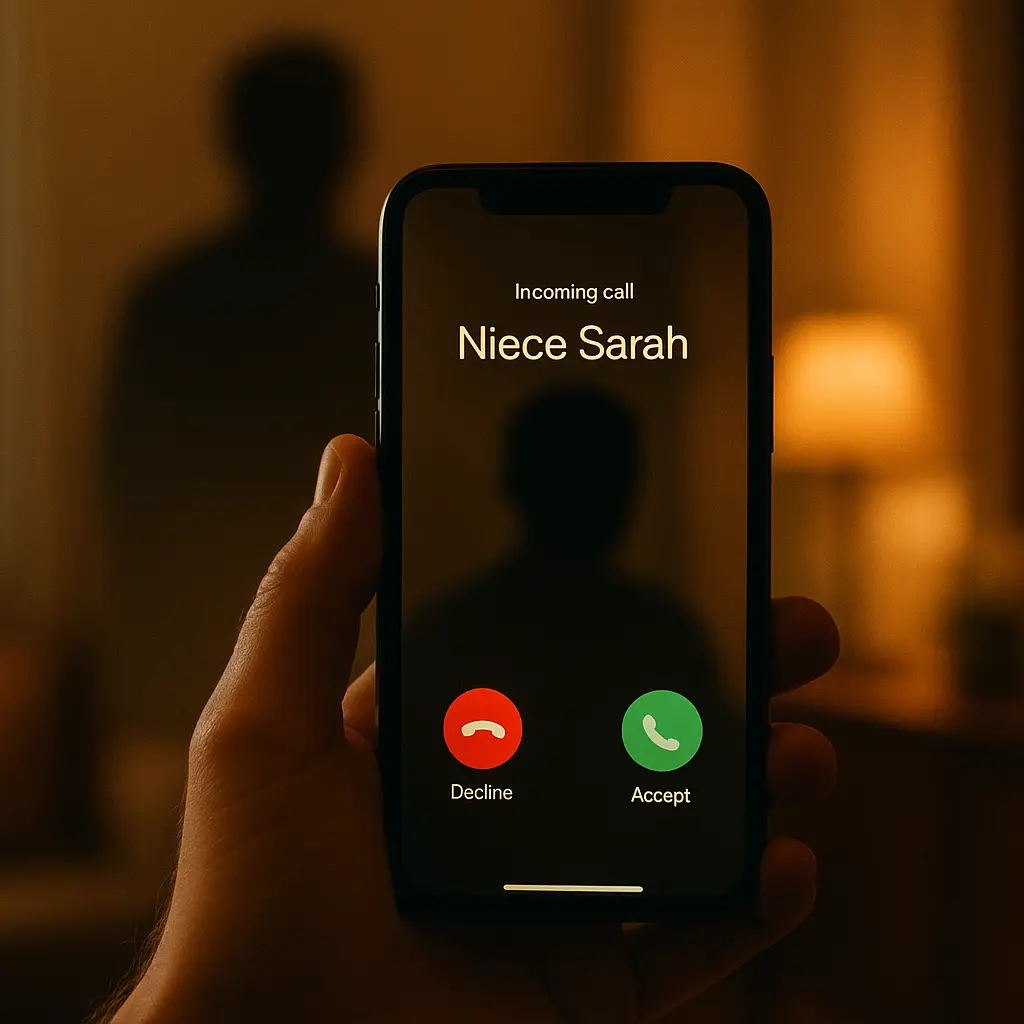
The call came at 2:47 PM on a Tuesday. My phone showed Sarah's name and photo, my niece, the one who texts me cat memes and argues about whether deep dish is real pizza.
"Aunt Margot?" The voice cracked. Scared. Young. Absolutely hers.
"Sarah? What's wrong?"
"I'm in trouble. I got arrested. I need bail money. Please don't tell Mom."
I've spent two decades writing about cybersecurity. I've warned people about this exact scam in at least four different articles. I know the script. I know the psychology. I know the defenses.
I still almost fell for it.
The Voice Was Perfect
This wasn't the robotic text-to-speech you hear when you call your bank's automated line. This was Sarah's voice. The slight uptick at the end of her sentences. The way she says "like" too often when she's nervous. The specific timber that makes her sound younger than twenty-three.
The caller had her cadence. Her breathing pattern. The small vocal fry that creeps in when she's upset.
I've known Sarah since she was born. I've heard her voice in every emotional state across two decades. This sounded exactly like her in crisis.
AI voice cloning works by analyzing audio samples to extract the unique characteristics of someone's speech. The technology needs surprisingly little source material, some systems can generate convincing output from as little as three seconds of audio. Once the model learns the voice, it can generate new speech in real time, speaking words the original person never said.
Sarah has an Instagram account. She posts videos. She has a TikTok. She's left voicemails on my phone. Any of those clips could have been the training data. The scammer didn't need to hack anything or steal files. They just needed publicly available audio and access to voice cloning software that's become disturbingly easy to find.
The technology behind this is called text-to-speech synthesis with voice conversion. The AI model learns the acoustic features of a target voice, pitch, tone, rhythm, pronunciation patterns, and applies those features to new text input. The result is synthetic audio that preserves the speaker's vocal identity while saying whatever the attacker wants.
The Pressure Was Immediate
"I can't talk long. They're letting me use someone's phone. I need you to send bail money right now. They said $8,500. Can you Venmo it?"
Every sentence was designed to prevent me from thinking clearly. Time pressure. Secrecy. A specific dollar amount that sounded official but not outrageous. A payment method that's instant and irreversible.
The FTC documents how emergency scams exploit emotional manipulation and artificial urgency to bypass rational decision-making. The scammer creates a crisis, demands immediate action, and insists on secrecy to prevent verification. The voice cloning technology just makes the deception more convincing.
"Sarah, where are you?"
"I can't say. Please just send it. I'm scared."
"What did they arrest you for?"
"It doesn't matter. Please. I need help."
I wanted to help. The voice was hers. The fear was real. The request was specific enough to sound legitimate.
But something felt wrong.
The Break in the Pattern
Sarah calls me "Magic." Always has. Since she was six and decided my nickname was the coolest thing she'd ever heard.
This caller said "Aunt Margot" three times and never once used the name Sarah has called me for seventeen years.
That's when I hung up.
I called Sarah's actual number. She answered on the second ring, laughing at something her roommate said in the background.
"Hey, Magic, what's up?"
"Are you in jail?"
"What? No. I'm at work. Why?"
Someone had just tried to steal $8,500 from me using an AI-generated clone of my niece's voice. The technology was flawless. The social engineering was textbook. The only thing that saved me was a nickname.
How the Attack Works
Voice cloning scams follow a predictable structure. The operators harvest audio samples from social media, public videos, or voicemail greetings. They feed those samples into AI voice synthesis tools that can now be accessed through subscription services for less than the cost of a Netflix account.
CISA's guidance on social engineering describes how attackers combine multiple manipulation techniques to increase success rates. Voice cloning adds a new layer to an old scam. The grandparent scam, where callers impersonate grandchildren in crisis, has existed for years. AI just makes it more convincing.
The scammer doesn't need to know much about your family structure. They can guess. "Grandma" or "Grandpa" works for elderly targets. "Mom" or "Dad" works for middle-aged targets. They try common relationship terms and listen for recognition. Once you confirm the relationship, they have control.
The crisis is always urgent and embarrassing. Arrested. In an accident. Stranded abroad. Something that explains why they can't call from their own phone, why they need money immediately, and why you shouldn't tell anyone else.
The payment method is always irreversible. Wire transfer. Gift cards. Cryptocurrency. Venmo. Anything that can't be undone once you realize the mistake.
The voice is now indistinguishable from the real person.
The Technology Isn't New, But the Access Is
Voice synthesis research has existed for decades. What changed is accessibility. You don't need a research lab or specialized equipment anymore. You need a laptop and a credit card.
Some platforms market themselves as tools for content creation, voiceover work, or accessibility features. The same technology that helps someone generate a podcast in their own voice after a medical procedure also enables fraud at scale.
Researchers studying malware development have documented how criminal services evolve to lower the technical barrier to entry. Voice cloning follows the same pattern. The tools are user-friendly. The tutorials are abundant. The cost is negligible.
The operators don't need to be sophisticated. They need a list of phone numbers, a script, and access to the software. They can run dozens of calls per hour. Even a low success rate becomes profitable when the cost per attempt is nearly zero.
The Defense That Actually Works
You can't prevent someone from cloning your voice. If you've ever posted a video, left a voicemail, or spoken in a recorded meeting, the audio exists. Trying to scrub every sample from the internet is impossible.
The defense isn't preventing the clone. The defense is verifying the person.
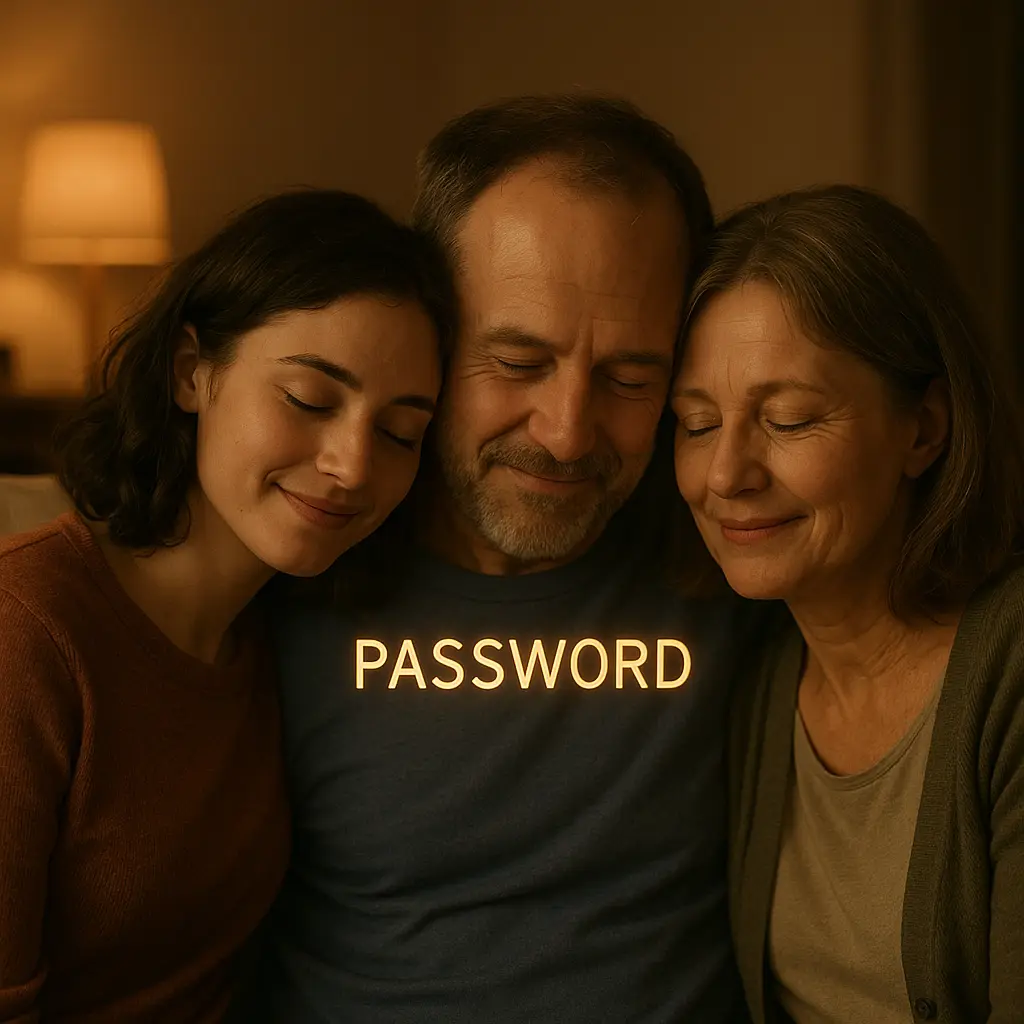
A family password stops this attack cold. It's a shared secret word or phrase that only your immediate family knows. When someone calls claiming to be in an emergency, you ask for the password before you do anything else.
The password doesn't need to be complex. It just needs to be something the AI couldn't know. "Rutabaga." "Gandalf." "Purple monkey dishwasher." Anything that's never been said in a public recording.
In Ocean's Eleven, the crew uses verbal codes to confirm identity and signal status during the heist. "We're in the black" means the plan is proceeding. "We're in the red" means abort. The codes work because everyone knows them in advance and they're never spoken outside the team.
A family password works the same way. The AI can clone the voice perfectly, but it can't know information it was never trained on. When the scammer can't provide the password, the deception collapses.
You establish the password in advance. You practice using it in low-stakes situations so it feels natural. You update it periodically if you think it might have been compromised. You don't post it on social media or mention it in recorded conversations.
That's it. That's the entire defense.
What to Do If You Get the Call
Hang up. Immediately. Don't engage. Don't try to verify details. Don't ask questions. Just end the call.
Call the person back at the number you have saved in your phone. Not the number that just called you. Not a number the caller provides. The number you already know is theirs.
If they don't answer, call another family member. Call their roommate. Call their workplace. Call someone who can verify their actual location and status.
If the caller claims they can't answer because they're in custody or their phone is broken or they're in a hospital, that's exactly when you need to verify through another channel. Real emergencies leave evidence. Real arrests create public records. Real hospitals have phone systems.
Never send money based on a phone call alone. Never buy gift cards. Never wire funds. Never use peer-to-peer payment apps for emergency requests.
The FBI's Internet Crime Complaint Center reports that fraud losses from emergency impersonation scams exceeded $3 billion in 2025. The addition of voice cloning technology is driving that number higher. The scam works because the voice bypasses your skepticism.
The Conversation You Need to Have
Sit down with your family. Tell them about voice cloning. Explain that anyone's voice can be faked. Establish a family password together.
Make it clear that you will never be offended if they ask for the password when you call with an emergency. Make it clear that you will always provide it when they ask.
Practice using it. Call your parent and say, "I need to borrow $200, but first, what's the family password?" Make it routine. Make it normal.
Talk to elderly relatives who might be more vulnerable to the emotional manipulation. Explain that their grandchild's voice can be cloned. Explain that the fear they hear is synthetic. Explain that hanging up and calling back is always the right move.
The scammers rely on you not having this conversation. They rely on the assumption that you'll trust the voice because you've never considered that the voice could be fake.
What Didn't Work
I didn't spot the scam because of security training. I didn't spot it because I'm suspicious by nature. I didn't spot it because I carefully analyzed the voice for artifacts or inconsistencies.
I spotted it because Sarah always calls me Magic.
That's not a reliable defense. That's luck. The next scammer might research better. They might scrape old text messages or social media posts to learn the nickname. They might train the AI on longer samples that include the specific terms of endearment your family uses.
Relying on subtle behavioral cues is a weak defense against technology that's improving every month. The AI will get better at replicating those cues. The scammers will get better at researching their targets.
The family password works because it's information the AI can't access. It's not about spotting the fake. It's about requiring proof that doesn't exist in any training data.
The Broader Pattern
Voice cloning is one tool in a larger ecosystem of AI-enabled fraud. Deepfake video calls. Synthetic text messages. AI-generated emails that mimic your writing style. The technology is converging toward a point where digital impersonation becomes trivial.
CISA's phishing guidance emphasizes that technical defenses alone can't stop social engineering. The human element remains the vulnerability. AI just makes the exploitation more efficient.
The scammers are industrializing fraud. They're using AI to scale attacks that previously required human labor. Voice cloning. Chatbots that conduct conversations. Automated systems that scrape social media for target information and generate personalized lures.
The defense has to be equally systematic. Not just awareness, but concrete protocols. Not just "be careful," but "here's exactly what to do when this happens."
A family password is that protocol.
What I Told Sarah
I called her back after I confirmed she wasn't in jail. I explained what had just happened. I explained that someone had cloned her voice and tried to scam me out of $8,500.
She was horrified. She wanted to delete all her social media accounts. She wanted to know how to prevent this from happening again.
I told her she can't prevent it. The audio is already out there. The technology is already accessible. Trying to lock down every recording is fighting the wrong battle.
I told her we needed a family password. I told her that if I ever call her claiming to be in an emergency, she should ask for it. I told her that if she ever calls me with an urgent request, I'm going to ask for it, and she shouldn't be offended.
We picked a word. We practiced using it. We agreed to tell the rest of the family.
That's the conversation everyone needs to have. Not someday. Not after the first scam attempt. Now.
Because the voice on the other end of the line might be perfect. The fear might sound real. The crisis might feel urgent.
But if they can't give you the password, it's not your niece.