Ad blockers and YouTube: the underlying mechanism behind the cat-and-mouse game
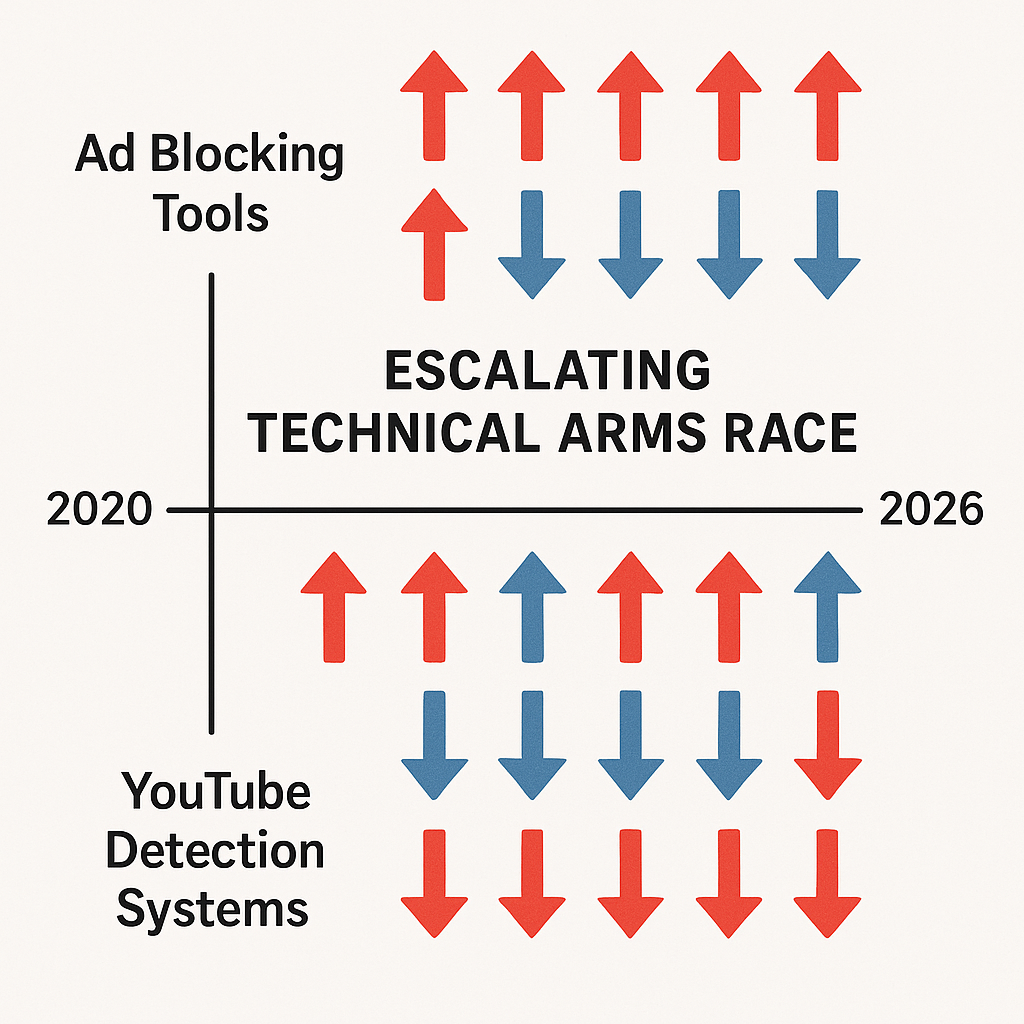
YouTube shows you ads. You install an ad blocker. YouTube detects the ad blocker and stops playback. You update the ad blocker. YouTube updates its detection. The cycle repeats. This has been going on for years, and it shows no signs of stopping.
The underlying mechanism is a technical arms race. YouTube wants to serve ads because that's how the platform makes money. Users want to skip ads because ads interrupt the experience. Ad blocker developers build tools to hide ads. YouTube builds detection systems to find those tools. Neither side can win permanently, so both sides keep updating their code.
This article explains how the mechanism works. What YouTube actually detects. How ad blockers try to hide. Why the cycle never ends. And what you need to understand if you're caught in the middle.
What YouTube is actually detecting
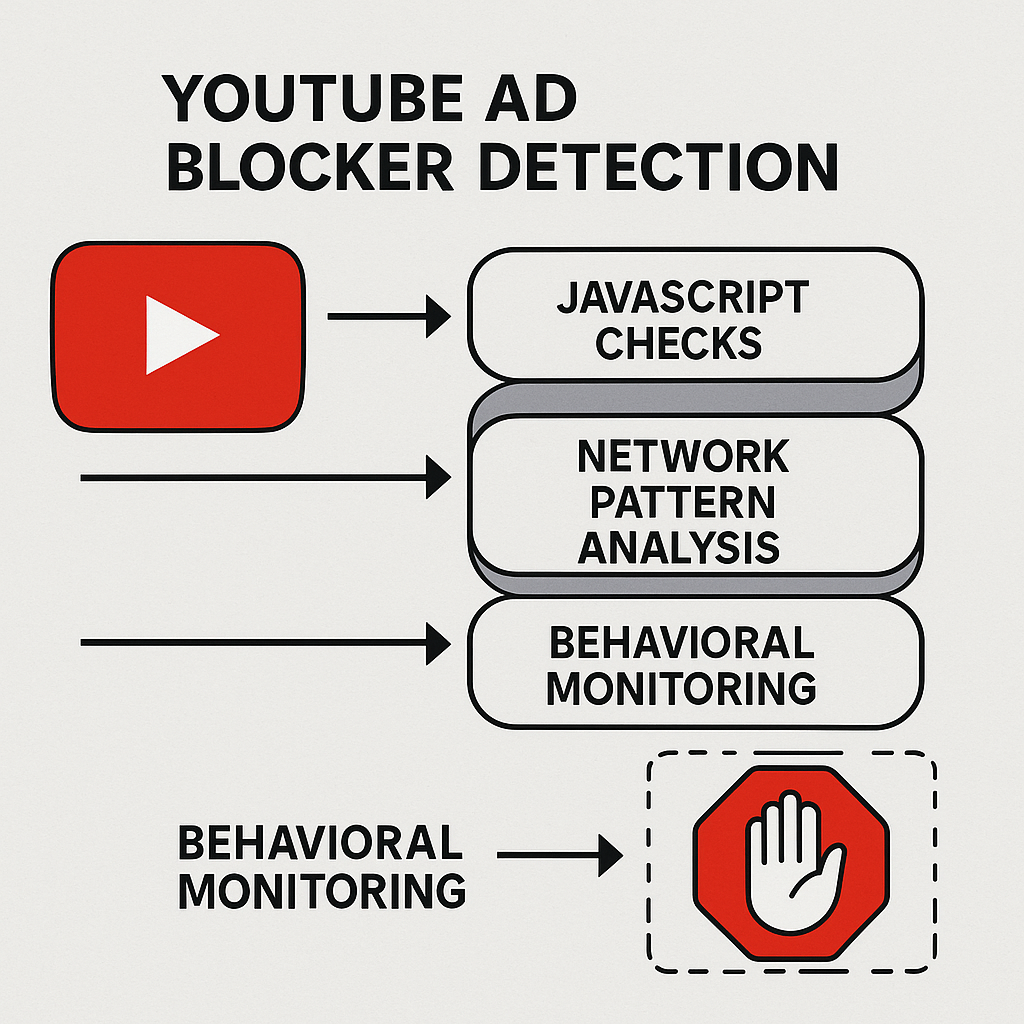
YouTube's detection system doesn't look for a specific ad blocker by name. It looks for the effects of ad blocking. When an ad blocker removes an ad from a page, it leaves traces. YouTube's code checks for those traces.
The first check is JavaScript-based. YouTube's player code expects certain elements to load, certain scripts to run, and certain events to fire. When you watch a video, the player sends requests to ad servers, waits for responses, and displays the ads it receives. If an ad blocker intercepts those requests, the expected elements don't appear. The player notices.
The second check is network-based. Ad blockers maintain lists of known ad-serving domains. When your browser tries to load content from those domains, the ad blocker blocks the request. YouTube can see which domains succeeded and which failed. If a pattern of failures matches known ad-blocking behavior, the detection triggers.
The third check is behavioral. YouTube measures how you interact with videos. How long you watch before the video starts. How often you skip forward. Whether you pause at the moments when ads would normally appear. If your behavior suggests you're not seeing ads, the system flags it.
These checks run continuously. YouTube doesn't wait for you to finish a video. The detection happens in real time, while you're watching. If the system decides you're blocking ads, it can stop playback immediately.
The detection isn't perfect. False positives happen. Some users with slow connections or outdated browsers trigger the detection even without ad blockers. Some privacy-focused browser settings block the same tracking scripts that ad blockers target, which looks identical to YouTube's detection system. The platform tries to minimize false positives, but they're inevitable when you're trying to infer behavior from indirect signals.
How ad blockers try to hide
Ad blocker developers know what YouTube is looking for. They write code to avoid detection. The simplest approach is to block ads without leaving obvious traces. Instead of preventing ad requests entirely, some ad blockers let the requests go through, then hide the ad content after it loads. The network traffic looks normal. The JavaScript events fire normally. The ad just doesn't appear on your screen.
This works until YouTube checks whether you actually saw the ad. The platform can measure whether the ad element was visible in your browser's viewport, how long it stayed visible, and whether you interacted with it. If an ad loads but never becomes visible, that's a detection signal.
So ad blockers get more sophisticated. They simulate ad viewing. They make the ad element appear in the viewport for a realistic duration. They generate fake interaction events to make it look like you watched the ad. They try to fool YouTube's measurement code into thinking the ad played normally.
YouTube responds by checking whether the interactions are realistic. Real users don't watch ads with perfect consistency. Real users pause, skip, and leave tabs in the background. If your viewing pattern is too perfect, that's suspicious. If every ad plays to completion without variation, that's suspicious. If the timing between events matches a known ad blocker's simulation pattern, that's very suspicious.
The arms race escalates. Ad blockers add randomization to their simulations. They vary the timing, the interaction patterns, and the visibility duration. They try to mimic real human behavior well enough to pass YouTube's checks. YouTube adds more checks. The cycle continues.
Some ad blockers take a different approach. Instead of hiding from detection, they try to bypass it. They modify YouTube's player code directly, removing the detection checks before they run. This works until YouTube updates the player. The platform deploys new code frequently, sometimes multiple times per day. Ad blockers that rely on modifying specific code patterns break with each update.
Other ad blockers focus on blocking YouTube's detection code itself. They maintain lists of scripts and domains associated with detection, then block those just like they block ads. This creates a recursive problem. YouTube can detect that its detection code is being blocked, which is itself a form of detection. The ad blocker then needs to block the detection of the detection blocking, and so on.
Why this matters beyond YouTube
The YouTube ad blocker war is a microcosm of a larger conflict about control over web experiences. YouTube wants to control what you see on their platform. You want to control what loads in your browser. Both positions have legitimate arguments.
YouTube provides a service. That service costs money to operate. Servers, bandwidth, content moderation, and creator payments all require revenue. Ads generate that revenue. When users block ads, the platform loses money. At scale, that threatens the service's viability. YouTube argues that ad blocking is essentially theft of service.
You own your browser. You control your device. You decide what code runs on your hardware. If you don't want to load ads, you don't have to. If you don't want to run tracking scripts, you don't have to. Your browser is your property, and you have the right to configure it as you see fit. This is a fundamental principle of computing.
The technical mechanism of the conflict reflects this philosophical tension. YouTube uses code to enforce its preferences. You use code to enforce yours. Neither side can eliminate the other's ability to act. YouTube can't force your browser to run code you don't want. You can't force YouTube to serve you content without conditions. So both sides keep updating their code, trying to gain temporary advantages in a war that has no permanent winner.
This dynamic extends beyond YouTube. Every website that serves ads faces the same tension. Every ad blocker faces the same detection challenges. The technical patterns are similar across platforms. What YouTube does, others will copy. What ad blockers learn from YouTube, they'll apply elsewhere.
The conflict also intersects with privacy. Ad blockers don't just block ads. They block tracking scripts, analytics code, and behavioral profiling tools. Many users install ad blockers primarily for privacy, not to avoid seeing ads. YouTube's detection system can't distinguish between "I don't want to see ads" and "I don't want to be tracked." Both behaviors look the same from YouTube's perspective.
This creates collateral damage. Privacy-conscious users who would tolerate ads get caught in detection systems designed to target ad blocking. Browser features designed to protect privacy trigger the same detection signals. The line between "blocking ads" and "protecting privacy" blurs, and YouTube's detection treats them identically.
The Severance parallel
In the streaming series Severance, employees undergo a procedure that splits their consciousness between work and personal life. Their work selves have no memory of their personal lives. Their personal selves have no memory of their work. The company controls the boundary between these two states completely.
The same dynamic plays out with YouTube's ad blocker detection. YouTube wants to control your viewing experience completely. You want to maintain control over your own browser. The detection system is YouTube's attempt to enforce a boundary. Ad blockers are your attempt to maintain autonomy. Neither side can fully control the other, so both sides keep trying to gain leverage.
The show explores what happens when a system tries to enforce perfect control over human behavior. The answer is that perfect control is impossible. People find ways to resist. They exploit gaps in the system. They develop workarounds. The system responds by closing gaps and adding surveillance. The cycle continues, with neither side achieving permanent victory.
YouTube's detection system is less dystopian than the severance procedure, but the underlying pattern is the same. A platform tries to enforce its preferences through technical means. Users resist through their own technical means. The platform adds more detection. Users add more evasion. The boundary between what the platform controls and what you control keeps shifting, but neither side can eliminate the other.
What actually works in 2026
The technical state of ad blocking on YouTube changes weekly. What works today might not work tomorrow. What broke last month might work again next month. The specifics are too volatile to document reliably.
Some general patterns hold. Browser extensions that focus solely on YouTube tend to break frequently. They rely on specific code patterns that YouTube changes often. Extensions that take a broader approach, blocking ads across many sites, tend to be more resilient. They use more general techniques that are harder for any single platform to defeat.
Privacy-focused browsers with built-in ad blocking face similar challenges. Some work better than others. Some update faster. Some prioritize different tradeoffs. Browser comparison details cover those differences.
YouTube Premium is the only option that completely avoids the detection problem. You pay a monthly fee. YouTube removes ads. The detection system doesn't run because you're not blocking ads. This is YouTube's preferred solution, and the one they actively promote when their detection triggers.
Some users report success with network-level ad blocking. Tools that run on your router or a separate device, blocking ad domains before they reach your browser. These are harder for YouTube to detect because the blocking happens outside your browser. YouTube can still see that ads aren't loading, but the signals are different. Whether this works long-term depends on how YouTube's detection evolves.
Other users rotate between different ad blocking tools. When one breaks, they switch to another. When that breaks, they switch again. This works as long as you're willing to spend time managing the rotation and troubleshooting when things break. For some people, the effort is worth it. For others, it's not.
The reality is that no solution is permanent. YouTube has strong incentives to detect ad blocking and strong technical capabilities to implement detection. Ad blocker developers have strong incentives to evade detection and strong technical skills to implement evasion. Both sides will continue updating their code indefinitely.
The economics behind the arms race
YouTube's parent company doesn't disclose platform-specific revenue, but researchers estimate that YouTube generates around $30 billion annually from ads. That's not profit. That's total ad revenue, which gets split between YouTube and creators. The platform keeps roughly 45 percent. Creators get 55 percent.
When you block ads, YouTube loses its share of that revenue. The creator whose video you're watching loses their share too. At small scale, this doesn't matter. At large scale, it threatens the platform's business model. Industry estimates suggest that somewhere between 25 and 40 percent of desktop users run ad blockers. Mobile ad blocking is lower, around 10 to 15 percent, because mobile browsers make it harder.
YouTube has two options. Accept the revenue loss, or fight ad blocking. The company chose to fight. The detection system is the result. The cost of building and maintaining the detection system is presumably lower than the cost of accepting widespread ad blocking.
Ad blocker developers face different economics. Most ad blockers are free. Some accept donations. Some offer premium features for a fee. A few are funded by companies that pay to have their ads whitelisted, which creates its own ethical questions. The revenue from ad blocking is much smaller than the revenue from serving ads.
This asymmetry matters. YouTube can afford to invest heavily in detection. Ad blocker developers have fewer resources. But ad blocker developers have one advantage: they're distributed. There are dozens of ad blocking tools. YouTube has to detect all of them. Ad blockers only have to evade YouTube's detection. That's a more focused problem.
The economic incentives ensure that the arms race continues. YouTube can't afford to stop fighting ad blocking. Ad blocker developers can't afford to stop evading detection. Neither side has a path to permanent victory, so both sides keep spending resources on temporary advantages.
What you can actually control
You control your browser. You decide what extensions to install. You decide what privacy settings to enable. You decide whether to use YouTube's service on their terms or not at all. Those are your options.
You don't control YouTube's detection system. You don't control how often YouTube updates its code. You don't control whether ad blockers will work next week. Those are outside your sphere of influence.
The choice is whether to engage with the arms race or step away from it. Engaging means installing ad blockers, updating them when they break, switching tools when necessary, and accepting that the process will never be finished. Stepping away means either tolerating ads or paying for YouTube Premium to avoid them.
There's no moral high ground here. YouTube provides a service and wants to get paid for it. You want to control your browsing experience. Both positions are reasonable. The technical conflict exists because both sides are acting rationally according to their incentives.
If you choose to use ad blockers, understand that you're opting into an ongoing maintenance task. Ad blockers will break. You'll need to update them. Sometimes you'll need to switch to different tools. The process is not set-it-and-forget-it. It's an active choice that requires ongoing attention.
If you choose to pay for YouTube Premium, understand that you're paying to avoid the arms race. The service removes ads, which means the detection system doesn't run. You get additional features like background play and offline downloads. Whether the monthly fee is worth it depends on how much you use YouTube and how much you value avoiding ads.
If you choose to tolerate ads, understand that you're accepting YouTube's preferred model. The platform serves ads. You watch them. Creators get paid. YouTube gets paid. The system works as designed. This is the path of least resistance, and for many users, it's the most practical option.
The regulatory angle
Governments have started paying attention to ad blocking and detection. The European Union's Digital Markets Act includes provisions about platform control over user experiences. Some interpretations suggest that aggressive anti-ad-blocking measures could violate those provisions. The law is new enough that there's no clear precedent yet.
Privacy regulations like GDPR and CCPA affect how platforms can track users and serve targeted ads. Some ad blocking is a direct response to privacy concerns. When users block tracking scripts, they're exercising rights that privacy law explicitly grants them. Whether platforms can punish users for exercising those rights is an open legal question.
In the United States, the FTC has issued guidance about data security and user control. The guidance doesn't directly address ad blocking, but it establishes principles about user autonomy and informed consent. How those principles apply to ad blocker detection is unclear.
The legal landscape is evolving. What's allowed today might not be allowed tomorrow. What's prohibited in one jurisdiction might be permitted in another. YouTube operates globally, which means it has to navigate different legal frameworks simultaneously. This constrains how aggressive the platform can be with detection.
Ad blocker developers face their own legal risks. Some detection evasion techniques could potentially violate anti-circumvention laws. The Digital Millennium Copyright Act in the United States prohibits circumventing technical measures that control access to copyrighted works. Whether ad blocker detection counts as such a technical measure is debatable. No court has definitively ruled on this yet.
The regulatory uncertainty creates risk for both sides. YouTube can't be sure that its detection system will remain legal everywhere. Ad blocker developers can't be sure that their evasion techniques won't trigger legal liability. Both sides proceed cautiously, which is one reason the arms race hasn't escalated to more aggressive measures.
The future trajectory
The arms race will continue. YouTube will keep updating its detection. Ad blockers will keep updating their evasion. Neither side will achieve permanent victory. This pattern is stable because the incentives are stable.
YouTube's detection will likely get more sophisticated. Machine learning models that analyze viewing patterns. Behavioral analysis that goes beyond simple interaction checks. Server-side ad insertion that makes blocking harder. These techniques are expensive and complex, but YouTube has the resources to implement them.
Ad blockers will likely get more sophisticated too. Better simulation of human behavior. More robust evasion techniques. Distributed development that makes it harder for YouTube to target specific tools. The ad blocking community is motivated and technically skilled. They'll adapt.
The conflict might shift to new fronts. Server-side ad insertion is harder to block because the ads are embedded in the video stream itself. The ad blocker can't tell where the video ends and the ad begins. Some users report that YouTube is testing this approach. If it becomes widespread, ad blocking would require different techniques. Video analysis to detect ad segments. Automatic skipping based on pattern recognition. These are harder problems, but not unsolvable.
Browser vendors play a role too. Chrome is developed by the same company that owns YouTube. Firefox is developed by a nonprofit with different incentives. Safari is developed by a company that competes with YouTube's parent. These different incentives affect how browsers handle ad blocking and detection. What works in one browser might not work in another.
The regulatory environment will continue evolving. More countries will pass privacy laws. More jurisdictions will scrutinize platform power. These changes will affect what YouTube can do and what ad blockers can do. The legal constraints will shape the technical conflict.
What this means for you
If you use YouTube regularly, you need to decide how you want to handle ads. The three options are: watch ads, pay for Premium, or use ad blockers with the understanding that they'll require ongoing maintenance. There's no fourth option that gives you ad-free viewing without cost or effort.
If you choose ad blockers, pick tools that update frequently and have active development communities. Check for updates regularly. Be prepared to switch tools when your current one breaks. Understand that this is an ongoing process, not a one-time fix.
If you choose to pay for Premium, understand that you're paying to avoid the arms race. The monthly fee buys you convenience and certainty. The service works consistently. You don't have to troubleshoot when things break. For many users, that's worth the cost.
If you choose to watch ads, understand that you're accepting YouTube's business model. The platform is free because ads pay for it. Creators get paid because ads generate revenue. This is the deal YouTube offers. Accepting it is a valid choice.
The technical conflict between YouTube and ad blockers will continue indefinitely. Neither side can win permanently. Both sides will keep updating their code. The specifics will change, but the pattern will remain the same. Understanding that pattern helps you make informed decisions about how to navigate it.