Voicemail Security: The Reality Behind That Blinking Light
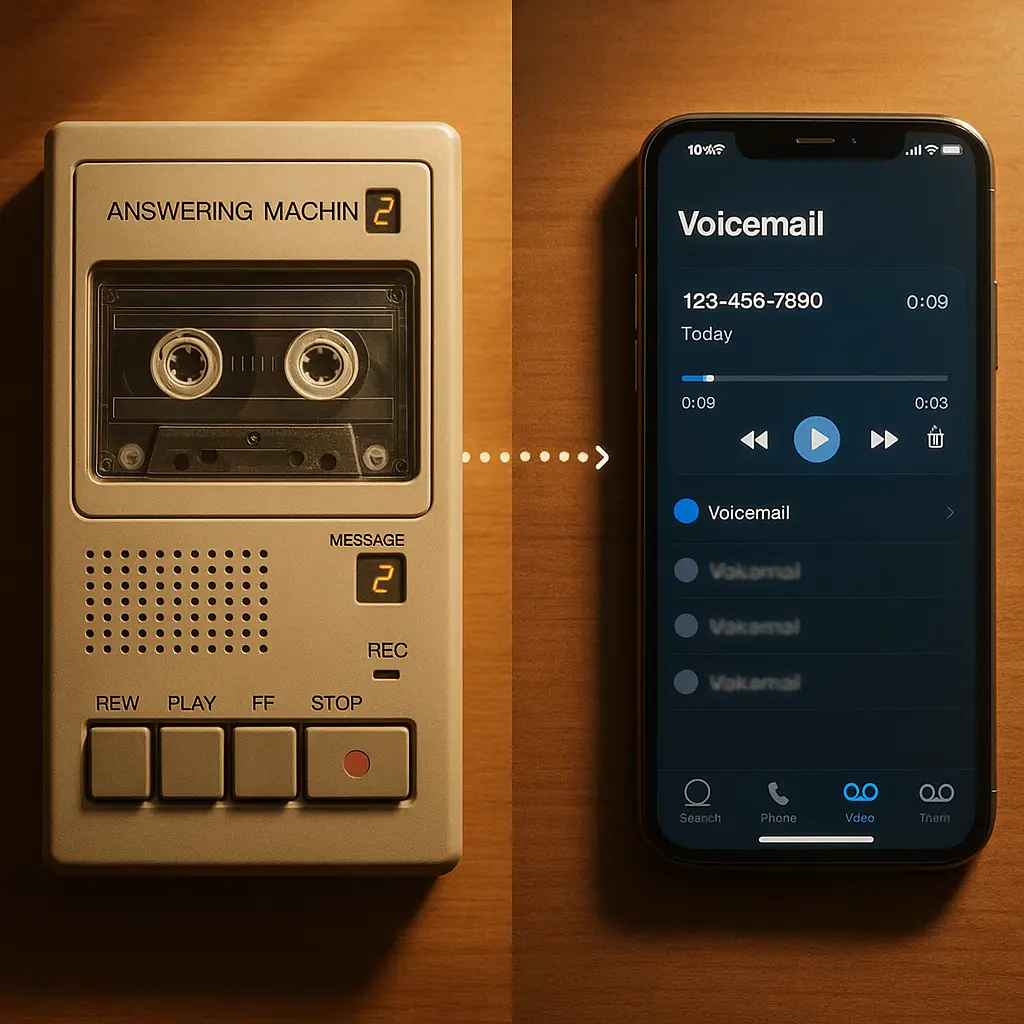
You have 14 new voicemails. Most of them are spam. Two are from your doctor's office with appointment reminders. One contains your bank's fraud alert with a callback number. All of them sit on your carrier's server, unencrypted, accessible to anyone who knows your four-digit PIN.
Is voicemail secure? No. The blinking light on your phone represents a communication channel built in the 1980s, barely updated since, and fundamentally incompatible with modern security expectations. Here's the reality behind that notification.
The Underlying Mechanism: How Voicemail Actually Works
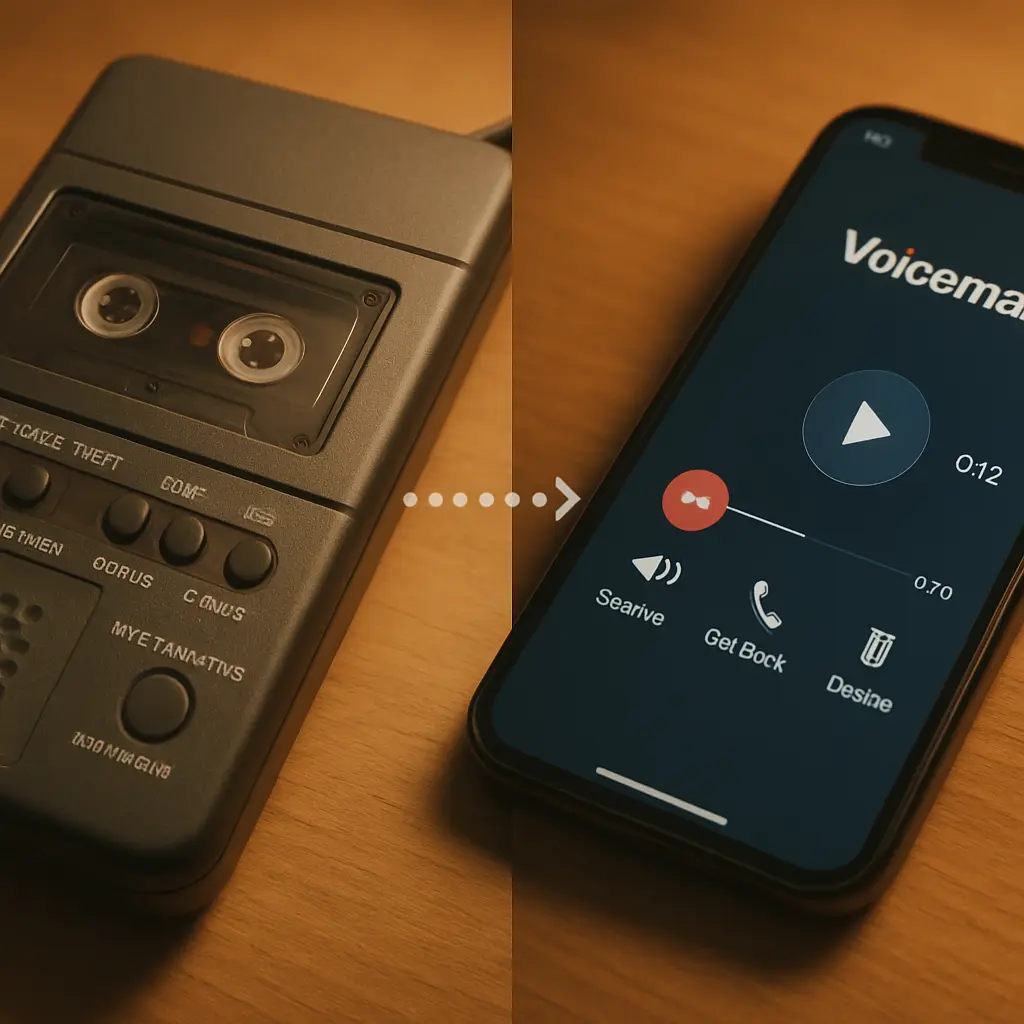
When someone leaves you a voicemail, their voice travels as audio data through the phone network to your carrier's voicemail server. The server stores that audio as a file, typically in a format like WAV or AMR. The file sits there, unencrypted, until you retrieve it by calling your voicemail box or opening your visual voicemail app.
Voicemail predates widespread encryption. The system was designed when the primary threat model was physical wiretapping of copper phone lines, not remote digital access to centralized servers. Carriers never retrofitted end-to-end encryption into voicemail because the infrastructure doesn't support it. Your messages are stored in cleartext on servers you don't control, protected only by a PIN you probably set years ago and never changed.
Visual voicemail adds a layer of convenience but doesn't fundamentally alter the security model. When you enable visual voicemail, your carrier's server transcribes the audio using speech recognition and sends both the transcription and the audio file to your phone. Your device stores these locally, which means they benefit from whatever encryption your phone uses at rest. But the original audio still lives on the carrier's server, unencrypted. Visual voicemail is a better user experience, not a security upgrade.
The PIN is the only barrier between your voicemail and anyone who wants to listen. Most carriers default to four digits. Some allow six. None require the kind of complexity you'd use for a password manager or email account. And because voicemail PINs authenticate via phone call, they're vulnerable to social engineering attacks where attackers convince carrier support to reset the PIN by impersonating you.
What Voicemail Doesn't Protect
Voicemail lacks encryption in transit and at rest. When you call to retrieve messages, the audio travels over the phone network. If you're on a cellular connection, that traffic moves through the air as radio signals. If you're on WiFi calling, it routes through your internet connection. Neither path encrypts the voicemail content itself. The carrier might use transport-layer encryption for the connection, but the voicemail audio file remains unencrypted on their server before and after you listen.
There's no two-factor authentication for voicemail. Your PIN is the only credential. If someone guesses it, resets it through carrier support, or intercepts it during a SIM swap attack, they have full access to every message in your inbox. Voicemail systems don't send alerts when someone accesses your messages from an unfamiliar number. You won't know your voicemail has been compromised until something goes wrong elsewhere.
Voicemail doesn't log access. You can't see who listened to which messages, when, or from where. If an attacker accesses your voicemail, there's no audit trail. Carriers don't provide detailed access logs to users. You're operating blind.
Retention is indefinite by default. Most carriers store voicemail messages until you delete them or until your inbox fills up. That doctor's appointment reminder from six months ago? Still there. The bank fraud alert with your account number? Still there. Every message accumulates, creating a growing archive of potentially sensitive information that sits unencrypted on a server you don't control.
The PIN Problem
Voicemail PINs are weak by design. Four digits give you 10,000 possible combinations. Six digits give you a million. Compare that to a password manager's master password, which should have enough entropy to resist brute-force attacks for decades. Voicemail PINs are short because they were designed to be entered on a phone keypad, not a keyboard, and users needed something they could remember and type quickly while standing at a payphone in 1987.
Carriers don't enforce PIN complexity. You can set your PIN to 0000 or 1234, and most systems will accept it. Some carriers assign a default PIN based on the last four digits of your phone number, which is public information. If you never changed that default, your voicemail is protected by a number anyone can look up.
PIN reset procedures are the weakest link. Attackers call carrier support, impersonate you using publicly available information (name, phone number, billing address), and request a PIN reset. Social engineering succeeds because carrier support staff are trained to help customers, not to assume everyone calling is a threat actor. Once the PIN is reset, the attacker calls your voicemail from any phone, enters the new PIN, and listens to everything.
SIM swap attacks bypass the PIN entirely. If an attacker convinces your carrier to transfer your phone number to a SIM card they control, they receive your calls and texts. They can then call your voicemail, which recognizes the incoming call as coming from your number, and access messages without needing the PIN at all. SIM swaps are common enough that the FBI has issued warnings about them repeatedly.
Visual Voicemail: A Better Interface, Not Better Security
Visual voicemail transcribes your messages and displays them as text in your phone's voicemail app. You can read the transcription, tap to listen, and delete messages without calling in. It's convenient. It's faster. It doesn't solve the security problem.
The transcription process happens on your carrier's server. The audio file is processed by speech recognition software, which generates a text version of the message. Both the audio and the transcription are sent to your phone. Your device stores them locally, which means they benefit from your phone's encryption at rest. If someone steals your phone while it's locked, they can't read your visual voicemail without unlocking the device first.
But the original audio still lives on the carrier's server, unencrypted. Visual voicemail doesn't remove messages from the server when you download them. It copies them to your phone. The server retains the audio until you explicitly delete it, and even then, deletion policies vary by carrier. Some carriers keep deleted messages for a grace period in case you want to recover them. The window of exposure doesn't close just because you switched to visual voicemail.
Third-party visual voicemail apps don't change the security model either. Apps like YouMail or Google Voice offer better transcription, spam filtering, and custom greetings, but they still retrieve voicemail from your carrier's server. The underlying infrastructure is the same. The audio is still unencrypted. The PIN is still the only authentication barrier.
What Voicemail Reveals
Voicemail contains metadata that matters. Every message includes the caller's phone number, the date and time of the call, and the duration of the message. If your carrier provides enhanced caller ID, the message might also include the caller's name as registered with the carrier. This metadata persists even if you delete the audio. Carriers log call records, and those logs can be subpoenaed or accessed by law enforcement without a warrant under certain circumstances.
The content of voicemail messages often includes information you wouldn't put in an unencrypted email. People leave callback numbers, appointment details, prescription names, account numbers, and verification codes in voicemail because it feels like a private channel. It isn't. Voicemail is less secure than email. At least email providers offer two-factor authentication and encrypted connections. Voicemail offers a four-digit PIN.
Voicemail spam is a growing problem. Robocallers leave messages advertising scams, fake tech support, fake IRS threats, and fake package delivery notifications. These messages clutter your inbox and create opportunities for phishing. If you're used to ignoring most of your voicemail, you might miss a legitimate message buried among the spam. If you're not used to ignoring it, you might fall for a scam that sounds urgent and official.
The Carrier's Role
Your carrier controls the voicemail infrastructure. They decide how messages are stored, how long they're retained, and who can access them. You don't get to choose a different voicemail provider the way you can choose a different email provider. Voicemail is bundled with your phone service, and the security model is whatever your carrier implements.
Carriers can access your voicemail. They own the servers. They have the encryption keys (or rather, they don't encrypt the files in the first place). Law enforcement can request access to your voicemail through a subpoena, and carriers will comply. In some jurisdictions, voicemail older than 180 days can be accessed without a warrant under the Stored Communications Act, though legal interpretations vary.
Carriers are not end-to-end encryption providers. They're telecommunications companies operating under a regulatory framework that prioritizes lawful intercept capabilities over user privacy. Voicemail was never designed to be a secure communication channel. It was designed to be a convenient way to leave a message when someone didn't answer the phone.
Some carriers offer "secure voicemail" as a premium feature, but the term is misleading. What they usually mean is that the voicemail system requires a PIN and maybe logs access attempts. That's not encryption. That's basic access control, and it's the minimum you'd expect from any system handling personal data.
Alternatives That Actually Protect Messages
If you need to send or receive sensitive information, don't use voicemail. Use an encrypted messaging app like Signal. Signal encrypts messages end-to-end, meaning only you and the recipient can read them. The Signal server can't decrypt your messages. Your carrier can't decrypt your messages. Law enforcement can't decrypt your messages without access to your unlocked device.
Signal supports voice messages. You can record and send audio clips that are encrypted the same way text messages are. The recipient gets a notification, taps to listen, and the audio plays on their device. The message is stored encrypted on Signal's servers temporarily and deleted after delivery. You control retention on your own device.
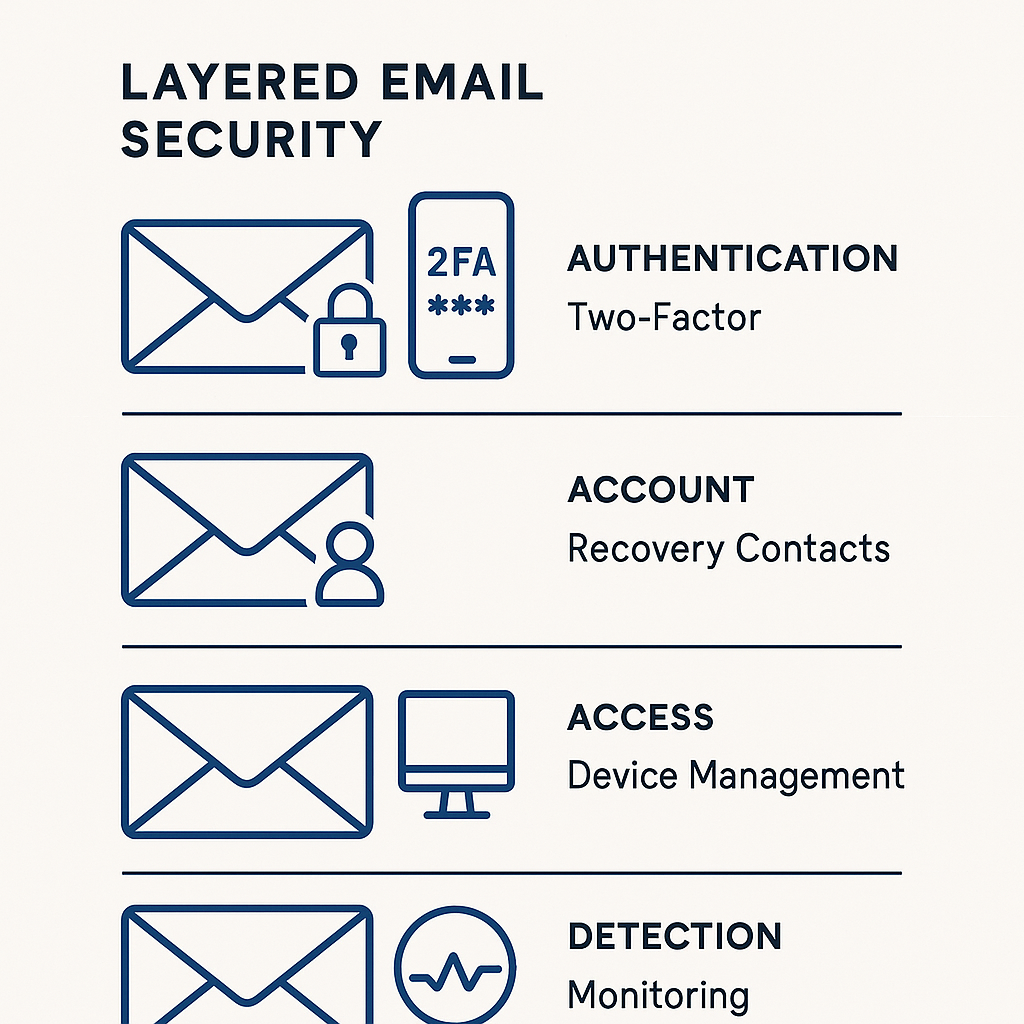
For appointment reminders, prescription notifications, and other routine information that doesn't need to be secret, email is fine. Email providers like Gmail and Outlook offer two-factor authentication, encrypted connections, and spam filtering. Email isn't end-to-end encrypted by default, but it's more secure than voicemail because you can enable stronger authentication and the provider logs access attempts.
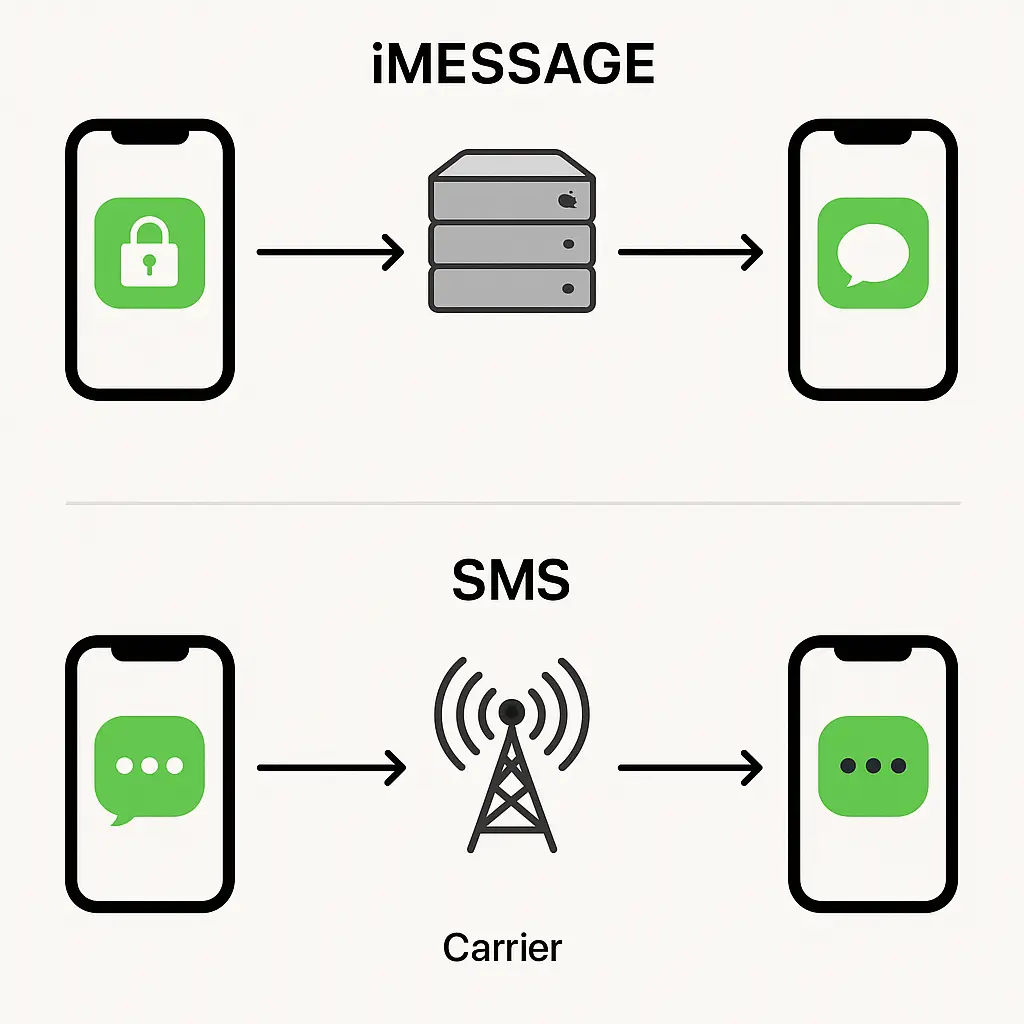
For verification codes, use an authenticator app instead of SMS or voicemail. Authenticator apps like Google Authenticator or Authy generate time-based codes on your device. The codes are never transmitted over the phone network, so they can't be intercepted by SIM swaps or voicemail access. Authenticator apps are more secure than SMS-based two-factor authentication and infinitely more secure than having a verification code read aloud in a voicemail.
What You Can Actually Do
Set a strong voicemail PIN. Don't use 0000, 1234, or the last four digits of your phone number. Choose six random digits if your carrier allows it. Write the PIN down and store it in your password manager. You're not going to remember it, and that's fine. You'll retrieve it when you need it.
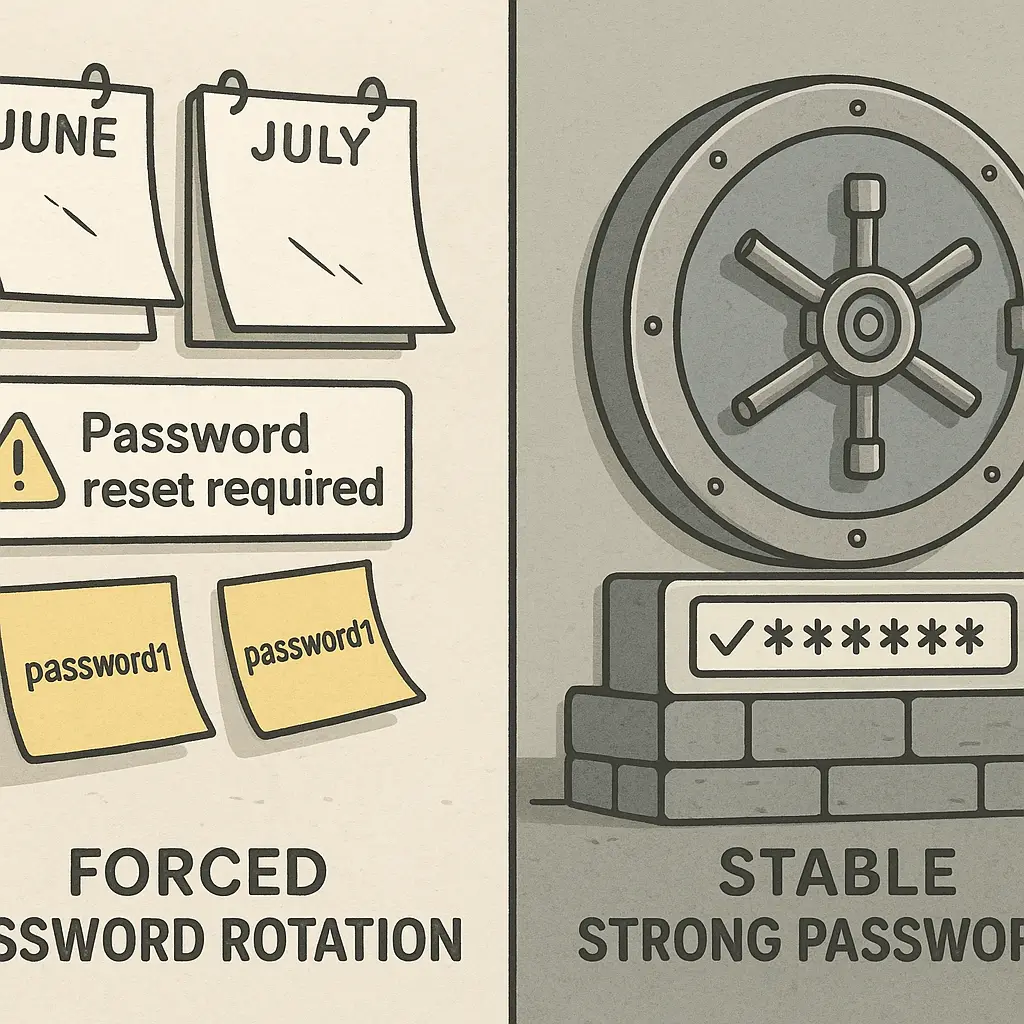
Change your PIN regularly. Treat it like a password. If you suspect your voicemail has been accessed without your permission, change the PIN immediately and contact your carrier to review recent access logs if they provide them.
Delete messages containing sensitive information as soon as you've listened to them. Don't let appointment reminders, prescription details, or account numbers accumulate in your inbox. The longer a message sits on the server, the longer the window of exposure.
Disable voicemail entirely if you don't need it. Many carriers allow you to turn off voicemail. Calls that would go to voicemail will simply ring until the caller hangs up. If people need to reach you, they can send a text or email. If it's urgent, they'll call back.
If you must use voicemail, check it regularly and keep your inbox empty. Don't let messages pile up. An inbox with 47 unheard messages is a larger attack surface than an inbox with zero.
Consider using a third-party service like Google Voice for voicemail. Google Voice offers visual voicemail, transcription, spam filtering, and the ability to access messages through a web interface with two-factor authentication. It's not end-to-end encrypted, but it's more secure than carrier voicemail because you can enable stronger account protection. Google Voice also lets you port your number away from your carrier, which reduces the risk of SIM swap attacks affecting your voicemail access.
The Cultural Reference: Severance and the Illusion of Separation
In the streaming series Severance, employees at Lumon Industries undergo a procedure that separates their work memories from their personal memories. Their "innie" self has no knowledge of their "outie" life, and vice versa. The separation feels absolute. It's presented as a clean boundary, a way to keep work and life from contaminating each other.
Voicemail operates on a similar illusion. It feels like a separate, private channel. You call in, enter your PIN, and listen to messages that seem isolated from the rest of your digital life. The blinking light on your phone suggests a boundary: these messages are here, waiting, protected by that four-digit code.
But the separation is fiction. Voicemail isn't severed from the rest of your communication. It's stored on the same carrier infrastructure that handles your calls and texts. It's accessible through the same social engineering attacks that compromise your account. It's vulnerable to the same SIM swaps, PIN resets, and server breaches that affect every other unencrypted system.
The illusion of separation makes voicemail feel safer than it is. You assume the boundary exists because the interface suggests it. You enter a PIN, so it must be secure. You retrieve messages from a dedicated inbox, so it must be isolated. But the boundary is cosmetic. The voicemail system is just another application running on your carrier's servers, and those servers don't enforce the kind of separation that would make the channel meaningfully private.
Severance ends with the revelation that the separation isn't as clean as Lumon promises. Memories leak. The boundary breaks down. Voicemail's boundary was never there to begin with.
The Bottom Line
Voicemail is not secure. It's unencrypted audio stored on your carrier's servers, protected by a weak PIN, accessible to anyone who can reset that PIN or swap your SIM. Visual voicemail adds convenience but doesn't change the underlying security model. The messages you receive, appointment reminders, prescription details, verification codes, bank alerts, sit in cleartext on infrastructure you don't control.
If you need to communicate securely, use encrypted messaging. If you need to receive routine information, use email with two-factor authentication. If you must use voicemail, set a strong PIN, delete messages immediately, and understand that you're operating on a system designed for convenience in 1987, not security in 2026.
The blinking light on your phone isn't a secure vault. It's a reminder that old infrastructure doesn't disappear just because newer, better options exist. Voicemail persists because it's embedded in the phone network, because people are used to it, and because carriers have no financial incentive to replace it with something more secure.
You can't fix voicemail. You can only decide whether to keep using it.