How to tell a real dating profile from a fake: the step-by-step verification process
You matched with someone attractive. The messages are flattering. The conversation feels easy. Then something small doesn't add up. Maybe the photos look too polished. Maybe the story about their job shifts between messages. Maybe they're moving too fast.
Fake dating profiles are common enough that verification should be routine, not paranoid. Romance scams cost Americans over $1.3 billion in 2024, according to the FBI's Internet Crime Complaint Center. The median individual loss was around $4,000, but many victims lost far more. These scams work because they exploit trust, time investment, and emotional attachment before the financial ask ever appears.
This is a practical guide. You'll learn the step-by-step verification process to spot fake profiles, recognize scripted romance scam patterns, and protect yourself before you invest time or money in someone who doesn't exist.
The baseline verification: reverse image search
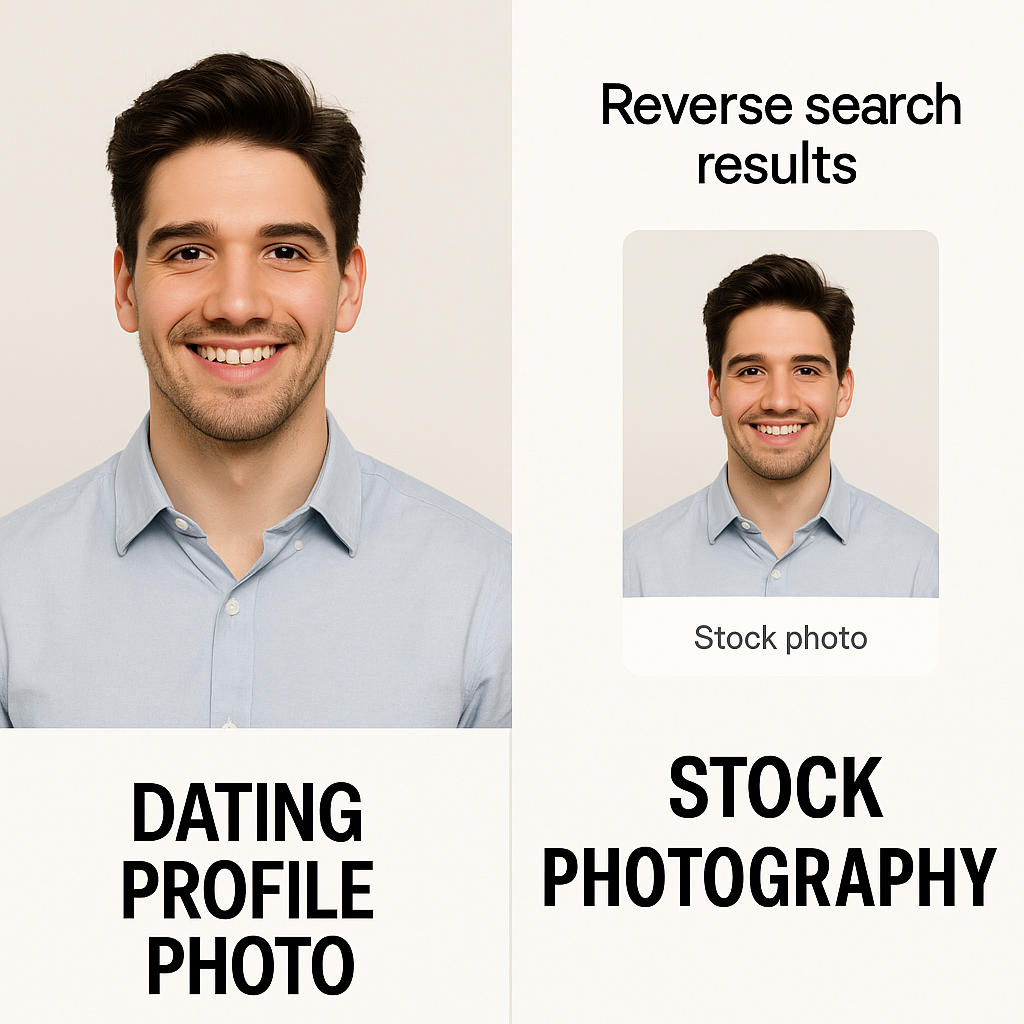
Start here. Before you invest time in conversation, verify the photos.
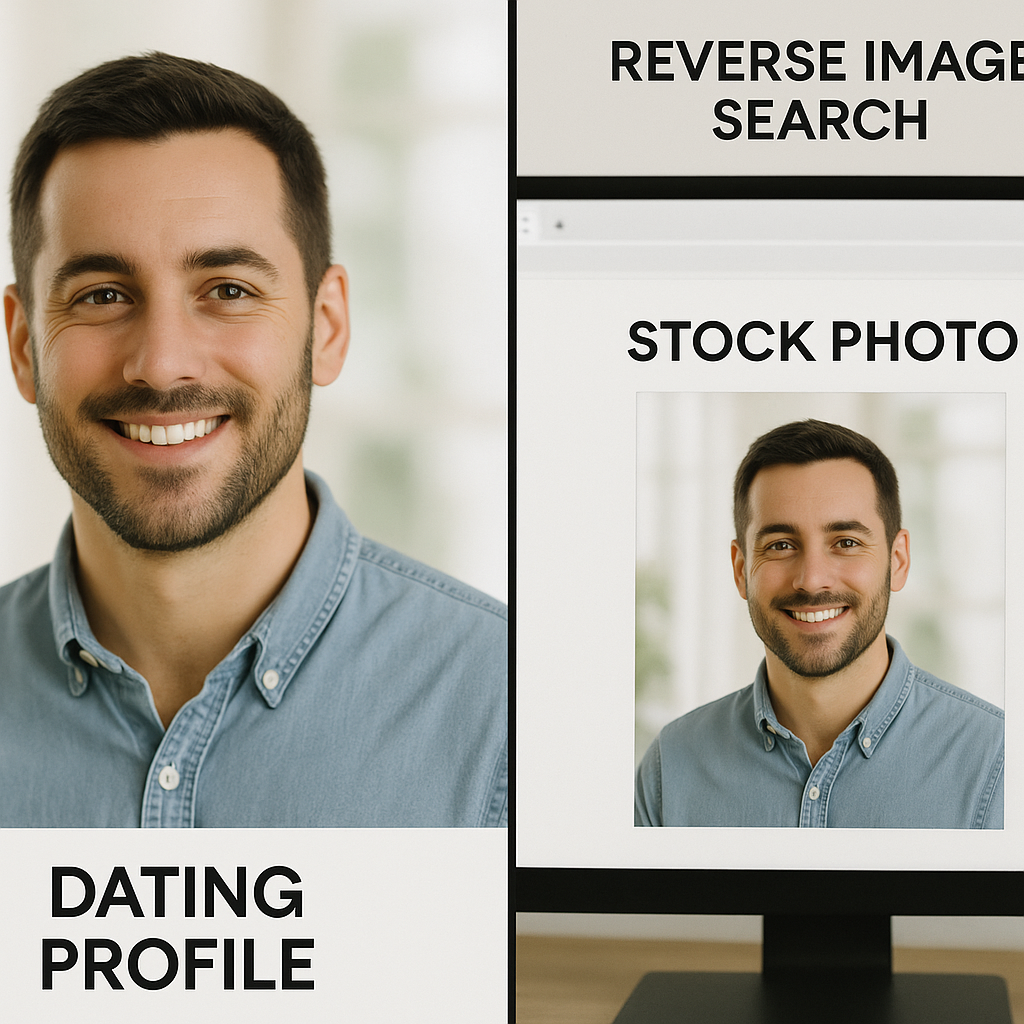
Open the dating profile. Right-click on the main profile photo and save it to your device. Then upload that image to Google Images or TinEye. Both services search billions of indexed images to find matches.
What you're looking for:
- The same photo appearing on multiple dating profiles with different names
- The same photo appearing on modeling sites, stock photography databases, or social media accounts that don't match the profile's details
- The same photo appearing in contexts that contradict the profile's story (a "doctor in Chicago" whose photo appears on a Ukrainian modeling agency site)
If the photo appears once or twice in contexts that match the profile's story (their Instagram, their LinkedIn, a news article about their work), that's consistent with a real person. If the photo appears dozens of times across unrelated sites, it's stolen.
Scammers recycle photos. A single attractive image might fuel hundreds of fake profiles across multiple platforms. Reverse image search catches this immediately.
Some scammers use photos of real people who aren't public figures. If the reverse search returns nothing, that doesn't guarantee the profile is real. It means you need to check the other patterns.
The photo consistency test
Real people post photos that span time, locations, and contexts. Fake profiles often don't.
Look at all the photos in the profile. Ask:
- Do the photos show the same person at different ages, in different settings, with different lighting?
- Do the photos include casual snapshots, not just professional modeling shots?
- Do the photos include other people (friends, family, coworkers) in natural contexts?
- Do the photos show identifiable locations that match the profile's stated city or background?
Scammers typically use a small set of photos stolen from one source. The lighting, quality, and context will be uniform because they're pulling from a single photoshoot or social media account. You won't see progression over time. You won't see the person aging, gaining weight, changing hairstyles, or appearing in the messy, unpolished moments that fill real people's photo libraries.
If every photo looks like it came from the same professional session, that's a warning sign. Real people's photo collections are inconsistent.
The profile text patterns
Fake profiles follow templates. The bio text often contains specific patterns that appear across thousands of scam profiles.
Common phrases:
- "I'm new to this site and looking for something real"
- "I don't come on here often, so message me at [external contact]"
- "I'm a simple person who loves to laugh and enjoy life"
- "I'm looking for my soulmate / my other half / my king or queen"
- "I work in [vague profession] and travel a lot for work"
- Excessive use of "God-fearing," "honest," "loyal," "drama-free," and similar trust-building adjectives
Real people write specific details. They mention hobbies with specifics (not "I love music" but "I'm trying to learn bass and failing"), reference local places, or show personality quirks. Fake profiles use generic, universally appealing language designed to match as many targets as possible.
If the bio could describe anyone, it probably describes no one.
The conversation escalation pattern
This is where romance scams separate from ordinary catfishing. The scammer's goal is to create emotional obligation quickly, then isolate the conversation off the dating platform.
The pattern unfolds in stages:
Stage 1: Immediate intensity. Within the first few messages, the scammer expresses unusually strong interest. They call you beautiful, amazing, special. They say they feel a connection. They ask deep personal questions fast (about your family, your past relationships, your dreams). This creates a feeling of intimacy before you've built any real foundation.
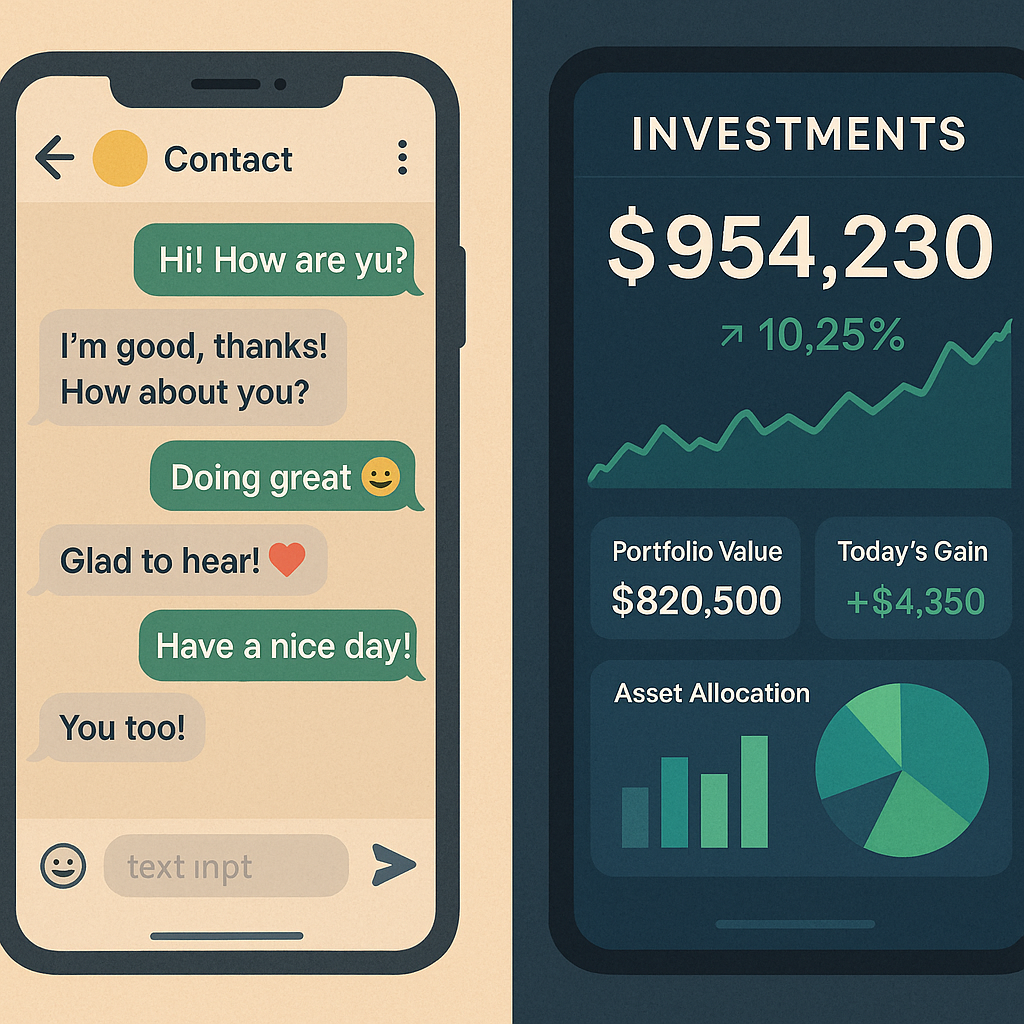
Stage 2: Moving off-platform. Within days, they suggest moving to text, WhatsApp, Telegram, or email. The reason given is usually that they "don't check the app often" or "prefer more private conversation." The real reason is that dating platforms monitor for scam patterns and can ban accounts. Once you're texting, the platform can't intervene.
Stage 3: The love declaration. Faster than makes sense, they say they're falling for you. They talk about a future together. They use phrases like "I've never felt this way before" or "I think you're the one." This happens within days or weeks, not months. The goal is to create emotional investment that makes you reluctant to question inconsistencies later.
Stage 4: The crisis. After the emotional foundation is built, something goes wrong. They're stuck abroad and need money for a plane ticket. A family member has a medical emergency. Their business deal fell through and they need a short-term loan. They're being held up at customs and need to pay a fee. The crisis is always urgent, always solvable with money, and always temporary.
Stage 5: The escalation. If you send money once, the requests continue. The crisis deepens or new crises appear. The amounts increase. The scammer may send fake documents (hospital bills, customs forms, business contracts) to make the requests seem legitimate. Some victims send money repeatedly over months, believing they're helping someone they love.
Real relationships don't follow this script. Real people don't profess love to strangers within a week. Real people don't have financial emergencies that can only be solved by someone they've never met.
The video call test
This is the single most effective verification method. Real people will video call. Scammers won't.
After a few days of messaging, suggest a video call. Frame it casually: "I'd love to see your face while we talk." If they're real, they'll agree or suggest an alternative time that works better.
If they're a scammer, you'll hear excuses:
- "My camera is broken"
- "The internet here is too slow for video"
- "I'm shy about video calls"
- "I don't like how I look on camera"
- "Let's wait until we know each other better"
These excuses might sound reasonable in isolation, but they're part of a pattern. The scammer will continue to avoid video calls indefinitely. If you press, they'll get defensive or try to redirect the conversation back to emotional topics.
Some scammers will agree to a video call, then cancel at the last minute with an urgent excuse. If this happens more than once, you're being strung along.
Video calls reveal that the person doesn't match their photos. That's why scammers avoid them. If someone consistently refuses to video call after you've been messaging for more than a week, walk away.
The consistency check
Real people's stories stay consistent. Scammers' stories shift.
Keep track of what they tell you. Write it down if you need to. Then watch for contradictions:
- Their job title or employer changes between conversations
- The city they're in changes without explanation
- Their family situation changes (they had two kids, now they have three)
- Their age or birthday doesn't match what they said earlier
- Their travel plans contradict their work schedule
Scammers often run multiple conversations simultaneously. They forget which story they told which target. If you catch an inconsistency and point it out, watch how they respond. Real people will clarify or acknowledge the confusion. Scammers will deflect, change the subject, or get defensive.
In The Sting, the con artists maintain elaborate false identities, but the con only works because the mark never gets the chance to verify the details. You have that chance. Use it.
The financial boundary
This is non-negotiable: never send money to someone you've only met online.
Not for a plane ticket. Not for a medical emergency. Not for a business opportunity. Not for customs fees. Not for gift cards. Not for phone credits. Not even for small amounts "just to help out."
Scammers test boundaries. They start with small requests to see if you'll comply. If you send $50 for phone credits, they know you're a viable target. The requests escalate from there.
Real people don't ask romantic interests they've never met for money. If someone you've been messaging for days or weeks asks for financial help, that's the scam. It doesn't matter how compelling the story is. It doesn't matter how much you feel connected. The financial ask is the scam revealing itself.
If you've already sent money, stop. Don't send more. The crisis won't resolve. The requests will continue until you run out of money or catch on.
The platform matters
Different dating platforms attract different scam densities, but no platform is immune.
Some platforms verify profiles through photo verification (you submit a real-time selfie that matches your profile photos) or identity verification (you upload an ID). These features reduce fake profiles but don't eliminate them. Scammers adapt by using stolen IDs or bypassing verification through compromised accounts.
Platforms with free messaging tend to have higher scam rates than platforms that require paid subscriptions to message. The barrier to entry matters. A scammer who can create unlimited free accounts will flood a platform. A scammer who has to pay per account will be more selective.
But verification and paid subscriptions only shift the economics. They don't stop scams. Even on platforms with strong verification, you still need to verify profiles yourself.
The grammar and phrasing patterns
Many romance scams originate from organized groups operating outside the U.S. The English is often fluent but slightly off.
Watch for:
- Overly formal phrasing ("I am writing to you with great interest")
- Awkward word choices that a native speaker wouldn't use
- Inconsistent use of American vs. British spelling (switching between "color" and "colour")
- Unusual sentence structures that suggest translation or non-native fluency
This pattern isn't universal. Some scammers are native English speakers. Some use AI tools to generate fluent text. But when combined with other warning signs, awkward phrasing adds weight.
The external contact push
Scammers want you off the dating platform as fast as possible. They'll suggest moving to text, WhatsApp, Telegram, email, or even Google Hangouts within the first few exchanges.
The reason they give is convenience. The real reason is control. Once you're texting, the dating platform can't monitor the conversation, flag suspicious behavior, or ban the account. You lose the safety features built into the platform.
Real people might suggest moving to text eventually, but it happens after you've established rapport, not in the first three messages. If someone pushes hard to move off-platform immediately, that's a red flag.
What to do if you've been targeted
If you've identified a fake profile or realized you're talking to a scammer, here's the sequence:
Stop contact immediately. Don't try to confront them. Don't try to get your money back by sending more money. Don't engage further. Block them on all platforms.
Report the profile. Use the dating platform's report feature. Most platforms have a specific option for reporting scams or fake profiles. This helps the platform identify patterns and protect other users.
Report to the FTC. File a complaint at reportfraud.ftc.gov. The FTC tracks romance scam patterns and uses reports to build cases against organized fraud operations.
Report to the FBI. If you lost money, file a complaint with the FBI's Internet Crime Complaint Center at ic3.gov. The IC3 aggregates reports to identify large-scale fraud operations.
Document everything. Save screenshots of the profile, messages, and any financial transactions. If the scammer sent you documents (fake IDs, fake hospital bills, fake business contracts), save those too. This documentation supports law enforcement investigations and helps if you need to dispute charges with your bank.
Contact your bank. If you sent money via wire transfer, credit card, or payment app, contact your financial institution immediately. Explain that you were scammed. In some cases, you may be able to reverse the transaction or dispute the charge. The success rate is low, but it's worth trying.
Don't blame yourself. Romance scams are sophisticated social engineering. The scammers are professionals. They script conversations, test emotional triggers, and refine their approach based on what works. Falling for a scam doesn't mean you're naive. It means you encountered someone whose job is deception.
The verification checklist
Before you invest time in someone you met online, run through this checklist:
- Reverse image search all profile photos
- Check for photo consistency across the profile
- Read the bio for template language and generic phrasing
- Suggest a video call within the first week
- Watch for conversation patterns that escalate too fast
- Track details for consistency across conversations
- Set a hard boundary: no money, no exceptions
- Stay on the dating platform until you've verified the person is real
If any single item fails, that's not proof of a scam. If multiple items fail, walk away. The combination of patterns is what matters.
The long game
Some romance scams unfold over months. The scammer builds trust slowly, shares details about their life, sends photos (stolen but consistent), and creates the appearance of a real relationship. The financial ask doesn't come until you're emotionally invested.
These long-game scams are harder to spot because they don't follow the fast escalation pattern. But the same verification methods apply. The scammer still won't video call. The photos still won't pass reverse image search. The story still won't stay consistent under scrutiny.
Time investment doesn't prove authenticity. Scammers are patient when the potential payoff is large. If you've been messaging someone for months and they still won't video call, that's the pattern revealing itself.
The takeaway
Fake dating profiles follow predictable patterns because they're built from templates, stolen photos, and scripted conversations. Verification isn't about paranoia. It's about applying basic due diligence before you invest time, emotion, or money in someone you've never met.
Reverse image search the photos. Suggest a video call early. Watch for conversation patterns that escalate too fast. Set a hard boundary on money. Stay on the platform until you've verified the person is real.
Real people will pass these tests. Scammers won't. The verification process protects you from wasting months on someone who doesn't exist and losing money to someone whose job is deception.
If something feels off, trust that feeling. You're not obligated to give someone the benefit of the doubt when the patterns don't add up. Walk away. There are real people on dating platforms. You'll find them by filtering out the fake ones first.