Sharing data with AI chatbots: what's actually private

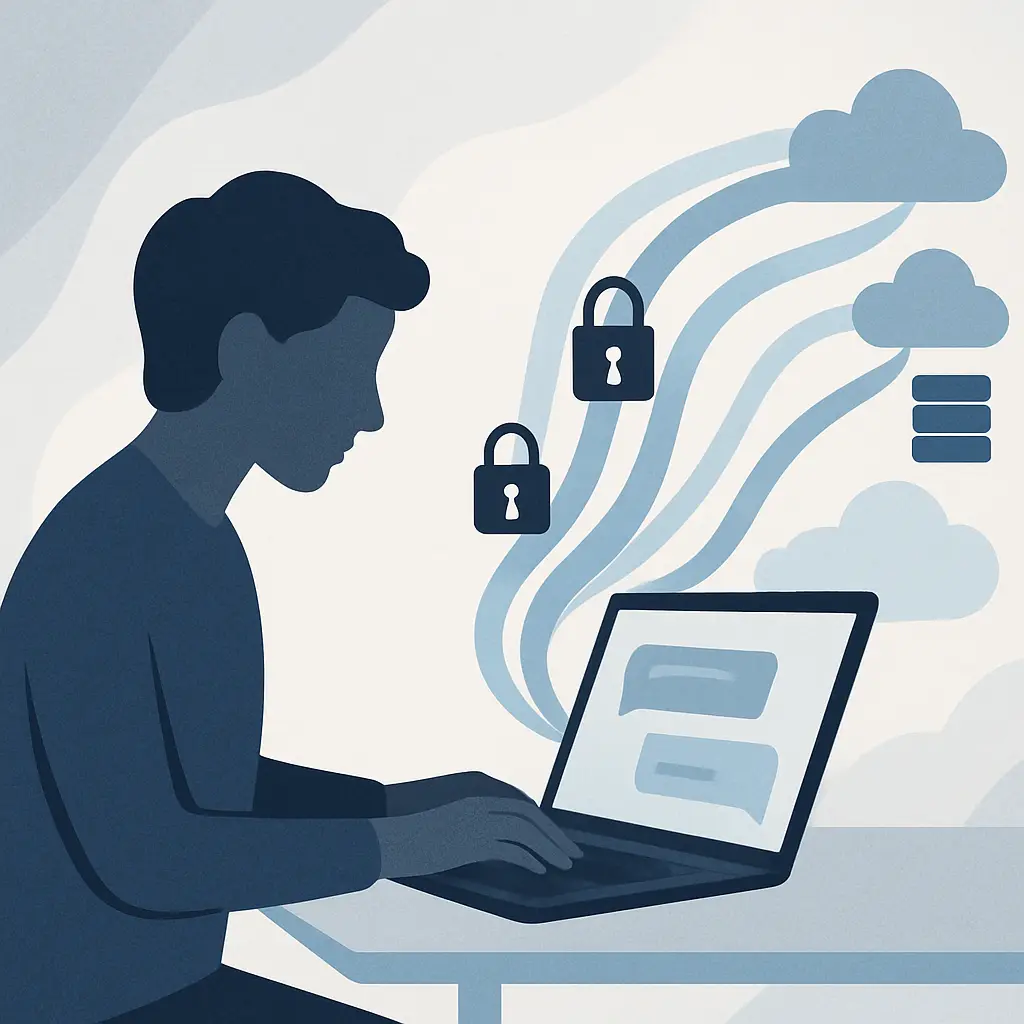
You ask ChatGPT to draft an email. Claude helps you debug code. Gemini summarizes a document. The interface feels private, just you and the bot. But behind that clean chat window, your prompts travel to remote servers, get processed by models trained on billions of conversations, and sometimes get stored indefinitely.
The question "is ChatGPT private?" doesn't have a yes-or-no answer. Privacy in AI chatbots depends on which service you use, what settings you enable, what plan you pay for, and what you're actually typing. Some platforms delete conversations immediately. Others keep them for months. Some use your data to train future models. Others promise they won't. The marketing says "secure." The privacy policies say something else.
Here's the reality behind AI chatbot privacy in 2026, what actually gets stored, who sees it, and what you can control.
What happens when you type a prompt
When you send a message to an AI chatbot, your text leaves your device and travels to the company's servers. The model processes your input, generates a response, and sends it back. That's the visible part. What's less obvious is what happens to the data after the conversation ends.
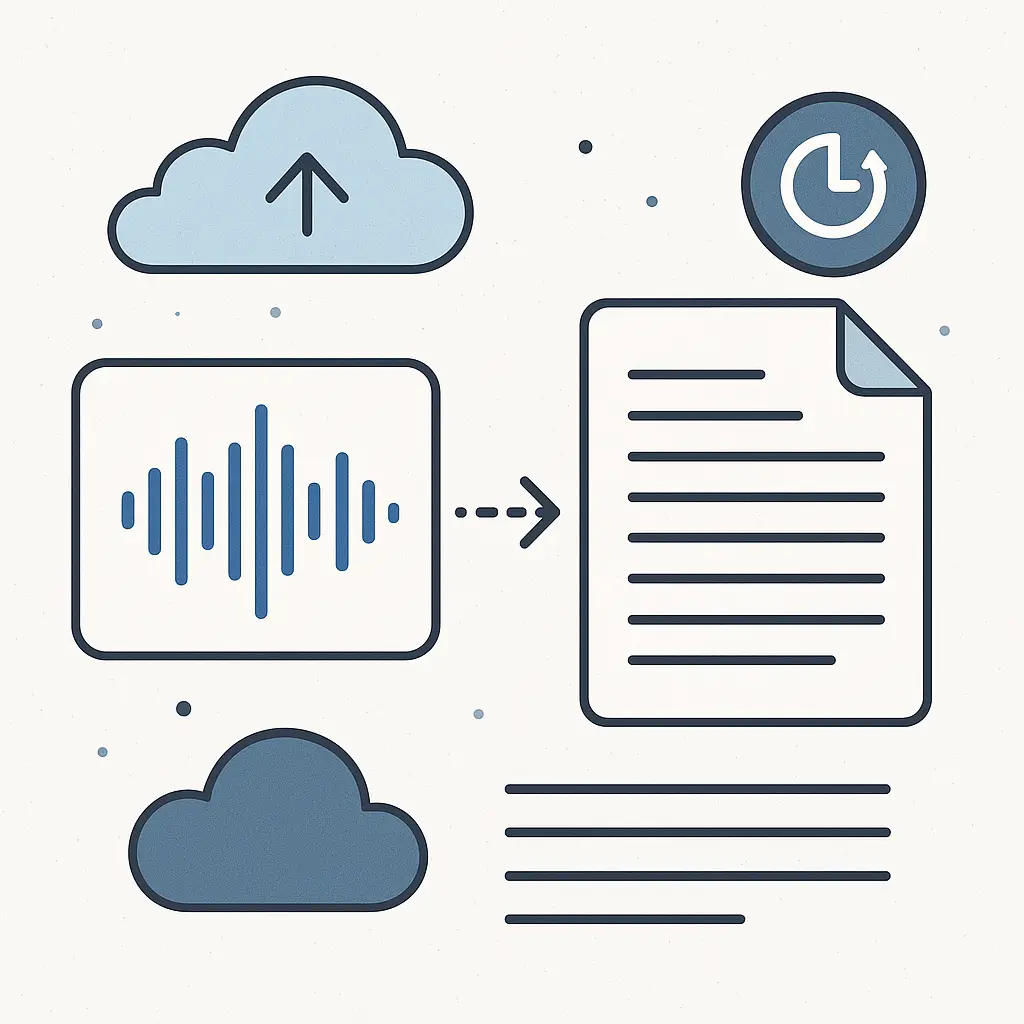
Most AI services store your prompts and the model's responses. The retention period varies. OpenAI keeps ChatGPT conversations for 30 days by default, even if you've opted out of using your data for training. Google's Gemini stores conversations tied to your Google account unless you delete them manually. Anthropic's Claude stores conversations for 90 days on free accounts, with different policies for paid tiers.
Storage isn't just about keeping a record. Some companies use stored conversations to improve their models. That means your prompts, and the model's responses, become part of the training data that shapes future versions of the AI. If you ask ChatGPT how to write a resignation letter, that interaction might influence how the model responds to similar questions from other users later.
The FTC has raised concerns about data minimization and security in AI systems. Companies that collect more data than necessary create larger attack surfaces. A breach at an AI provider doesn't just expose usernames and passwords, it exposes every conversation you've ever had with the bot.
Training use: what it means and how to opt out
When an AI company says it uses your data for training, it means your prompts and the model's responses get fed back into the system to make the model better. This isn't always bad. Training on real-world use cases helps models understand context, handle edge cases, and generate more useful responses. But it also means your private questions, work-related prompts, and personal details could influence how the model behaves for everyone else.
OpenAI lets you opt out of training use through account settings. When you disable this option, your conversations still get stored for 30 days for abuse monitoring, but they don't go into the training pipeline. Google offers similar controls for Gemini. Anthropic's Claude doesn't use free-tier conversations for training by default, but the policy differs for enterprise customers.
Opting out of training doesn't mean your data disappears. It just changes how the company uses it. Your prompts still live on their servers. They're still subject to the company's data retention policies, internal access controls, and whatever happens if the company gets breached or subpoenaed.
The EFF's Surveillance Self-Defense guide recommends treating any data you send to a third-party service as potentially permanent. Even if a company promises deletion, you can't verify it. Even if they honor deletion requests, backups might persist. The safest assumption is that anything you type into an AI chatbot could be stored indefinitely.
Metadata: the data you didn't mean to share
AI chatbots collect more than just your prompts. Metadata, information about your interactions, gets logged alongside the content. This includes timestamps, IP addresses, device identifiers, session length, and usage patterns. If you're logged into an account, your prompts get tied to your profile, linking every conversation to your identity.
Metadata reveals patterns. How often you use the service. What times of day you're active. Whether you're on mobile or desktop. Whether you're accessing the service from home, work, or a coffee shop. These patterns can be as revealing as the prompts themselves. Someone who asks about tax deductions every April and job interview questions every fall is painting a picture without realizing it.
Some platforms anonymize metadata. Others don't. Privacy policies rarely specify how long metadata gets retained or who inside the company can access it. The CISA guide on protecting sensitive information emphasizes that metadata, when combined with other data sources, can de-anonymize users even when direct identifiers are stripped.
Enterprise vs. consumer accounts
AI chatbot privacy splits sharply between consumer and enterprise tiers. Consumer accounts, the free and low-cost plans most people use, operate under standard privacy policies. Your data gets stored, potentially used for training, and handled according to the company's terms.
Enterprise accounts get different treatment. Many AI providers offer business plans with stricter data handling. These plans typically include zero-retention options, where conversations get deleted immediately after processing. They promise not to use enterprise data for training. They offer audit logs, compliance certifications, and legal agreements that consumer accounts don't get.
The tradeoff is cost. Enterprise plans run hundreds or thousands of dollars per month. They require contracts, minimum user counts, and administrative overhead. For individuals and small teams, the privacy benefits aren't accessible. You get the consumer-tier privacy policy or you don't use the service.
This creates a two-tier system. People who can afford enterprise plans get better privacy. Everyone else accepts whatever data practices come with the free or cheap tier. The FTC's guidance on data security doesn't distinguish between enterprise and consumer contexts, companies have a legal obligation to protect data regardless of who's paying for it, but in practice, the level of protection varies dramatically.
What you can control
Most AI chatbots offer some privacy controls. You can delete individual conversations or clear your entire history. You can disable training use. You can use the service without logging in, though this limits functionality and doesn't eliminate data collection, it just makes it harder to tie the data back to you.
Deleting conversations removes them from your account view. Whether deletion also removes the data from the company's servers depends on the platform. Some services honor deletion requests immediately. Others retain deleted data for a period before purging it. Privacy policies use vague language like "we may retain data for legitimate business purposes" without specifying how long or under what conditions.
You can also limit what you share. Don't paste sensitive information into AI chatbots. Don't use real names, addresses, or identifying details in prompts. Don't ask questions that reveal confidential work information, health conditions, or financial details. The less you share, the less risk you take.
Some people use AI chatbots through VPNs to obscure their IP address. This adds a layer of separation but doesn't prevent the service from logging your prompts, linking them to your account, or using them for training. A VPN hides where you're connecting from. It doesn't hide what you're saying.
The Severance problem
In Severance, employees at Lumon Industries undergo a procedure that splits their consciousness. Their work selves have no memory of their outside lives. Their outside selves have no memory of what happens at work. It's a clean separation, until it isn't. The show's tension comes from the impossibility of maintaining that boundary. Information leaks. Memories surface. The split collapses.
AI chatbots promise a similar separation. You type something into Claude for work, and it feels contained. You ask ChatGPT a personal question, and it feels private. But the boundary is artificial. Your work prompts and personal prompts both flow to the same servers, get processed by the same models, and sit in the same databases. The separation exists in your head, not in the infrastructure.
Companies try to enforce boundaries through enterprise accounts, separate instances, and data partitioning. But the architecture is fundamentally shared. Models trained on millions of conversations don't distinguish between work questions and personal questions. They learn patterns from everything. If you've asked a chatbot about your health, your job search, and your side project, all of that context lives in the same system.
The privacy risk isn't just about one prompt. It's about the accumulation. Every conversation adds to the profile. Every question refines the model's understanding of who you are, what you care about, and what you're trying to accomplish. The separation you imagine, work over here, personal over there, doesn't exist on the back end.
Local LLMs: running AI on your device
One way to avoid sending data to external servers is to run AI models locally. Local LLMs process text on your device without transmitting prompts to a company's infrastructure. You download the model, install the software, and run everything offline. Your prompts never leave your machine.
Local models are smaller and less capable than cloud-based services like ChatGPT or Claude. They run slower, produce less sophisticated responses, and require more technical setup. But they offer genuine privacy. No company sees your prompts. No training pipeline ingests your data. No server logs record your activity.
The tradeoff is convenience. Local LLMs don't sync across devices. They don't integrate with other services. They don't benefit from the massive computational resources that power cloud-based AI. For most people, the privacy gain isn't worth the functionality loss. But for anyone handling truly sensitive information, journalists, lawyers, healthcare workers, activists, local models offer a level of control that cloud services can't match.
The EFF's tool guides include recommendations for privacy-focused software. Local LLMs fit the same philosophy: if you want privacy, you need to control the infrastructure.
What AI companies actually promise
Privacy policies for AI chatbots are long, vague, and subject to change. Companies promise to protect your data, but the specifics matter. OpenAI's policy says it may use your data to improve services unless you opt out. Google's policy says it retains data tied to your account unless you delete it. Anthropic's policy says it doesn't use free-tier data for training but reserves the right to analyze conversations for safety and abuse monitoring.
These policies leave room for interpretation. "Improve services" could mean training models, debugging systems, or analyzing usage patterns. "Safety monitoring" could mean scanning for harmful content, tracking abuse trends, or building detection systems. "Legitimate business purposes" could mean almost anything.
The FTC's guidance on privacy policies emphasizes that companies must honor their stated policies. If a policy says data won't be used for training, the company can't later use it for training without updating the policy and notifying users. But enforcement is inconsistent. Violations happen. Users rarely have the resources to challenge them.
Reading privacy policies is tedious. Most people don't. They click "agree" and assume the service is safe. But the details matter. The difference between "we delete data after 30 days" and "we may retain data for legitimate business purposes" is the difference between temporary storage and indefinite retention.
Work use: when your employer's policy matters
If you use AI chatbots for work, your employer's policies might override the AI company's privacy promises. Many organizations ban the use of public AI services for work-related tasks. Others allow it but require specific tools, configurations, or approvals. Some have negotiated enterprise agreements with AI providers that include stricter data handling.
Using ChatGPT for work without checking your employer's policy creates risk. If your company prohibits it, you're violating internal rules. If the company allows it but you paste confidential information into a public service, you're exposing data that doesn't belong to you. If the company gets breached and investigators find that employees were using unsecured AI tools, the liability could fall on you.
The CISA guide on multifactor authentication and other security practices applies to work contexts. Employees have a responsibility to follow their organization's security policies. Using AI chatbots outside approved channels undermines those policies, even if the AI service itself seems secure.
Breaches: what happens when AI companies get hacked
AI companies are targets. They hold vast amounts of conversational data, user profiles, and behavioral information. A breach at an AI provider doesn't just expose account credentials, it exposes every conversation you've ever had with the bot.
In 2023, OpenAI disclosed a bug that briefly exposed some users' chat histories to other users. The company fixed it quickly, but the incident revealed how much data sits in these systems and how easily it could leak. Security researchers have warned that AI platforms represent high-value targets for attackers. The data is rich, personal, and often poorly protected.
If an AI service gets breached, you won't necessarily know what was exposed. Companies disclose breaches inconsistently. Some notify affected users immediately. Others wait months. Some provide detailed information about what data was accessed. Others offer vague statements about "potential exposure."
The FTC's data breach response guide outlines what companies should do after a breach. But compliance varies. Users are left guessing about whether their prompts, account details, or metadata ended up in the wrong hands.
What stays private, what doesn't
AI chatbots don't offer the privacy most people assume. Your prompts get stored. Your conversations get logged. Your usage patterns get analyzed. Some of that data feeds into training pipelines. Some of it sits on servers indefinitely. Some of it could leak in a breach.
What you can control is limited. You can opt out of training use. You can delete conversations. You can avoid sharing sensitive information. You can use enterprise accounts if you can afford them. You can run local models if you have the technical skills. But you can't make a cloud-based AI service truly private. The architecture doesn't allow it.
The reality check is this: if you type it into a chatbot, assume someone else could see it. That doesn't mean you shouldn't use AI tools. It means you should use them with your eyes open. Don't paste your tax return into ChatGPT. Don't ask Claude to review your medical records. Don't use Gemini to draft confidential work emails unless your employer has an enterprise agreement that actually protects the data.
AI chatbots are useful. They're not private. Those two facts can coexist, but only if you understand the tradeoff and decide whether it's worth it.