Quantum computing won't break your passwords tomorrow, but the migration has already started
You've seen the headlines. Quantum computers will break encryption. Your passwords will be worthless. The internet will collapse. Panic now.
The reality is less dramatic and more interesting. Quantum computing poses a real threat to specific cryptographic systems, but the timeline, scope, and response are all different from what the breathless coverage suggests.
Here's what's actually happening, what breaks first, and what you need to do about it right now.
The quantum threat is real but narrow
Quantum computers use quantum mechanics to perform certain calculations exponentially faster than classical computers. That "certain calculations" part matters. Quantum computers aren't faster at everything. They're faster at specific mathematical problems that happen to underpin the cryptography protecting most of the internet.
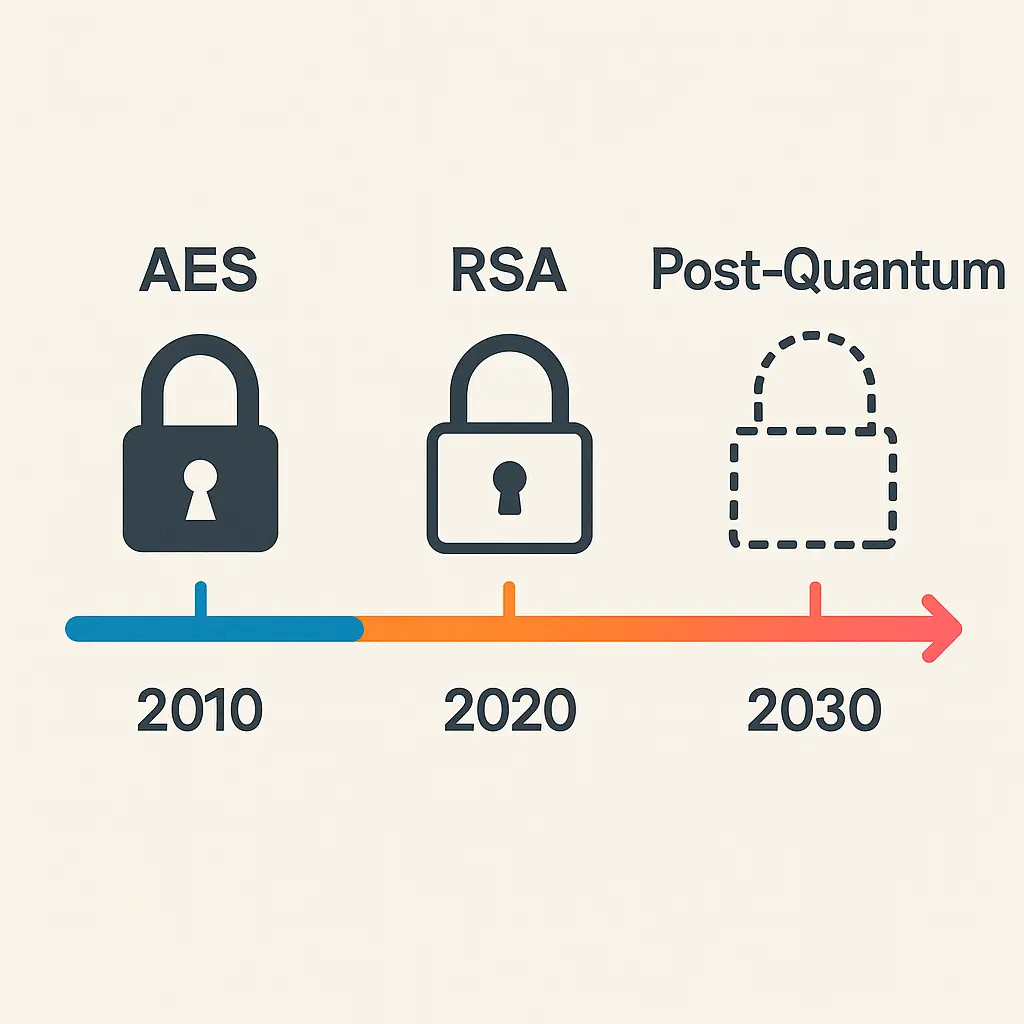
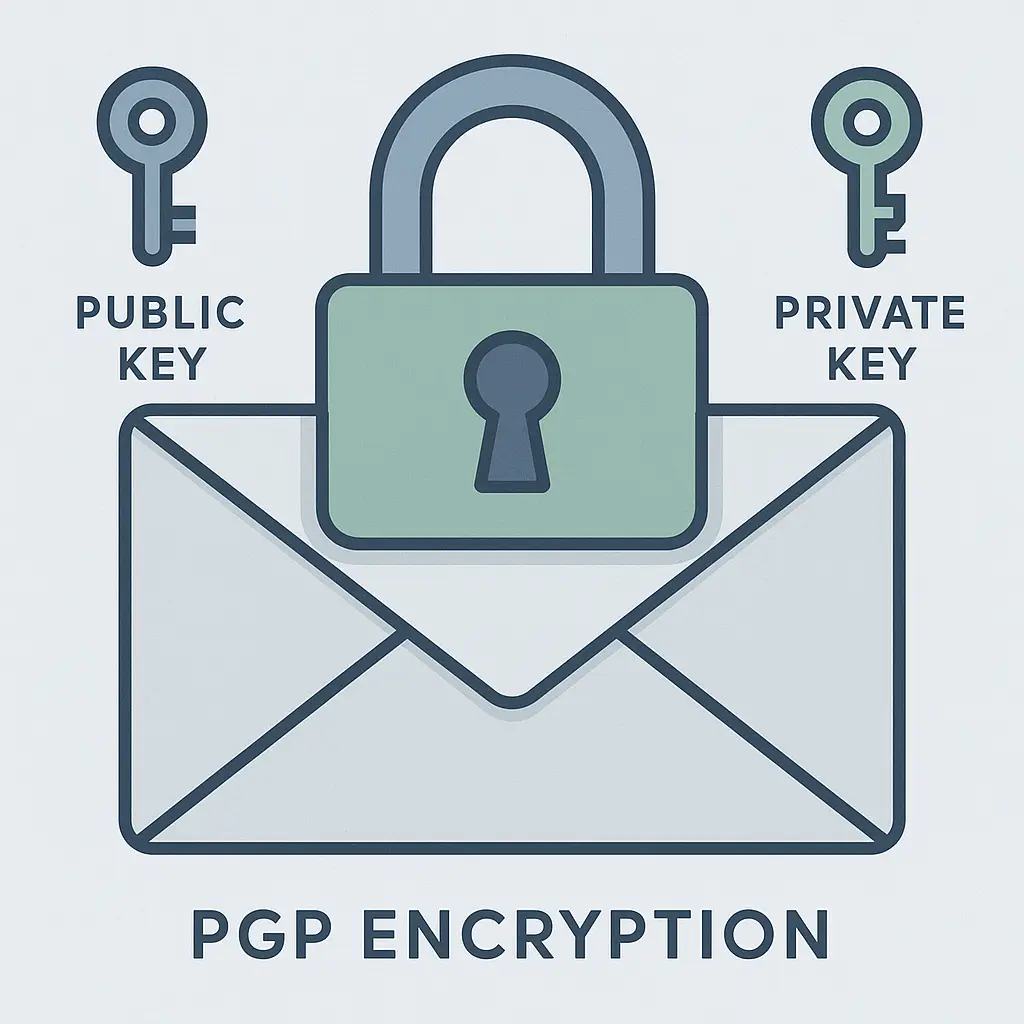
The threat breaks into two categories: asymmetric encryption and symmetric encryption. Asymmetric encryption, RSA, elliptic curve cryptography, Diffie-Hellman key exchange, protects HTTPS connections, email signatures, software updates, and digital certificates. Quantum computers running Shor's algorithm can break these systems efficiently once the hardware scales up.
Symmetric encryption, AES, ChaCha20, the algorithms that encrypt files and messages after the connection is established, remains safe. Quantum computers running Grover's algorithm can speed up brute-force attacks, but doubling the key size neutralizes the advantage. AES-256, already widely deployed, stays secure in a post-quantum world.
Your passwords aren't the target. Password cracking happens through brute force, dictionary attacks, and credential stuffing, methods that don't benefit much from quantum speedup. The real vulnerability is the infrastructure that authenticates servers, signs software, and establishes encrypted connections.
The timeline is longer than you think
Building a quantum computer powerful enough to break RSA-2048 requires millions of stable qubits operating with extremely low error rates. Current systems have hundreds of qubits with error rates too high for cryptographic attacks.
Researchers have found that quantum computers will eventually break today's encryption, but the consensus timeline lands somewhere between 10 and 30 years. Some estimates are more optimistic. Some are more pessimistic. No one knows for sure, because the engineering challenges are immense.
The uncertainty doesn't mean complacency. It means the threat is real but not imminent. You don't need to panic today, but organizations responsible for long-term sensitive data need to start planning now.
Harvest now, decrypt later is the exception, not the rule
The one scenario that collapses the timeline is "harvest now, decrypt later." Adversaries collect encrypted traffic today with the intention of decrypting it once quantum computers become available. This matters for data that stays sensitive for decades: state secrets, intellectual property, medical records, financial data with long compliance windows.
For most people, harvest now decrypt later is irrelevant. Your email from 2026 won't matter in 2046. Your banking transactions from today will be settled and archived long before quantum computers arrive. The threat model applies to governments, defense contractors, healthcare systems, and organizations handling data with multi-decade sensitivity windows.
If you work in one of those fields, your organization should already be migrating. If you don't, this isn't your problem to solve.
Post-quantum cryptography is already here
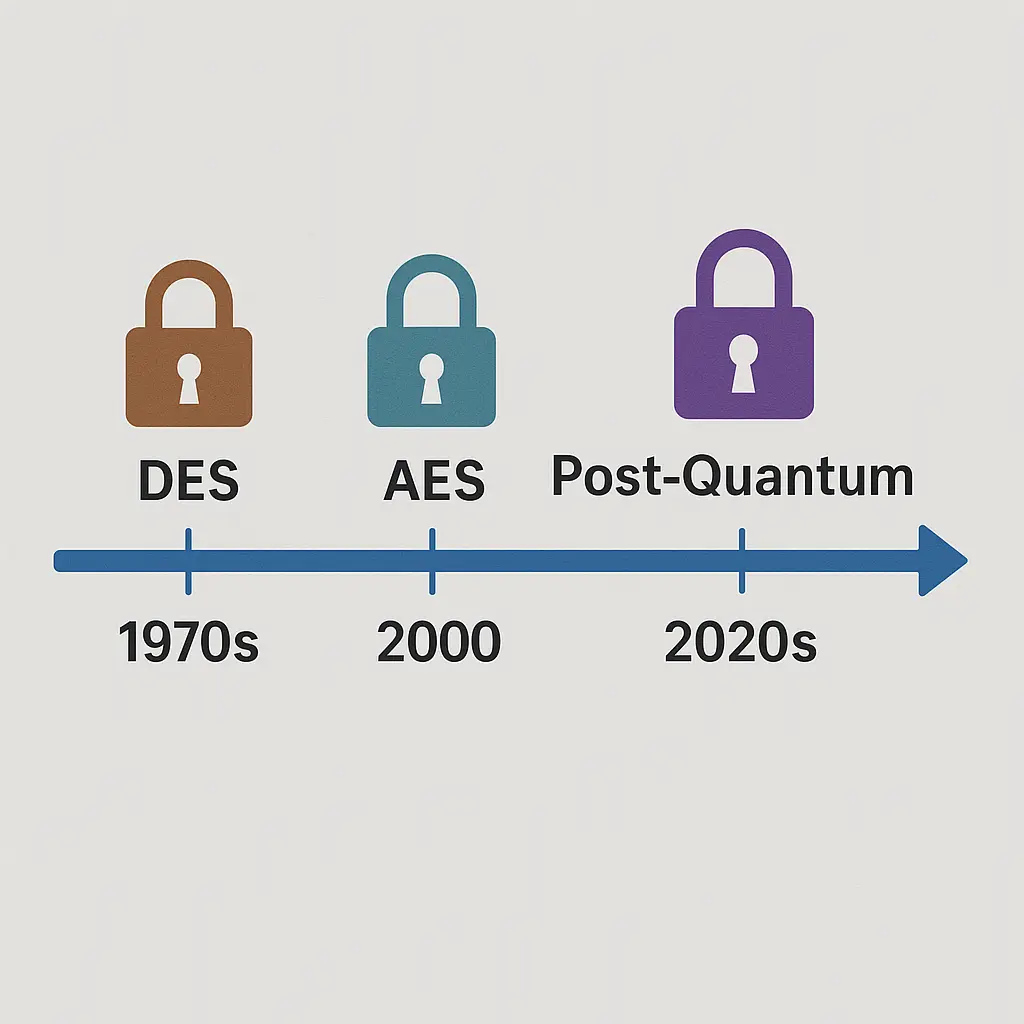
The response to quantum threats is post-quantum cryptography: algorithms built on mathematical problems that quantum computers can't solve efficiently. These aren't theoretical. NIST finalized the first post-quantum cryptography standards in 2024, selecting algorithms based on lattice problems, hash functions, and code-based cryptography.
The standards cover three use cases: general encryption, digital signatures, and key exchange. CRYSTALS-Kyber handles encryption and key establishment. CRYSTALS-Dilithium and SPHINCS+ handle digital signatures. Falcon provides an alternative signature scheme optimized for efficiency.
These algorithms are being deployed now. Google Chrome started testing post-quantum key exchange in 2023. Apple added post-quantum protections to iMessage in 2024. Signal integrated post-quantum encryption into its protocol the same year. The migration is happening behind the scenes, through software updates you're already installing.
You don't need to do anything. The infrastructure is being upgraded around you.
The migration is a decade-long project
Replacing cryptographic infrastructure takes time. Every HTTPS connection, every software signature, every VPN tunnel, every encrypted email relies on asymmetric cryptography. Swapping out the algorithms requires coordination across operating systems, browsers, servers, hardware, and protocols.
The process started years ago. NIST's post-quantum cryptography project launched in 2016. The first standards arrived in 2024. Full deployment will take another decade, give or take.
Organizations are prioritizing systems based on risk. Long-term sensitive data gets migrated first. Public-facing infrastructure follows. Legacy systems with embedded cryptography, medical devices, industrial control systems, older networking equipment, will take the longest.
For individuals, the migration is invisible. Your devices will update. Your connections will use new algorithms. You won't notice the difference, because post-quantum cryptography is designed to be a drop-in replacement for the systems it's replacing.
What breaks first when quantum computers arrive
Asymmetric encryption breaks first. RSA-2048, the standard for HTTPS certificates and email signatures, becomes vulnerable once quantum computers scale. Elliptic curve cryptography, widely used for key exchange and digital signatures, breaks even faster.
The consequences ripple through everything that depends on asymmetric encryption. HTTPS connections lose their authentication guarantees. Software updates can't be verified. VPNs can't establish secure tunnels. Digital signatures become forgeries.
Symmetric encryption, AES, ChaCha20, the algorithms encrypting your files and messages, stays safe. Doubling the key size from AES-128 to AES-256 neutralizes the quantum advantage. Most systems already use AES-256 by default.
Password hashing algorithms like bcrypt, scrypt, and Argon2 also remain secure. These algorithms are designed to be computationally expensive, and quantum computers don't provide enough speedup to make brute-force attacks practical.
The threat is infrastructure, not endpoints. Your laptop's encrypted hard drive stays safe. The connection between your laptop and the server becomes vulnerable.
The cultural reference that fits
In The Fellowship of the Ring, the Council of Elrond debates what to do about the One Ring. Gandalf explains that Sauron's power is growing, but the timeline isn't immediate. The threat is real, the consequences are catastrophic, but there's time to prepare. The council decides to act, not because the danger is imminent, but because waiting until the threat arrives means it's too late.
Quantum computing is the same dynamic. The threat is real. The timeline is uncertain but measured in years, not months. Organizations with long-term sensitive data need to start migrating now, not because quantum computers are breaking encryption today, but because the migration itself takes a decade.
What you should actually do right now
For most people: nothing. Keep your devices updated. Use strong, unique passwords. Enable two-factor authentication. The post-quantum migration is happening through the same update mechanisms you're already using.
If you work in an organization handling long-term sensitive data, government, defense, healthcare, finance, your IT team should already be planning the migration. Ask about post-quantum readiness. Understand the timeline. Make sure someone is responsible for tracking NIST standards and deploying updates.
If you're responsible for cryptographic infrastructure, start inventorying systems that rely on RSA, elliptic curve cryptography, and Diffie-Hellman key exchange. Test post-quantum algorithms in non-production environments. Plan the migration in phases, prioritizing systems with the longest data sensitivity windows.
If you're building new systems, use post-quantum algorithms now. NIST's standards are finalized. Libraries are available. There's no reason to deploy new infrastructure with cryptography that will need replacement in a decade.
The math behind quantum advantage
Quantum computers exploit superposition and entanglement to explore multiple solutions simultaneously. For certain problems, factoring large numbers, solving discrete logarithms, this provides exponential speedup.
Shor's algorithm factors an n-bit number in roughly n³ time on a quantum computer. Classical algorithms require exponential time. RSA-2048, which would take classical computers billions of years to crack, could fall to a sufficiently large quantum computer in hours.
Grover's algorithm speeds up brute-force search by roughly the square root. A 128-bit key, which requires 2¹²⁸ operations to crack classically, requires around 2⁶⁴ operations on a quantum computer. Doubling the key size to 256 bits restores the original security level.
The math is well understood. The engineering is hard. Building stable qubits, maintaining coherence, and scaling to millions of qubits remain unsolved problems. The timeline depends on breakthroughs that haven't happened yet.
What doesn't change
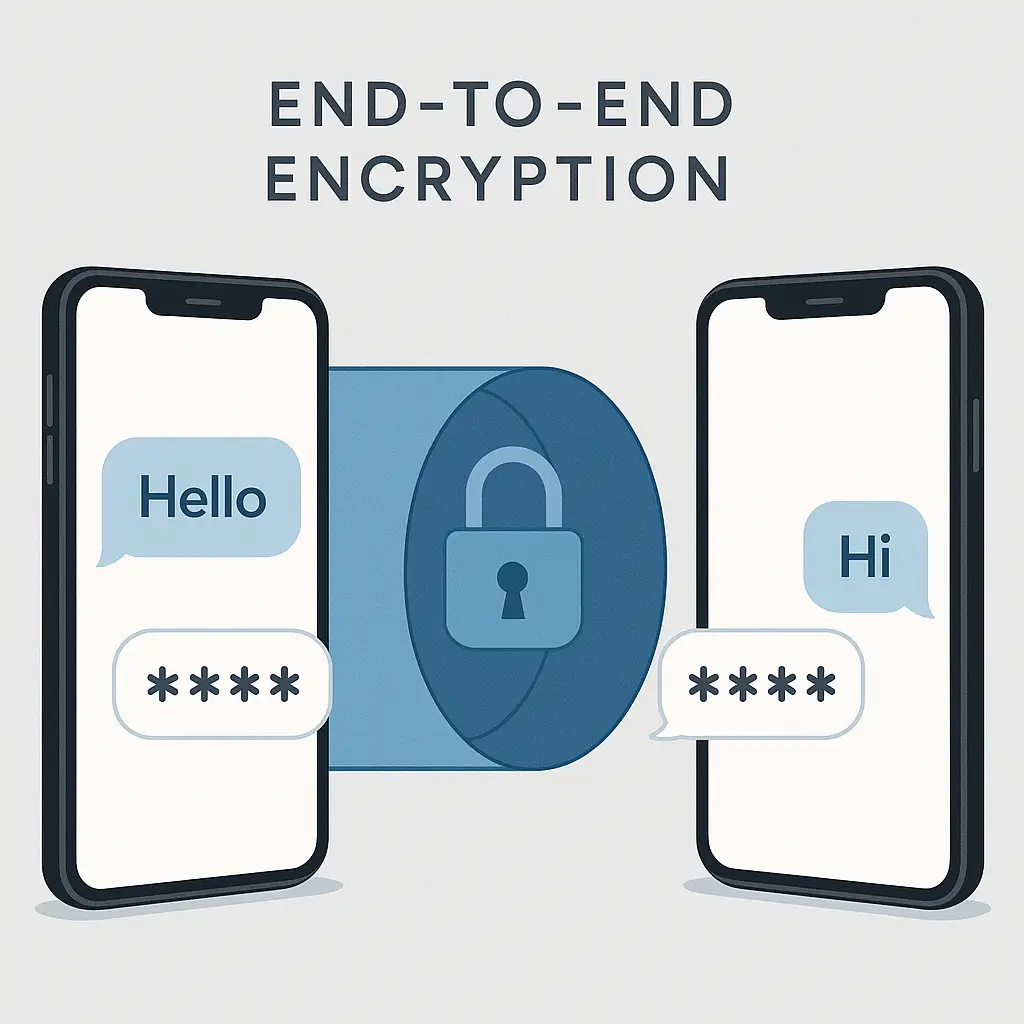
End-to-end encryption stays relevant. Quantum computers break the key exchange, not the encryption itself. Post-quantum algorithms replace RSA and elliptic curves with lattice-based and hash-based alternatives, but the architecture remains the same: asymmetric cryptography establishes keys, symmetric cryptography encrypts data.
Password managers stay essential. Quantum computers don't make password reuse safe. They don't make weak passwords strong. They don't change the fact that credential stuffing and phishing are more common threats than cryptographic attacks.
Two-factor authentication stays necessary. Quantum computers don't bypass 2FA. They don't make TOTP codes guessable. They don't change the fact that authentication requires proving possession, knowledge, or biometrics.
The fundamentals of security, strong passwords, unique credentials, layered defenses, routine updates, remain unchanged. Quantum computing shifts the cryptographic substrate, but the principles stay the same.
The real risk is complacency, not panic
The quantum threat is real, but the timeline is long enough to respond. The danger isn't that quantum computers will arrive tomorrow and break everything. The danger is that organizations will ignore the migration until it's too late.
Post-quantum cryptography is ready. Standards are finalized. Algorithms are tested. Libraries are available. The infrastructure is being deployed. The migration is happening now, through routine updates and gradual replacement.
For individuals, the transition is invisible. For organizations, it's a decade-long project requiring planning, testing, and coordination. The work is boring, methodical, and essential.
Quantum computing won't break your passwords tomorrow. But the systems protecting your connections, authenticating your software, and signing your emails will eventually need replacement. That replacement is underway. You don't need to panic. You don't need to do anything dramatic. You just need to keep your devices updated and trust that the people responsible for cryptographic infrastructure are doing their jobs.
Most of them are. The migration is happening. The timeline is manageable. The threat is real, but so is the response.