Phishing still works after twenty years because it exploits human judgment, not technical flaws
Phishing turned twenty-five in 2021. The FTC has published guidance on recognizing phishing for most of that time. CISA offers free training programs to help organizations defend against it. Security researchers have documented every variant, every tell, every psychological trick. And yet, according to the FBI's 2025 Internet Crime Report, phishing remains the most reported cybercrime category in the United States, with losses exceeding two billion dollars annually.
That number has grown every year since tracking began. Not because phishing has become more technically sophisticated. Not because attackers discovered some new vulnerability in email protocols. Phishing still works in 2026 for the same reason it worked in 2003: it exploits human judgment, not software flaws. And human judgment operates on patterns that don't patch.
This isn't a story about technology failing. It's a story about why social engineering succeeds when everyone knows it exists, why training programs produce diminishing returns, and why the gap between knowing about phishing and recognizing it in real time remains as wide as ever.
The mechanism hasn't changed
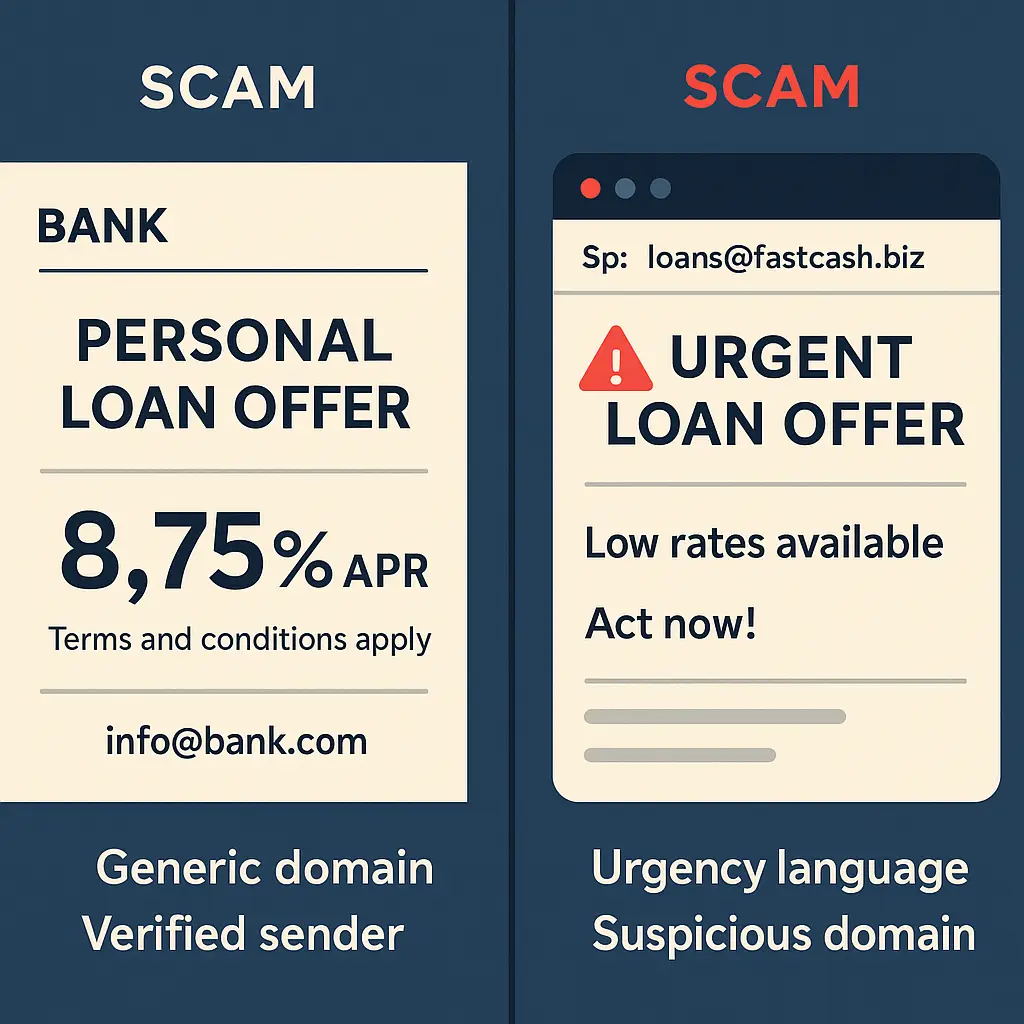
Phishing is social engineering delivered through digital channels. The attacker sends a message designed to provoke a specific action: click this link, download this attachment, reply with your credentials, authorize this payment. The message impersonates a trusted entity, creates urgency or fear, and provides a plausible reason why immediate action is necessary.
The technical delivery has evolved. Emails look more legitimate. Grammar has improved. Personalization has increased. But the underlying psychological mechanism, manipulating trust, urgency, and authority to bypass careful analysis, remains identical to the first documented phishing attacks in the mid-1990s.
Early phishing emails were easy to spot. Misspellings, broken formatting, obviously fake sender addresses. Spam filters caught most of them. The ones that got through stood out as suspicious to anyone paying attention. But attackers adapted. They registered domains one character off from legitimate ones. They copied legitimate email templates. They researched targets to add personalization. And spam filters adapted in response, getting better at catching the new patterns.
This created an arms race, but not the kind most people imagine. The race isn't about technical sophistication. It's about speed. Attackers test new social engineering tactics, defenders update training and filters, attackers shift to different tactics. The cycle repeats. And in that cycle, the attackers have a structural advantage: they only need to succeed once per target, while defenders need to succeed every time.
Why technical defenses have limits
Spam filters in 2026 are remarkably good. Gmail, Outlook, and other major email providers use machine learning models trained on billions of messages. They catch around 99% of generic phishing attempts before those messages reach your inbox. That sounds like a victory, but the 1% that gets through is the 1% designed to evade automated detection.
Those messages don't trigger the usual red flags. They come from compromised legitimate accounts or newly registered domains that haven't accumulated a bad reputation yet. They avoid spam trigger words. They use legitimate link shorteners or cloud storage services as intermediaries. They arrive during business hours, formatted like internal communications, referencing real projects or real people.
Security researchers call this the "quality over quantity" shift. Mass phishing campaigns still exist, but the messages reaching inboxes are increasingly targeted, researched, and customized. A 2024 analysis by researchers at SANS Institute found that phishing emails bypassing spam filters had, on average, three times as many personalized elements as emails caught by filters. Personalization works because it provides context that makes the message feel legitimate.
And personalization is cheap now. Attackers scrape LinkedIn, corporate websites, and social media to build profiles. They identify reporting structures, ongoing projects, vendor relationships. They use this information to craft messages that reference real people, real deadlines, real systems. The result is an email that looks and feels like it belongs in your inbox, because it was designed specifically for your inbox.
Technical defenses can't solve this completely. A filter trained to block messages with personalized content would also block legitimate messages. A filter trained to flag all urgent requests would create so many false positives that users would learn to ignore the warnings. The last line of defense is human recognition, and that's where the problem gets harder.
The training paradox
Organizations spend millions on security awareness training. Employees sit through annual phishing modules. IT departments send simulated phishing emails to test vigilance. And yet, click rates on real phishing attempts remain stubbornly high.
The problem isn't that training doesn't work. It's that training produces knowledge, not automatic recognition. You can teach someone the signs of phishing: check the sender address, hover over links before clicking, be suspicious of urgency. That person can pass a quiz on those concepts. But when an email arrives at 4:47 PM on a Friday, formatted like a message from their CEO, asking them to urgently review a document before a board meeting Monday morning, the knowledge doesn't always activate in time.
This is the gap between explicit knowledge and implicit recognition. Explicit knowledge requires conscious effort to apply. You have to remember to check, remember what to look for, remember to pause. Implicit recognition happens automatically, the way you recognize a friend's face or notice when a sentence has a grammatical error. Phishing training builds explicit knowledge, but attackers design their messages to bypass the moment when explicit knowledge gets applied.
They do this by triggering emotional responses that override careful analysis. Urgency creates time pressure. Fear creates anxiety. Authority creates deference. These responses are adaptive in normal contexts, responding quickly to urgent requests from authority figures is often the right thing to do, but they're exploitable in adversarial contexts.
And the exploitation is getting more precise. Attackers A/B test subject lines. They measure which phishing templates produce the highest click rates. They optimize for the specific emotional triggers that work best in specific industries or job roles. The result is a message engineered to produce the emotional state where careful analysis is least likely to happen.
Why AI hasn't changed the fundamentals
The security industry spent 2024 and 2025 warning about AI-powered phishing. Language models can generate grammatically perfect emails. They can adapt tone and style to match legitimate communications. They can personalize at scale. And all of that is true. But it's also a distraction from the actual problem.
Phishing already worked before AI. The barrier to success wasn't grammar or personalization, attackers could already hire native speakers or use compromised accounts for personalization. The barrier was human recognition of social engineering patterns. AI hasn't changed those patterns. It's made certain tactical elements easier, but the strategic approach remains identical.
A 2025 study by Krebs on Security analyzed phishing campaigns before and after the widespread availability of ChatGPT and similar tools. The click rate on AI-generated phishing emails was around 2% higher than human-written emails in the same campaigns. Two percent. Not twenty. Not two hundred. The improvement was measurable but marginal, because the core social engineering tactics, urgency, authority, fear, curiosity, were already optimized through decades of trial and error.
What AI has done is lower the skill floor. Someone with minimal English proficiency can now generate convincing phishing emails. Someone without social engineering expertise can use a language model to craft plausible pretexts. This expands the pool of potential attackers, which increases the volume of attempts, but it doesn't fundamentally change the defense problem.
The defense problem remains: how do you get someone to pause and apply critical thinking in the moment when an email is designed to prevent exactly that pause?
The Seinfeld problem
In Seinfeld, George Costanza perfects the art of looking busy without doing actual work. He cultivates an expression of intense concentration, carries papers purposefully, sighs heavily when interrupted. The performance is convincing because it matches the pattern people expect from someone genuinely overwhelmed with work.
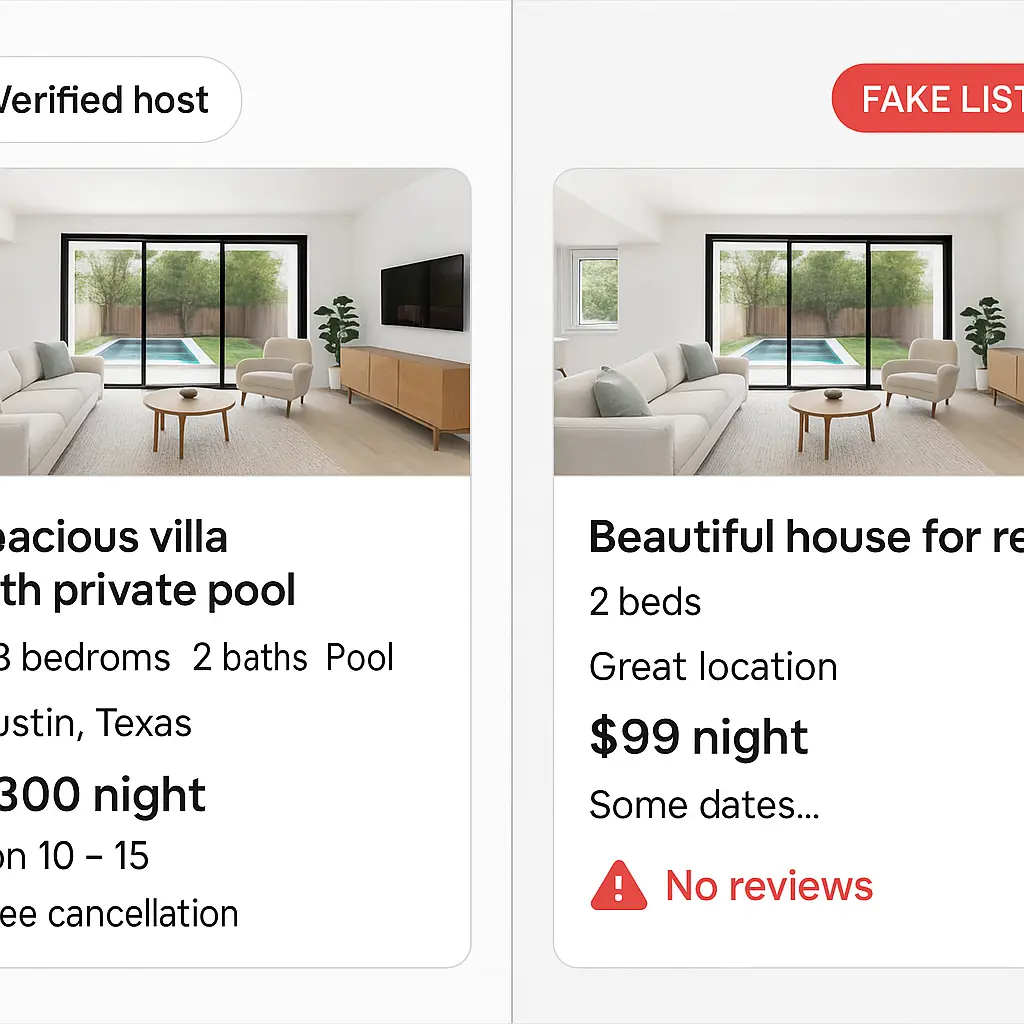
Phishing emails do the same thing. They perform legitimacy. They match the pattern you expect from a real message from your bank, your IT department, your CEO. The sender address looks right at first glance. The formatting matches the template. The request seems plausible. And because the pattern matches, your brain processes it as legitimate without deeper inspection.
This is pattern matching, and it's how humans navigate information overload. You receive hundreds of emails per week. You can't carefully analyze each one. Your brain develops shortcuts: messages from known senders are safe, messages matching familiar templates are legitimate, messages about expected topics are trustworthy. These shortcuts work most of the time, and that's why they persist.
Phishing exploits the shortcuts. It presents the surface pattern of legitimacy while hiding the underlying fraud. And because the shortcuts are automatic, you don't consciously decide to trust a message that looks like it's from your bank, you just do, the fraud bypasses conscious analysis.
The defense is to override the shortcut. To pause. To inspect. To verify. But that requires recognizing when to override, and recognition is the hard part. A message that perfectly mimics the expected pattern doesn't trigger the "something's wrong" signal that would prompt closer inspection.
This is why phishing still works after twenty years. The attack surface isn't a software vulnerability that can be patched. It's the gap between pattern matching and conscious analysis, and that gap is a feature of how human cognition handles information overload, not a bug that training can eliminate.
The asymmetry problem
Attackers need one success. Defenders need perfect vigilance. That asymmetry defines why phishing persists.
If you receive ten phishing emails over a year and catch nine of them, you've done well by most standards. But the one you missed can compromise your account, your employer's network, or your bank balance. The attacker only needs that one click to succeed. Your nine successes don't cancel out the one failure.
This creates a psychological problem for defenders. Perfect vigilance is exhausting. It requires treating every email as potentially hostile, verifying every link, questioning every urgent request. Most people can maintain that level of suspicion for a short time, but not indefinitely. Eventually, vigilance fatigue sets in. You start trusting the pattern again. And that's when the next phishing email arrives.
Attackers know this. They know that sustained vigilance is cognitively expensive. They know that people relax after a period without incidents. They know that the eleventh email gets less scrutiny than the first. So they send volume. Not because volume increases the per-message success rate, but because volume increases the probability that at least one message arrives when the target's guard is down.
And the volume is cheap. Sending ten thousand phishing emails costs almost nothing. The infrastructure is commoditized. The templates are reusable. The targeting data is scraped automatically. An attacker can send those ten thousand emails and achieve their goal if just ten people click. That's a 0.1% success rate, and it's profitable.
Defenders can't match that economic model. Training every employee costs money. Updating filters costs money. Investigating suspicious emails costs time. And all of that investment still produces imperfect results, because the human judgment problem remains unsolved.
Why the problem is structural
Phishing persists because it exploits structural features of how email works, how organizations work, and how human cognition works.
Email is designed for interoperability. Anyone can send you a message. Sender addresses can be spoofed. Domains can be registered to mimic legitimate organizations. These aren't bugs; they're design choices that enable email to function as an open communication system. Fixing them would require breaking compatibility with decades of deployed infrastructure.
Organizations are designed for efficiency. Employees are expected to respond quickly to requests from managers, process invoices from vendors, follow instructions from IT. These expectations create predictable patterns of behavior that attackers can exploit. Changing the expectations would slow down legitimate work.
Human cognition is designed for pattern matching. We navigate the world by recognizing familiar patterns and responding automatically. Overriding that automation requires conscious effort, and conscious effort is a limited resource. We can't carefully analyze every decision, so we rely on shortcuts. Those shortcuts are adaptive in normal environments and exploitable in adversarial ones.
Phishing sits at the intersection of these three structural features. It uses the openness of email to deliver messages that exploit organizational patterns and cognitive shortcuts. Defending against it requires changing at least one of those three things, and each change has costs that organizations are often unwilling to pay.
Some organizations have tried. They've implemented strict sender verification. They've required multi-factor authentication for sensitive actions. They've trained employees to verify requests through secondary channels. These measures work, but they add friction. They slow down communication. They create exceptions and workarounds. And when the friction becomes too high, people find ways around it, which creates new vulnerabilities.
This is the phishing paradox: the defenses that work best are the ones that create the most friction, and the friction is what prevents those defenses from being adopted widely enough to matter.
What actually helps
Perfect defense against phishing doesn't exist. But some approaches reduce risk more than others.
The most effective individual defense is the pause. Ten seconds. That's the gap between automatic pattern matching and conscious analysis. When you receive an unexpected email asking for urgent action, pause. Don't click immediately. Don't reply immediately. Take ten seconds to ask: Does this make sense? Is this how this organization normally communicates? Can I verify this request through a different channel?
Those ten seconds disrupt the attacker's advantage. Phishing emails are designed to prevent the pause. They create urgency, they trigger fear, they exploit authority. The pause is the moment when those tactics lose effectiveness, because conscious analysis can recognize the manipulation.
The second most effective defense is verification through secondary channels. If you receive an email asking you to reset your password, don't click the link in the email. Open a browser, type the URL manually, log in through the normal process. If you receive a payment request from a vendor, call them using a phone number from a previous invoice, not the number in the email. If your CEO asks you to urgently purchase gift cards, walk to their office or call their assistant.
This is friction. It's inconvenient. It slows things down. But it breaks the attack chain, because phishing relies on you taking the action the email requests using the method the email provides. Changing the method, using a different channel, a different URL, a different verification process, prevents the attacker from benefiting even if the initial message was convincing.
The third defense is technical: multi-factor authentication. If an attacker gets your password through phishing, MFA prevents them from logging in without also compromising your second factor. This doesn't stop the phishing email from working, you still clicked, you still entered your credentials, but it stops the attacker from achieving their goal. And when attackers consistently fail to achieve their goal even after successful phishing, they move to easier targets.
Organizations can help by reducing the gap between security policy and operational reality. If your security policy requires employees to verify every urgent request through a secondary channel, but your operational culture punishes employees for slowing down urgent requests, the policy won't stick. If your security training tells employees to be suspicious of unexpected attachments, but your business processes routinely send unexpected attachments, the training creates confusion rather than clarity.
The organizations that defend against phishing most effectively are the ones that align their security policies with their operational culture. They make verification easy. They reward caution. They design processes that don't require employees to choose between security and getting their work done. This is harder than buying a better spam filter, but it's also more effective.
Why it won't end
Phishing will still work in 2036. The attacks will look different. The delivery mechanisms will evolve. The social engineering tactics will adapt. But the core vulnerability, the gap between pattern matching and conscious analysis, will remain, because that gap is a feature of human cognition, not a bug in email systems.
We could, in theory, eliminate phishing by eliminating email. Replace it with a closed communication system where every sender is verified, every message is authenticated, every request requires multi-channel confirmation. That system would be secure against phishing. It would also be unusable for most of the work email currently enables.
We could, in theory, train humans to treat every message as hostile until proven otherwise. Perfect suspicion, applied consistently, would stop phishing cold. It would also stop collaboration, slow decision-making, and create organizational paralysis. The cost would exceed the benefit.
So we live with the risk. We deploy spam filters that catch 99% of attempts. We train employees to recognize the remaining 1%. We implement MFA to limit the damage when recognition fails. And we accept that some phishing emails will succeed, because the alternative, redesigning email, organizations, and human cognition, isn't practical.
The gap between knowing about phishing and recognizing it in real time will persist. The gap between security training and automatic behavior will persist. The gap between technical defenses and social engineering will persist. These gaps are where phishing lives, and they're not closing.
What changes is awareness. In 2003, most people had never heard of phishing. In 2026, most people know it exists. That knowledge doesn't prevent every attack, but it creates the possibility of the pause. The ten-second gap where conscious analysis can override pattern matching. The moment where you ask whether the urgent request from your CEO makes sense, whether the password reset from your bank is legitimate, whether the invoice from your vendor matches your records.
That pause is the defense. Not perfect. Not automatic. But better than nothing. And in a problem without perfect solutions, better than nothing is what we have.