Opting out of data sale: the actual mechanism
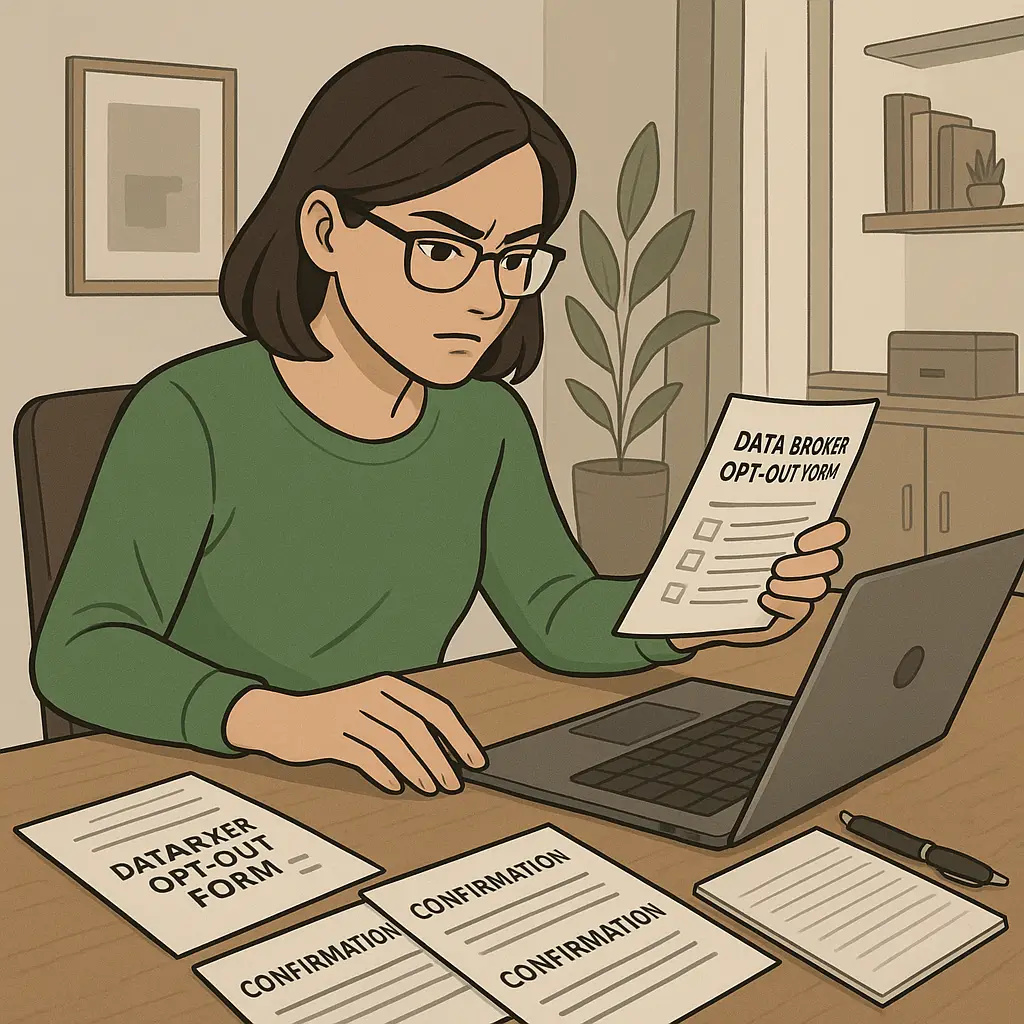
You want your data removed from data broker sites. You search for opt-out instructions. You find a form. You fill it out. Then nothing happens for six weeks. Or the form breaks. Or they ask for a photo ID to prove you're you, which feels like handing over more data to the people you're trying to escape.
This is the data broker opt-out process in 2026. It's not streamlined. It's not consumer-friendly. It's designed to make you give up.
But it does work, if you understand the mechanism and commit to the repetitive, bureaucratic slog. Here's the step-by-step method that actually removes your data, what each action accomplishes, and why the process is built to frustrate you into quitting.
The mechanism behind data broker opt-out
Data brokers aggregate information from public records, credit headers, social media, purchase histories, and other brokers. They package that information into profiles and sell access to marketers, recruiters, investigators, and anyone else willing to pay.
When you submit an opt-out request, you're asking the broker to suppress your profile from their public-facing search tools and stop selling it to third parties. The FTC regulates some data broker practices, but enforcement is inconsistent and penalties are often too small to matter.
State privacy laws, California's CCPA, Virginia's VCDPA, Colorado's CPA, and similar statutes in around a dozen other states, give residents the legal right to opt out of data sales. Brokers must honor these requests. Outside those states, compliance is voluntary, and many brokers simply ignore requests from residents without legal standing.
The opt-out process itself follows a pattern:
- You locate the broker's opt-out page. This is often buried in footer links or privacy policy documents, not prominently displayed.
- You submit a request with your name, current address, and sometimes additional identifying information like age or phone number.
- The broker verifies your identity. Some accept the request as-is. Others demand a photo ID, utility bill, or signed affidavit.
- The broker processes the request. This takes anywhere from 7 days to 90 days, depending on the broker's internal procedures and how seriously they take compliance.
- Your profile is suppressed from their search tools. It may or may not be removed from their internal databases.
- The broker repopulates your profile from new data sources within months. You start over.
The entire system is built on the assumption that most people will quit after the first or second attempt.
Step 1: Identify which brokers have your data
You can't opt out of brokers you don't know exist. Start by searching for yourself on the major people-search sites. These are the brokers with public-facing search tools that anyone can use to look you up.
Search your full name, current address, phone number, and any previous addresses you've lived at in the last 10 years. Variations matter, search with and without middle initials, with maiden names if applicable, with nicknames if you use them professionally.
The major brokers to check first:
- Spokeo
- BeenVerified
- Whitepages
- Intelius
- PeopleFinders
- TruthFinder
- MyLife
- Radaris
- FastPeopleSearch
- ThatsThem
This is not an exhaustive list. There are hundreds of data brokers. These are the ones with the highest search volume and the most visible profiles. If your data appears on these sites, it's almost certainly on dozens of smaller brokers as well.
Take screenshots of every profile you find. Note the URL, the information displayed, and the date you found it. You'll need this documentation if a broker claims they don't have your data or if you need to file a complaint with a state attorney general later.
Step 2: Locate each broker's opt-out process
Every broker has a different opt-out mechanism. Some use web forms. Some require email. Some demand postal mail with a notarized signature. There is no standardization.
Start at the broker's homepage and look for links labeled "Privacy," "Opt Out," "Do Not Sell My Info," or "Remove My Information." These are usually in the footer. If you don't see an obvious link, search the site for "opt out" or "CCPA."
If the broker's site doesn't list an opt-out process, check their privacy policy. The policy should explain how to submit a request, even if the explanation is deliberately vague.
If you still can't find instructions, search for "[broker name] opt out" in a search engine. Consumer advocacy sites and privacy forums often maintain updated instructions for the most evasive brokers.
Some brokers make you create an account before you can submit an opt-out request. This is a friction tactic. You're handing them an email address to opt out of a profile they built without asking. Do it anyway. Use a burner email if you prefer, but complete the process.
Step 3: Submit the opt-out request
Follow the broker's instructions exactly. If they ask for a name, address, and age range, provide exactly that. If they ask for a photo ID, decide whether you're willing to send it. Some brokers accept requests without ID verification. Others refuse to process requests without it.
When a broker demands a photo ID, you're facing a tradeoff. Sending ID gives them more data. Not sending ID means your profile stays live. There's no universally correct answer. If the broker already lists your full name, address, phone number, and date of birth, information they pulled from public records, a driver's license doesn't add much. If the profile is sparse, sending ID feels like handing over the keys.
Use the broker's preferred submission method. If they offer a web form, use the form. If they require email, send email. If they insist on postal mail, send postal mail. Fighting the process wastes time. The goal is removal, not principle.
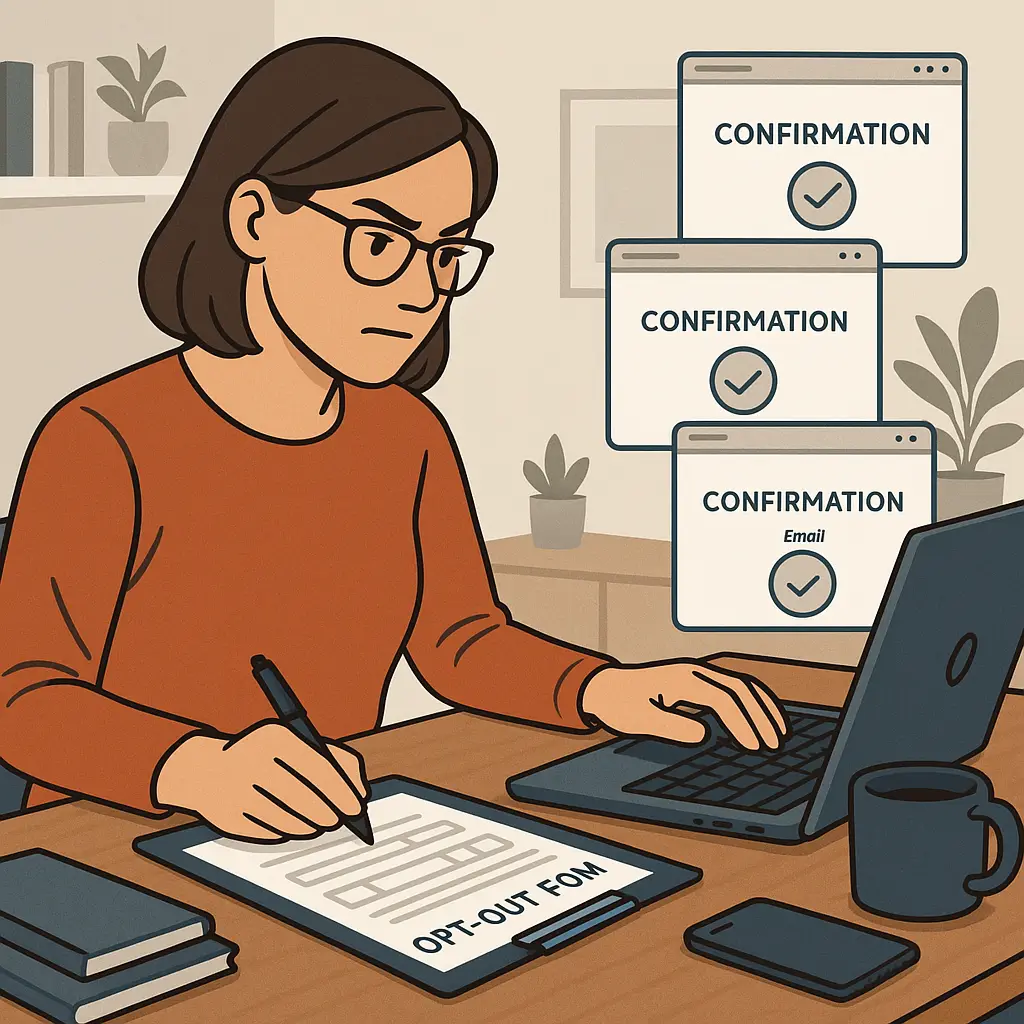
Keep records of every submission. Save confirmation emails, take screenshots of submitted forms, and note the date you sent each request. Brokers will claim they never received your request. Documentation proves otherwise.
Step 4: Follow up when nothing happens
Most brokers claim they'll process requests within 30-45 days. In practice, many ignore first requests entirely.
Set a calendar reminder for 45 days after each submission. On day 45, search for your profile again. If it's still live, submit a second request. Reference your first request in the new submission. Include the date you sent it and any confirmation number you received.
If the second request also gets ignored, escalate. Some brokers have dedicated privacy officers or data protection officers. Email them directly. If the broker operates under CCPA or similar state laws, mention the statute by name and note that you're a resident of a covered state.
If the broker still doesn't respond, file a complaint with your state attorney general's office. California, Virginia, Colorado, and other states with privacy laws have enforcement divisions that handle data broker complaints. The complaint process varies by state, but most accept online submissions.
Filing a complaint doesn't guarantee action, but it creates a paper trail. If enough people complain about the same broker, enforcement becomes more likely.
Step 5: Repeat the process across all brokers
Opt-out is not a one-time event. It's a maintenance task.
After you've submitted requests to the major brokers, wait 60-90 days. Then search for yourself again. New profiles will appear. Profiles you thought were removed will repopulate. This is normal. Data brokers pull from the same public record sources, and those sources don't stop updating.
The most effective approach is to pick a quarterly schedule, January, April, July, October, and run through the entire opt-out process every three months. It's tedious. It's repetitive. It works better than any other method available to individuals.
If quarterly maintenance feels unsustainable, consider a paid removal service. Incogni, DeleteMe, and similar companies automate the submission and follow-up process for around $10-15 per month. They don't remove your data any faster than you can, but they handle the repetitive work. The tradeoff is that you're trusting a third party with your identifying information to remove your identifying information from other third parties. That's a reasonable tradeoff for some people and an unacceptable one for others.
Why data brokers make this so difficult
The difficulty is not an accident. Data brokers profit from selling access to your data. Every person who successfully opts out reduces their inventory and their revenue. The harder they make the process, the fewer people complete it.
Broken forms, slow processing times, ID verification requirements, and repopulation cycles are all friction tactics. They're not bugs. They're features. The system is working exactly as designed.
Some researchers have found that brokers process opt-out requests faster when submitted from IP addresses in states with strong privacy laws. The implication is that brokers deprioritize or ignore requests from residents of states without legal enforcement mechanisms. I can't verify that claim with hard data, but it matches the pattern of behavior I've seen across years of handling these requests.
The Electronic Privacy Information Center tracks data broker practices and publishes reports on compliance rates. Their findings consistently show that opt-out processes are deliberately opaque, inconsistently enforced, and designed to fail.
What happens after you opt out
Your profile gets suppressed from the broker's public-facing search tools. That means someone searching for your name won't find your listing on that broker's site.
Your data may or may not be deleted from the broker's internal databases. Most brokers distinguish between suppression and deletion. Suppression hides your profile from public view but keeps the data in their systems. Deletion removes the data entirely. Brokers almost never delete data unless legally required to do so.
Your profile will repopulate within months. Brokers pull fresh data from public records, credit headers, and other brokers on a regular basis. The opt-out request suppresses the profile at a point in time. It doesn't prevent the broker from rebuilding the profile later.
This is why opt-out is ongoing maintenance. You're not erasing your data from the internet. You're temporarily suppressing it from specific brokers, knowing it will reappear, and committing to suppressing it again.
The legal landscape in 2026
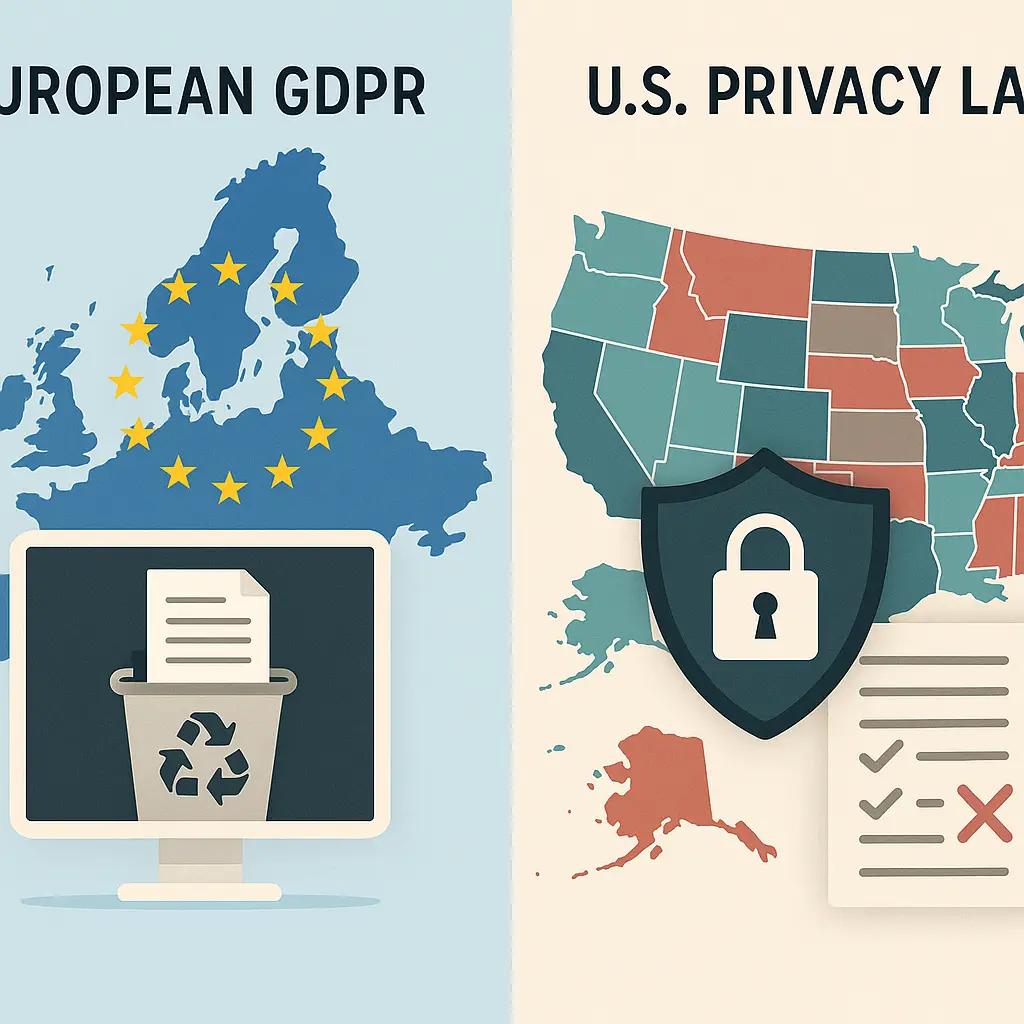
Around a dozen U.S. states have enacted privacy laws that give residents the right to opt out of data sales. California's CCPA was the first. Virginia, Colorado, Connecticut, Utah, and others followed. The specific rights and enforcement mechanisms vary by state, but the core principle is the same: residents can demand that brokers stop selling their data.
The FTC enforces federal consumer protection laws that apply to data brokers, but those laws focus on deceptive practices and security breaches, not the existence of data broker profiles. The FTC can penalize brokers for lying about their practices or failing to secure data, but it can't force brokers to delete profiles unless a specific statute requires it.
GDPR gives Europeans stronger rights, including the right to erasure. American residents outside states with privacy laws have no comparable protection. If you live in a state without a privacy law, data brokers can legally ignore your opt-out request.
This patchwork system creates confusion. A broker might honor a request from a California resident while ignoring the same request from someone in Alabama. The legal obligation depends on where you live, not where the broker operates.
When automated services make sense
Paid removal services like Incogni submit opt-out requests on your behalf, monitor for repopulation, and resubmit requests when profiles reappear. They charge a monthly or annual fee and promise to handle the repetitive work.
These services work. They don't remove your data any faster than you can, but they automate the follow-up process and handle the bureaucratic friction. If you value your time more than $10-15 per month, the tradeoff is reasonable.
The privacy tradeoff is real. You're giving a third party your name, address, phone number, and date of birth, the same information you're trying to remove from data brokers, and trusting them to handle it responsibly. Most removal services claim they don't sell or share your data, but you're taking their word for it.
If you're comfortable with that tradeoff, automated services save time. If you're not, manual opt-out is the only option.
What data brokers don't tell you
Data brokers claim they only aggregate publicly available information. That's technically true but deliberately misleading. Public records, property deeds, voter registrations, court filings, business licenses, are public. But aggregating those records into searchable profiles, cross-referencing them with purchase histories and online behavior, and selling access to the combined dataset is a business model, not a public service.
The Mozilla privacy principles describe transparency, user control, and data minimization as core privacy values. Data brokers operate in direct opposition to all three. They collect without asking, aggregate without disclosure, and sell without consent.
Brokers also don't tell you that opt-out suppresses your profile from public search tools but doesn't remove your data from their internal systems or stop them from selling it to direct buyers. A suppressed profile means casual searchers won't find you. It doesn't mean your data isn't being sold to employers, landlords, insurers, or law enforcement.
The reality of ongoing maintenance
Opt-out is not a project you complete. It's a recurring task you commit to.
Set up a system. Pick a quarterly schedule. Create a spreadsheet with broker names, opt-out URLs, submission dates, and follow-up dates. Treat it like paying bills or renewing subscriptions. It's boring, repetitive, and necessary.
The alternative is accepting that your data will remain accessible to anyone willing to pay $20 for a people-search report. That's a reasonable choice for some people. For others, the quarterly maintenance is worth the effort.
What you can't control
You can't stop data brokers from collecting your data in the first place. Public records are public. Credit headers are sold legally. Social media platforms share data with third parties under terms you agreed to when you signed up.
You can't force brokers to delete your data from their internal systems. Suppression is not deletion. The data stays in their databases even when your profile is hidden from public view.
You can't prevent repopulation. Brokers pull fresh data from the same sources that fed the original profile. Opt-out suppresses the profile at a point in time. It doesn't block future data collection.
You can't opt out of brokers you don't know exist. There are hundreds of data brokers. You'll find the major ones. You'll miss dozens of smaller ones.
The goal is not perfection. The goal is reduction. Every profile you suppress is one less source of exposure. Every broker you force to process an opt-out request is one less easy target for someone searching for your information.