IRS Identity Protection PIN Explained: The Six-Digit Code That Stops Tax Fraud
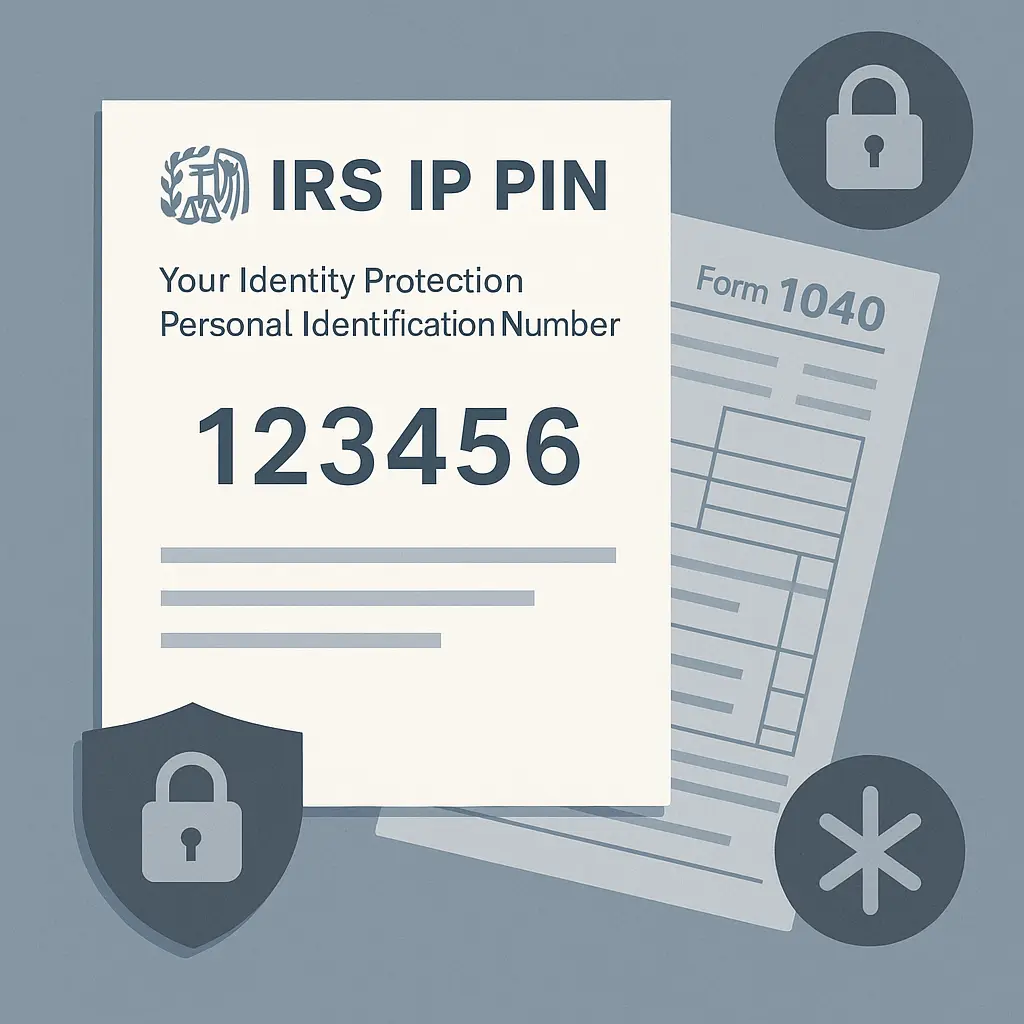
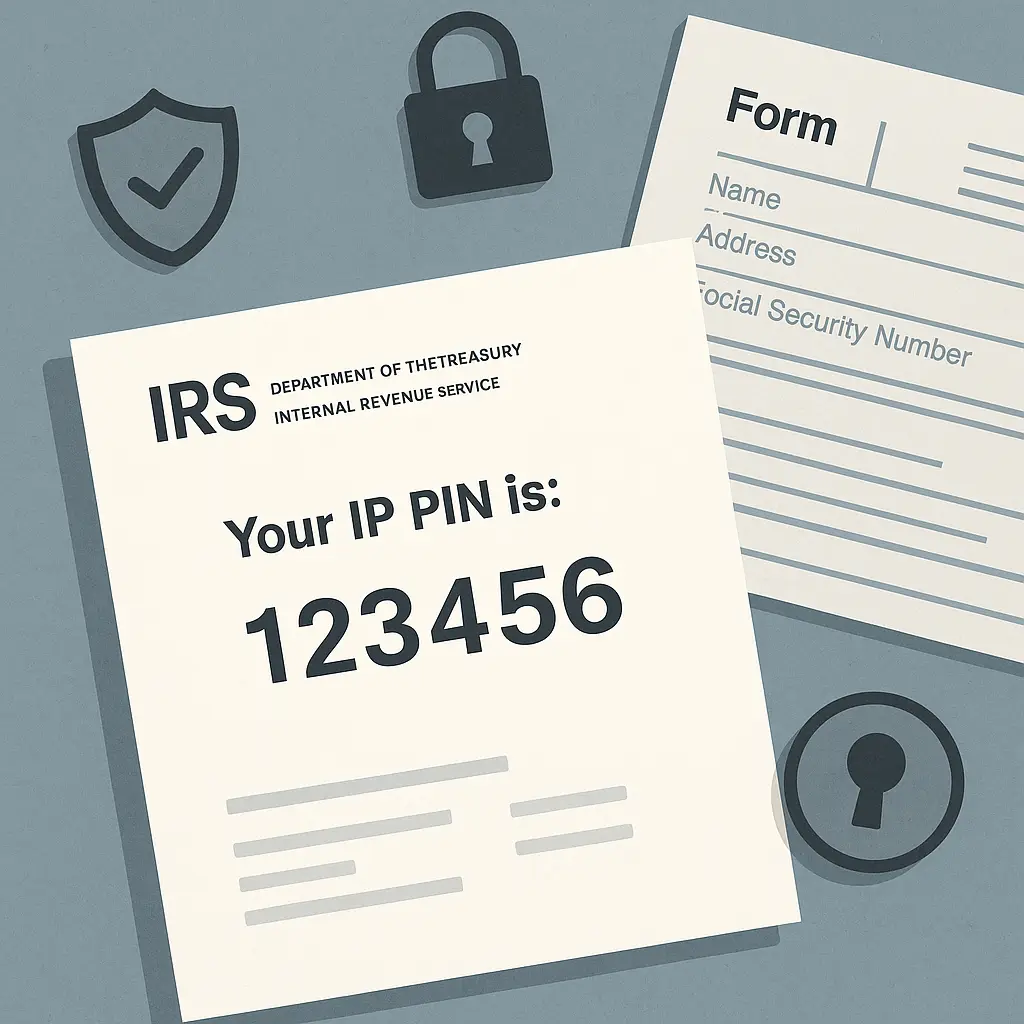
The IRS Identity Protection PIN is a six-digit code that proves you're you when filing taxes. Without it, the IRS rejects your return. With it, nobody else can file in your name and steal your refund.
The system exists because tax refund fraud is a billion-dollar problem. Identity thieves file fraudulent returns using stolen Social Security numbers before the real taxpayer files, claim a refund, and disappear. The victim discovers the fraud when their legitimate return gets rejected, then spends months untangling the mess with the IRS.
The IP PIN stops that. It's a second authentication factor for your tax return. Even if someone has your Social Security number, birthdate, and income information, they can't file without your PIN. And the PIN changes every year.
Here's how the system works, who needs one, what it protects, and what it doesn't.
The underlying mechanism
The IRS generates a new six-digit PIN for you every January. The code arrives by mail or becomes available through your IRS online account. When you file your federal tax return, you enter the PIN in a specific field. The IRS checks it against their database. If the PIN matches your Social Security number, the return processes. If it doesn't match, the return gets rejected immediately.
The rejection happens at the submission stage, before any human reviews your return. The IRS system performs an automated check: does this Social Security number have an IP PIN on file? If yes, does the submitted PIN match? No match means instant rejection, regardless of whether the rest of the return is accurate.
This creates a hard gate. Someone filing a fraudulent return in your name might have all your personal information, but they won't have the current year's six-digit code. The IRS mailed it to your address, or you retrieved it through an account only you can access. Without that code, their fraudulent return fails.
The PIN expires every December 31st. The IRS generates a new one for the following tax year. You can't reuse last year's PIN. This rotation limits the damage if someone somehow obtains your current PIN. It's only valid for one filing season.
The system ties to your Social Security number, not your tax preparer or software. If you use TurboTax, H&R Block, or a CPA, you give them the PIN along with your other tax information. They enter it when they file. If you file on paper, you write the PIN in the designated box.
State tax returns are separate. Most states don't participate in the IP PIN program. A few have their own systems, but they're not connected to the federal PIN. Your six-digit IRS code does nothing for your California, New York, or Texas return. If someone wants to commit state-level tax fraud, the IP PIN won't stop them.
Who gets an IP PIN
Three groups of people end up with an IP PIN: victims of tax-related identity theft, people the IRS flags as high-risk, and anyone who opts in voluntarily.
If you've been a victim of tax refund fraud, the IRS assigns you an IP PIN automatically. You don't choose this. Once your case resolves and the IRS confirms someone filed a fraudulent return using your information, they enroll you in the program. You'll receive a letter explaining the PIN and how to use it. From that point forward, you must use the PIN every year when filing.
The IRS also assigns PINs to taxpayers they identify as high-risk based on patterns in their data. They don't publish the exact criteria, but researchers have found that tax fraud follows predictable patterns involving specific ZIP codes, income brackets, and filing behaviors. If your profile matches those patterns, you might receive an IP PIN without requesting one.
The third group is voluntary enrollees. Since 2021, any taxpayer can request an IP PIN through the IRS website. You don't need to prove you've been a victim. You just need to verify your identity and opt in. Once you enroll, you're in permanently. The IRS doesn't let you unenroll. You'll use the PIN every year for the rest of your life, or until the program changes.
Voluntary enrollment requires identity verification through ID.me, a third-party service the IRS uses for authentication. You create an account, upload a government-issued ID, and either take a selfie or join a video call with a verification agent. The process takes around 15 minutes if everything goes smoothly. Once verified, the system generates your PIN immediately.
If you can't or won't use ID.me, you can request an IP PIN by mail. You fill out Form 15227, mail it to the IRS, and wait. The IRS processes the request and mails your PIN to the address on file. This takes weeks, sometimes months, and you can't file your return until the PIN arrives.
Children can have IP PINs. If someone files a fraudulent return using your child's Social Security number, the IRS will assign them a PIN. Parents manage the PIN for minors. You retrieve it through your own IRS account or by calling the IRS.
What the IP PIN actually protects
The IP PIN stops one specific attack: someone filing a federal tax return in your name to steal your refund. That's it. It's a narrow defense, but it's effective within that scope.
Tax refund fraud works like this: an attacker obtains your Social Security number, name, and date of birth through a breach, phishing, or purchase from a criminal marketplace. They fabricate income information or use real W-2 data if they have it. They file a return in your name, claim a refund, and direct the money to a bank account or prepaid card they control. The IRS processes the return and issues the refund, usually within a few weeks.
You discover the fraud when you try to file your legitimate return. The IRS system rejects it because a return has already been filed under your Social Security number. At that point, you're stuck. You have to prove your identity, prove the other return was fraudulent, and wait for the IRS to investigate. The process takes months. You don't get your refund until the IRS resolves the case.
The IP PIN prevents this scenario. The fraudulent return gets rejected at submission because the attacker doesn't have your current PIN. Your legitimate return goes through because you do. The attack fails before it causes damage.
This protection applies only to federal returns. Most states don't use the IP PIN system. If someone wants to file a fraudulent state return, the federal PIN does nothing. Some states have their own PIN programs, but they're separate and require separate enrollment.
The IP PIN also doesn't protect your tax refund from other forms of fraud. If someone intercepts your refund after the IRS issues it, the PIN doesn't help. If someone changes your bank account information with the IRS and redirects your direct deposit, the PIN doesn't stop that. If someone files a fraudulent return using a fake Social Security number instead of yours, the PIN is irrelevant.
The PIN doesn't protect against identity theft outside of tax filing. Someone with your Social Security number can still open credit accounts, apply for loans, or commit other forms of fraud. Freezing your credit is a separate action that addresses those risks.
How to get and use your PIN
If you already have an IP PIN, the IRS mails you a new one every January. The letter arrives at the address on file with the IRS. If you moved and didn't update your address, the letter goes to the old address. You won't get it.
You can also retrieve your PIN online through the IRS Get an IP PIN tool. You log in using ID.me, verify your identity, and the system displays your current PIN. This works even if you haven't received the letter yet, or if you lost it.
If you don't have an IP PIN and want one, you follow the same process. Visit the Get an IP PIN tool, verify your identity through ID.me, and opt in. The system generates your PIN immediately. You can print it, save it, or write it down. You'll need it when you file.
The PIN is six digits. It's not a password. You don't memorize it. You look it up when you need it. Most people store it with their tax documents or in a password manager.
When you file your tax return, you enter the PIN in the designated field. If you're using tax software, the software prompts you for it. If you're filing on paper, there's a box on Form 1040 labeled "Identity Protection PIN." You write the six digits there.
If you use a tax preparer, you give them the PIN along with your W-2s and other documents. They enter it when they file. You don't need to explain what it is. Any competent preparer knows.
If you forget your PIN or lose it before filing, you retrieve it through the Get an IP PIN tool. If you can't access the tool because you don't have an IRS online account or can't verify your identity through ID.me, you call the IRS. The phone number is on the letter they mailed you, or you can find it on the IRS website. Expect long hold times during tax season.
If you file before your new PIN is available, your return gets rejected. This happens occasionally in January if the IRS hasn't generated the new PINs yet or if there's a delay in mailing. You wait for the PIN, then refile.
What happens if you don't use it
If you have an IP PIN and you file a return without it, the IRS rejects the return. You get a notice explaining the rejection. You retrieve your PIN, correct the return, and resubmit. The rejection doesn't create a penalty, but it delays your refund.
If you have an IP PIN and someone else files a return in your name without it, their return gets rejected. This is the intended outcome. The system works.
If you don't have an IP PIN and someone files a fraudulent return in your name, the IRS processes it. You discover the fraud when you try to file and your return gets rejected because one has already been filed under your Social Security number. At that point, you're in the identity theft recovery process.
You file Form 14039, Identity Theft Affidavit, with the IRS. You provide documentation proving your identity and explaining the fraud. The IRS investigates, which takes months. During this time, you don't get your refund. Once the IRS confirms the fraud, they issue your refund and assign you an IP PIN for future years.
The recovery process is why the IP PIN exists. It's much easier to prevent the fraud than to fix it after it happens.
The tradeoffs
The IP PIN adds friction. You have to retrieve a six-digit code every year and enter it when filing. If you lose the code, you have to look it up or call the IRS. If you move and don't update your address, you won't get the letter. If you can't verify your identity online, you're stuck waiting for mail.
For people who've been victims of tax fraud, this friction is worth it. The alternative is dealing with another fraudulent return, another months-long investigation, another delayed refund.
For people who opt in voluntarily, the calculation is different. You're trading convenience for protection against a threat you might never face. Tax refund fraud is real, but it's not universal. The IRS doesn't publish exact numbers, but researchers estimate that around 1-2% of taxpayers experience tax-related identity theft in a given year. That's millions of people, but it's still a small percentage.
The IP PIN doesn't protect against all identity theft. It's a single-purpose tool. If you're serious about protecting your identity, you also need to freeze your credit, monitor your accounts, and use strong authentication on your financial services.
The PIN is permanent once you enroll. The IRS doesn't offer an unenroll option. If you decide later that the friction isn't worth it, you're stuck with it. This is intentional. The IRS wants to prevent people from enrolling, unenrolling, and leaving gaps in their protection.
The system depends on the IRS maintaining accurate address records. If your address is wrong in their system, you won't get the letter. If you don't have an IRS online account, you can't retrieve the PIN digitally. If you can't verify your identity through ID.me, you have to use the mail process, which is slow.
The ID.me requirement is controversial. ID.me is a private company that stores biometric data and identity documents. Privacy advocates have raised concerns about the IRS outsourcing identity verification to a third party. The IRS has defended the partnership, arguing that ID.me's verification process is more secure than alternatives. The debate continues.
What this looks like in practice
In Severance, the show's central tension comes from the fact that Mark's innie and outie are the same person, but neither has access to the other's memories. The IP PIN creates a similar split, but in reverse. Your tax return is filed once a year, and only the version of you who has the current six-digit code can do it. If you don't have the code, you're locked out. If someone else doesn't have the code, they're locked out too.
The analogy holds because the IP PIN is about controlled access to a single, high-stakes action. Filing a tax return isn't something you do casually. It's a once-a-year event with financial consequences. The IP PIN ensures that only the person who can prove they're the legitimate taxpayer can execute that action.
This matters because tax refund fraud is one of the few identity theft scenarios where the victim often doesn't know they've been targeted until they try to file their own return. Credit fraud usually shows up on your credit report within weeks. Bank fraud triggers alerts. Tax fraud is silent until you collide with it.
The IP PIN flips that dynamic. Instead of discovering the fraud after it happens, you prevent it from happening at all. The fraudulent return fails at the gate.
When the IP PIN isn't enough
The IP PIN stops federal tax refund fraud. It doesn't stop state tax refund fraud, credit fraud, loan fraud, unemployment fraud, or any other form of identity theft.
If someone has your Social Security number, they can still open credit accounts, apply for loans, and commit fraud in your name. The IP PIN does nothing about that. You need to freeze your credit with Equifax, Experian, and TransUnion to stop credit fraud.
If someone files a fraudulent state tax return, the federal IP PIN doesn't help. Some states have their own PIN programs, but most don't. You have to check your state's tax authority website to see what protections they offer.
If someone intercepts your refund after the IRS issues it, the IP PIN doesn't protect you. If they change your direct deposit information with the IRS, the PIN doesn't stop that. If they file a fraudulent return using a fake Social Security number instead of yours, the PIN is irrelevant.
The IP PIN is one tool in a larger identity protection strategy. It's a good tool, but it's not comprehensive.
Should you get one
If you've been a victim of tax-related identity theft, you already have one. The IRS assigned it to you. You don't have a choice.
If the IRS sent you one automatically because they flagged you as high-risk, you have one. You need to use it.
If you haven't been a victim and the IRS hasn't sent you one, you have to decide whether the friction is worth the protection.
The case for opting in: tax refund fraud is real, the recovery process is miserable, and the IP PIN prevents it. If you've had your Social Security number exposed in a breach, if you're in a demographic that's frequently targeted, or if you just want the peace of mind, the friction is worth it.
The case against opting in: the IP PIN adds a step to filing every year, it's permanent, and it only protects against one specific form of fraud. If you're already taking other identity protection steps like freezing your credit and monitoring your accounts, the marginal benefit of the IP PIN might not justify the hassle.
I opted in. My Social Security number has been in at least three breaches I know about. The friction of looking up a six-digit code once a year is trivial compared to the months-long nightmare of resolving tax fraud. That's my calculation. Yours might be different.
If you decide to opt in, visit the IRS Get an IP PIN tool, verify your identity through ID.me, and enroll. The system generates your PIN immediately. Write it down. Store it with your tax documents. Use it when you file.
If you decide not to opt in, monitor your credit, freeze your credit, and file your taxes early. The earlier you file, the less time a fraudster has to file before you do.
The IP PIN isn't magic. It's a gate. It works because it's a gate only you can open. That's enough.