Incogni vs. DeleteMe: automated data broker removal services compared
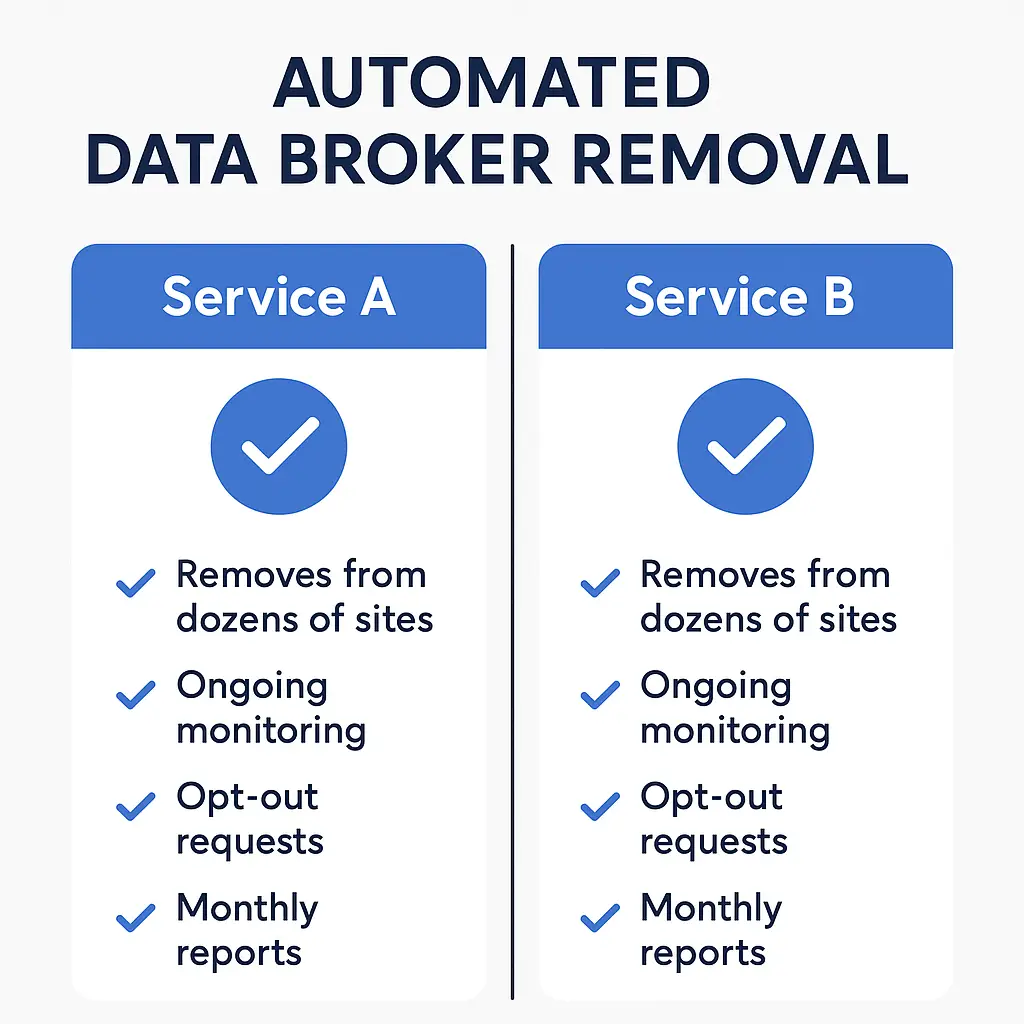
Data brokers hold dossiers on nearly every American. They sell your address, phone number, age, income estimates, shopping habits, and more to anyone willing to pay. Automated removal services promise to scrub your data from these sites so you don't have to spend weekends filling out opt-out forms. Two services dominate this space: Incogni and DeleteMe.
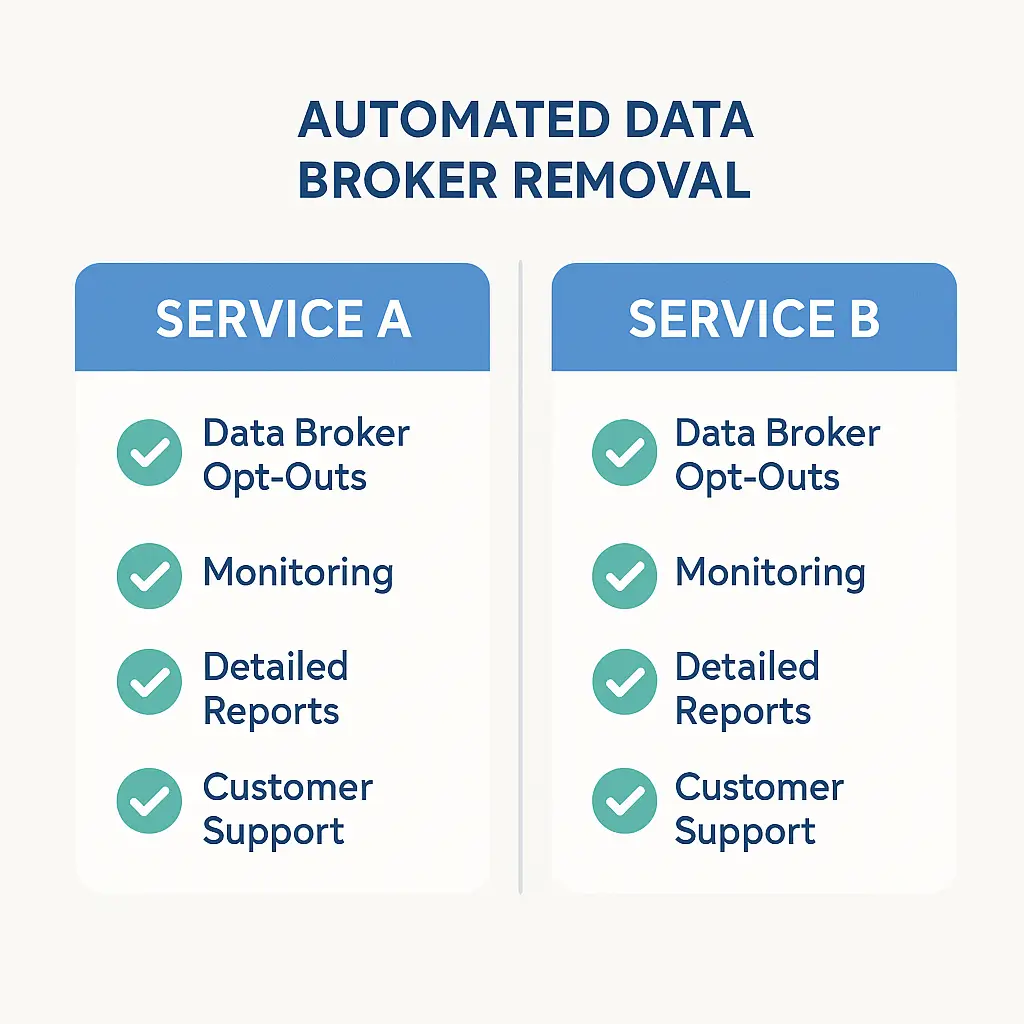
Both submit removal requests on your behalf. Both monitor for data reappearance. Both charge annual fees. But they differ on broker coverage, transparency, speed, and what you actually get for your money. Here's how they compare on what matters.
What data broker removal services actually do
Data brokers aggregate your information from public records, online activity, purchase history, and other sources. They package this into profiles and sell access to marketers, employers, landlords, insurers, and anyone else who pays. Your name, address, phone number, relatives, past addresses, estimated income, property ownership, and behavioral patterns all appear in these databases.
The FTC has documented how this industry operates with minimal oversight. Brokers buy data from each other, scrape public records, and purchase lists from retailers. Your profile exists across dozens or hundreds of sites, updated constantly as new data flows in.
Removal services automate the opt-out process. They identify which brokers hold your data, submit removal requests using each broker's specific process, verify removal, and monitor for reappearance. Without automation, you'd need to manually visit each broker's site, navigate their opt-out process (which ranges from a simple form to requiring notarized documents sent by mail), wait for confirmation, and repeat the entire process every few months when your data reappears.
The services differ dramatically on how many brokers they target, how transparent they are about progress, and how effectively they handle the constant repopulation problem.
Broker coverage: quantity vs. focus
Incogni claims coverage of around 180 data brokers. DeleteMe focuses on roughly 30-50 high-impact brokers. This difference defines much of how the services operate.
Incogni's broader list includes smaller, regional, and specialized brokers. More coverage sounds better, but many of these smaller brokers have minimal reach. A local people-search site with 10,000 users matters less than a major aggregator feeding data to dozens of downstream services.
DeleteMe targets the largest, most-accessed brokers, the ones that feed other services and appear prominently in search results. Their list includes Spokeo, Whitepages, BeenVerified, Intelius, and similar high-traffic sites. Removing your data from these sources has immediate, visible impact.
The tradeoff: Incogni's wider net catches more obscure brokers, but many won't matter to your daily exposure. DeleteMe's focused approach prioritizes the brokers that actually affect search results, spam calls, and identity theft risk. Neither service covers every broker, hundreds of smaller operations exist, and new ones launch regularly.
Removal process and timeline
Both services start by scanning broker databases for your information. You provide your name, current address, past addresses, age, and phone number. They use this to identify matching profiles.
Incogni automates removal requests through APIs where available and falls back to manual submission for brokers without API access. Their dashboard shows which brokers currently hold your data, which removals are in progress, and which have completed. Initial removals typically complete within 30-90 days, depending on each broker's response time.
DeleteMe assigns you a privacy advisor who handles all submissions manually. This human-in-the-loop approach means slower initial processing but more thorough verification. Your advisor reviews each profile to confirm it matches you (avoiding false positives) and follows up when brokers don't respond. Initial removals take 60-120 days on average.
Both services face the same fundamental problem: data reappears. Brokers repopulate their databases from public records, purchased lists, and data-sharing agreements with other brokers. A profile removed in January often reappears by April. Both services monitor for reappearance and resubmit removal requests, but the cycle never ends. This is why both operate on subscription models, one-time removal doesn't work.
Transparency and reporting
Incogni provides a real-time dashboard showing every broker they've contacted, current status (pending, removed, or failed), and a timeline of actions taken. You can see exactly which brokers hold your data right now and which removal attempts are in progress. The dashboard updates as removal confirmations arrive.
This transparency is useful for understanding scope and progress. You know which brokers responded, which ignored requests, and which require follow-up. The downside: seeing 180 brokers can feel overwhelming, especially when many are small operations you've never heard of.
DeleteMe sends quarterly reports summarizing removals completed, new profiles found, and ongoing efforts. The reports are less granular, you won't see real-time status for individual brokers, but they highlight the highest-impact removals and explain what changed since the last report.
The quarterly cadence matches how most people actually engage with this problem. Checking a dashboard daily doesn't change anything; removals take weeks. But some users want real-time visibility, and Incogni delivers that.
Pricing and value
Incogni charges around $12.99/month billed annually (roughly $155/year). DeleteMe's pricing varies by plan: individual coverage runs about $129/year, family plans (covering 2+ people) cost more. Both services offer monthly billing at higher per-month rates.
The value calculation depends on how you weigh coverage breadth vs. focused impact. Incogni's broader broker list costs slightly more but targets obscure sites that may not matter. DeleteMe's narrower focus costs less and prioritizes high-impact removals.
Neither service is cheap, and both require ongoing payment. Cancel your subscription, and your data reappears within months. This isn't a flaw in the services, it's how data brokers operate. Removal isn't permanent. Ongoing monitoring and resubmission are necessary.
For context, manual removal, if you value your time at even minimum wage, costs far more in hours spent than either service charges. The first round alone (visiting 30-50 broker sites, navigating different opt-out processes, mailing notarized forms where required) takes 15-20 hours. Repeating this quarterly makes the subscription fee look reasonable.
What neither service solves
Both services reduce your exposure, but they don't eliminate it. Hundreds of data brokers exist, and new ones launch regularly. No service covers them all. Your data will appear on sites neither service monitors.
Public records remain accessible. Property ownership, voter registration, court records, and business filings are public by law. Removal services can't touch these sources, and brokers pull from them constantly.
Past data sharing persists. If you've used loyalty programs, filled out warranty cards, entered contests, or signed up for free trials, companies have sold your data to brokers. Those transactions happened years ago, but the data still circulates.
Social media and online activity create new exposure. Every account you create, every form you fill, every purchase you make generates data that can end up in broker databases. Removal services clean up past exposure; they don't prevent new data collection.
EPIC has documented how this creates a perpetual cycle. Removal is reactive. Data collection is proactive and constant. You're always playing catch-up.
Edge cases and limitations
Both services struggle with common names. If you're John Smith, expect false positives, profiles that aren't you but match your name and approximate age. DeleteMe's manual review process catches more of these. Incogni's automated approach sometimes flags profiles that aren't actually yours, creating noise in your dashboard.
Neither service handles name changes well. If you've changed your name (marriage, legal name change, or other reasons), you'll need to provide all past names. Brokers index under every name you've used, and removal requests must specify which name to remove. This adds complexity and time.
Address history matters. Brokers link profiles across past addresses. If you've moved frequently, your data appears under multiple address combinations. Both services require you to list past addresses, but gaps in your memory create gaps in coverage.
Family members create spillover exposure. Data brokers link relatives. Your profile lists your parents, siblings, spouse, and children. Removing your data doesn't remove theirs, and their profiles often include your information. Family plans (offered by both services) address this, but they cost more.
Choosing between them
If you want maximum broker coverage and real-time visibility, Incogni's broader list and live dashboard deliver that. You'll pay slightly more and see a lot of brokers you've never heard of, but you'll know exactly what's happening at any moment.
If you want focused impact on the brokers that actually matter, the ones showing up in search results and feeding downstream services, DeleteMe's curated list and manual review process prioritize effectiveness over breadth. The quarterly reporting model matches how most people engage with this problem.
Both services require ongoing payment. Both face the same fundamental limitation: data reappears. Both reduce exposure but don't eliminate it. The choice comes down to whether you value comprehensive coverage or focused impact, and whether you want real-time visibility or periodic summaries.
For most people, either service delivers meaningful reduction in spam calls, junk mail, and search result exposure. The difference between 50 and 180 brokers matters less than the difference between doing nothing and doing something.
What to expect after subscribing
Initial setup takes 10-15 minutes. You'll provide your name, current address, past addresses (as many as you remember), phone number, email, and date of birth. Both services use this to scan broker databases for matching profiles.
The first 30 days show the most activity. Removal requests go out, confirmations arrive, and your dashboard or report fills with updates. This is when you'll see the most dramatic reduction in exposure.
Months 2-6 bring slower progress. Some brokers take weeks to respond. Others ignore initial requests and require follow-up. A few refuse removal entirely (some brokers claim exemptions for journalistic purposes or other reasons). Your data gradually disappears from search results and people-search sites.
Month 6 onward is maintenance. New profiles appear as brokers repopulate their databases. The service resubmits removal requests. This cycle continues as long as you maintain your subscription. The work never ends, but neither does the protection.
Expect spam reduction, not elimination. Calls and junk mail will decrease, but other sources (past purchases, loyalty programs, social media) still feed marketing lists. You'll see improvement, not silence.
Search results clean up noticeably. Googling your name will show fewer people-search sites and outdated address listings. This is often the most visible benefit, what strangers can find about you online shrinks.
The manual alternative
You can do this yourself. Every data broker has an opt-out process. Some are simple web forms. Others require mailed requests. A few demand notarized documents. All take time.
The FTC provides guidance on how to approach manual removal, but the process is tedious and repetitive. You'll visit 30-50 broker sites, navigate different opt-out procedures, wait for confirmations, and repeat the entire process quarterly as your data reappears.
The first round takes 15-20 hours. Subsequent rounds take less time (you've learned the processes), but the work never stops. Most people complete one round, see the time commitment, and either give up or subscribe to a service.
Manual removal makes sense if you have more time than money, if you only care about removing data from a handful of specific brokers, or if you want to understand exactly how the process works before paying someone else to handle it.
For most people, the subscription fee is worth avoiding the time sink.
The Office had an episode where Jim Halpert maintains a secret second desk for pranking Dwight, hidden supplies, backup plans, redundant systems all running in parallel. Data brokers operate the same way. Remove your data from one broker, and it's already replicated across five others you've never heard of. Delete it from those five, and three new ones have pulled it from public records. The redundancy is the point. Brokers share data, buy data from each other, and scrape the same public sources constantly. One-time removal doesn't work because the system is designed to repopulate itself. Automated services exist because the manual alternative is a full-time job.
What happens when you cancel
Your data reappears. Brokers repopulate their databases from public records, purchased lists, and data-sharing agreements. Without ongoing removal requests, your profiles return within a few months.
This isn't a scare tactic, it's how the system works. Data brokers don't delete your information permanently. They remove it from their public-facing databases when legally required, but they retain the underlying records and repopulate when new data arrives.
Canceling makes sense if your threat model changes (you've moved, changed careers, or resolved the specific privacy concern that prompted the subscription). It doesn't make sense if you want lasting protection. The protection lasts only as long as the monitoring continues.
Final considerations
Both Incogni and DeleteMe reduce your exposure to data broker surveillance. Neither eliminates it. Both require ongoing payment. Both face the same fundamental limitation: data brokers repopulate their databases constantly.
Incogni offers broader coverage, real-time visibility, and automated processing. DeleteMe offers focused impact, manual review, and quarterly reporting. The choice depends on whether you value comprehensive coverage or targeted effectiveness, and whether you want to monitor progress actively or receive periodic summaries.
For most people, either service delivers meaningful improvement in privacy, reduced spam, and cleaner search results. The difference between them matters less than the difference between subscribing to one and doing nothing.
If you're serious about reducing your data broker exposure, pick one and commit to annual renewal. The work is never done, but the protection is real.