Health Insurance Data: What Your Insurer Knows and Who They Share It With

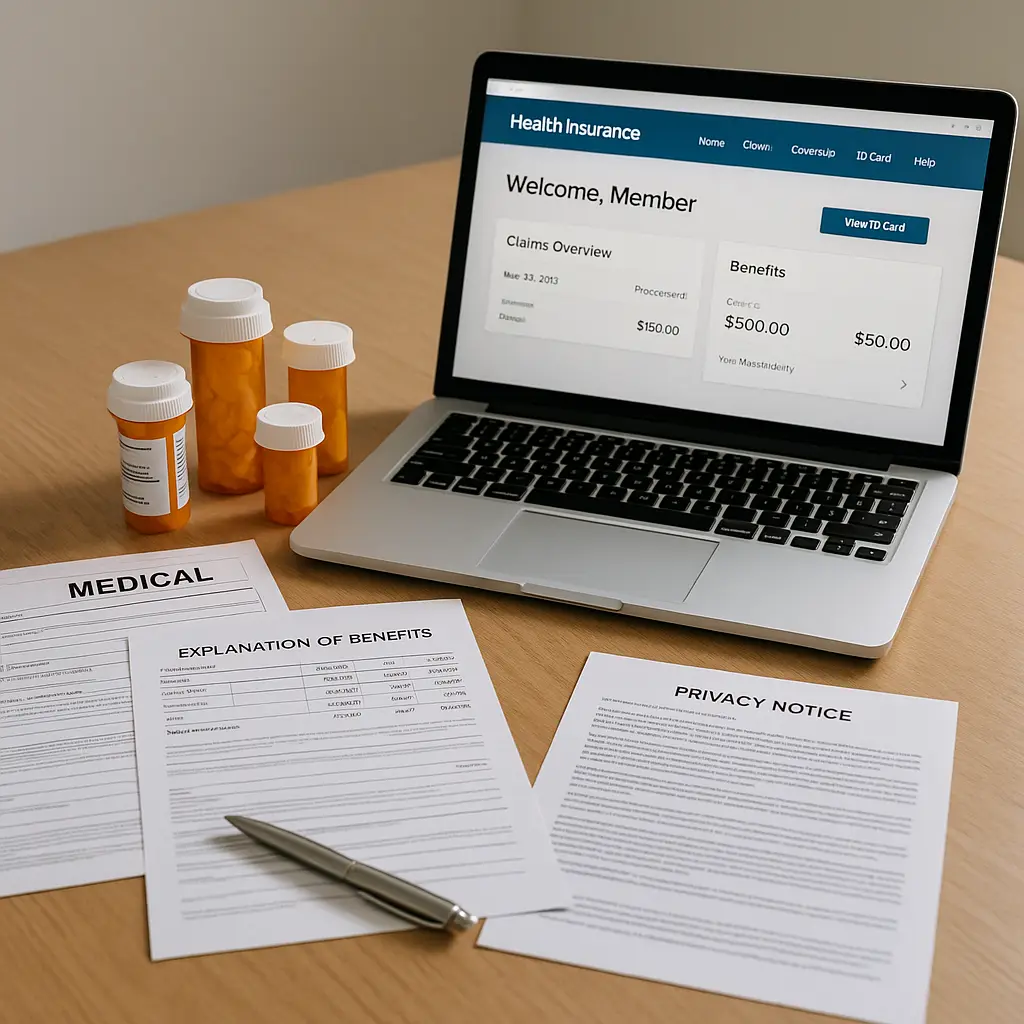
Your health insurance company knows more about your medical life than any other organization except your healthcare providers. Every time you visit a doctor, fill a prescription, or submit a claim, you generate a data trail that insurers collect, analyze, and store. That data determines your premiums, influences coverage decisions, and flows to third parties you've never heard of.
The scope of this collection surprises most people. Your insurer doesn't just know you went to the doctor last Tuesday. They know the diagnosis code your doctor submitted, the specific tests ordered, the medications prescribed, and how much each step cost. They know which specialists you see, how often you refill prescriptions, and whether you've been to the emergency room this year. They track patterns across years, comparing your utilization to actuarial models and flagging outliers for review.
This isn't surveillance in the traditional sense. Health insurers collect this data to process claims, detect fraud, and manage risk. But the infrastructure built for those purposes creates a detailed medical profile that extends far beyond what you'd share in casual conversation. Understanding what gets collected, where it goes, and what rights you have matters more as that data becomes more valuable and more vulnerable.
What Your Health Insurer Collects
The foundation of your insurer's data collection is the claim. Every time a healthcare provider submits a claim for payment, they send detailed information about the service provided. That claim includes your name, date of birth, policy number, the provider's name and location, the date of service, diagnosis codes describing your condition, procedure codes describing what was done, and the cost.
Diagnosis codes use the ICD-10 system, which contains around 70,000 specific codes. Your doctor doesn't just note that you have back pain. The code specifies lower back pain versus upper back pain, acute versus chronic, left side versus right side. Procedure codes use the CPT system, which similarly breaks down medical services into thousands of granular categories. A routine physical exam has a different code than a physical exam for a specific complaint, which has a different code than a physical exam required for work clearance.
Your pharmacy claims generate a parallel data stream. Every prescription you fill creates a record containing the drug name, dosage, quantity, prescribing physician, pharmacy location, and date filled. Insurers track refill patterns, medication adherence, and potential drug interactions. They know if you stopped taking a medication early, if you're filling prescriptions at multiple pharmacies, or if you're taking medications that suggest conditions you haven't disclosed.
Lab results flow to insurers when providers submit claims for lab work. The insurer receives the test ordered, the results, and the associated diagnosis. Imaging studies like X-rays, MRIs, and CT scans generate similar records. Hospital admissions create detailed claims showing admission date, discharge date, procedures performed, medications administered, and diagnoses treated.
Insurers also collect data you provide directly. Your application for coverage asks about pre-existing conditions, smoking status, family medical history, and current medications. Annual wellness visits generate questionnaires about lifestyle, mental health, and preventive care. Some insurers offer wellness programs that track physical activity, weight, and biometric data through apps or wearable devices.
The Medical Information Bureau aggregates data from life insurance applications, disability insurance applications, and some health insurance applications. MIB maintains files on roughly 230 million people in the U.S. and Canada. If you've applied for individual health insurance, life insurance, or disability insurance, you probably have an MIB file containing medical codes, height, weight, and other underwriting information. Insurers check MIB when processing applications to verify consistency and detect fraud.
All of this data accumulates over time. Your insurer doesn't just see this year's claims. They see patterns spanning years or decades if you've maintained continuous coverage. They can track chronic conditions, medication changes, specialist referrals, and utilization trends. That longitudinal view creates a detailed medical history that most people don't maintain themselves.
Who Sees Your Health Insurance Data
HIPAA creates the legal framework for health insurance data sharing. The law designates insurers as covered entities, which means they must follow specific rules about how they use and disclose protected health information. But HIPAA permits many types of sharing that surprise people who assume medical privacy means medical secrecy.
Your insurer shares data with business associates who perform services on their behalf. These include claims processors, pharmacy benefit managers, utilization review companies, case management firms, actuarial consultants, and IT vendors. Business associate agreements require these entities to protect your data, but the practical reality is that dozens of companies you've never heard of handle your medical information as part of routine insurance operations.
Pharmacy benefit managers deserve special attention. PBMs process prescription claims, negotiate drug prices, and manage formularies. The three largest PBMs in the U.S. process around 80% of all prescriptions. When you fill a prescription, your PBM sees the drug, dosage, prescriber, and pharmacy. They use that data to manage drug costs, detect fraud, and analyze utilization patterns. PBMs are business associates of your insurer, but they also work with multiple insurers, creating data aggregation opportunities that span competitive boundaries.
Your healthcare providers receive data back from your insurer. When they check your eligibility, they see your coverage details, deductible status, and copay amounts. When they submit claims, they receive explanations of benefits showing what was paid, what was denied, and why. Some providers participate in care coordination programs where insurers share data about your other healthcare activities to improve treatment.
Government agencies access health insurance data through multiple channels. The Centers for Medicare & Medicaid Services oversees Medicare and Medicaid, which involves extensive data collection and analysis. State insurance regulators audit insurer practices and review rate filings, which include aggregate claims data. The Department of Health and Human Services investigates HIPAA violations and can access records during enforcement actions. Law enforcement can obtain health insurance data through subpoenas and warrants in criminal investigations.
Employers who self-fund health plans occupy a complicated middle ground. Around 60% of covered workers receive insurance through self-funded plans, where the employer assumes financial risk and the insurance company acts as an administrator. HIPAA prohibits insurers from disclosing individual health information to employer plan sponsors, but employers receive aggregate data showing overall utilization, high-cost claims categories, and demographic breakdowns. The separation between individual claims and employer access depends on administrative barriers that don't always hold in practice, especially at smaller companies where a handful of people manage both HR and benefits.
Third-party administrators who handle claims processing for self-funded plans see everything. They're business associates of the employer, not the employee, which creates a data flow where your medical information passes through a company your employer hired but you didn't choose.
Research organizations and public health agencies access de-identified health insurance data for studies, surveillance, and policy analysis. De-identification removes obvious identifiers like name, address, and Social Security number, but the remaining data still contains diagnosis codes, procedure codes, dates, and demographic information. Some experts say that de-identified health data can be re-identified by combining it with other datasets, though this requires sophisticated analysis and access to multiple data sources.
Marketing and analytics companies purchase de-identified claims data from data brokers who aggregate information from multiple insurers. These datasets feed predictive models, market research, and pharmaceutical company analysis. The data doesn't contain your name, but it contains enough detail to support targeted advertising and risk scoring.
The Practical Limits of HIPAA Protection
HIPAA restricts how covered entities use and disclose your health information, but the law contains broad exceptions that permit sharing in ways most people don't expect. Understanding these exceptions matters more than memorizing the general rule.
HIPAA permits disclosure for treatment, payment, and healthcare operations without your authorization. Treatment includes care coordination between providers. Payment includes claims processing, billing, and reimbursement. Healthcare operations include quality assessment, case management, fraud detection, business planning, and customer service. These three categories encompass most of what health insurers do, which means most data sharing happens under HIPAA's explicit permission rather than as an exception to it.
Insurers can share your information with business associates without asking you first. The business associate agreement creates contractual obligations, but you're not a party to that contract and you don't get to approve which business associates your insurer uses. If your insurer decides to outsource claims processing to a new vendor, your data goes to that vendor automatically.
HIPAA permits disclosure to public health authorities, health oversight agencies, law enforcement, coroners, medical examiners, and organ procurement organizations under specific circumstances. These disclosures don't require your authorization and often don't require notification.
Your authorization is required for marketing, sale of health information, and most uses of psychotherapy notes. But the definitions matter. Marketing doesn't include communications about treatment alternatives, case management, or care coordination. Sale doesn't include disclosures for treatment, payment, or healthcare operations, even if money changes hands. These carve-outs mean that many commercial uses of your data fall outside the authorization requirement.
HIPAA's minimum necessary standard requires covered entities to limit disclosures to the minimum amount needed for the purpose. But the covered entity determines what's necessary, and HIPAA explicitly exempts disclosures for treatment and disclosures to the individual. In practice, minimum necessary functions as a guideline rather than a hard limit.
The law gives you rights to access your records, request amendments, receive an accounting of disclosures, and request restrictions on certain uses. But exercising these rights involves paperwork, waiting periods, and potential fees. Insurers can charge reasonable costs for copying records. They can deny amendment requests if they believe the information is accurate. They can refuse restriction requests for most purposes. The accounting of disclosures doesn't include routine treatment, payment, and operations disclosures, which means it omits most of the data sharing that actually happens.
HIPAA doesn't regulate employers, schools, life insurers, or many other entities that collect health information outside the healthcare context. If you disclose medical information on a life insurance application, that information isn't protected by HIPAA. If you share health data with a wellness app that isn't a business associate of a covered entity, HIPAA doesn't apply. The law's scope is narrower than its reputation suggests.
State laws sometimes provide stronger protections than HIPAA. Some states require explicit consent for certain types of health information sharing. Some states restrict employer access to health data more strictly than federal law. Some states have breach notification requirements that exceed HIPAA's standards. But state law variation creates complexity rather than consistent protection, and most people don't know which state laws apply to their coverage.
What Happens When Health Insurance Data Leaks
Health insurance data breaches expose some of the most sensitive personal information that exists. A breach doesn't just reveal that you have insurance. It reveals diagnoses, medications, procedures, provider visits, and the detailed medical history your insurer has accumulated over years.
The HHS breach portal lists breaches affecting 500 or more individuals. In 2023, the portal recorded around 720 breaches affecting more than 133 million individuals. Health insurance companies, healthcare providers, and business associates all appear on the list. The breaches result from hacking, unauthorized access, theft, improper disposal, and loss of unencrypted devices.
When a health insurer suffers a breach, the exposed data typically includes names, Social Security numbers, dates of birth, addresses, policy numbers, diagnosis codes, procedure codes, and claims history. Some breaches expose bank account numbers, credit card numbers, and other financial data. The combination of medical and financial information makes health insurance breaches particularly valuable to criminals.
Medical identity theft uses stolen health insurance information to obtain medical services, prescriptions, or medical equipment in someone else's name. The fraudulent claims appear in your records, potentially affecting future treatment decisions and creating billing disputes. Medical identity theft is harder to detect than financial fraud because you might not notice fraudulent claims until you receive an explanation of benefits for services you didn't receive.
Exposed health data feeds targeted phishing campaigns. Attackers use diagnosis information to craft convincing emails about treatment options, medication offers, or medical device promotions. They use provider information to impersonate your doctor's office. They use insurance details to pose as your insurer requesting verification or payment.
The reputational and emotional impact of health data exposure extends beyond financial harm. Medical information reveals conditions people keep private, medications they don't discuss publicly, and treatments they'd prefer to keep confidential. The exposure of mental health records, substance abuse treatment, reproductive health services, or HIV status creates risks that don't fit into traditional fraud frameworks.
HIPAA requires covered entities to notify affected individuals within 60 days of discovering a breach. The notification must describe what happened, what information was involved, what the entity is doing in response, and what steps you can take to protect yourself. But notification doesn't undo exposure, and the recommended steps often amount to monitoring your credit and reviewing your explanation of benefits for fraudulent claims.
Credit monitoring helps detect financial fraud but doesn't address medical identity theft. Reviewing EOBs catches some fraudulent claims but not all, especially if you receive numerous legitimate claims that make anomalies hard to spot. The practical tools for recovering from health data exposure are weaker than the tools for recovering from credit card fraud.
What You Can Actually Control
Your ability to control health insurance data collection is limited by the fact that submitting claims is how insurance works. You can't opt out of data collection and still use your coverage. But you have some control over what gets collected and how it's used.
You can request an accounting of disclosures from your health insurer. This shows who received your health information for purposes other than treatment, payment, and operations. The accounting won't show routine claims processing or care coordination, but it will show disclosures to public health authorities, law enforcement, or third parties for research. You can request an accounting once per year without charge.
You can request a copy of your claims history from your insurer. This shows what data they have on file, including diagnosis codes, procedure codes, and dates of service. Reviewing your claims history helps you verify accuracy and detect potential fraud. Insurers can charge reasonable fees for providing copies.
You can request restrictions on certain uses or disclosures of your health information. Insurers must agree to restriction requests if you pay out of pocket for a service and ask the provider not to submit a claim. For other restriction requests, insurers can agree or decline. If they agree, they must follow the restriction except in emergencies.
You can opt out of insurer wellness programs that collect activity data, weight, or biometric information. These programs are voluntary, and declining doesn't affect your coverage. Some employers offer premium discounts or HSA contributions for wellness program participation, which creates financial pressure to share data you'd prefer to keep private.
You can review your insurer's Notice of Privacy Practices, which describes how they use and disclose your information. This document is required by HIPAA and must be available on the insurer's website. It's written in legal language and runs many pages, but it's the authoritative source for understanding your insurer's data practices.
You can pay out of pocket for services you want to keep off your insurance record. If you pay cash and don't submit a claim, your insurer won't receive the diagnosis codes, procedure codes, or provider information. This works for routine services but becomes impractical for expensive procedures or ongoing treatment. Some providers offer cash pay discounts that partially offset the loss of insurance coverage.
You can check your Medical Information Bureau file once per year for free. Visit MIB's disclosure page to request your file. The file contains codes rather than plain English descriptions, but MIB provides a code key. If you find errors, you can dispute them through MIB's correction process.
You can file complaints with the HHS Office for Civil Rights if you believe your insurer violated HIPAA. OCR investigates complaints and can impose penalties for violations. The complaint process doesn't provide direct compensation, but it can trigger enforcement action.
You can limit what you disclose on insurance applications. Answer questions accurately, but don't volunteer information beyond what's asked. Some people over-disclose out of caution, providing details about minor conditions or old injuries that don't affect current health. That information becomes part of your record and can influence future underwriting decisions.
You can ask providers not to submit claims for certain services if you're willing to pay out of pocket. This works for services like mental health counseling, STI testing, or contraception that patients sometimes prefer to keep off their insurance record. Providers aren't required to agree, but many will accommodate the request if you pay in full at the time of service.
The Mechanism Behind Data Aggregation
Health insurance data doesn't stay isolated within individual insurers. It flows into aggregated databases that combine information from multiple sources, creating datasets that reveal patterns invisible in single-company records.
All-payer claims databases collect claims data from multiple insurers in a state. Around 20 states operate APCDs that aggregate data from commercial insurers, Medicare, and sometimes Medicaid. These databases support healthcare cost analysis, quality measurement, and policy research. The data is de-identified before release to researchers, but the aggregation creates detailed population-level views of healthcare utilization.
The Healthcare Cost Institute maintains a claims database covering around 60 million Americans with employer-sponsored insurance. HCCI receives data from four large insurers and releases reports on healthcare costs, utilization trends, and price variation. The data is de-identified and aggregated, but it represents one of the largest non-government health datasets in the U.S.
Pharmacy benefit managers aggregate prescription data across the insurers they serve. A single PBM might process claims for 100 million people, creating a dataset that spans competitive boundaries and reveals national prescribing patterns. PBMs use this data internally for formulary decisions and drug pricing negotiations, but they also sell de-identified data to pharmaceutical companies, researchers, and analytics firms.
Data brokers purchase health insurance claims data, de-identify it, and resell it to third parties. These transactions happen under HIPAA's research and healthcare operations exceptions, which permit sale of de-identified data without authorization. The buyers include pharmaceutical companies conducting market research, medical device manufacturers analyzing utilization patterns, and hedge funds modeling healthcare company performance.
The de-identification process removes 18 types of identifiers specified by HIPAA, including names, addresses, Social Security numbers, and medical record numbers. But the remaining data still contains diagnosis codes, procedure codes, dates, demographic information, and geographic detail at the zip code level. Researchers have demonstrated that de-identified health records can be re-identified by linking them to other datasets, especially when the health data includes rare conditions or unusual combinations of procedures.
The aggregation creates value for research, public health, and policy analysis. Researchers use claims data to study treatment effectiveness, cost trends, and health disparities. Public health agencies use it to track disease outbreaks and monitor vaccination rates. Policymakers use it to evaluate insurance regulations and healthcare reform proposals. But the same aggregation that enables population-level analysis also creates privacy risks that individual-level protections don't address.
In Schitt's Creek, Moira Rose Discovers That Privacy Isn't About Hiding
In the streaming-era comedy, Moira Rose's carefully curated public persona collides with the reality that her past is documented, searchable, and available to anyone with internet access. The show uses this tension for laughs, but it illustrates something true about modern privacy: the issue isn't whether information exists, but who controls access to it and how it's used.
Health insurance data works the same way. The data exists because you used your insurance. That's not negotiable. The question is who sees it, how they use it, and what rights you have to correct errors or limit sharing. You can't make the data disappear, but you can understand the system well enough to make informed decisions about what you share and when you pay cash to keep something off the record.
The comedy comes from Moira's discovery that her attempts at image control were always incomplete. The privacy lesson comes from recognizing that control isn't about preventing all disclosure. It's about understanding the mechanisms well enough to make deliberate choices rather than accidental ones.
What Matters More Than Panic
Your health insurance company knows a lot about you. That's how insurance works. The data collection isn't optional, the sharing is broader than most people realize, and HIPAA's protections have more exceptions than headlines suggest. But understanding the system gives you more control than ignoring it.
Review your explanation of benefits. Most people throw them away or file them unread. The EOB shows what claims your insurer processed, which helps you detect fraud and verify accuracy. If you see a claim for a service you didn't receive, report it immediately.
Check your Medical Information Bureau file annually. It's free once per year and takes 10 minutes. Errors in your MIB file can affect insurance applications and premium calculations.
Read your insurer's Notice of Privacy Practices. It's long and boring, but it's the authoritative source for understanding how your insurer uses your data. Pay attention to sections on business associates, marketing, and third-party disclosures.
Ask providers about cash pay options for services you want to keep off your insurance record. Many providers offer discounts for cash payment, and some services cost less out of pocket than your insurance copay.
Request an accounting of disclosures if you're concerned about who's seen your health information. The accounting won't show routine claims processing, but it will show non-routine disclosures that might surprise you.
The data is out there. Your insurer has it, their business associates have it, and some version of it flows to aggregated databases you'll never access directly. You can't undo that collection, but you can understand it well enough to make informed decisions about what happens next.