Freezing Your Child's Credit: The Step-by-Step Process Parents Need
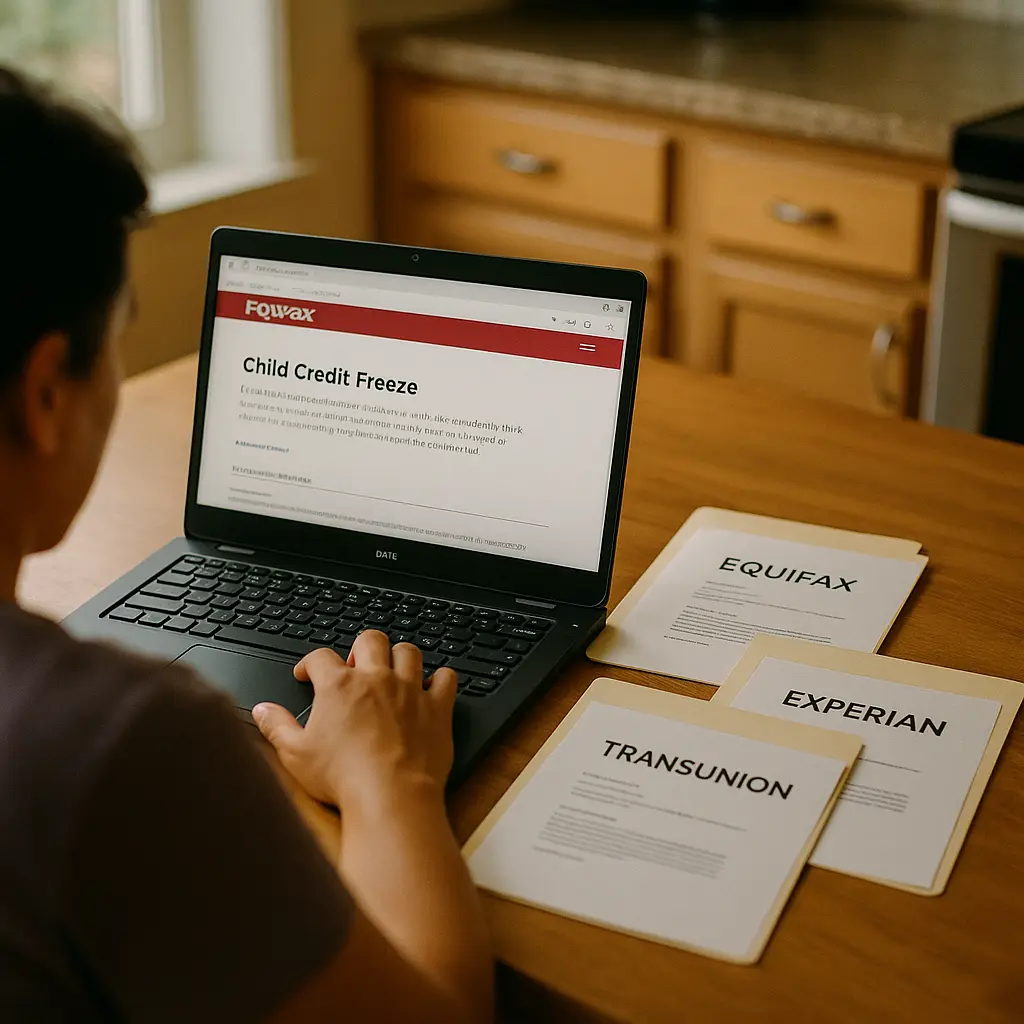
Your child doesn't have a credit card. They've never applied for a loan. They're seven years old. And somewhere in the credit system, a file with their Social Security number might already exist.
Child identity theft isn't rare. It's not a fringe threat that only happens to other families. The FTC reports that children's Social Security numbers are valuable to identity thieves precisely because the fraud can go undetected for years. A thief opens a credit card in your child's name in 2026. You don't find out until your kid applies for their first apartment in 2040. By then, the damage is extensive, the trail is cold, and the cleanup takes months.
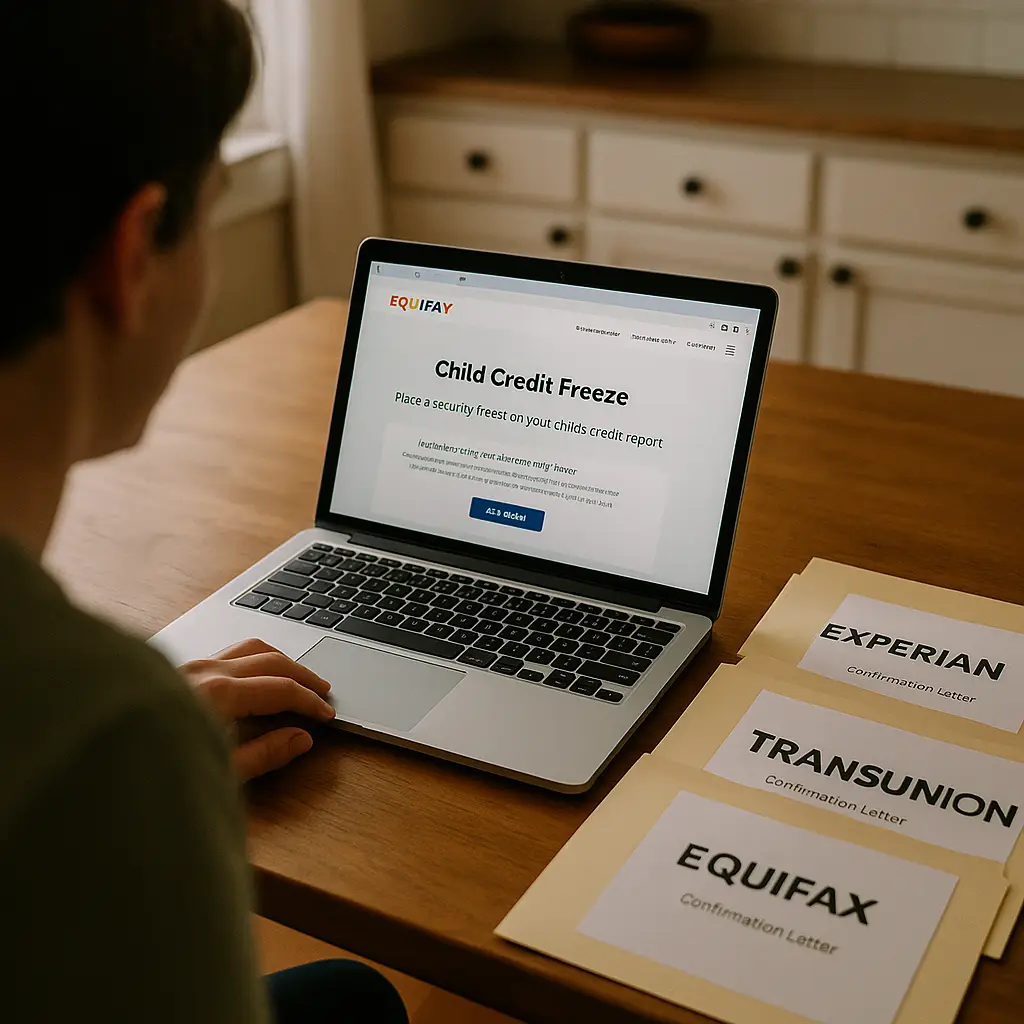
Freezing your child's credit stops this before it starts. The process is straightforward, completely free, and creates a barrier that prevents anyone from opening accounts in your child's name until you deliberately lift the freeze. This article walks through the exact steps, bureau by bureau, with the documents you need and the confirmation you should receive.
How Credit Bureaus Create Files for Children
Credit bureaus don't automatically create files for every child at birth. A file gets created when a Social Security number appears in a credit application, a data matching system, or a fraud attempt. Sometimes a typo creates a file. Sometimes a thief deliberately targets children because they know the fraud won't surface for years.
The three major bureaus, Equifax, Experian, and TransUnion, operate independently. A file at one bureau doesn't guarantee a file at the others. A freeze at one bureau doesn't protect against applications that only check the other two. You need to freeze at all three.
If your child doesn't have a credit file yet, the freeze request creates one and locks it immediately. If a file already exists, the freeze prevents new accounts from opening. Either way, the outcome is the same: no one can use your child's Social Security number to open credit.
What You Need Before You Start
Each bureau requires proof that you are the parent or legal guardian and that the child exists. The documentation requirements overlap but aren't identical. Gather these before you begin:
For your child:
- Social Security number (the actual number, not just the card)
- Birth certificate (certified copy, not a hospital souvenir certificate)
- Proof of address (your utility bill, mortgage statement, or bank statement showing the child's name and your address)
For yourself:
- Government-issued photo ID (driver's license or passport)
- Proof of address matching your ID
- Proof of guardianship (birth certificate showing you as parent, or court documents if you're a legal guardian)
Some bureaus accept scanned documents uploaded through their websites. Others require physical copies mailed with your request. You'll need clear, legible scans or photocopies. A smartphone photo of a document often works, but check that text is readable and edges aren't cut off.
Freezing at Equifax
Equifax handles child credit freezes through a dedicated process separate from adult freezes. You cannot complete this online through a standard account. You must submit a request by mail.
Step 1: Download the request form.
Equifax provides a minor freeze request form on their website. As of 2026, you can find it by searching "Equifax minor credit freeze" or navigating to their security freeze section and looking for information about minors. The form asks for your information, your child's information, and your relationship to the child.
Step 2: Gather required documents.
Equifax requires:
- Completed request form
- Copy of your government-issued ID
- Copy of your child's Social Security card or a document showing their SSN (like a tax return or benefit statement)
- Copy of your child's birth certificate
- Proof of address (utility bill, bank statement, or mortgage statement dated within the last 90 days)
Step 3: Mail the request.
Send everything to:
Equifax Security Freeze P.O. Box 105788 Atlanta, GA 30348
Use certified mail with return receipt. This costs a few dollars but gives you proof that Equifax received your request. Keep a copy of everything you send.
Step 4: Wait for confirmation.
Equifax sends a confirmation letter within 30 days. The letter includes a PIN you'll use to lift or remove the freeze later. Store this PIN somewhere secure. You'll need it when your child turns 18 and wants to apply for credit.
If you don't receive confirmation within 30 days, call Equifax at 1-800-685-1111 and ask about the status of your minor freeze request. Have your mailing date and tracking number ready.
Freezing at Experian
Experian also requires a mailed request for child credit freezes. Their process is similar to Equifax but uses different forms and addresses.
Step 1: Download the request form.
Experian's minor freeze form is available on their website under the security freeze section. Search "Experian minor credit freeze" or navigate through their freeze information pages. The form asks for parent and child information.
Step 2: Gather required documents.
Experian requires:
- Completed request form
- Copy of your driver's license or state-issued ID
- Copy of your child's Social Security card or a document showing their SSN
- Copy of your child's birth certificate
- Proof of address (utility bill, bank statement, or government-issued document dated within the last 90 days)
Step 3: Mail the request.
Send everything to:
Experian Security Freeze P.O. Box 9554 Allen, TX 75013
Again, use certified mail with return receipt. Keep copies of all documents.
Step 4: Wait for confirmation.
Experian sends a confirmation letter within 30 days. The letter includes a PIN for managing the freeze. Store it securely. If you don't receive confirmation, call Experian at 1-888-397-3742.
Freezing at TransUnion
TransUnion offers both online and mail options for child credit freezes, but the online process only works if your child already has a credit file. If you're not sure whether a file exists, start with the mail option. It works either way.
Step 1: Decide on submission method.
If your child already has a credit file (perhaps you've checked and confirmed this, or you're freezing after discovering fraud), you can use TransUnion's online portal. If you're freezing as a preventive measure and don't know whether a file exists, mail the request.
Step 2: For online submission:
Visit TransUnion's website and navigate to the minor freeze section. You'll create an account, upload documents, and submit the freeze request electronically. TransUnion asks for:
- Your government-issued ID
- Your child's birth certificate
- Your child's Social Security card or a document showing their SSN
- Proof of address
Step 3: For mail submission:
TransUnion doesn't provide a specific form. Write a letter requesting a security freeze for your minor child. Include:
- Your full name, address, date of birth, and Social Security number
- Your child's full name, address, date of birth, and Social Security number
- A statement that you are the parent or legal guardian requesting a freeze
- Copies of the required documents (your ID, child's birth certificate, child's SSN documentation, proof of address)
Mail everything to:
TransUnion LLC P.O. Box 2000 Chester, PA 19016
Use certified mail. Keep copies.
Step 4: Wait for confirmation.
TransUnion sends confirmation within 30 days, including a PIN for freeze management. Store it securely. If you don't receive confirmation, call TransUnion at 1-888-909-8872.
What Happens After You Freeze
Once all three freezes are in place, your child's credit is locked. No one can open new accounts using their Social Security number. Existing accounts (if any exist due to fraud) remain active, but no new credit can be issued.
The freeze doesn't affect your child's daily life. They can still:
- Get a job (employment verification doesn't require credit checks for minors)
- Open a bank account (banks verify identity but don't pull credit for minors)
- Get a phone in your name (family plans don't require the child's credit)
- Apply for scholarships or school programs
The freeze only blocks new credit applications. That's the entire point.
Storing Your PINs and Documentation
Each bureau sends you a PIN or password for managing the freeze. You need these PINs when your child turns 18 and wants to apply for credit, or if you need to lift the freeze earlier for some reason.
Store the PINs somewhere you'll remember and can access years from now. Options:
Physical storage: A fireproof safe at home works. Label an envelope "Child Credit Freeze PINs" and include the PINs, the confirmation letters, and copies of the documents you submitted. Store it with other important papers like birth certificates and Social Security cards.
Digital storage: A password manager works if you're confident you'll still have access to it in ten or fifteen years. Create an entry titled "Child Credit Freeze" and store each bureau's PIN as a separate field. Include notes about when you froze the credit and where you stored physical copies of the confirmation letters.
Backup: Keep a second copy of the PINs in a different location. If your house floods or burns, you need a backup. A trusted family member, a safe deposit box, or a second secure location works.
Don't store the PINs in an unencrypted document on your computer. Don't email them to yourself. Don't write them on a sticky note in your desk drawer. Treat these PINs like you'd treat your own credit freeze PINs, because in ten years, they'll be just as important.
Checking Whether Your Child Already Has a Credit File
You might wonder whether your child already has a credit file before you freeze. The freeze process works either way, but if you want to check first, you can request a manual review from each bureau.
Write a letter to each bureau requesting a search for credit files associated with your child's Social Security number. Include:
- Your child's full name, date of birth, and Social Security number
- Your full name and contact information
- A statement that you are the parent or legal guardian
- Copies of your ID, your child's birth certificate, and proof of address
Mail the request to the same addresses used for freeze requests. The bureau searches their system and sends a letter confirming whether a file exists. If a file exists, the letter may include a credit report showing what accounts are listed.
If you find accounts you didn't open, you're looking at identity theft. The freeze still works, but you'll also need to dispute the fraudulent accounts, file a report with the FTC at IdentityTheft.gov, and possibly file a police report. The freeze prevents new fraud. Disputing the accounts cleans up the existing damage.
When to Lift the Freeze
Your child turns 18. They want to apply for a student credit card, finance a car, or rent an apartment. Now you lift the freeze.
Each bureau offers temporary or permanent freeze removal. Temporary removal lifts the freeze for a specific period (like 30 days) and then reinstates it automatically. Permanent removal deletes the freeze entirely.
For a young adult just starting to build credit, temporary removal makes sense. Lift the freeze for the application period, let them apply, then let it relock. Once they have a few accounts and understand how credit works, you can remove the freeze permanently.
To lift a freeze, you contact each bureau using the PIN they sent you. Most bureaus offer online freeze management once the child turns 18. You log in, enter the PIN, and choose temporary or permanent removal. The freeze lifts within minutes for online requests, or within three business days for phone or mail requests.
If you've lost the PIN, the bureau can reissue it, but the process takes longer. This is why storing the PINs securely matters.
The Analogy That Fits
In The Fellowship of the Ring, the Council of Elrond debates what to do with the One Ring. Gandalf argues for destroying it in Mount Doom, the only permanent solution that removes the threat entirely. Other council members suggest hiding it, using it, or guarding it in Rivendh. All of those options leave the Ring in play, available to anyone who finds it.
A credit freeze is the Mount Doom option. You're not hiding your child's Social Security number (it's already out there in school records, medical files, and government databases). You're not monitoring it closely and hoping to catch fraud early. You're removing the SSN from circulation in the credit system entirely. It's still there, but it's locked away where no one can use it to open accounts.
The alternative, monitoring your child's credit, watching for suspicious activity, reacting to fraud after it happens, leaves the ring in play. Freezing the credit destroys the threat before it materializes.
What the Freeze Doesn't Protect
A credit freeze stops new credit accounts. It doesn't stop all identity theft.
Your child's Social Security number can still be used for:
- Filing fraudulent tax returns (someone claims your child as a dependent and steals the refund)
- Medical identity theft (someone uses your child's insurance information for treatment)
- Employment fraud (someone uses your child's SSN to get a job, leaving your child with a tax bill)
These threats require different defenses. For tax fraud, you can request an IRS Identity Protection PIN once your child has a Social Security number. For medical fraud, you monitor explanation of benefits statements from your insurance company. For employment fraud, you check your child's Social Security earnings record periodically through the Social Security Administration.
The credit freeze is one layer. It's the most important layer for preventing financial fraud, but it's not the only layer you need.
The Cost Is Zero, The Effort Is Finite, The Protection Is Real
Freezing your child's credit costs nothing. The FTC mandates that credit freezes for both adults and minors are free. You pay for certified mail and document copies, but the freeze itself has no fee.
The effort is finite. You gather documents once, mail three requests, and store three PINs. Total active time is maybe two hours spread across a week. Then it's done. The freeze stays in place until you lift it.
The protection is real. A frozen credit file cannot be used to open accounts. Period. The freeze doesn't rely on monitoring, doesn't depend on catching fraud early, and doesn't require you to stay vigilant for years. It's a structural barrier that works whether you're paying attention or not.
Affiliate Recommendation: Identity Theft Monitoring for the Whole Family
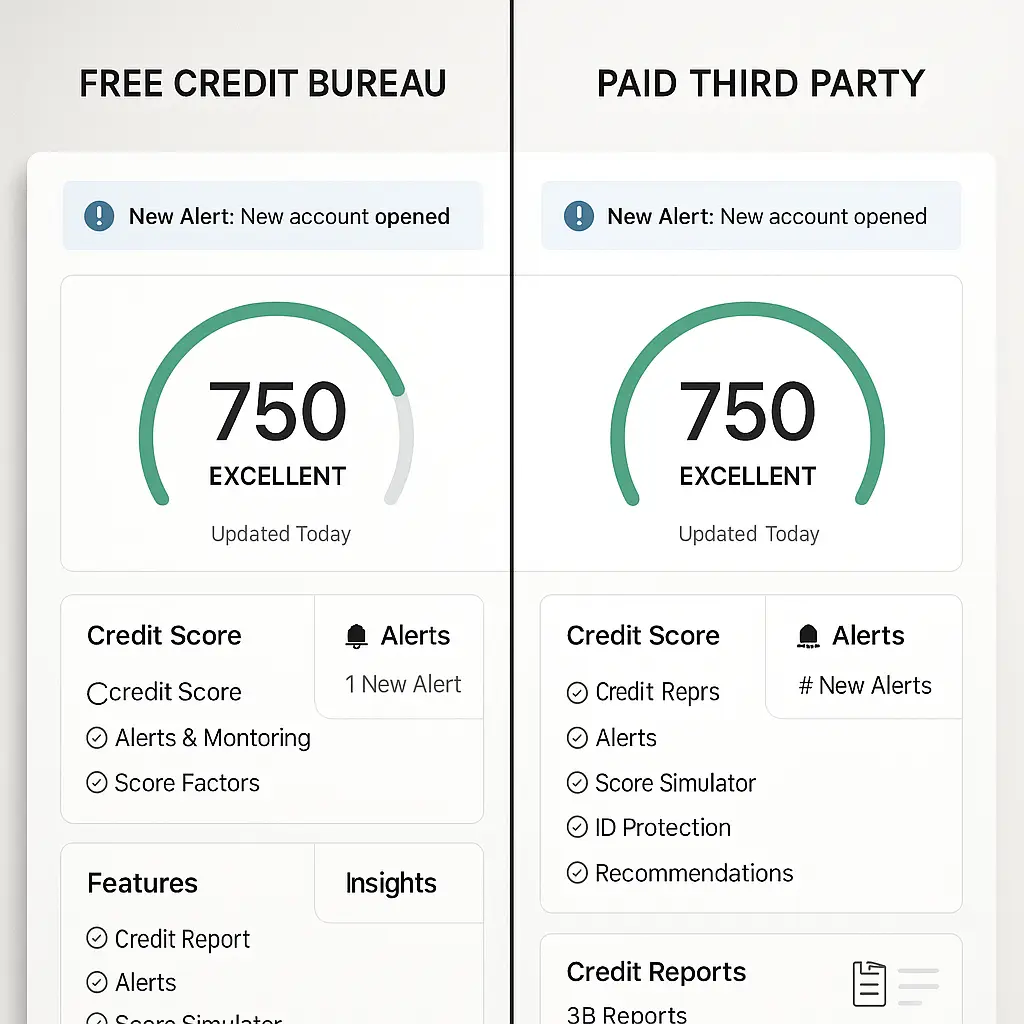
A credit freeze stops new accounts, but it doesn't monitor existing accounts or catch other forms of identity theft. If you want broader protection for your family, consider NordProtect, which offers credit monitoring, dark web scanning, and identity theft recovery support for multiple family members under one plan.
NordProtect monitors your child's Social Security number for use in contexts the credit freeze doesn't cover, like tax fraud, medical fraud, or employment fraud. If someone tries to use your child's SSN outside the credit system, you get an alert. The service also includes recovery assistance if identity theft does occur, which means you're not navigating the cleanup process alone.
Credit freezes and monitoring services aren't redundant. The freeze prevents new credit accounts. Monitoring catches other forms of fraud. Together, they create layered protection that covers more attack surfaces than either tool alone.
The Conversation You'll Have in Ten Years
Your child turns 18. They want to apply for their first credit card. You sit down together, explain what a credit freeze is, and hand them the PINs you've stored for a decade.
"I froze your credit when you were seven," you say. "No one could use your Social Security number to open accounts. Now you can lift the freeze and start building credit on your own terms."
That conversation is worth two hours of paperwork in 2026. Your child starts adulthood with a clean credit file, no hidden fraud, and no years-long cleanup process. They learn that identity protection isn't paranoia, it's a practical step you took because you understood the threat.
The alternative conversation, "Someone opened accounts in your name when you were a kid, and we didn't find out until now", is harder. The cleanup takes months, the damage to their credit score delays life milestones, and the lesson they learn is that identity theft happens to people who don't protect themselves.
Freeze your child's credit. Do it this week. The process is straightforward, the cost is zero, and the protection lasts until they're ready to build credit themselves.