Free VPNs: What They Cost You When the Price Is Zero
A free VPN sounds like the perfect deal. You get privacy, security, and access to blocked content without paying a monthly subscription. The app installs in seconds, the connection button glows green, and you're protected. Or so it seems.
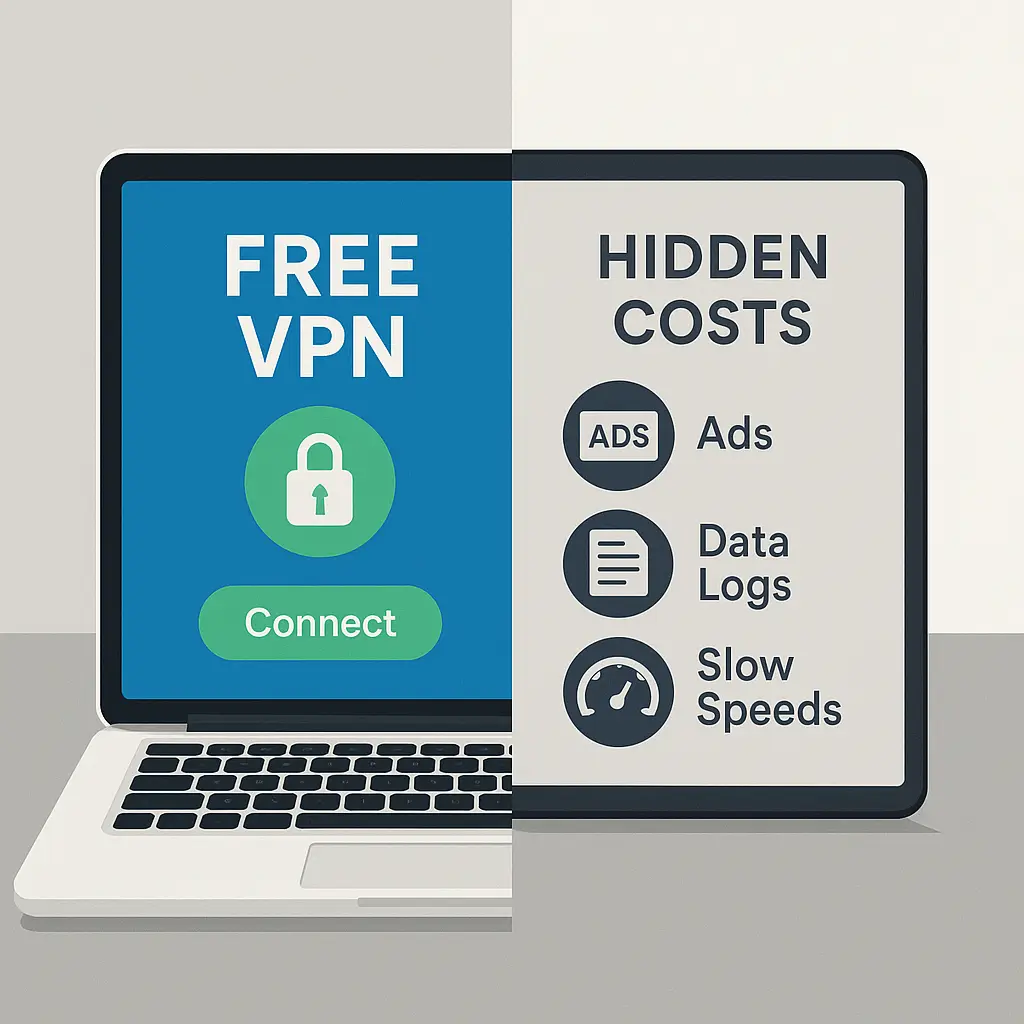
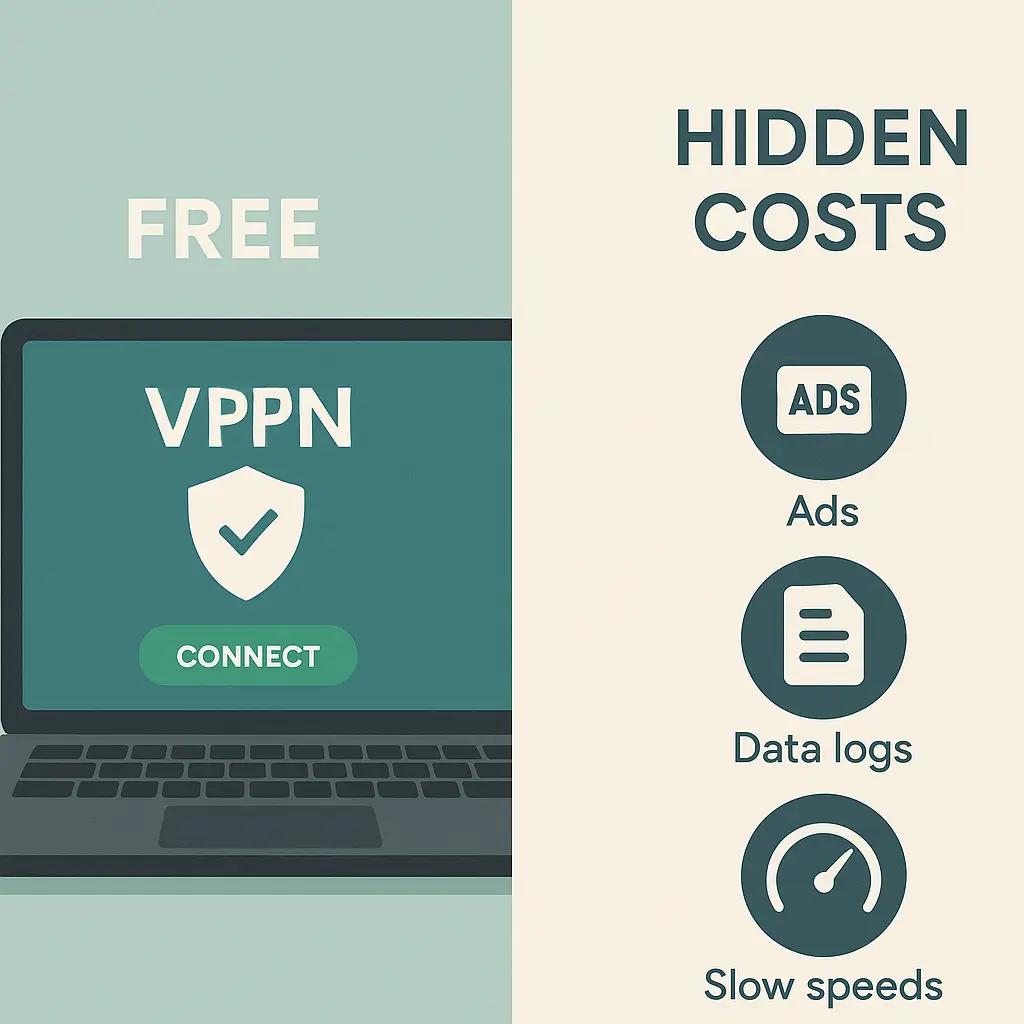
The reality is more complicated. Free VPNs exist, they function, and some are even legitimate. But the business model creates predictable tradeoffs. When you're not paying with money, you're paying with something else: your data, your bandwidth, your patience, or your actual security. The question isn't whether free VPNs are categorically unsafe. The question is what you're giving up and whether the exchange makes sense for your situation.
Here's what free VPNs actually cost you, how the business models work, and when the monthly fee for a paid service stops being optional.
The Business Model Behind Free VPNs
VPN infrastructure costs money. Servers, bandwidth, maintenance, support, and development all require ongoing funding. Paid VPNs cover these costs with subscriptions. Free VPNs cover them differently.
Some free VPNs operate as loss leaders for premium tiers. You get limited access for free, and the service upsells you to a paid plan when you hit bandwidth caps or speed throttles. This model is transparent. The free tier exists to convert you into a paying customer. Companies like Proton VPN use this approach, offering a genuinely private free tier with clear limitations.
Other free VPNs monetize through advertising. The app shows banner ads, video ads, or interstitial ads between connections. The revenue from those ads funds the service. This model is also transparent, though the user experience suffers. You're trading your attention and screen real estate for access.
The problematic models are less visible. Some free VPNs log your browsing activity and sell that data to third-party advertisers, data brokers, or analytics firms. Your traffic passes through their servers, they record what you visit, and they package that information for sale. The VPN protects you from your ISP seeing your traffic, but the VPN provider itself becomes the surveillance point. This model contradicts the core purpose of using a VPN in the first place.
A smaller subset of free VPNs engage in outright malicious behavior. They inject tracking scripts into web pages, redirect your traffic through affiliate links to earn commissions, or install adware and spyware alongside the VPN client. These services aren't just bad VPNs. They're malware with a VPN interface.
The business model determines the tradeoffs. A free tier from a reputable company with a clear revenue model is one thing. A free VPN from an unknown developer with no visible income source is another.
What Free VPNs Log and Why It Matters
Paid VPNs with audited no-log policies promise not to record your browsing activity, connection times, or IP addresses. Free VPNs rarely make that promise, and when they do, there's often no third-party audit to verify it.
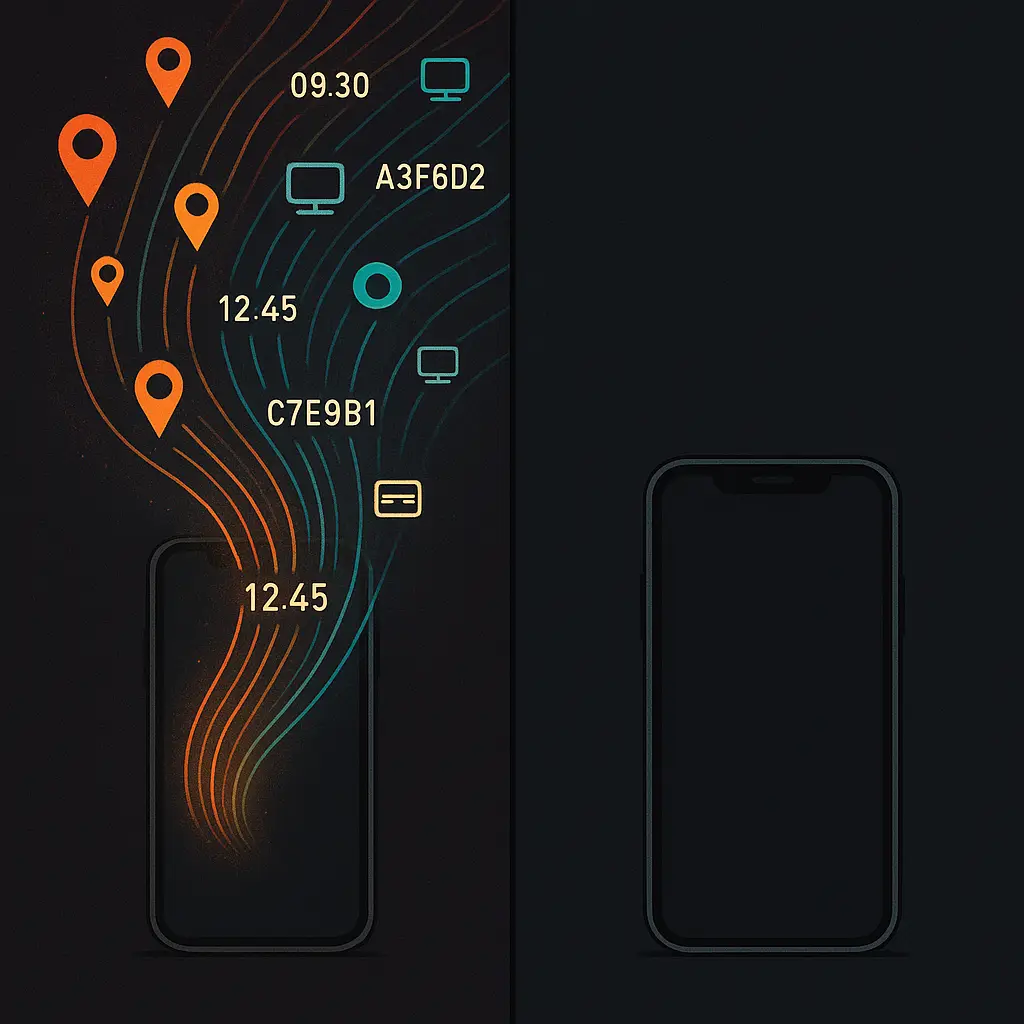
Logging policies vary, but common data collection includes:
- Connection timestamps (when you connect and disconnect)
- Bandwidth usage (how much data you transfer)
- Originating IP address (your real IP before the VPN connection)
- Destination IP addresses or domains (what sites you visit)
- Device information (operating system, app version, device identifiers)
Some free VPNs also collect browsing history in detail. They record the full URLs you visit, not just the domains. This level of logging creates a complete profile of your online activity, which is exactly what a VPN is supposed to prevent.
The privacy policy is where this gets disclosed, though the language is often vague. Phrases like "we may collect usage data to improve our service" or "we share anonymized data with partners" are red flags. Anonymized data is often re-identifiable when combined with other datasets. Partners is a euphemism for third-party companies buying your browsing data.
If you're using a free VPN to protect your privacy from your ISP, but the VPN provider is logging and selling the same data your ISP would have seen, you've gained nothing. You've just moved the surveillance point from one company to another.
Speed, Bandwidth, and Server Limitations
Free VPNs throttle your connection. This isn't a bug. It's how the business model works. Speed limits and bandwidth caps push free users toward paid tiers.
Typical limitations include:
- Data caps (500 MB to 10 GB per month, depending on the service)
- Speed throttling (connections limited to 1-5 Mbps, even on fast networks)
- Server restrictions (access to a handful of servers in a few countries, often overloaded)
- Session time limits (forced disconnections after 30 minutes to an hour)
These restrictions make free VPNs impractical for streaming, video calls, or large file transfers. You can check email or browse text-heavy sites, but anything bandwidth-intensive hits the cap quickly.
Server congestion is another issue. Free users share a small pool of servers, and those servers are often overcrowded. Paid users get priority access to a larger network with better performance. Free users get what's left. The result is slow, unreliable connections that drop frequently.
If you're using a free VPN for occasional, low-bandwidth tasks, these limitations might be tolerable. If you're trying to work remotely, stream video, or use the VPN daily, the restrictions make the service unusable.
Security Risks: When Free VPNs Make Things Worse
Some free VPNs don't just fail to protect you. They actively compromise your security.
The most common issue is weak encryption. VPNs are supposed to encrypt your traffic so that no one between you and the VPN server can see what you're doing. Some free VPNs use outdated encryption protocols (PPTP, for example) that are trivial to break. Others use no encryption at all, routing your traffic through their servers in cleartext. You think you're protected, but anyone monitoring the network can still see everything.
DNS leaks are another problem. A VPN should route all your traffic, including DNS queries, through the encrypted tunnel. Some free VPNs fail to do this. Your DNS requests leak outside the tunnel, revealing what websites you're visiting even though your HTTP traffic is encrypted. This defeats the purpose of using a VPN in the first place.
Malware distribution is less common but more serious. Some free VPNs bundle adware, spyware, or tracking software with their installers. You download what you think is a VPN client, and you also get software that monitors your browsing, injects ads, or redirects your traffic through affiliate links. This isn't hypothetical. Security researchers have documented cases of free VPN apps on Android and iOS engaging in this behavior.
The worst-case scenario is a free VPN operated by a malicious actor. Your traffic passes through their servers. They can see everything you're doing if the encryption is weak or nonexistent. They can inject malicious scripts into web pages you visit. They can redirect you to phishing sites. They can steal credentials if you log into accounts over the VPN. This is rare, but it happens.
If a free VPN makes your security worse than no VPN at all, it's not a tradeoff. It's a liability.
The Proton VPN Model: How Legitimate Free Tiers Work
Not all free VPNs are predatory. Proton VPN offers a free tier that's genuinely private, with no data logging, no ads, and no data sales. The catch is bandwidth limits, speed throttling, and access to only a few servers. But the encryption is strong, the company has a clear business model (upselling to paid tiers), and third-party audits verify their no-log claims.
This is the legitimate version of a free VPN. You get real privacy protection with clear limitations. The service works for occasional use, like checking email on public WiFi or accessing a blocked site once in a while. It doesn't work for daily use, streaming, or high-bandwidth tasks. That's the tradeoff, and it's disclosed upfront.
The difference between Proton VPN's free tier and a sketchy free VPN is transparency. Proton tells you exactly what you're getting and what you're not. They don't log your data, they don't sell your browsing history, and they don't inject ads. The limitations exist to fund the service through paid conversions, not to exploit free users.
If you need a free VPN for low-stakes, occasional use, Proton VPN is the model to follow. If you need more than that, you need a paid service.
When Public WiFi Protection Requires a Paid VPN
Public WiFi is the most common reason people use VPNs. Coffee shop networks, hotel WiFi, and airport connections are all untrusted networks where attackers can intercept your traffic.
A free VPN can encrypt your traffic on public WiFi, protecting you from local eavesdropping. But the limitations make it impractical for anything beyond basic browsing. If you're working remotely, joining video calls, or transferring files, the speed throttling and data caps of a free VPN will interrupt your work.
Paid VPNs don't throttle speed or cap bandwidth. You get consistent, fast connections that work for real use cases. NordVPN, for example, offers automatic connection when you join an untrusted network, unlimited bandwidth, and access to thousands of servers. The monthly fee is around ten dollars. If you're using public WiFi regularly, that cost is justified by the reliability and performance.
Free VPNs are fine for checking email once in a while. They're not fine for replacing your home network when you're traveling or working remotely. The performance gap is too large.
The Privacy Paradox: When a VPN Becomes the Threat
Using a VPN to protect your privacy only works if the VPN provider doesn't log your activity. If they do, you've just moved the surveillance from your ISP to the VPN company. And if that VPN company sells your data to third parties, you're worse off than you started.
This is the privacy paradox of free VPNs. The service promises privacy, but the business model requires data monetization. Those two goals are incompatible. A VPN that logs your browsing and sells it to advertisers isn't protecting your privacy. It's repackaging your data for a different buyer.
Paid VPNs with audited no-log policies solve this problem. They don't need to monetize your data because you're paying them directly. The subscription fee funds the service, and the privacy policy is enforceable because third-party audits verify compliance. Companies like Proton VPN and NordVPN publish audit reports showing they don't log user activity.
Free VPNs rarely undergo independent audits. When they do, the results often reveal logging practices that contradict the privacy policy. Without an audit, you're trusting the provider's word. That's a weak foundation for privacy protection.
If privacy is your goal, a paid VPN with a verified no-log policy is the only reliable option. Free VPNs may encrypt your traffic, but encryption without a trustworthy provider doesn't protect you from the provider itself.
What the Privacy Policy Actually Says
Free VPN privacy policies are long, dense, and written to obscure rather than clarify. But they're also legally binding disclosures of what the company does with your data. Reading them is tedious. Skipping them is a mistake.
Key phrases to watch for:
- "We may share your data with third parties for marketing purposes." This means they're selling your browsing data to advertisers.
- "We collect usage data to improve our service." This often includes detailed logs of what sites you visit.
- "We use cookies and tracking technologies." This means they're tracking you even when the VPN is off.
- "We may disclose your information to comply with legal requests." This is standard, but it matters more if they're logging your activity in the first place.
Some free VPNs disclose data collection practices that would disqualify them as privacy tools. They log your browsing, share it with partners, and track you across devices. The privacy policy admits this, but most users never read it.
If you're using a free VPN, read the privacy policy. If it says they log your activity or share your data with third parties, you're not getting privacy protection. You're getting a different surveillance model.
The Comparison: Free vs. Paid VPNs
Free VPNs and paid VPNs differ on every metric that matters: speed, privacy, security, and reliability.
Speed: Free VPNs throttle connections to 1-5 Mbps. Paid VPNs offer full-speed connections, often exceeding 100 Mbps on fast networks.
Privacy: Free VPNs often log your activity and sell your data. Paid VPNs with no-log policies don't.
Security: Free VPNs sometimes use weak encryption or leak DNS queries. Paid VPNs use strong encryption and prevent leaks.
Reliability: Free VPNs have data caps, session limits, and overcrowded servers. Paid VPNs offer unlimited bandwidth and access to thousands of servers.
The cost difference is around ten dollars per month. That's less than two coffee shop visits. If you're using a VPN regularly, the paid version is worth it. If you're using it once a month for low-stakes browsing, a legitimate free tier like Proton VPN's might suffice.
The middle ground doesn't exist. Free VPNs that promise unlimited speed, no logging, and full privacy are lying. The business model doesn't support those claims.
When Free Is Good Enough
Free VPNs work for specific, limited use cases:
- Checking email on public WiFi once in a while
- Accessing a blocked website for a one-time task
- Testing whether a VPN solves a specific problem before committing to a paid service
If your use case fits one of those categories, a legitimate free VPN like Proton VPN's free tier is fine. The limitations are tolerable because the task is brief and low-bandwidth.
Free VPNs don't work for:
- Daily use as your primary privacy tool
- Streaming video or other high-bandwidth activities
- Remote work over public WiFi
- Protecting sensitive data (financial accounts, work files, personal communications)
If your use case fits one of those categories, the monthly fee for a paid VPN is non-negotiable. The performance, privacy, and security gaps are too large.
The Hidden Cost of Free
Free VPNs aren't free. You're paying with your data, your time, your bandwidth, or your security. The question is whether that payment is worth what you're getting.
In Friends, Phoebe argues that no good deed is truly selfless because you always get something in return, even if it's just the satisfaction of helping. Ross counters that the satisfaction is the point. The same logic applies to free VPNs. The service isn't free because the company is altruistic. It's free because you're the product, and the company is getting something in return.
A legitimate free tier with clear limitations is a fair exchange. A free VPN that logs your activity, sells your data, or compromises your security is not. The difference is transparency. If the business model is clear, you can make an informed choice. If it's hidden, you can't.
Most free VPNs fall into the hidden category. The privacy policy discloses data collection, but it's buried in legalese. The app shows ads, but it doesn't explain how those ads are targeted. The service throttles speed, but it doesn't tell you why. The tradeoffs are real, but they're not disclosed upfront.
If you're using a free VPN, you need to know what you're giving up. If you don't, you're not making a tradeoff. You're being exploited.
The Verdict: When to Pay, When to Walk Away
Free VPNs exist on a spectrum. At one end, you have legitimate free tiers like Proton VPN's, which offer genuine privacy with clear limitations. At the other end, you have malicious apps that log your data, inject ads, and compromise your security.
The middle is murky. Most free VPNs aren't outright scams, but they're not privacy tools either. They monetize your data, throttle your speed, and cap your bandwidth. They work for occasional, low-stakes use. They don't work for anything more.
If you need a VPN for daily use, remote work, or genuine privacy protection, pay for one. The monthly fee is around ten dollars. Services like NordVPN or Proton VPN offer audited no-log policies, unlimited bandwidth, and fast, reliable connections. The cost is justified by the performance and privacy you're getting.
If you need a VPN for occasional use on public WiFi, a legitimate free tier works. But read the privacy policy first. If it says they log your activity or share your data with third parties, walk away. The hidden cost is too high.
Free VPNs aren't categorically unsafe. But they're not free, either. You're paying with something. The question is whether you know what that something is, and whether the exchange makes sense for your situation.