Crypto investment scams: the modern playbook
The FBI's Internet Crime Complaint Center reported that cryptocurrency investment fraud cost Americans over $4 billion in 2024. That's more than any other category of cybercrime, and the losses keep climbing. These scams work because they exploit a perfect storm: genuine interest in cryptocurrency, fear of missing out on the next Bitcoin, and the complexity of crypto markets that makes it hard to distinguish legitimate platforms from elaborate fakes.
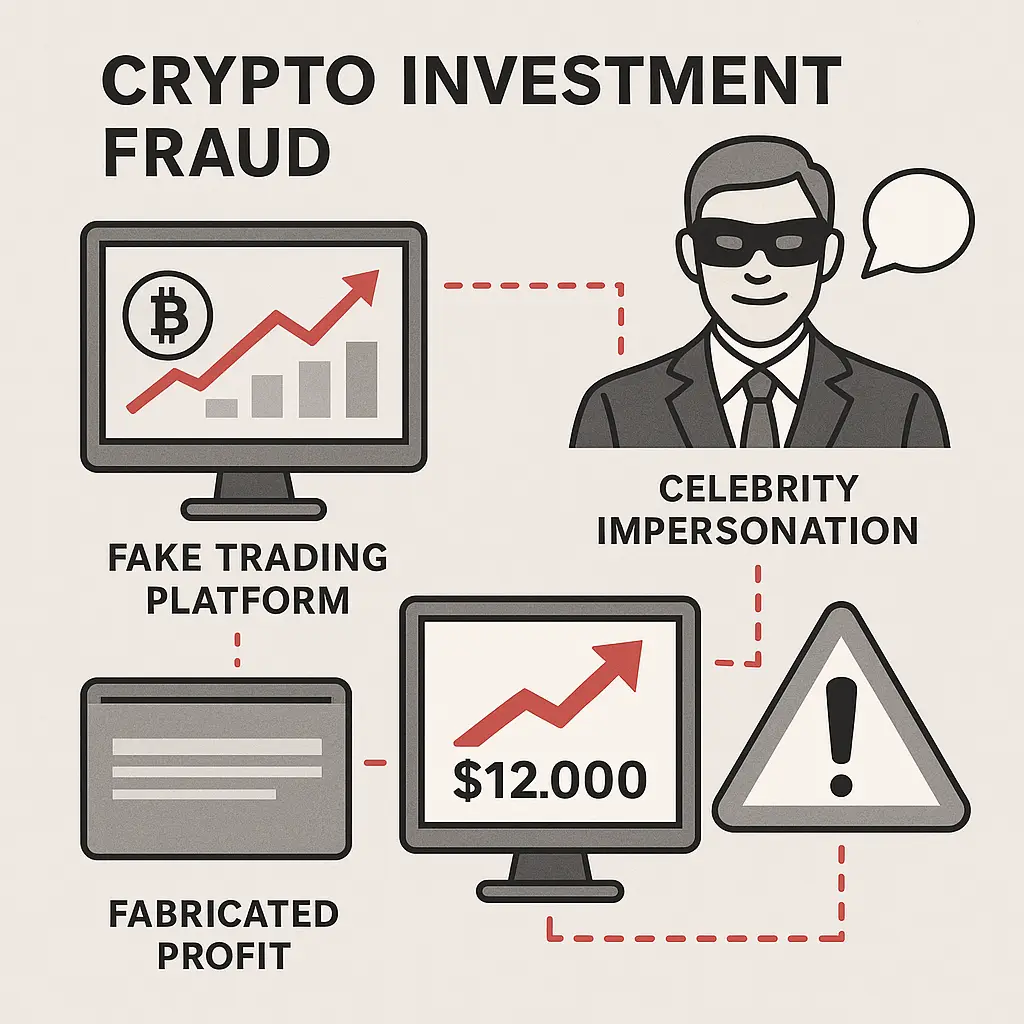
A crypto investment scam is fraud dressed up as opportunity. The scammer builds a fake trading platform, fabricates impressive returns, and disappears with your money the moment you try to withdraw. The mechanism is simple. The execution is not. These operations run for months, employ sophisticated social engineering, and leave victims with empty accounts and no recourse.
Here's how the playbook works, what makes these scams succeed, and how to recognize them before you lose money.
The basic mechanism: fake platforms and fabricated returns
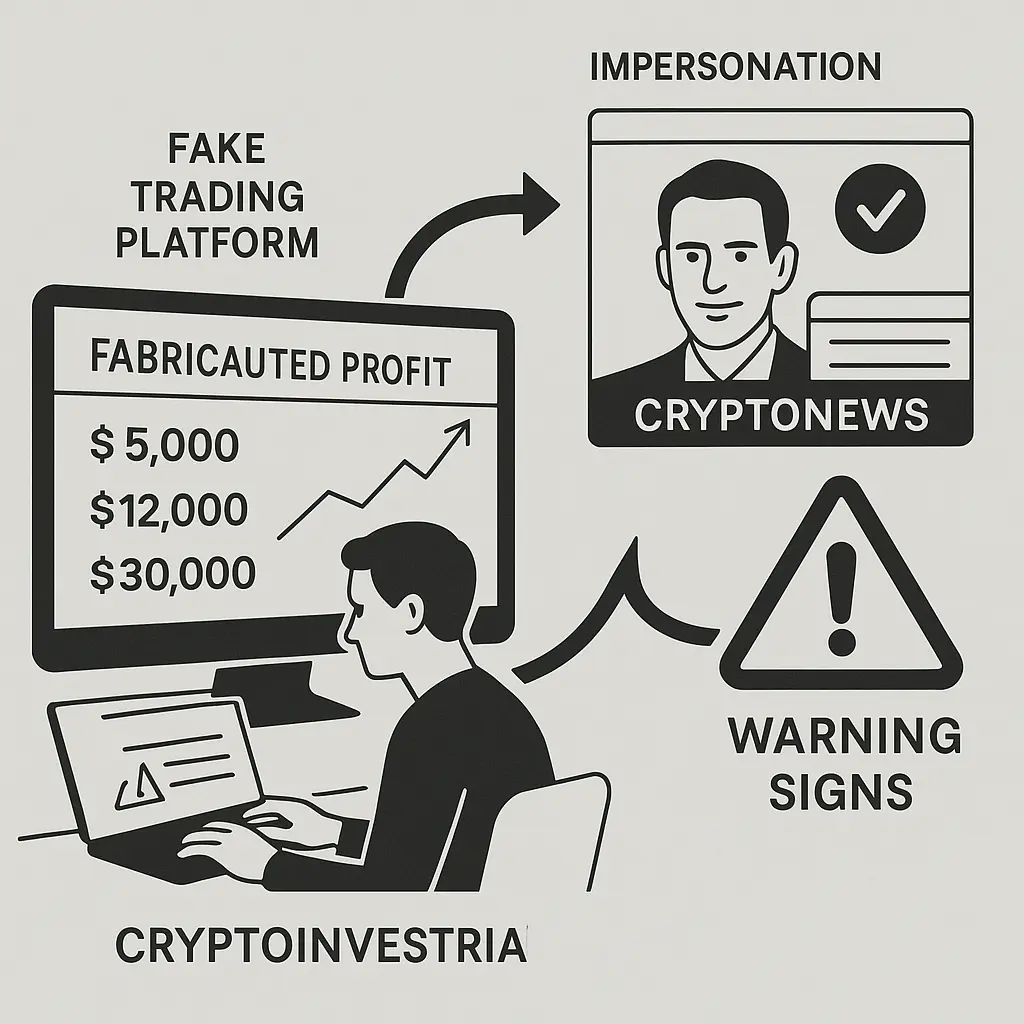
At the core of every crypto investment scam is a fake platform. The scammer controls the website, the trading interface, and every number you see. When you deposit real cryptocurrency or wire real money, it goes directly to the scammer. When the platform shows you profits, those numbers are fiction. The scammer fabricates gains to convince you the investment is working, then vanishes when you try to withdraw.
The platform itself looks legitimate. Professional design, real-time price charts pulled from actual exchanges, customer testimonials, regulatory badges, and terms of service documents. Some scammers clone existing platforms and change the branding. Others build entirely new sites with convincing backstories. The technical sophistication varies, but the underlying fraud is identical: your deposits go into the scammer's wallet, not into any actual investment.
The FTC notes that investment scams often start on social media, where scammers pose as successful traders or use fake celebrity endorsements to build credibility. The initial contact feels organic. A message from someone who seems knowledgeable. A post about their crypto gains. An invitation to join a private investment group. The scammer establishes trust before introducing the fake platform.
Once you're on the platform, the scam follows a predictable pattern. You make a small initial deposit to test the waters. The platform shows modest gains. You can even withdraw a small amount to verify the system works. This is the hook. The scammer processes small withdrawals to build confidence, knowing that victims who see real money come back will deposit much larger amounts. When the big money goes in, withdrawal suddenly becomes impossible.
The pig butchering variant: romance and trust
Pig butchering scams add a relationship component to the investment fraud. The scammer builds a romantic or friendly connection over weeks or months before ever mentioning cryptocurrency. They invest time in learning about you, creating emotional intimacy, and positioning themselves as someone who cares about your financial future. When they finally introduce the investment opportunity, it feels like advice from a trusted friend, not a sales pitch from a stranger.
The term comes from the farming metaphor: fatten the pig before slaughter. The scammer cultivates the relationship, builds trust, demonstrates their own success with crypto trading, and gradually introduces you to their platform. By the time money changes hands, the victim isn't just investing in cryptocurrency. They're investing in the relationship. That emotional component makes it harder to recognize the fraud and harder to walk away when warning signs appear.
I've read case studies where victims deposited six figures over several months, watching their account balances grow on screen while maintaining daily contact with the scammer. The fabricated profits felt real because the relationship felt real. When withdrawal attempts failed, victims often sent additional money to cover fake taxes or fees, unable to accept that the entire relationship was theater.
The IC3's 2024 report breaks out pig butchering as a distinct category, with losses exceeding $1.5 billion that year alone. The combination of romance fraud and investment fraud creates a psychological trap that traditional financial scams don't match.
Celebrity impersonation and fake endorsements
Scammers impersonate celebrities, business leaders, and crypto influencers to add credibility to fake platforms. They create deepfake videos of Elon Musk announcing a new crypto investment opportunity. They fabricate tweets from Mark Cuban endorsing a trading platform. They build entire websites claiming that Shark Tank investors are backing a revolutionary crypto fund. None of it is real, but the social proof is powerful.
These impersonation tactics work because they bypass skepticism. If you see a video of a trusted public figure explaining an investment, your brain processes that as legitimate information. The scammer doesn't need to convince you directly. They borrow credibility from someone you already trust. By the time you realize the endorsement is fake, you've already deposited money.
The FTC warns about impersonation scams across multiple contexts, noting that scammers increasingly use AI tools to create convincing fake videos and audio. In crypto investment fraud, this technology makes celebrity endorsements nearly indistinguishable from legitimate content. The fabricated video plays on YouTube, Facebook, or a professional-looking investment site, and victims have no easy way to verify authenticity in the moment.
Some scammers go further, creating fake news articles about celebrity crypto investments. They register domains that look like legitimate news outlets, publish fabricated interviews, and share those links on social media. The entire ecosystem is fake, but each piece reinforces the others. The video cites the news article. The news article links to the platform. The platform displays the video. Victims see multiple sources confirming the same story and conclude it must be legitimate.
The withdrawal trap: fees, taxes, and frozen accounts
The scam fully reveals itself when you try to withdraw money. The platform suddenly requires additional payments before releasing your funds. The scammer claims you owe taxes on your profits, or transaction fees, or account verification deposits, or insurance against fraud. These are all fake. The scammer is extracting as much money as possible before you realize the entire operation is fraudulent.
Some victims pay these fake fees multiple times, each payment followed by a new requirement. The scammer invents reasons why withdrawal still isn't possible. Your account needs upgrading to VIP status. The blockchain network requires a security deposit. Regulatory compliance demands additional documentation and a processing fee. The demands continue until the victim either runs out of money or finally recognizes the fraud.
Other platforms simply freeze accounts. Customer support stops responding. The website goes offline. The scammer disappears with everything. There's no fee to pay because there's no mechanism to pay it. The platform was always temporary infrastructure, designed to operate just long enough to collect deposits before vanishing.
In Ocean's Eleven, Danny Ocean spends months planning an elaborate casino heist, building trust with his crew, and executing a complex con. The crypto investment scammer runs the same playbook in reverse: they build trust with the victim, execute the con through a fake platform, and plan their exit before the victim realizes they've been robbed. The difference is that Ocean's crew targeted a casino vault. The crypto scammer targets individuals who can't recover their losses through insurance or legal action.
The FBI notes that cryptocurrency fraud is particularly difficult to reverse because transactions are irreversible and often cross international borders. Once you've sent crypto to a scammer's wallet, there's no bank to call, no credit card company to dispute the charge, and no regulatory agency with jurisdiction to freeze the funds.
Warning signs and verification steps
Crypto investment scams follow recognizable patterns. Guaranteed returns are the first red flag. Legitimate investments carry risk. Any platform or person promising specific profit percentages, especially high ones, is lying. Markets fluctuate. Investments lose value. Guarantees don't exist.
Pressure to invest quickly is the second warning. Scammers create artificial urgency through limited-time offers, claims that the opportunity is closing soon, or statements that you'll miss out if you don't act immediately. Legitimate investment platforms don't operate on deadlines. They want informed investors who understand the risks.
Celebrity endorsements without verification are the third flag. If a platform claims Elon Musk, Mark Cuban, or any other public figure is involved, verify that claim through the celebrity's official channels. Check their verified social media accounts. Search reputable news sources. Scammers fabricate endorsements because they work, but they rarely survive basic verification.
Difficulty withdrawing funds is the final confirmation. If a platform makes it easy to deposit but hard to withdraw, that's fraud. Legitimate platforms process withdrawals as readily as deposits. Any requirement for additional fees, taxes, or deposits before releasing your money is a scam. Walk away. The money you've already deposited is likely gone, but don't compound the loss by sending more.
To verify a crypto platform's legitimacy, start with regulatory databases. In the United States, check if the platform is registered with the SEC or CFTC. Search for the company name in state business registries to confirm it exists as a legal entity. Look for the platform's name combined with "scam" or "review" in search engines. Real platforms have reviews on multiple sites. Fake platforms have either no independent reviews or a sudden flood of negative reports from victims.
Check the domain registration date. If the platform claims to have been operating for years but the domain was registered six months ago, that's fraud. Use WHOIS lookup tools to see when the domain was created and who registered it. Scammers often use privacy services to hide ownership, but the registration date is usually visible.
Ask questions that legitimate platforms can answer easily. Where is the company legally registered? Who are the executives? What regulatory licenses does the platform hold? How are customer funds protected? Legitimate companies have clear answers. Scammers dodge, deflect, or provide vague responses that sound official but contain no verifiable information.
What to do if you've been scammed
If you've sent money to a crypto investment scam, act immediately. Contact your bank or credit card company if you funded the account through traditional payment methods. File a fraud report and request a chargeback. The success rate is low for crypto transactions, but some victims recover funds if they catch the fraud quickly enough.
Report the scam to the FBI's Internet Crime Complaint Center. File a report with the FTC. These reports feed into databases that law enforcement uses to track criminal operations. Your individual case may not result in prosecution, but the aggregate data helps authorities identify patterns and take down scam networks.
Document everything. Save screenshots of the platform, messages with the scammer, transaction records, and any communications about withdrawal attempts. This documentation is essential if law enforcement investigates or if you pursue legal action. The platform will likely disappear, so capture evidence while it's still accessible.
Do not send additional money. Scammers often follow up with recovery scams, claiming they can help you get your money back for an upfront fee. This is the same scammer or an associate running a second con. There is no legitimate service that recovers funds from crypto scams for a fee paid in advance. Any contact offering to help recover your losses is another scam.
Warn others. Share your experience on scam reporting sites, social media, and forums where people discuss crypto investments. Your story might prevent someone else from falling for the same fraud. The scammer is running this operation against multiple victims simultaneously. Public warnings reduce their success rate.
The psychology that makes these scams work
Crypto investment scams succeed because they exploit predictable human responses. Fear of missing out drives people to invest in opportunities that seem too good to pass up. Social proof makes fake testimonials and celebrity endorsements convincing. The complexity of cryptocurrency markets makes it hard for most people to distinguish legitimate platforms from fakes. And the desire for financial security makes promises of high returns emotionally appealing, even when logic suggests they're unrealistic.
Scammers understand these psychological vulnerabilities and design their operations accordingly. They don't target stupid people. They target normal people in moments of hope, curiosity, or financial stress. The victim who loses six figures to a pig butchering scam isn't naive. They're someone who wanted to believe that a new relationship and a promising investment were both real. The victim who falls for a celebrity-endorsed platform isn't gullible. They're someone who trusted a public figure's apparent recommendation without taking time to verify.
The shame that follows these scams prevents many victims from reporting them. That silence protects the scammer and increases the likelihood that others will fall for the same fraud. Breaking that silence matters. These scams work through volume. The more people who recognize the patterns and share warnings, the harder it becomes for scammers to find new victims.
The regulatory gap and enforcement challenges
Cryptocurrency operates in a regulatory gray zone that scammers exploit. Traditional investment fraud falls under clear jurisdiction. The SEC regulates securities. The CFTC regulates commodities. State agencies license investment advisors. But cryptocurrency platforms often claim to fall outside these categories, and enforcement agencies struggle to keep pace with the technology.
That gap creates opportunity for fraud. Scammers set up platforms that look like regulated exchanges but operate with no oversight. They target victims in one country while running operations from another, making prosecution difficult even when law enforcement identifies the perpetrators. And the irreversible nature of blockchain transactions means that even successful prosecutions rarely result in victims recovering their money.
Some experts say regulatory frameworks are evolving, with agencies like the SEC taking more aggressive action against crypto fraud. But the pace of enforcement lags behind the pace of scam innovation. By the time regulators shut down one operation, the scammers have launched three more under different names.
Prevention over recovery
The most effective defense against crypto investment scams is refusal to engage. Don't invest in platforms you can't verify. Don't trust celebrity endorsements without independent confirmation. Don't send money to anyone who contacted you first about an investment opportunity. And don't believe promises of guaranteed returns, regardless of how convincing the pitch sounds.
If you're genuinely interested in cryptocurrency investment, use established platforms with clear regulatory status, public leadership, and years of operational history. Coinbase, Kraken, and Gemini are examples of platforms that operate under regulatory oversight in the United States. They're not perfect, and crypto investment still carries significant risk, but they're not running the fake platform scam.
Research before investing. Understand what you're buying, how the platform makes money, and what protections exist if something goes wrong. Crypto investments are speculative. Prices fluctuate wildly. You can lose everything you put in through market forces alone, without any fraud involved. If you can't afford to lose the money, don't invest it in cryptocurrency.
The scammers are professionals. They've refined these operations through thousands of attempts. They know what works. They know how to build trust, fabricate legitimacy, and extract money before victims realize they've been conned. Your defense is skepticism, verification, and the willingness to walk away from opportunities that don't survive basic scrutiny. That's not exciting. It's not the story you want to tell about how you got rich through crypto. But it's the approach that keeps your money in your account instead of a scammer's wallet.