Credit Report Errors: Why They Happen and How to Dispute Them Successfully
Credit reports are supposed to be accurate records of your financial history. In practice, they're messy databases maintained by three separate companies, fed by thousands of data sources, and riddled with errors that can cost you thousands of dollars in higher interest rates or denied credit.
Around one in five credit reports contains an error significant enough to affect your credit score or loan approval, researchers have found. Some errors are minor: a misspelled name, an old address that won't go away. Others are serious: accounts you never opened, late payments you never made, debts that belong to someone else entirely.
The credit reporting system wasn't designed for accuracy. It was designed for scale. Here's why errors happen, how to find them, and the exact dispute process that actually works.
Why Credit Report Errors Happen
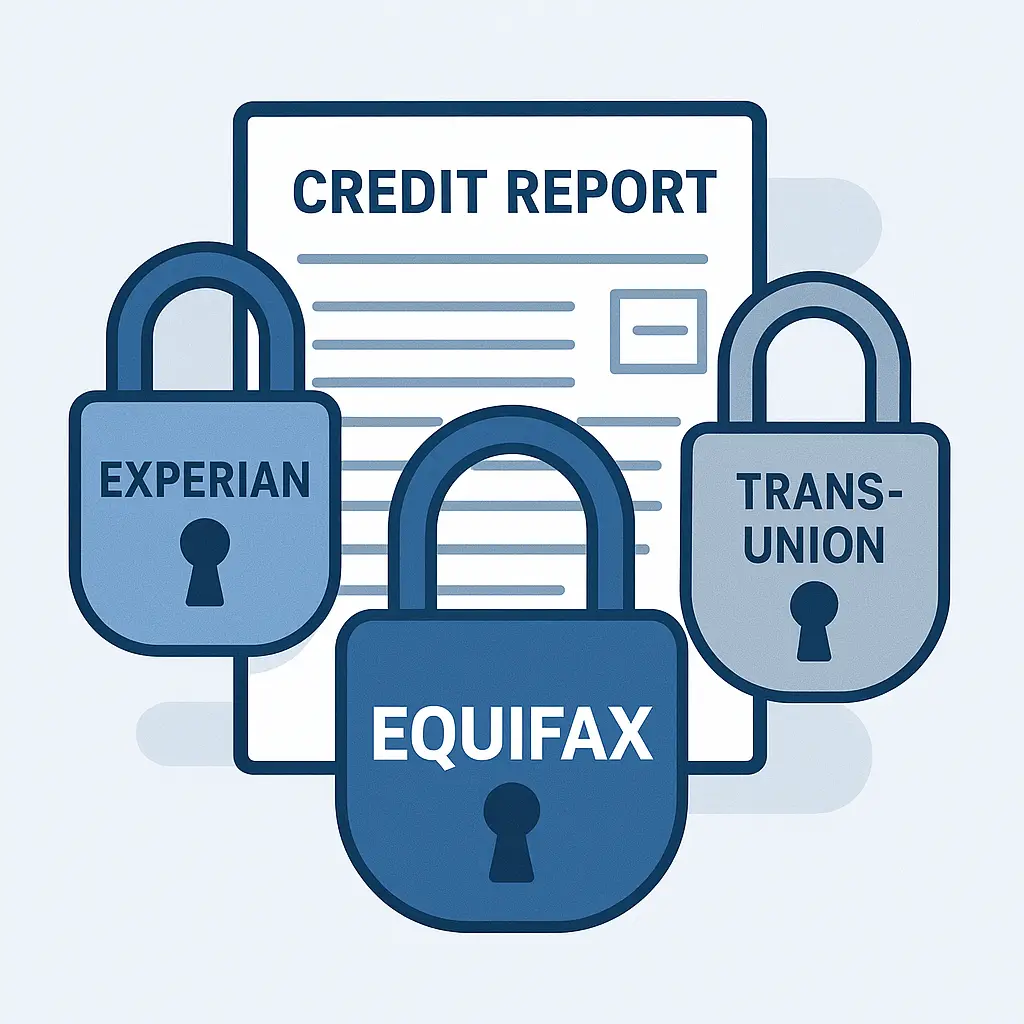
Credit bureaus, Equifax, Experian, and TransUnion, don't investigate your accounts. They collect data from creditors, compile it into reports, and sell those reports to lenders. The bureaus are middlemen, not auditors.
Creditors report your account activity monthly: payment history, balances, credit limits, account status. This data flows from thousands of banks, credit card companies, collection agencies, and other furnishers into the bureaus' databases. The bureaus match incoming data to consumer files using name, address, Social Security number, and date of birth.
Errors enter the system at multiple points. A creditor reports the wrong account number. A data entry clerk transposes two digits in your Social Security number. The bureau's matching algorithm links someone else's debt to your file because you share a name and live in the same city. A collection agency buys a portfolio of debts and reports accounts without verifying the information. An identity thief opens accounts in your name, and those accounts appear on your report as if you opened them.
The system has no built-in verification. Creditors report data; bureaus compile it. No one checks whether the account actually belongs to you until you dispute it.
Mixed files are common. If you have a common name, similar Social Security number, or share an address with someone who has bad credit, their information can end up on your report. In The Good Place, Eleanor Shellstrop's identity confusion was played for laughs, wrong person, wrong file, wrong afterlife. Credit bureaus create the same confusion, but the consequences are higher interest rates and denied mortgages, not frozen yogurt debates.
Outdated information lingers. Negative items are supposed to fall off your report after seven years (ten for bankruptcies). Sometimes they don't. Accounts you paid off years ago still show as open. Debts you settled appear as unpaid. The bureaus don't automatically clean up old data; they wait for you to notice and complain.
Identity theft creates errors that look legitimate. If someone opens a credit card in your name, the account appears on your report with your identifying information. The bureau has no way to know you didn't authorize it unless you tell them.
How to Get Your Credit Reports
You're entitled to one free credit report per year from each of the three bureaus through AnnualCreditReport.com, the only federally authorized source. Do not use other sites that claim to offer "free" reports but require payment or sign you up for monitoring services.
Request all three reports at once. Each bureau maintains a separate database, so an error on one report may not appear on the others. You need to check all three to find all the problems.
The reports arrive as PDFs or through the website interface. Download and save them. You'll need them for the dispute process.
Read through each report carefully. Look for:
- Accounts you don't recognize
- Incorrect personal information (name, address, Social Security number, date of birth)
- Accounts listed as open that you closed
- Incorrect payment history (late payments you made on time, or payments marked late when you were never late)
- Duplicate accounts (the same debt listed twice)
- Incorrect balances or credit limits
- Accounts that should have aged off (negative items older than seven years, bankruptcies older than ten)
- Inquiries you didn't authorize (hard inquiries from lenders you never applied to)
Some errors are obvious. Others require comparing the report to your own records: bank statements, payment confirmations, account closure letters. If something looks wrong, it probably is.
The Dispute Process: Step by Step
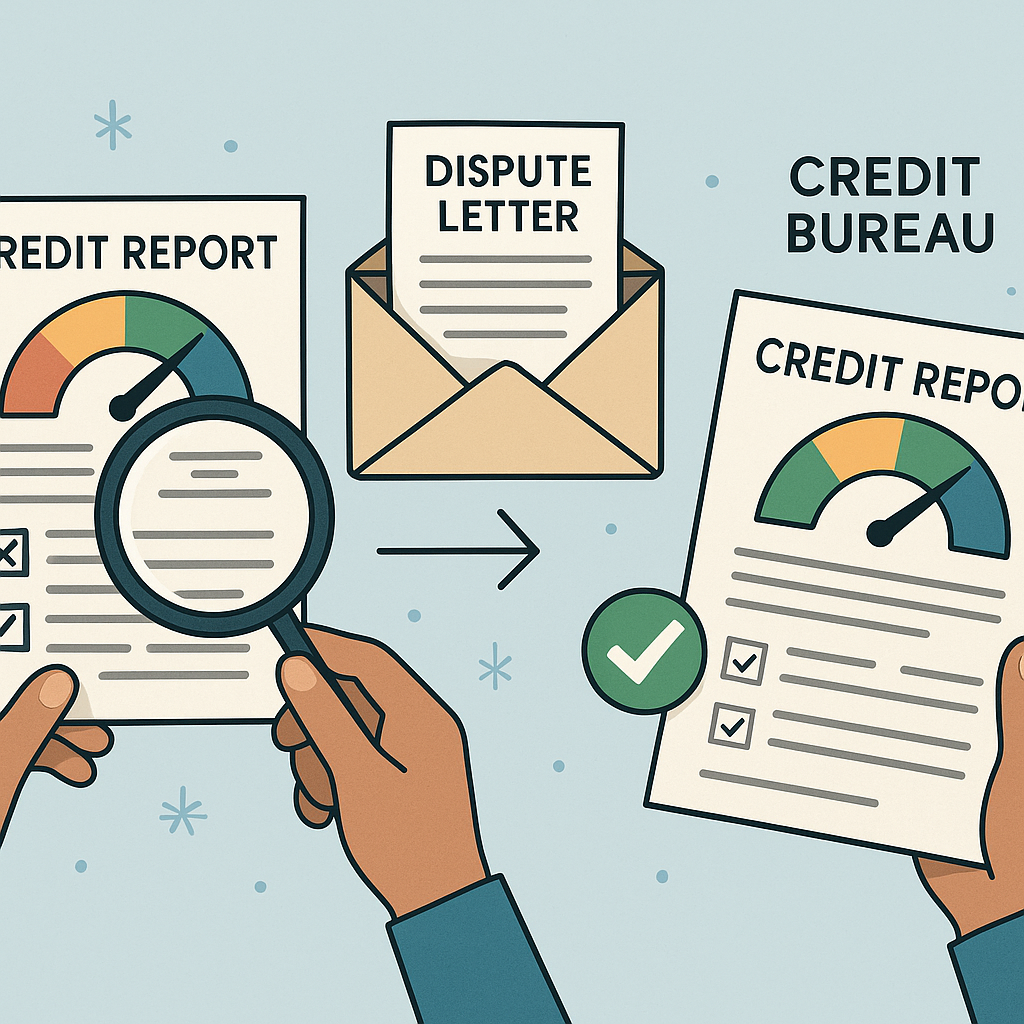
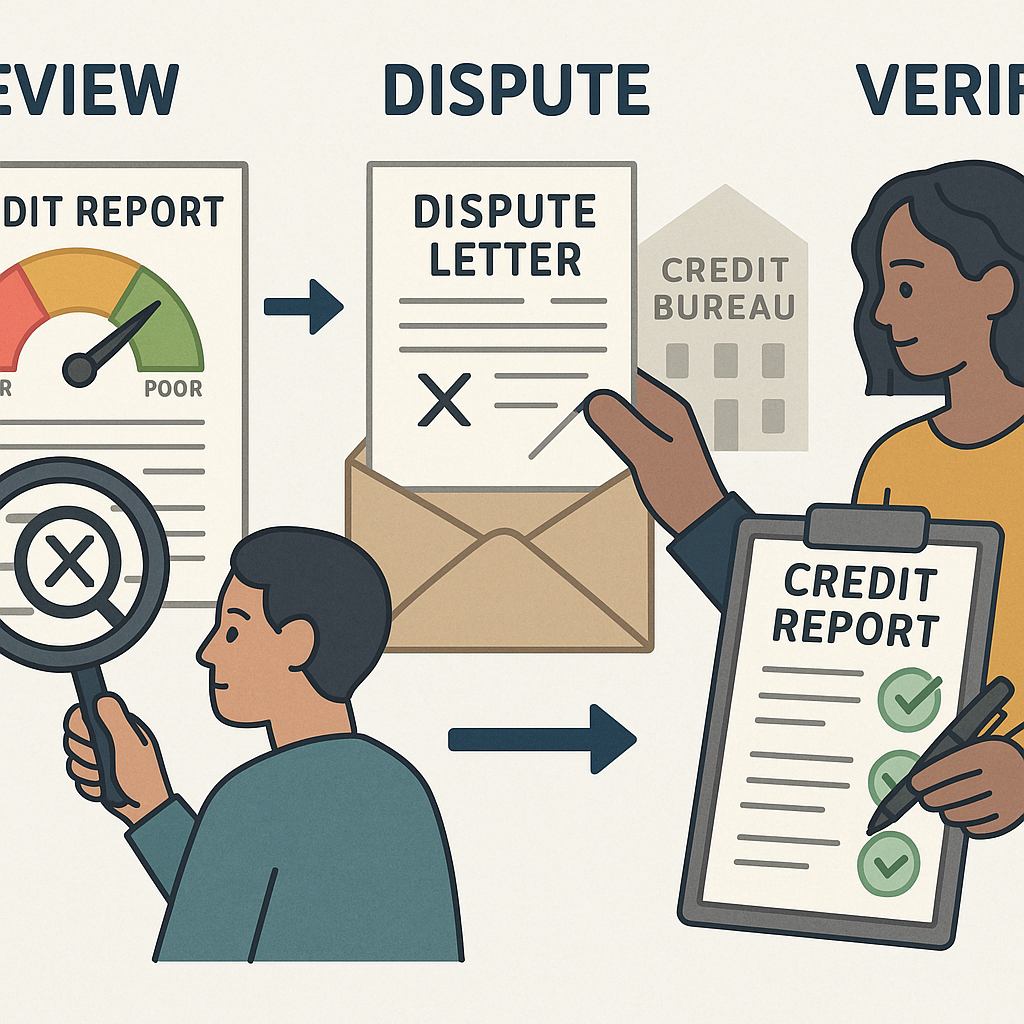
Disputing credit report errors is a formal process with specific steps. The credit bureaus are required by federal law to investigate disputes and correct errors. Here's how to make them do it.
Step 1: Gather Your Evidence
Before you contact the bureaus, collect documentation that proves the error. This might include:
- Bank statements showing on-time payments
- Letters from creditors confirming account closure or zero balance
- Identity theft reports if the account is fraudulent
- Court documents if the error involves a judgment or bankruptcy
- Correspondence showing you disputed the debt with the creditor
The more documentation you provide, the harder it is for the bureau to dismiss your dispute as frivolous.
Step 2: Write Your Dispute Letter
You can dispute online, by phone, or by mail. Mail is better. A written dispute creates a paper trail, and the bureau must respond in writing.
Your dispute letter should be short, specific, and factual. Include:
- Your full name, current address, Social Security number, and date of birth
- A clear statement of what's wrong ("Account #1234 on page 3 of my Equifax report is not mine" or "The payment history for Account #5678 incorrectly shows a late payment in March 2025; I paid on time")
- A request for correction or removal
- Copies (not originals) of supporting documents
- Your signature
Send the letter to the credit bureau's dispute address. Each bureau has a specific address for disputes:
- Equifax: P.O. Box 740256, Atlanta, GA 30374
- Experian: P.O. Box 4500, Allen, TX 75013
- TransUnion: P.O. Box 2000, Chester, PA 19016
Send your letter via certified mail with return receipt requested. This proves the bureau received it and starts the 30-day investigation clock.
Step 3: Dispute with Each Bureau Separately
If the error appears on reports from multiple bureaus, you must dispute with each one separately. Correcting the error at Equifax doesn't fix it at Experian or TransUnion. Each bureau maintains its own database and conducts its own investigation.
This means writing three separate letters, sending three separate packets of documentation, and tracking three separate disputes. It's tedious. It's also necessary.
Step 4: Wait for the Investigation
The credit bureau has 30 days to investigate your dispute after receiving it. During the investigation, the bureau contacts the creditor that furnished the information and asks them to verify it.
The creditor checks their records and responds to the bureau. If the creditor confirms the information is accurate, the bureau leaves it on your report. If the creditor can't verify the information, or if they confirm it's wrong, the bureau must correct or remove it.
If you submit additional documentation during the investigation, the bureau can extend the deadline to 45 days.
Step 5: Review the Results
The bureau will send you a letter explaining the results of the investigation. If they corrected or removed the error, the letter will include an updated copy of your credit report.
If they verified the information as accurate and left it on your report, the letter will explain why. Read it carefully. Sometimes the bureau's explanation reveals that the creditor provided additional information you didn't have, or that the error is smaller than you thought (for example, the account is yours, but the payment date is wrong).
Step 6: Escalate if Necessary
If the bureau doesn't fix the error, you have options:
Add a statement to your report. You can add a 100-word statement to your credit file explaining your side of the dispute. This statement appears on your report whenever someone pulls it. It doesn't fix the error, but it provides context.
Dispute with the creditor directly. If the creditor verified incorrect information to the bureau, dispute with them. Send a letter explaining the error and asking them to correct their records and notify the bureaus. Creditors are required to investigate disputes and correct errors under the Fair Credit Reporting Act.
File a complaint with the CFPB. The Consumer Financial Protection Bureau handles complaints about credit reporting. File a complaint online. The CFPB forwards your complaint to the bureau and requires a response. This often gets results when direct disputes don't.
Consider legal action. If the error is serious and the bureau refuses to fix it, you can sue under the Fair Credit Reporting Act. You don't need a lawyer for small claims court, and you can recover damages if you win. For larger cases, consumer protection attorneys often work on contingency (they get paid if you win).
Special Case: Disputing Fraudulent Accounts
If the error is a fraudulent account opened by an identity thief, the dispute process is slightly different.
First, file an identity theft report. Go to IdentityTheft.gov and complete the FTC's identity theft affidavit. This creates an official record of the theft.
Second, file a police report. Some police departments are reluctant to take reports for identity theft, but federal law requires them to do so. Bring your FTC affidavit, a copy of your credit report showing the fraudulent accounts, and any other documentation you have.
Third, send copies of both reports to the credit bureaus along with your dispute letter. Mark the letter "Identity Theft" and state clearly that the accounts are fraudulent and not yours.
The bureaus are required to block fraudulent accounts from your report within four business days of receiving your identity theft report. This is faster than the standard 30-day investigation period.
Fourth, contact the creditor directly. Send them a copy of your identity theft report and ask them to close the fraudulent account and stop reporting it to the bureaus. Creditors are required to stop collection activity on accounts you've identified as fraudulent.
What Happens After the Dispute
If the bureau corrects the error, the correction appears on your credit report immediately. Your credit score may improve, depending on what was corrected. Removing a fraudulent account or correcting a late payment that was actually on time can add points to your score.
If you're applying for credit soon, ask the bureau to send updated reports to any lender who pulled your report in the last six months (or two years for employment-related pulls). This ensures lenders see the corrected information.
If the error was serious, a fraudulent account, a wrongly reported late payment that cost you a loan approval, consider requesting a rapid rescore from your lender. This is a paid service (usually $25-$50 per bureau) that updates your credit report and score within a few days instead of waiting for the next monthly update.
Monitor your reports going forward. Errors can reappear if the creditor continues reporting incorrect information. Check your reports every few months to make sure corrections stick.
Credit Monitoring vs. Manual Checks
Credit monitoring services alert you to changes on your credit report: new accounts, inquiries, changes to existing accounts. Some are free (Credit Karma, the monitoring that comes with your bank account). Others charge monthly fees.
Monitoring is useful for catching identity theft quickly, but it doesn't prevent errors. You still need to review your full credit reports annually and dispute errors when you find them.
Free monitoring services make money by recommending credit products. They're not neutral. They'll suggest credit cards and loans based on your credit profile, and they earn commissions if you apply. Use them for alerts, not advice.
Paid monitoring services often include identity theft insurance and recovery assistance. NordProtect offers credit monitoring, dark web scanning, and support if you need to dispute errors or recover from identity theft. Whether the monthly fee is worth it depends on how much time you want to spend monitoring your own reports and whether you value the insurance coverage.
The free annual reports from AnnualCreditReport.com are sufficient for most people. Set a calendar reminder, pull all three reports once a year, review them carefully, and dispute anything that's wrong. If you're applying for a mortgage or other major loan, pull your reports a few months before you apply so you have time to fix errors before they matter.
Why This Matters
Credit reports determine whether you get approved for loans, what interest rate you pay, and sometimes whether you get hired or approved for an apartment. A single error can cost you thousands of dollars in higher interest over the life of a mortgage, or it can get your application rejected entirely.
The system isn't designed to protect you. It's designed to move data quickly and cheaply. The credit bureaus make money by selling reports, not by ensuring accuracy. Creditors make money by lending, not by carefully verifying what they report. No one in the system has a financial incentive to get your report right except you.
Disputing errors is tedious, bureaucratic, and slow. It requires paperwork, documentation, and follow-up. But it's the only way to fix the errors, and the errors won't fix themselves.
Pull your reports. Read them carefully. Dispute anything that's wrong. Follow up until it's fixed. This is one of the few areas where persistence actually works.