AI-Generated Phishing: How the Industry Detects and Defends Against Machine-Written Attacks
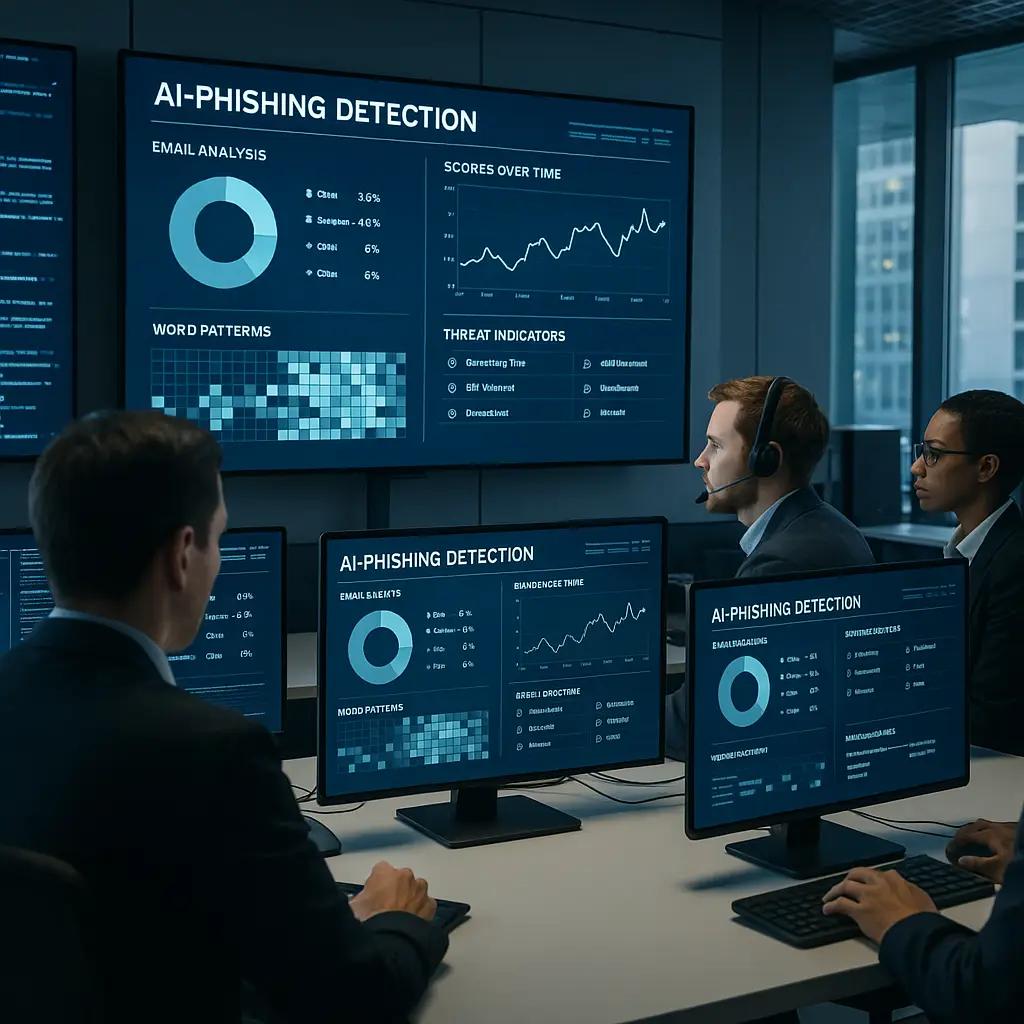
AI-generated phishing is not a theoretical threat. It's running production campaigns right now. The industry adapted detection methods, retrained security teams, and rebuilt parts of the email security stack. Here's what changed from the vendor and enterprise security perspective.
The Detection Problem AI Created
Traditional phishing filters relied on linguistic tells. Misspellings, awkward phrasing, grammatical errors, these were reliable signals that separated legitimate email from fraud. Language models eliminated those signals overnight.
A CISA advisory on phishing guidance published before widespread AI tool adoption emphasized grammar and spelling checks as primary detection methods. That guidance aged poorly. By mid-2025, security vendors reported that grammar-based detection rules produced false negatives at rates that made them unreliable for automated filtering.
The problem isn't that AI writes perfect English. The problem is that AI writes consistently mediocre English that matches the baseline quality of legitimate corporate communication. An AI-generated password reset email from "IT Support" reads exactly like the real thing because it was trained on thousands of real password reset emails.
Security researchers noticed the shift in late 2024. Phishing campaigns that previously contained detectable patterns, repeated phrases across messages, template artifacts, translation errors, started showing statistical uniformity without the usual tells. Each email in a campaign was unique. Grammar was clean. Tone matched the impersonated organization.
Detection systems built on pattern matching struggled. If every email is different but plausibly legitimate, traditional clustering algorithms fail to identify the campaign.
How Vendors Adapted Detection Systems
Email security vendors responded by layering new detection methods on top of existing infrastructure. The core components:
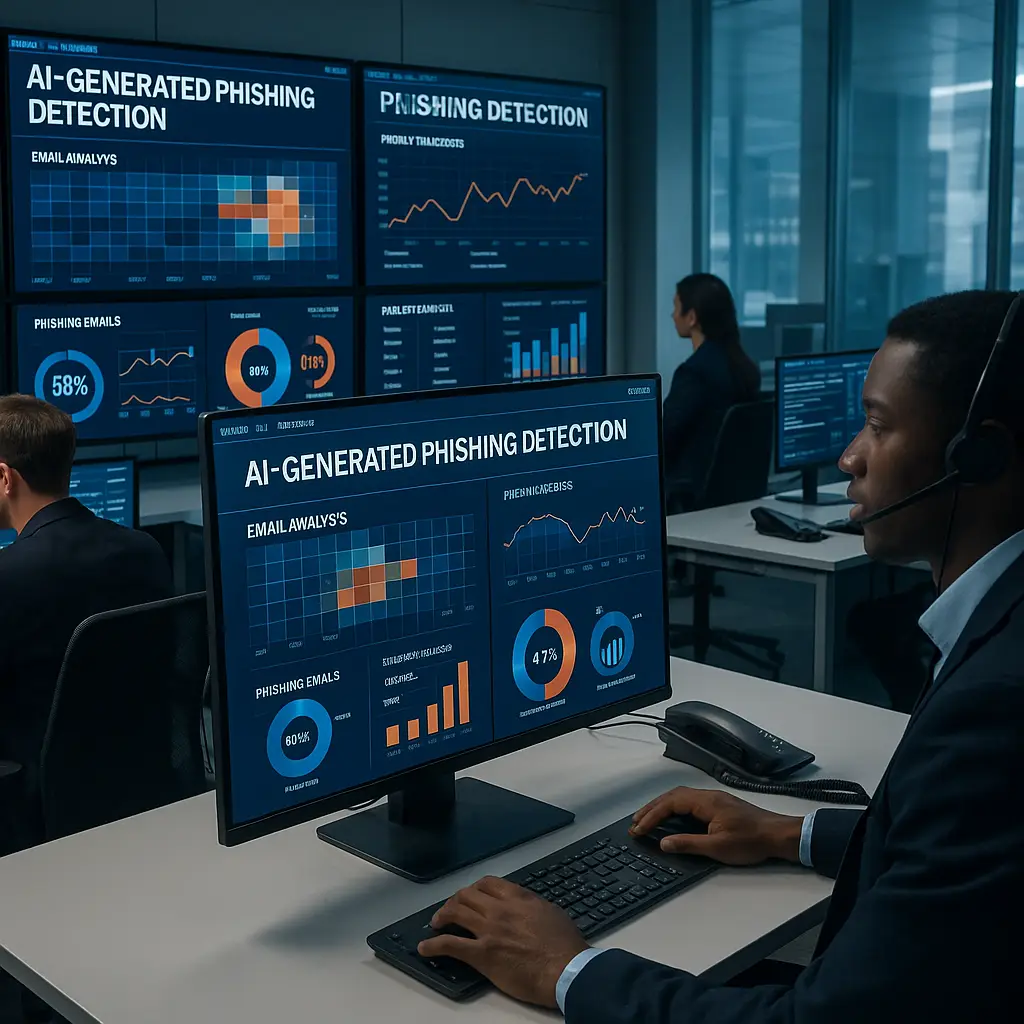
Behavioral analysis. Instead of analyzing individual emails in isolation, systems now track sender behavior over time. An account that suddenly sends 5,000 emails in an hour, each with minor variations in content, triggers alerts regardless of email quality. Volume and velocity became more important than content.
Metadata anomalies. AI-generated campaigns often show timing patterns that differ from human behavior. Messages sent at precise intervals, identical sending infrastructure across supposedly unrelated campaigns, and header inconsistencies that suggest automation. MITRE ATT&CK framework techniques document how attackers stage phishing infrastructure, and detection systems now cross-reference these patterns against known threat actor behavior.
Linguistic fingerprinting. Language models produce text with statistical properties that differ from human writing. Sentence length distribution, vocabulary diversity, and syntactic complexity follow patterns specific to the model family. Security vendors trained classifiers on known AI-generated text to identify these fingerprints. The method isn't perfect, models improve, fingerprints change, but it adds a detection layer that didn't exist before.
Link and attachment behavior. AI improves email body text, but the malicious payload still follows predictable patterns. Links to newly registered domains, redirects through URL shorteners, and file attachments with suspicious macros remain detectable. The industry focused detection resources on these elements rather than relying on body text analysis.
One major email security vendor told me their detection accuracy for AI-generated phishing sits around 73% using combined methods. That's lower than the 85-90% accuracy they achieved against traditional phishing, but higher than the 40% they saw when AI campaigns first appeared. The gap closed through model retraining and infrastructure updates, not because AI phishing got easier to spot.
What Security Operations Centers Changed
Enterprise security teams retrained analysts and updated playbooks. The changes:
Verification protocols became mandatory. If an email requests action, password reset, payment authorization, credential verification, the recipient must verify through a separate channel. Phone calls to known numbers, direct messages through authenticated platforms, or in-person confirmation for high-value requests. This policy existed before AI phishing, but enforcement tightened.
Grammar stopped being a reliable signal. Training programs that taught employees to spot typos and awkward phrasing were updated. The new focus: sender verification, link inspection, and request validation. Some organizations removed grammar-based detection from automated filters entirely after false negative rates climbed above acceptable thresholds.
Incident response timelines compressed. AI enables attackers to iterate faster. A campaign detected and blocked at 9 AM can be retooled and relaunched by 10 AM with different messaging, new infrastructure, and modified tactics. Security teams shortened response windows and automated more of the containment process.
User reporting systems improved. Employees remain the last line of defense. Organizations invested in easier reporting mechanisms, browser extensions, email client plugins, dedicated Slack channels, to reduce friction between "this looks suspicious" and "security team investigates." Response times dropped from hours to minutes at organizations that prioritized this workflow.
One Fortune 500 CISO I spoke with said their security operations center now treats all phishing as potentially AI-generated. The assumption changed from "most phishing is low-quality and easy to spot" to "assume competent execution and verify everything." That shift required budget, training, and cultural change, but it reflected the new baseline.
The Scale Problem
AI phishing doesn't just improve quality. It increases volume. Attackers who previously sent 10,000 emails per campaign now send 100,000. Each email can be customized for the recipient without additional human effort.
The math matters. If traditional phishing had a 0.5% click-through rate and AI phishing has a 0.7% click-through rate, the improvement seems modest. But if AI enables 10x campaign volume, the total number of successful compromises increases significantly.
Security vendors responded by scaling detection infrastructure. Cloud-based email security services added processing capacity, expanded threat intelligence feeds, and automated more of the triage process. The industry moved from "analyze every email in detail" to "filter aggressively, then analyze survivors."
This created a new problem: false positives. Aggressive filtering blocks legitimate email. Business communication suffers. Organizations balance security against usability, and that balance shifted toward security as AI phishing volume increased.
Threat Intelligence Sharing
The industry formalized threat intelligence sharing around AI phishing campaigns. When one organization detects a new attack pattern, that information propagates to other defenders within hours instead of days.
CISA's cybersecurity advisories publish indicators of compromise and tactical details for significant campaigns. Private sector information sharing and analysis centers (ISACs) operate similar programs. The goal: reduce the window where a new AI-generated campaign operates undetected.
Shared intelligence includes email headers, sending infrastructure details, linguistic patterns, and payload characteristics. Security vendors incorporate this data into detection models. The feedback loop compresses the time between "new attack launched" and "defenses updated."
One limitation: attackers adapt faster than defenders share intelligence. By the time a campaign is documented and distributed, the operators have moved to new infrastructure and modified their approach. Threat intelligence helps, but it's not a complete solution.
The Office Space Problem
In Office Space, Peter Gibbons explains his plan to skim fractions of a cent from financial transactions: "It's not even a crime. We're just rounding down." The scheme works until the scale overwhelms the system.
AI phishing follows similar logic. Each individual email isn't dramatically more dangerous than traditional phishing. The grammar is better, the personalization tighter, but the fundamental attack, trick someone into clicking a link or entering credentials, remains unchanged.
The difference is scale. Attackers round down the effort required per email to nearly zero. They can generate thousands of unique, contextually appropriate messages with minimal human involvement. The cumulative effect overwhelms defenses built for lower-volume attacks.
Security teams responded by automating more of their own workflow. Detection, triage, containment, and response all moved toward machine-speed operation. The human analyst role shifted from reviewing every alert to managing automated systems and investigating edge cases.
This isn't a temporary adjustment. The industry expects AI-generated phishing to remain the baseline. Detection systems, training programs, and security budgets reflect that assumption.
What Didn't Change
Some fundamentals remained constant:
Phishing still requires user interaction. AI can't force someone to click a link or enter credentials. Social engineering tactics, urgency, authority, fear, still drive successful attacks. The delivery mechanism improved, but the psychological manipulation stayed the same.
Email authentication protocols still work. SPF, DKIM, and DMARC verify sender identity. AI can't bypass cryptographic signatures. Organizations that implemented these protocols before AI phishing arrived maintained protection against spoofed sender addresses.
User awareness still matters. Employees who verify requests through separate channels, inspect links before clicking, and report suspicious messages remain effective defenses. AI doesn't change the value of a skeptical recipient.
Incident response fundamentals apply. Contain the breach, assess the damage, restore systems, and improve defenses. The playbook didn't change. Execution speed increased, but the steps remained the same.
Security professionals I spoke with emphasized this point repeatedly: AI phishing is an evolution, not a revolution. The industry adapted existing defenses rather than inventing entirely new approaches.
The Current State
As of late 2026, AI-generated phishing represents a significant but manageable threat. Detection systems catch most campaigns. Security teams know how to respond. Training programs emphasize verification over grammar checks.
The industry settled into a new equilibrium. Attackers use AI to scale and improve campaigns. Defenders use AI to detect and respond faster. The cat-and-mouse dynamic continues at higher speed and larger scale.
Organizations that invested in email security infrastructure, trained their teams, and implemented verification protocols adapted successfully. Organizations that relied on outdated detection methods or underfunded security programs struggled.
The gap between well-defended and poorly-defended organizations widened. AI phishing doesn't affect everyone equally. It exploits weakness wherever it exists, and it operates at a scale that makes previously tolerable vulnerabilities unacceptable.
What You Can Control
From an individual perspective:
Verify before you act. If an email requests a password reset, payment, or credential verification, confirm the request through a separate channel. Call the sender using a known phone number. Send a direct message through an authenticated platform. Don't reply to the email.
Inspect links before clicking. Hover over links to see the actual URL. Check for suspicious domains, misspellings, or unexpected redirects. If the link looks wrong, don't click.
Report suspicious emails. Your organization's security team can't defend against threats they don't see. Use the reporting mechanism your employer provides. If none exists, forward suspicious emails to IT or security staff.
Enable multi-factor authentication. If credentials get compromised through phishing, MFA provides a second layer of defense. Use authenticator apps or hardware tokens rather than SMS when possible.
Stay current on security training. If your organization offers phishing awareness training, take it seriously. The tactics evolve. What worked last year might not work now.
The industry adapted to AI-generated phishing. Individual vigilance remains part of the defense. The combination works better than either approach alone.