Age Verification Laws Online: What They Actually Do and What They Don't
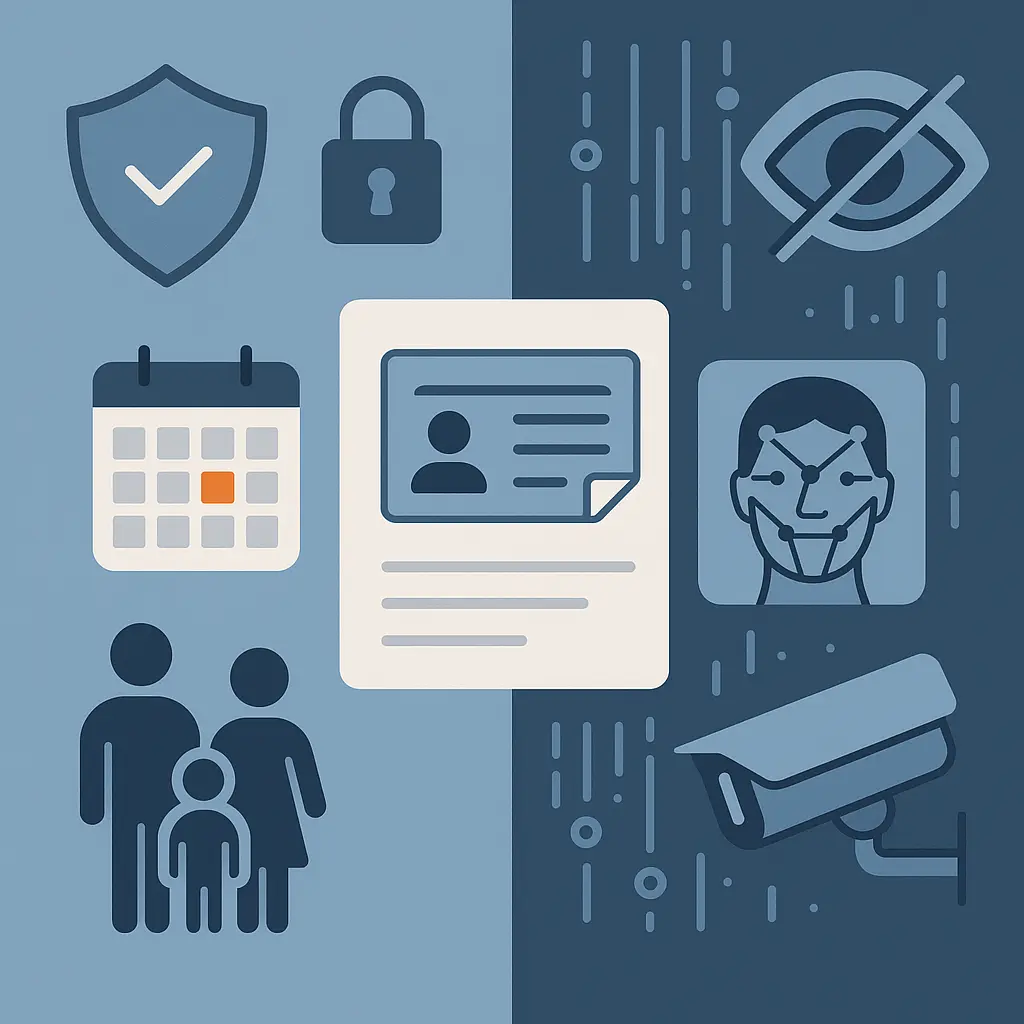
Age verification laws are spreading across the United States. As of mid-2026, more than a dozen states have passed legislation requiring websites to verify that users are over 18 before accessing certain content. The stated goal is child protection. The mechanism is identity verification. The tradeoff is privacy.
Here's how these systems actually work, what data they collect, what happens when they fail, and what you can control.
The Legal Landscape in 2026
State legislatures started passing age verification laws in 2023, targeting pornography websites first. Louisiana led. Texas, Arkansas, Utah, Mississippi, and Virginia followed. By 2026, the patchwork has expanded to include Montana, North Carolina, Kansas, Indiana, Idaho, Nebraska, and Oklahoma.
The laws share common elements but differ on critical details. Most require websites with adult content to verify that users are 18 or older before granting access. Verification methods vary. Penalties for noncompliance range from civil fines to criminal charges. Enforcement mechanisms differ by state.
Some laws define "adult content" narrowly, covering only pornography. Others cast a wider net, including social media platforms, gaming sites, or any service with user-generated content that might expose minors to harmful material. The definitions matter because they determine which platforms must comply.
CISA's cybersecurity best practices don't specifically address age verification, but the agency's guidance on identity verification and data protection applies to any system that collects sensitive personal information.
How Age Verification Actually Works
Age verification systems fall into three broad categories, each with different technical mechanisms and privacy implications.
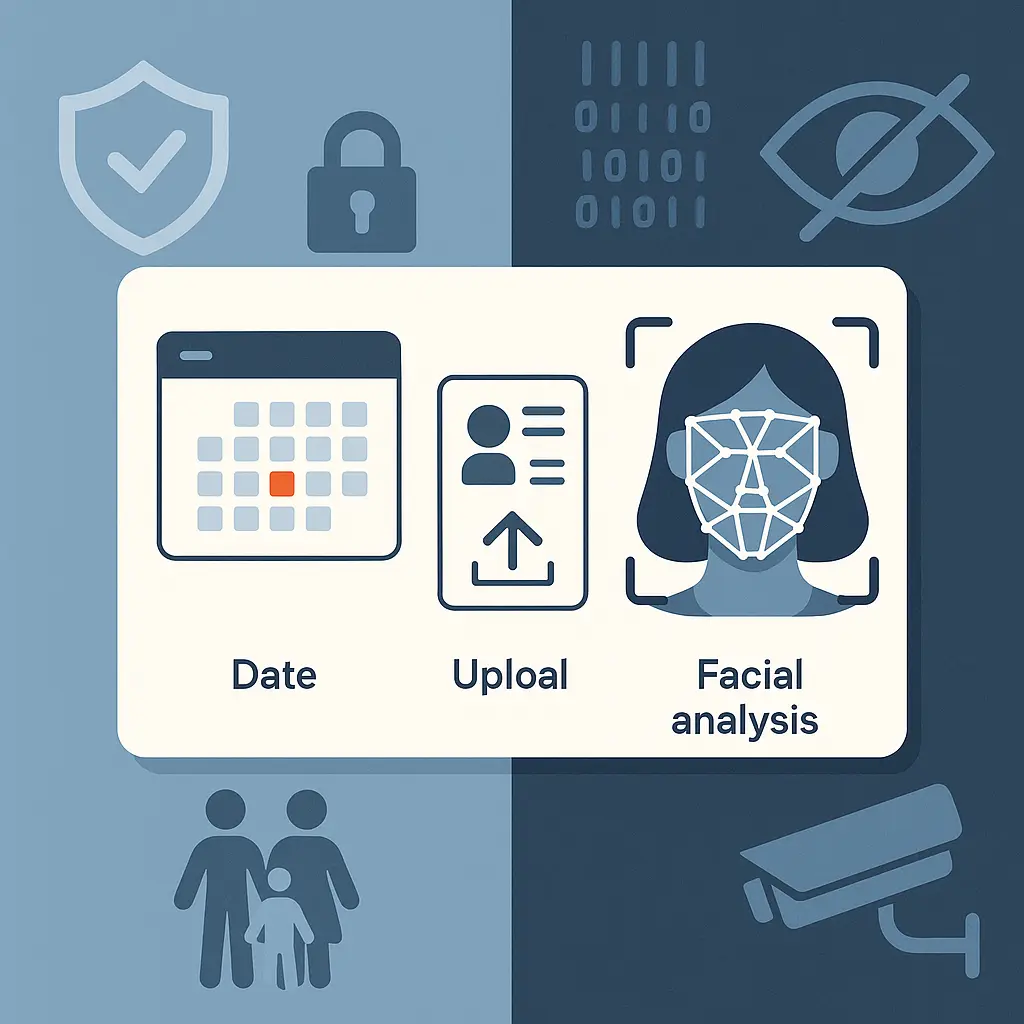
Method 1: Government ID scanning. The user uploads a photo of their driver's license, passport, or state ID. The system uses optical character recognition to extract the birthdate, then confirms the user is over 18. Some implementations also verify that the ID is legitimate by checking security features, holograms, or database lookups.
What gets collected: full name, birthdate, address, ID number, and in some cases a photo of the document itself. What happens to that data afterward depends on the provider. Some claim to delete it immediately after verification. Others store it for compliance auditing or fraud prevention.
Method 2: Facial age estimation. The user takes a selfie. The system analyzes facial features using machine learning models trained on age-labeled datasets. The model estimates age based on skin texture, bone structure, and other biometric markers. If the estimate exceeds 18, access is granted.
What gets collected: a photo of your face, processed through an algorithm that generates an age estimate. Some providers claim the photo is deleted immediately. Others retain it for model improvement or fraud detection. The accuracy of these systems varies. Research suggests they perform worse on darker skin tones and certain age ranges.
Method 3: Third-party verification services. The user is redirected to a service that checks identity through credit card verification, mobile carrier data, or existing identity databases. If the service confirms the user is over 18, it sends a token back to the original site granting access.
What gets collected depends on the verification method. Credit card checks reveal payment data. Carrier lookups expose mobile account details. Database checks might pull from data brokers, public records, or commercial identity verification providers.
Each method creates different privacy exposures. ID scanning collects the most sensitive data but offers the highest verification confidence. Facial estimation collects biometric data, which carries its own risks. Third-party services distribute your identity verification across multiple companies, each with its own data handling practices.
What Happens to Your Data
The laws require verification, but they don't always specify what happens to the data collected during that process. Some states mandate immediate deletion. Others allow retention for fraud prevention or compliance auditing. Most leave the details to the platforms and verification providers.
In practice, data handling varies widely. Some verification services claim to use zero-knowledge proofs, confirming age without storing identity data. Others store full ID scans for weeks or months. A few have been caught retaining data indefinitely despite privacy claims.
NIST's cybersecurity framework provides guidelines for protecting sensitive data, but compliance is voluntary for private companies unless state law mandates it. The result is inconsistency. One platform might delete your ID scan immediately. Another might store it on servers in a jurisdiction with weak data protection laws.
Breach risk is real. Any system that collects and stores identity documents creates a target. In 2024, a facial age estimation provider suffered a data breach exposing biometric data on millions of users. The company had claimed it deleted photos after verification. Post-breach analysis revealed retention for model training purposes.
What you can control is limited. If a platform requires verification and you want access, you must submit the data. You can choose platforms that use less invasive methods, but that assumes you have alternatives. You can read privacy policies to understand retention practices, but enforcement and auditing remain weak.
The Effectiveness Question
Do these laws actually prevent minors from accessing adult content? The answer depends on what you mean by "prevent."
Age verification creates a barrier. A 13-year-old casually browsing won't get past an ID upload screen. But a motivated teenager has options. VPNs route traffic through jurisdictions without verification laws. Borrowed or fake IDs defeat document scanning if the verification system doesn't check thoroughly. Alternative platforms that don't comply with state laws remain accessible.
Some platforms responded to state laws by geoblocking users in affected states entirely. Pornhub, for example, blocked access in Texas, Utah, and several other states rather than implement age verification. The company argued that the laws violated user privacy and were ineffective at protecting children. Users in those states can still access the content through VPNs or alternative sites.
The laws also create enforcement challenges. State attorneys general can pursue platforms that operate within their jurisdiction, but many adult content sites operate internationally. Cross-border enforcement is difficult. Platforms can simply block users from states with strict laws and continue operating elsewhere.
Research on effectiveness remains limited. Some experts argue that age verification reduces casual access, which may be enough to protect younger children. Others point out that older teens, the group most likely to seek out adult content, are also the most capable of bypassing verification systems.
The Privacy Tradeoff
Age verification laws force a choice between child protection and privacy. Supporters argue that protecting children from harmful content justifies the data collection. Critics argue that requiring adults to prove their age before accessing legal content creates a surveillance infrastructure with implications far beyond pornography.
The concern isn't hypothetical. Government ID scans create databases of who accesses what content. Even if individual platforms delete data immediately, the verification providers themselves accumulate records. Those records could be subpoenaed, hacked, or sold.
Facial age estimation raises different concerns. Biometric data is uniquely identifying and permanent. You can change your password. You can't change your face. Systems that collect facial data for age verification could repurpose it for other identification or tracking purposes.
Third-party verification services distribute your identity across multiple companies, each with its own security practices and business incentives. You might trust the platform you're trying to access, but the verification provider operates independently, often with minimal transparency.
EFF has raised concerns about age verification laws creating privacy risks that outweigh their protective benefits. The organization argues that requiring identity verification for legal content access chills free speech and creates opportunities for government surveillance.
The tradeoff becomes sharper when you consider scope creep. Laws that start with pornography sites can expand to social media, news sites, or any platform with user-generated content. Once the verification infrastructure exists, applying it more broadly becomes easier.
What Parents Can Actually Control
If you're a parent trying to protect your kids online, age verification laws are one tool, but not the only one and not necessarily the most effective.
Device-level controls remain more reliable than platform-level verification. Screen time limits, content filters, and app restrictions work regardless of what state you live in or which platforms comply with age verification laws. They're not perfect, but they don't require uploading your ID to a third party.
Conversation matters more than technology. Kids who understand why certain content is age-restricted and what the risks are make better decisions than kids who just see barriers to bypass. That's not an argument against age verification. It's a reminder that technical controls work best when combined with trust and communication.
Monitoring creates its own tradeoffs. Some parents use software that logs every site visited, every message sent, every app opened. That level of surveillance can damage trust and doesn't scale as kids get older. Finding the balance between protection and privacy within your own family is harder than outsourcing it to a verification system.
Age verification laws don't replace parental involvement. They create a baseline barrier, but motivated kids will find ways around it. The question is whether the privacy cost of that barrier is worth the protection it provides.
The Technical Limitations
Age verification systems fail in predictable ways. ID scanning can't distinguish a real document from a high-quality fake. Facial estimation makes errors, especially on edge cases near the age threshold. Third-party verification relies on data that may be outdated or incorrect.
False positives happen. Adults get blocked because their facial features read as younger than 18. False negatives happen. Teens get through because they look older or use someone else's ID. The error rates vary by system, but no method achieves perfect accuracy.
Accessibility creates another challenge. Not everyone has a government-issued ID. Not everyone has a smartphone with a camera for facial verification. Not everyone has a credit card for third-party checks. The systems assume a level of documentation and technology access that doesn't apply universally.
OWASP's web security testing guide includes sections on identity verification, but the focus is on preventing fraud, not on balancing child protection with privacy. The technical security of age verification systems is one concern. The broader implications of requiring identity verification for content access is another.
What Happens Next
Age verification laws are evolving. Some states are expanding scope to include social media and gaming platforms. Others are tightening data retention rules or specifying acceptable verification methods. Federal legislation has been proposed but not passed as of mid-2026.
The legal challenges continue. Civil liberties groups have filed lawsuits arguing that age verification laws violate First Amendment protections by creating barriers to accessing legal content. Some courts have issued preliminary injunctions. Others have allowed the laws to proceed while litigation continues.
Platform responses vary. Some companies comply by implementing verification. Others geoblock users in affected states. A few have shut down entirely rather than navigate the patchwork of state laws.
The technical infrastructure is maturing. Verification providers are developing methods that claim to preserve privacy while confirming age. Zero-knowledge proofs, decentralized identity systems, and cryptographic attestation are all being explored. Whether they deliver on their promises remains to be seen.
In The Two Towers, Treebeard warns that hasty decisions lead to regret. The Ents take time to deliberate because once a forest is burned, it doesn't grow back overnight. Age verification laws are being passed quickly, state by state, without full consideration of the privacy infrastructure they're building. Once that infrastructure exists, expanding it becomes trivial. The question isn't just whether we should verify age to protect children. It's whether we're comfortable with the verification systems we're creating and what else they might be used for later.
What You Can Do
If you live in a state with age verification laws, your options are limited but not nonexistent.
Understand what data you're submitting. Before uploading an ID or taking a verification selfie, read the privacy policy. Look for specifics on data retention, deletion timelines, and third-party sharing. If the policy is vague, assume the worst.
Choose less invasive methods when available. If a platform offers multiple verification options, pick the one that collects the least sensitive data. Credit card verification is less invasive than ID scanning. Facial estimation is less invasive than document upload, assuming the provider actually deletes the photo.
Use platforms that don't require verification. If a service geoblocks your state rather than implementing age verification, you can access it through a VPN. That's not a recommendation to bypass laws. It's an acknowledgment that enforcement is inconsistent and alternatives exist.
Talk to your kids about why the laws exist. Age verification is a technical barrier, but understanding the reasons behind it matters more than the mechanism. Kids who grasp why certain content is age-restricted are less likely to seek it out compulsively.
Advocate for better privacy protections. State laws that require age verification without mandating data deletion create unnecessary risk. If you care about the issue, contact your representatives and push for stronger privacy provisions in future legislation.
Age verification laws are here. They're spreading. The tension between child protection and privacy isn't going away. Understanding how the systems work, what data they collect, and what you can control is the first step toward navigating the tradeoff.