Tesla and the Tesla data question: What does your car collect about you?

Your Tesla knows where you went last Tuesday. It knows how hard you braked at the intersection. It knows who was in the passenger seat and what you said to them. It knows when you exceeded the speed limit, how often you check your phone at red lights, and whether you drifted out of your lane on the highway.
This isn't speculation. It's the documented reality of connected car data collection in 2026, and Tesla is the most visible example of a broader shift in automotive surveillance.
The question "what does Tesla collect about me" has a straightforward answer: nearly everything the car's sensors can measure. The harder question is what happens to that data, who sees it, and what control you actually have.
Here's the underlying mechanism.
The sensor array: what collects what
Tesla vehicles contain dozens of sensors that generate data continuously while the car operates. Each sensor serves an operational purpose, navigation, safety features, performance optimization, but each also creates a data stream that flows back to Tesla's servers.
GPS and location tracking. Every Tesla has GPS hardware that records your location multiple times per minute while driving. This data powers navigation, Supercharger routing, and traffic-aware features. It also creates a complete movement history tied to your vehicle identification number.
Location data persists in Tesla's systems even after you've completed a trip. The mobile app displays your car's current location and recent parking spots. Tesla's privacy policy states that location data may be retained "as long as necessary" for operational and business purposes, without specifying a deletion timeline.
Cameras and visual sensors. Tesla's current models include eight external cameras for Autopilot and Full Self-Driving features, plus one interior cabin camera mounted above the rearview mirror. The external cameras capture video of the road, surrounding vehicles, pedestrians, and infrastructure. The cabin camera records the driver and front passenger.
Tesla states that cabin camera footage is used for safety monitoring and driver attention tracking. The camera can detect if you're looking at your phone, drowsy, or distracted. This data feeds into Tesla's fleet learning system, which aggregates behavior patterns across millions of vehicles.
The cameras operate whenever the car is on. You can see the live feed from external cameras on the touchscreen. The cabin camera has no live preview, and there is no physical shutter or lens cover.
Driving behavior sensors. Accelerometers, gyroscopes, and steering angle sensors track how you drive. This includes acceleration patterns, braking force, cornering speed, lane positioning, and how smoothly you operate the vehicle.
Tesla uses this data to improve Autopilot algorithms and to monitor driver behavior during Autopilot engagement. Some insurance companies offer Tesla-specific policies that use this data to calculate premiums based on your actual driving patterns.
Audio and voice data. If you use voice commands, Tesla records and processes your speech. The car's microphones also capture ambient cabin audio when certain features are active. Tesla's privacy policy states that voice data may be stored and analyzed to improve speech recognition systems.
Touchscreen interactions. Every tap, swipe, and setting change on the center touchscreen generates a log entry. This includes media preferences, climate control adjustments, navigation searches, and feature usage patterns.
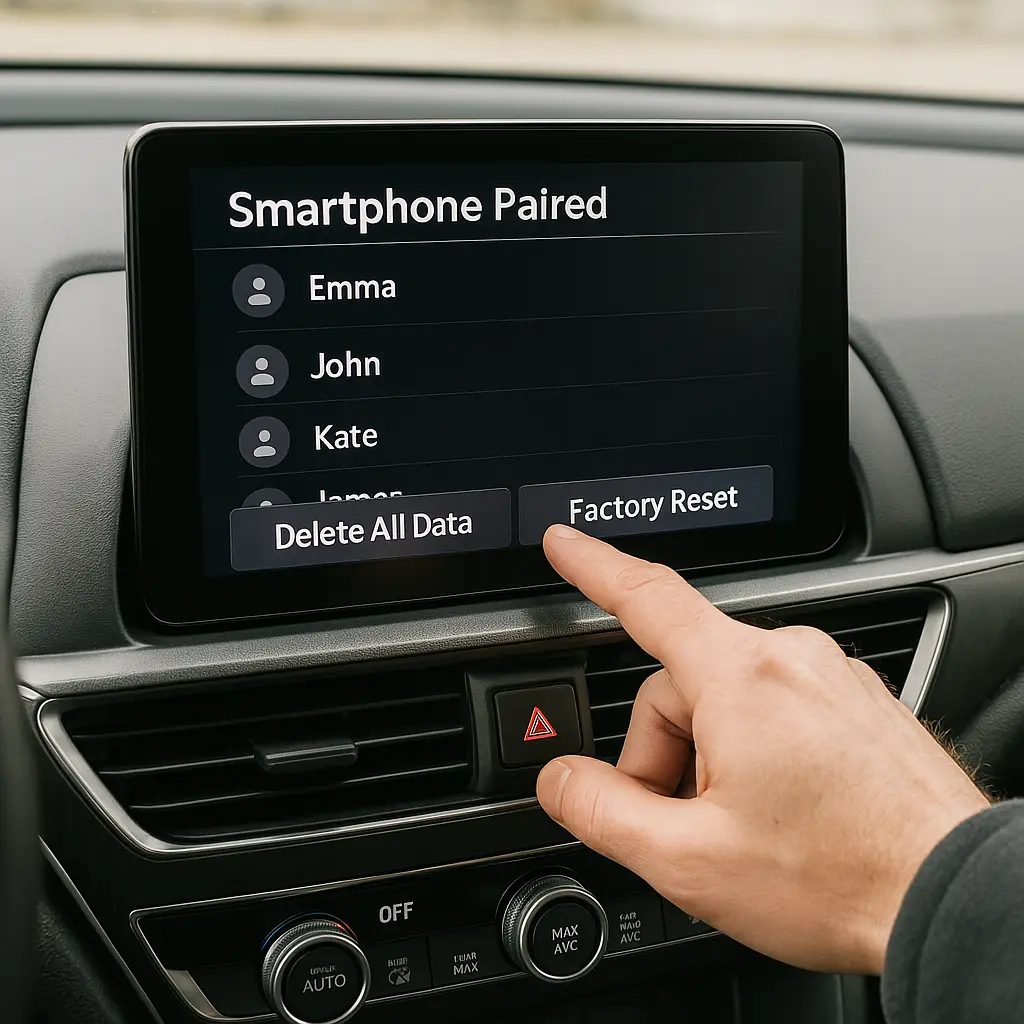
Phone and contact data. When you pair your phone via Bluetooth, Tesla can access your contacts, call history, and text messages if you grant those permissions. The car syncs this data to enable hands-free calling and messaging features.
Biometric data. Driver monitoring systems track eye movement, head position, and facial features to assess attention and alertness. This data is processed in real time and, according to Tesla, some of it is transmitted to company servers for fleet learning purposes.
Where the data goes
Tesla's data collection architecture routes information through multiple systems. Some data stays local on the car's computer. Some transmits to Tesla's servers in real time via the car's cellular connection. Some uploads in batches when the car connects to WiFi.
The distinction matters because local data storage and remote data storage create different privacy implications. Data that never leaves your car is harder for third parties to access. Data that reaches Tesla's servers enters a broader ecosystem of potential uses and disclosures.
Real-time telemetry. Location, speed, and operational data transmit continuously when the car is connected to cellular networks. This enables features like remote climate control, charging monitoring, and the mobile app's live location display.
Event-based uploads. Certain events trigger immediate data uploads. These include Autopilot disengagements, sudden braking, airbag deployments, and detected safety incidents. Tesla states this data helps improve safety systems and investigate crashes.
Periodic synchronization. When your Tesla connects to WiFi (typically at home or at Superchargers), it uploads larger data sets including software logs, diagnostic information, and accumulated sensor data. These uploads happen in the background without notification.
Fleet learning contributions. If you enable data sharing in your privacy settings, your car contributes anonymized driving data to Tesla's fleet learning system. This includes video from external cameras, driving behavior patterns, and edge cases that help train autonomous driving algorithms.
Tesla's privacy policy states that the company may retain this data indefinitely for research, development, and improvement of its products and services.
What Tesla's privacy policy actually says
Tesla's privacy policy, last updated in 2026, outlines data collection practices with varying degrees of specificity. Some sections are clear. Others use broad language that preserves maximum flexibility.
The policy states that Tesla collects "vehicle data," "personal information," and "usage information." It defines these categories broadly enough to encompass nearly everything the car's sensors can measure.
Data sharing and disclosure. Tesla states it may share your data with:
- Service providers who perform functions on Tesla's behalf
- Law enforcement and government agencies in response to legal requests
- Third parties in connection with corporate transactions (mergers, acquisitions, asset sales)
- Other parties with your consent
The policy does not specify which service providers receive data or what functions they perform. It does not commit to notifying you if your data is shared in a corporate transaction. It does not prohibit the sale of anonymized or aggregated data.
Data retention. Tesla states it retains data "as long as necessary" for operational purposes, legal compliance, and business needs. The policy does not specify retention periods for different data types. It does not commit to deleting data after a certain timeframe.
Your rights. The policy outlines rights to access, correct, and delete your data, subject to legal and operational limitations. Tesla states it may retain data even after a deletion request if necessary for safety, legal compliance, or fraud prevention.
In practice, these limitations mean that requesting data deletion does not guarantee that all data associated with your vehicle will be removed from Tesla's systems.
International data transfers. Tesla states that data may be transferred to and processed in countries outside your home jurisdiction, including the United States. This matters because data protection laws vary significantly between jurisdictions.
The cultural reference that fits here
In You've Got Mail, Kathleen Kelly runs a small bookstore that knows its customers personally, what they like, what they're looking for, what they bought last month. That knowledge creates value and builds relationships. But when the big-box competitor moves in, that same knowledge becomes data at scale: purchase histories, demographic profiles, predictive algorithms that optimize inventory and pricing without any human relationship at all.
The shift from local knowledge to centralized data is exactly what's happening with connected cars. Your car used to be a machine you owned and operated. Now it's a data collection platform that happens to provide transportation. The sensors serve you, navigation, safety, convenience, but they also serve Tesla, feeding a centralized system that knows more about your driving behavior than you do.
The analogy breaks down in one important way: Kathleen could choose not to share customer information. You can't drive a Tesla without generating the data. The sensors are integral to the car's operation. Opting out means not using the vehicle's core features, or not buying a Tesla at all.
What you can control (and what you can't)
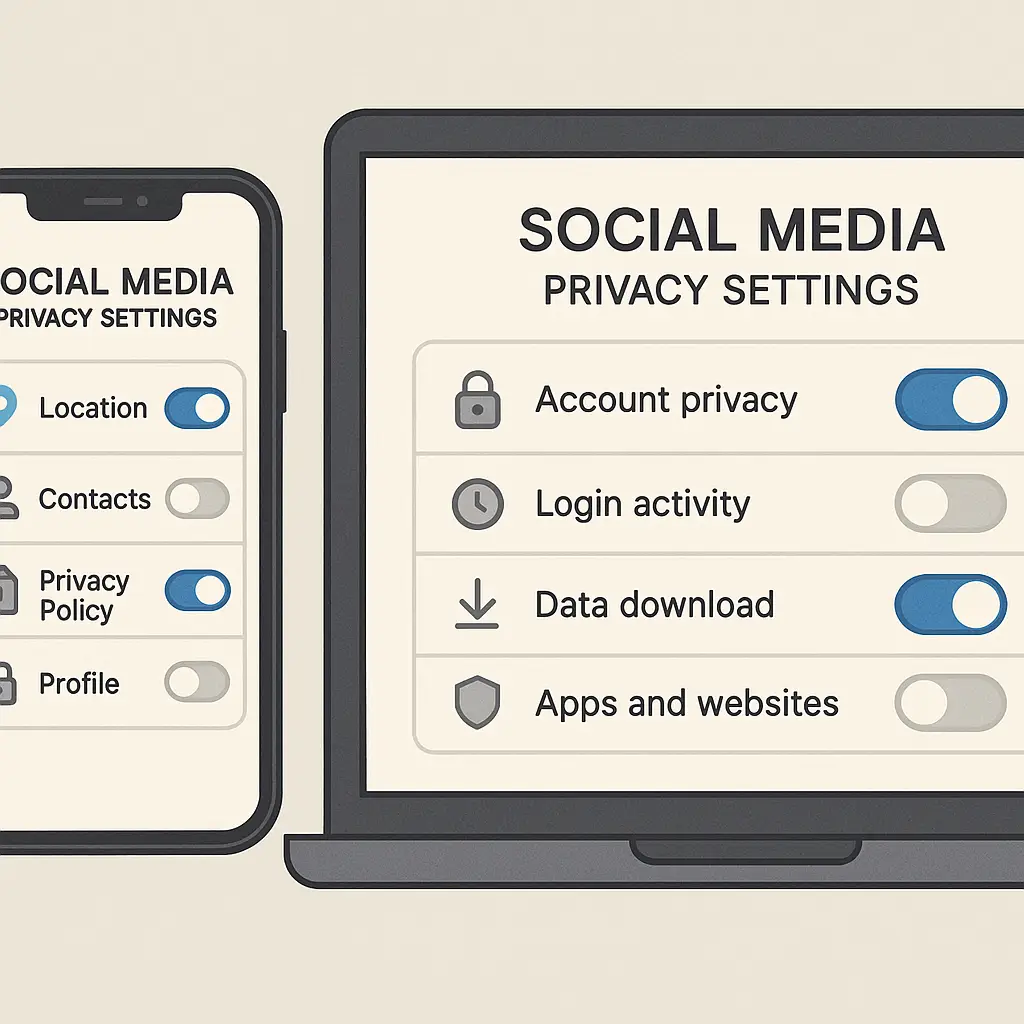
Tesla provides some privacy controls through the car's touchscreen and mobile app. These settings let you limit certain types of data collection and sharing. But the controls have boundaries.
Data sharing toggle. You can disable data sharing for fleet learning. This stops your car from contributing anonymized driving data to Tesla's improvement programs. It does not stop operational data collection required for features like navigation, Supercharger routing, or remote app access.
Location: Safety & Security > Data Sharing > Allow Cabin Camera Analytics (toggle off) Location: Safety & Security > Data Sharing > Allow Mobile Access (controls remote app features)
Disabling mobile access stops the app from displaying your car's location and prevents remote commands like climate control or unlocking. The car still collects location data for its own navigation and operational purposes.
Cabin camera privacy. You can disable cabin camera analytics, which stops the camera from recording and uploading driver monitoring data. The camera hardware remains active for safety features, but footage is not transmitted to Tesla's servers when this setting is disabled.
Sentry Mode and dashcam. These features record video from external cameras when the car is parked (Sentry Mode) or when you manually activate recording (dashcam). You control when these features run and where footage is stored (on a USB drive you provide). This footage stays local unless you choose to share it with Tesla as part of a safety report.
Voice command opt-out. You can avoid using voice commands, which prevents the car from recording and processing your speech. This does not disable the microphones, which remain active for phone calls and other features.
Bluetooth permissions. You can limit what data your phone shares with the car by adjusting Bluetooth permissions in your phone's settings. Denying access to contacts, messages, and call history prevents the car from syncing that information.
What you cannot control:
- GPS location tracking while the car is in use
- Operational telemetry (speed, acceleration, braking, steering input)
- Software logs and diagnostic data
- Event-based data uploads triggered by safety incidents
- Data retention periods after collection
- Third-party access granted through Tesla's service provider relationships
Turning off the car's cellular connection would prevent real-time data transmission, but it would also disable critical features like navigation, software updates, and mobile app access. Tesla does not offer a "privacy mode" that limits data collection while preserving full functionality.
What happens to your data when you sell the car
When you sell or transfer ownership of a Tesla, the company states that your account data is disassociated from the vehicle. The new owner cannot access your historical trip data, saved locations, or personal settings.
But disassociation is not deletion. Tesla's systems retain the data collected during your ownership. The privacy policy does not commit to deleting historical data when ownership changes. The data becomes unlinked from your account, but it remains in Tesla's databases, potentially in aggregated or anonymized form.
This creates a permanent record of your driving history that persists even after you no longer own the vehicle. There is no mechanism to request deletion of data collected during a previous ownership period once you've transferred the car.
Law enforcement access
Tesla states in its privacy policy that it may disclose data to law enforcement and government agencies in response to legal requests. This includes:
- Subpoenas
- Court orders
- Search warrants
- Emergency requests (situations involving imminent danger)
Tesla does not commit to notifying you when your data is disclosed to law enforcement unless required by law. In many jurisdictions, law enforcement can request data with a subpoena, which has a lower legal threshold than a warrant.
Your car's location history, speed data, and video footage from external cameras are all potentially accessible to law enforcement through legal process. Some of this data has already been used in criminal investigations and civil litigation.
The insurance connection
Some auto insurance companies offer Tesla-specific policies that use the car's driving data to calculate premiums. These programs, sometimes called usage-based insurance or telematics programs, promise lower rates for safe drivers.
The mechanism works like this: you consent to share your driving data with the insurance company. The insurer analyzes acceleration, braking, speed, and mileage patterns. Your premium adjusts based on how you actually drive, rather than demographic averages.
This creates a direct financial incentive to allow data sharing beyond what Tesla collects for its own purposes. You're not just sharing data with Tesla; you're sharing it with a third party that uses it to make coverage and pricing decisions.
The privacy implications extend beyond insurance. Once you've established a pattern of consenting to data sharing for financial benefit, that data becomes part of your risk profile in ways that may affect other services and decisions.
What this means for you
If you own a Tesla or are considering buying one, you are opting into comprehensive data collection as a condition of using the vehicle's features. This is not unique to Tesla, most connected cars collect similar data, but Tesla's extensive sensor array and centralized data architecture make the collection more thorough than many competitors.
You cannot use a Tesla's core features without generating location data, driving behavior data, and operational telemetry. You can limit some types of data sharing through privacy settings, but you cannot eliminate data collection while maintaining functionality.
The data you generate has potential uses beyond your immediate benefit. It may be shared with service providers, disclosed to law enforcement, or retained indefinitely for business purposes you don't control.
If this tradeoff is acceptable to you, comprehensive data collection in exchange for advanced features, over-the-air updates, and autonomous driving capabilities, then Tesla's data practices are the cost of entry. If it's not acceptable, your options are to avoid connected car features entirely or choose a vehicle with more limited data collection (which increasingly means choosing an older, less technologically advanced car).
There is no middle path where you get the full Tesla experience without the data collection. The sensors that enable Autopilot, Sentry Mode, and remote app access are the same sensors that generate the data streams Tesla collects and retains.
The question is not whether Tesla collects data about you. It does. The question is whether the value you receive from the car's features justifies the privacy tradeoff you're making by driving it.