Smart TV privacy: what your TV is doing while you watch
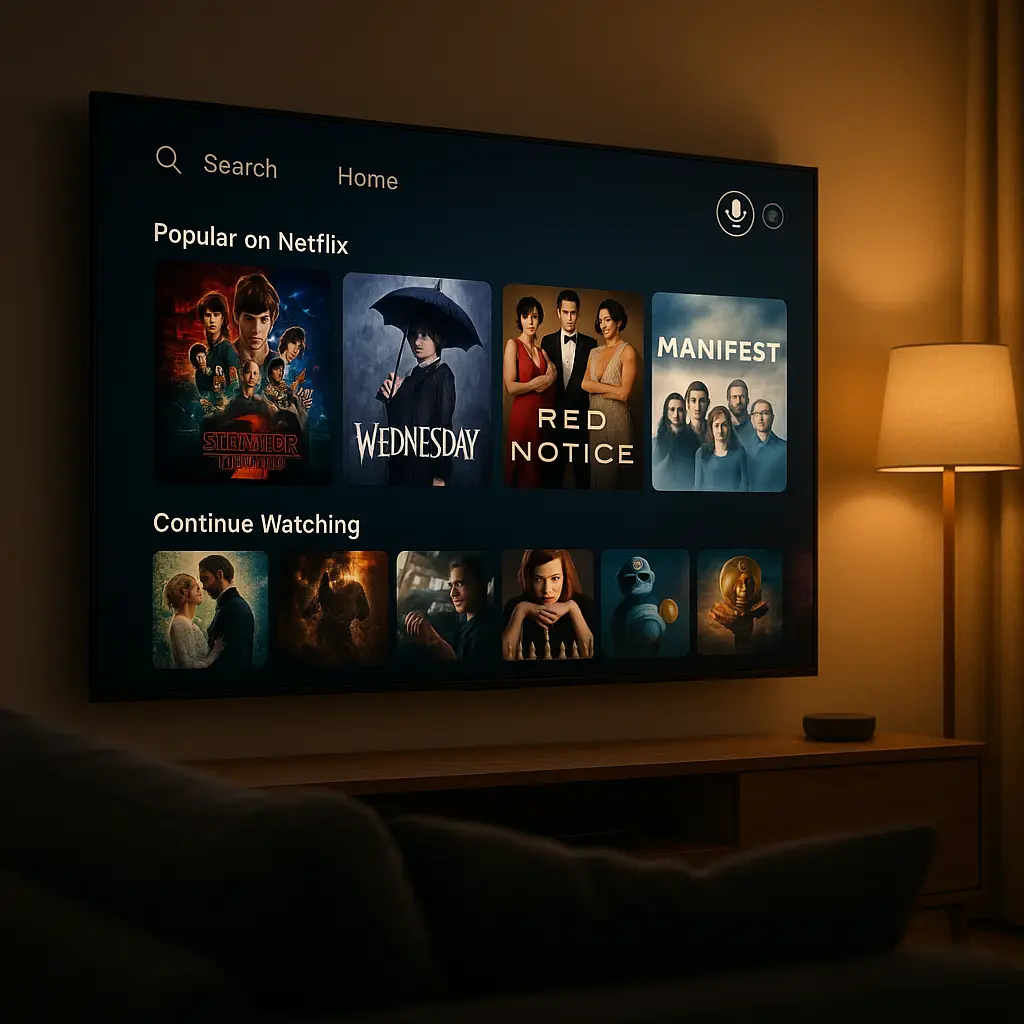
Your smart TV knows what you watch, when you watch it, how long you stay on each show, and whether you pause to grab snacks during the scary parts. It tracks which apps you open, which ads you see, and sometimes which ads you ignore. Some models listen through built-in microphones. A few watch through cameras. All of this happens quietly, in the background, while you're trying to watch TV.
The surveillance isn't a glitch. It's the business model.
Smart TVs run on software that treats your viewing habits as a product. Manufacturers build the hardware, sell it at thin margins, and recoup the difference by monetizing your data. The TV in your living room is a data collection device that happens to display video.
Here's how the mechanism works, what gets collected, and what you can actually control.
What smart TVs actually track
Every smart TV collects viewing data. The scope varies by manufacturer, but the core categories remain consistent across brands.
Content recognition is the foundation. Your TV analyzes what's on screen using one of two methods. Automatic Content Recognition (ACR) takes periodic screenshots of whatever you're watching and matches them against a database of known content. This works even if you're watching cable, playing a DVD, or using a game console. The TV doesn't care about the input source. It captures the screen, identifies the content, and logs it.
The second method is simpler: the TV records metadata from streaming apps. When you watch Netflix, the app tells the TV what you're watching. The TV logs the title, timestamp, and duration. Same with Hulu, Disney+, YouTube, and every other streaming service.
Both methods generate timestamped logs of your viewing behavior. The data includes what you watched, when you started, how long you stayed, whether you paused, and whether you finished. If you binge a series, the TV knows. If you bail after ten minutes, it knows that too.
App usage tracking records which apps you open, how often you use them, and how long you spend in each one. If you check the weather app every morning at 7 a.m., that pattern gets logged. If you open YouTube but never Netflix, the data reflects that preference.
Voice data collection happens on TVs with built-in assistants. When you use voice commands, the TV records the audio, transcribes it, and sends both the recording and the transcript to the manufacturer's servers for processing. Some models keep the microphone active in standby mode, listening for wake words even when the screen is off. The always-listening feature is optional on most TVs, but it defaults to enabled.
Network activity monitoring tracks devices connected to your home network. Some smart TVs scan for other devices and log their presence. The TV doesn't access those devices, but it knows they exist. This data helps manufacturers understand household composition and device ecosystems.
Ad interaction metrics measure how you respond to advertising. The TV logs which ads appear on screen, how long they stay visible, and whether you interact with them. If an ad offers a QR code and you scan it, the TV knows. If you ignore the ad entirely, that gets recorded too.
Camera data is less common but not rare. TVs with built-in cameras for video calls can theoretically capture images when the camera is active. Most manufacturers claim they don't record video without explicit user action, but the camera exists, it's connected, and it's controlled by software you don't write.
Where the data goes
Your smart TV doesn't keep this data to itself. The information flows to multiple destinations, each with different uses.
The manufacturer gets everything. Samsung, LG, Vizio, Sony, whoever made your TV, receives the full dataset. They aggregate viewing habits across millions of devices to build audience profiles, measure content popularity, and sell insights to advertisers and content producers.
Manufacturers typically anonymize the data before sharing it externally, but anonymization has limits. Viewing patterns are distinctive. If you watch the same obscure documentary at 2 a.m. three nights in a row, that pattern can identify you even without your name attached.
Advertising networks buy access to smart TV data. Companies like Inscape, Samba TV, and Alphonso embed their software in smart TVs and collect viewing data directly. They match your TV's behavior to other devices in your household, connecting your viewing habits to your phone's location data, your laptop's browsing history, and your shopping behavior. The result is a cross-device profile used for targeted advertising.
Streaming services collect their own data when you use their apps, but they also receive anonymized data from TV manufacturers. Netflix knows what you watch on Netflix. Through data-sharing agreements, they can also learn what you watch on Hulu, what you watch on cable, and how often you switch between services.
Data brokers purchase aggregated datasets from manufacturers and advertising networks. They combine smart TV data with information from other sources, credit cards, loyalty programs, public records, to build comprehensive consumer profiles. These profiles get sold to marketers, insurers, political campaigns, and anyone else willing to pay.
Third-party analytics firms use smart TV data for market research. They measure which shows attract which demographics, how viewing habits change over time, and which advertising strategies work. The insights get sold to networks, studios, and brands.
The data doesn't stay in one place. It moves through a supply chain of buyers, aggregators, and resellers. Each transaction layers on more context, connecting your viewing habits to your broader digital footprint.
The privacy settings you actually have
Smart TVs offer privacy controls, but the options are limited and the defaults favor data collection.
ACR opt-out is the most important setting. Automatic Content Recognition is usually enabled by default. You can disable it, but the setting hides in menus with names like "Viewing Information Services," "Smart Interactivity," or "Content Recognition." The wording varies by manufacturer. None of them call it "Stop tracking what I watch."
Disabling ACR stops the TV from analyzing screen content, but it doesn't stop app-level tracking. If you watch Netflix with ACR disabled, the TV won't capture screenshots, but Netflix still logs what you watch through its own app.
Voice assistant controls let you disable the microphone or limit when it listens. Most TVs offer three modes: always listening, listening only when the TV is on, or disabled entirely. The always-listening mode is convenient for voice commands, but it means the microphone stays active in standby. Disabling the assistant stops voice data collection, but you lose voice control features.
Ad personalization toggles let you opt out of targeted advertising, but opting out doesn't stop data collection. The TV still tracks your viewing habits. It just stops using that data to customize the ads you see. You'll still see ads. They'll just be less relevant.
Camera controls are straightforward: you can disable the camera or cover it with tape. Physical camera covers are more reliable than software toggles. If the camera has a physical shutter, use it. If it doesn't, tape works.
Network disconnection is the nuclear option. If you disconnect your smart TV from WiFi, it can't send data anywhere. Viewing logs accumulate locally, but they don't leave the device. The tradeoff is obvious: you lose streaming apps, software updates, and any feature that requires internet access. The TV becomes a dumb display.
Some TVs nag you to reconnect. Others disable features until you restore the network connection. A few models refuse to complete initial setup without internet access, forcing you to connect at least once before you can use the TV at all.
Guest mode exists on some models. It limits data collection during use, but the feature is inconsistent across brands. Samsung offers it. LG doesn't. Vizio's implementation differs from Sony's. Guest mode is better than nothing, but it's not a comprehensive solution.
The legal framework around smart TV surveillance
Smart TV data collection operates in a regulatory gray zone. Manufacturers disclose data practices in privacy policies, but the disclosures are vague, the consent is buried, and enforcement is inconsistent.
Federal law doesn't specifically regulate smart TV data collection. The FTC has authority over deceptive practices, and they've taken action against manufacturers for failing to disclose data collection or for collecting data after users opted out. In 2017, Vizio settled with the FTC for $2.2 million after the company tracked viewing habits without adequate disclosure. The settlement required Vizio to get explicit consent before collecting data, but it didn't ban the practice.
That case established a precedent: manufacturers must disclose what they collect and get consent, but they're free to collect as much as they want as long as they're transparent about it. Transparency, in practice, means a 10,000-word privacy policy that nobody reads.
State privacy laws offer more protection, but coverage is uneven. California's CCPA and its successor CPRA give residents the right to know what data gets collected, the right to delete it, and the right to opt out of sales. Colorado, Virginia, Connecticut, and a few other states have similar laws. If you live in one of those states, you can request your data and demand deletion.
Manufacturers comply, but the process is manual, slow, and designed to discourage use. You submit a request through a web form. The company verifies your identity. Weeks later, you receive a report. The data is aggregated and anonymized, making it hard to understand what's actually about you. Deleting the data doesn't stop future collection. You have to opt out separately, and that opt-out only applies going forward.
Children's privacy gets stronger protection under COPPA, but the law only applies to services directed at kids under 13. General-purpose smart TVs don't fall under COPPA, even if children use them. If your kid watches YouTube Kids on the family TV, YouTube's data practices are governed by COPPA, but the TV's data collection isn't.
Video Privacy Protection Act (VPPA) prohibits video rental services from disclosing customer viewing records without consent. The law dates to 1988, written in response to a reporter obtaining Supreme Court nominee Robert Bork's video rental history. VPPA applies to streaming services, but its application to smart TV manufacturers is contested. Some courts have ruled that smart TVs aren't video rental services. Others have allowed VPPA claims to proceed. The legal landscape is unsettled.
What you can actually do about it
You can't eliminate smart TV surveillance entirely without losing smart TV features, but you can reduce the data flow.
Disable ACR during setup. When you first turn on the TV, it walks you through setup screens. One of those screens asks about viewing data collection. The wording is deliberately vague, "improve your experience," "personalized recommendations," "help us understand what you watch", but it's asking for ACR consent. Decline it. If you already set up your TV, go into settings and disable ACR manually. The setting is usually under Privacy, Viewing Data, or a similarly ambiguous menu.
Turn off voice assistants if you don't use them. If you do use voice commands, set the microphone to activate only when the TV is on, not in standby. This stops the TV from listening when you're not actively watching.
Opt out of personalized advertising in the TV's privacy settings. This doesn't stop tracking, but it limits how the data gets used. You'll still see ads. They just won't be tailored to your viewing history.
Use an external streaming device instead of the TV's built-in apps. A Roku, Apple TV, Fire Stick, or Chromecast plugs into your TV's HDMI port and handles streaming. The TV becomes a dumb display. You still get tracked by the streaming device, but you've reduced the number of companies collecting data. Instead of the TV manufacturer, the streaming service, and the advertising network all tracking you, it's just the streaming device and the service.
This approach works best if you pair it with network disconnection. Use the external device for streaming, keep the TV offline, and the TV can't send data anywhere.
Review and delete your data if you live in a state with privacy laws. Visit the manufacturer's privacy portal, submit a data request, and see what they have. Request deletion. It's tedious, but it's the only way to clear historical data.
Cover the camera if your TV has one. Tape works. Sliding covers work. Physical barriers are more reliable than software toggles.
Read the privacy policy before you buy. I know. Nobody reads privacy policies. But if you're deciding between two TVs and privacy matters to you, the policy tells you what each manufacturer collects. Look for ACR disclosures, voice data handling, and third-party data sharing. The policy won't be short, but the relevant sections are usually labeled.
Consider a dumb TV if you're willing to sacrifice convenience. Commercial displays marketed to businesses often lack smart features. They're more expensive per inch, but they don't track you. Pair a dumb TV with an external streaming device and you get the same content with less surveillance.
The cultural reference that fits
In The Good Place, the demon Michael designs a neighborhood that looks like paradise but exists to torture its residents. The torture isn't obvious. It's subtle, embedded in the environment, disguised as convenience and comfort. The frozen yogurt shop has every flavor except the one you want. Your soulmate is perfectly wrong for you. The details seem helpful until you realize they're weaponized.
Smart TVs operate on the same principle. The interface is friendly. The recommendations are helpful. The voice assistant answers questions. The whole experience is designed to feel like a service, but the real product is you. Your attention, your habits, your preferences, all of it gets logged, analyzed, and sold. The surveillance is the point, not a side effect.
The difference is that Michael's victims didn't consent to the torture. You did, sort of, when you clicked through the setup screens and agreed to terms you didn't read. The consent is real in a legal sense, but it's not meaningful in a practical sense. You can't buy a modern TV without agreeing to some level of data collection. The market doesn't offer a no-surveillance option at consumer prices.
That's the mechanism. Your TV tracks what you watch because the business model requires it. The data flows to manufacturers, advertisers, brokers, and analytics firms. Privacy settings exist, but they're limited and hidden. You can reduce the tracking, but you can't eliminate it without losing the features that make a smart TV smart.
The choice is yours. Convenience or privacy. You can't have both.