Should I check my accounts after travel? Here's the exact post-trip review process
You unpack. You throw laundry in. You sort mail. Checking your accounts feels like one more task on a list that's already too long.
But here's what happens if you skip it: fraudulent charges sit unnoticed for days or weeks, your dispute window shrinks, and what could have been a quick phone call turns into months of paperwork with your bank.
Travel creates specific fraud exposure. You used your cards in unfamiliar locations. You connected to networks you can't verify. You handed your payment information to merchants you'll never see again. Some of those transactions were legitimate. Some might not have been.
This is the practical guide to reviewing your accounts after you return home. Here's what to check, in what order, and why the first 24 hours matter more than you think.
Why the first 24 hours matter
Fraudsters move fast. If your card was skimmed at a gas station in another state, the information gets sold within hours. If someone intercepted your hotel WiFi traffic, they're testing your credentials before you land.
The FTC recommends monitoring accounts regularly, and that monitoring becomes urgent after travel. The sooner you catch fraud, the faster you can freeze accounts, dispute charges, and prevent additional damage.
Most banks have dispute windows. Credit card companies typically give you 60 days from the statement date to challenge a charge. Bank accounts vary. Some institutions require disputes within 2 business days for unauthorized electronic transfers. The clock starts when the transaction posts, not when you notice it.
Waiting a week to review your accounts doesn't just delay action. It can cost you legal protections.
Start with bank accounts, not credit cards
Your instinct might be to check credit cards first. They're what you used most. But bank accounts deserve priority.
Credit card fraud shows up as charges you didn't authorize. The money hasn't left your pocket yet. You dispute, the card company investigates, and you're not liable for fraudulent transactions in most cases.
Bank account fraud is different. Someone with your debit card or account number can drain your checking account directly. That's rent money. That's the mortgage payment. That's the balance that keeps checks from bouncing.
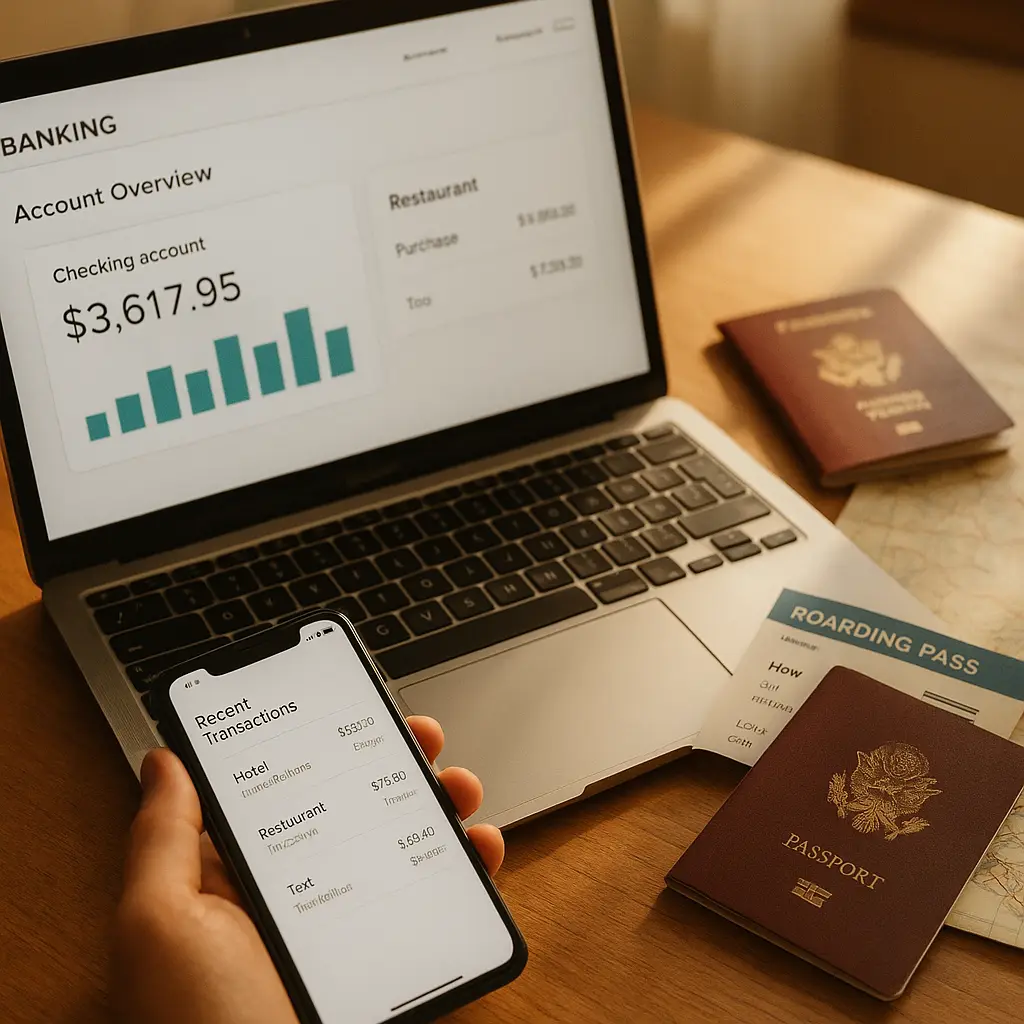
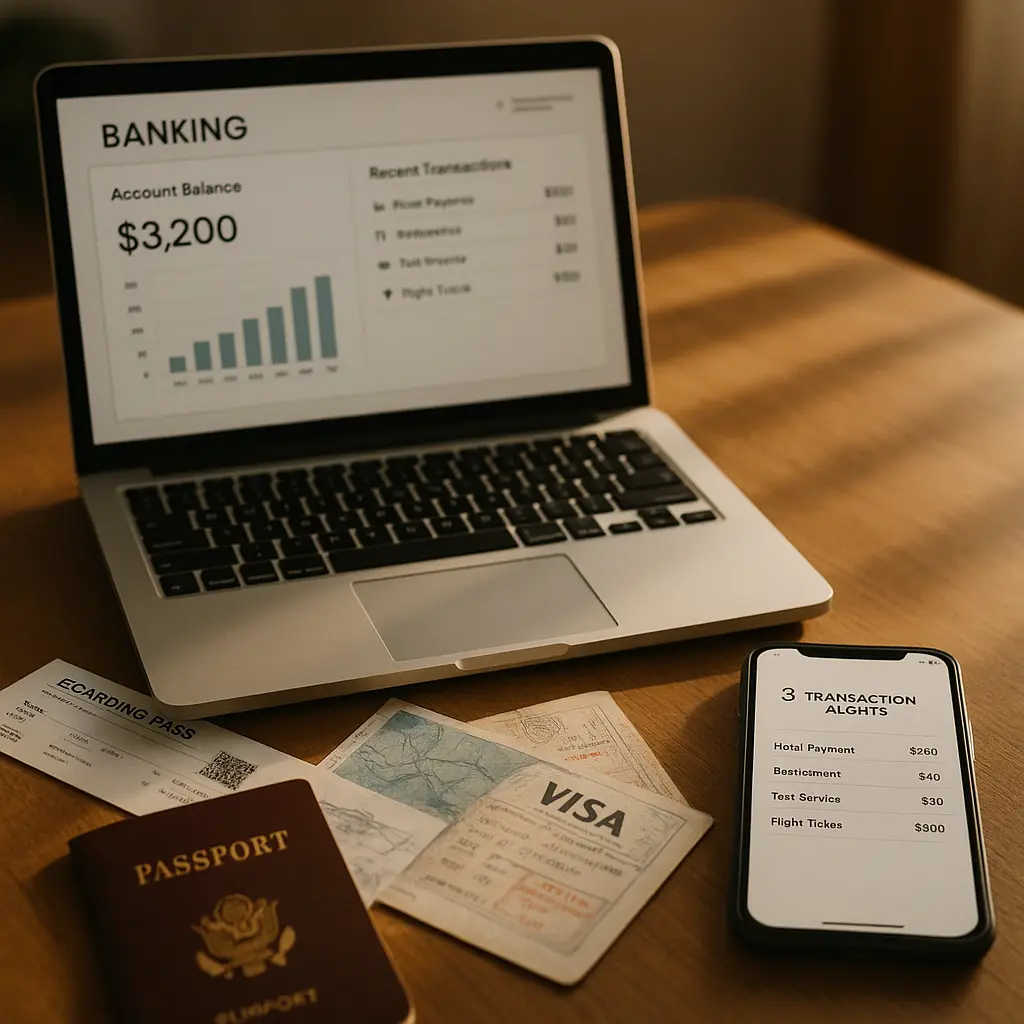
Check your bank accounts first. Log in. Review every transaction from the day you left through today. Look for:
- Withdrawals you don't recognize
- Direct debits from unfamiliar companies
- Transfers to accounts you didn't authorize
- ATM withdrawals in locations you didn't visit
If you spot anything suspicious, call your bank immediately. Don't wait until Monday. Don't email. Call the fraud line. Most banks operate fraud departments 24/7.
What to look for in credit card statements
Credit card fraud after travel follows predictable patterns. Small test charges appear first. A fraudster wants to know if the card works before attempting a large purchase. You'll see charges like:
- $1.00 or $2.99 from online services
- Small purchases at gas stations or convenience stores
- Subscription charges for services you didn't sign up for
If the test charge goes unnoticed, larger purchases follow. Electronics. Gift cards. Anything that converts quickly to cash.
Review every transaction on every credit card you brought. Compare the merchant name, location, and amount to your receipts. If you don't have receipts, cross-reference with your memory. Did you actually stop at that gas station? Did you buy coffee there?
Merchants sometimes appear under parent company names. That coffee shop might bill as "XYZ Hospitality Group." If you're unsure, search the merchant name online or call the number on your card to verify.
The hotel charge you forgot about
Hotels authorize your card when you check in, then finalize the charge when you check out. Sometimes the final charge doesn't post until days later. Sometimes it's higher than you expected because of incidentals, minibar charges, or parking fees you didn't track.
A hotel charge appearing three days after you return isn't necessarily fraud. But it deserves verification.
Check your hotel folio. Most hotels email a copy at checkout. If you don't have it, call the hotel directly and ask them to confirm the final amount. If the charge doesn't match, dispute it with your card company.
The same principle applies to car rentals. Rental companies hold a deposit, charge for the rental period, then add fuel or damage fees after you return the car. Those charges can lag by a week.
Foreign transaction fees and currency conversion
If you traveled internationally, your statement will show charges in your home currency, not the currency you spent. The conversion happens behind the scenes, and the rate your bank uses might differ from the rate you saw when you made the purchase.
Foreign transaction fees add another layer. Some cards charge 3% on every international purchase. That $50 dinner in euros becomes $51.50 on your statement. It's not fraud. It's a fee you agreed to when you opened the card.
If you're unsure whether a charge is legitimate or inflated by fees, check your card's terms. Look for the foreign transaction fee percentage. Calculate what the charge should be. If the math doesn't work, call your card company.
ATM withdrawals and skimming
ATM skimming remains common in tourist-heavy areas. A skimmer is a device that fits over the card reader and captures your card data when you insert it. A hidden camera records your PIN.
If you used ATMs during your trip, review every withdrawal. Check the location, date, and amount. If you see withdrawals you didn't make, your card was likely skimmed.
Call your bank immediately. Report the unauthorized withdrawals. Ask them to freeze the card and issue a replacement. File a police report if you're still in the area where the skimming occurred. Some banks require a police report for fraud claims.
Skimming also happens at gas station pumps. If you used your debit card at the pump, check for charges from stations you didn't visit.
Subscription charges that started while you were gone
Some fraudsters don't make one-time purchases. They sign you up for recurring subscriptions. Streaming services. VPNs. Fitness apps. Anything with a monthly fee.
The first charge is small, often $9.99 or $14.99. It blends into your statement. If you don't catch it, the charges continue every month.
Look for any subscription charges you don't recognize. If you find one, call the company directly. Cancel the subscription. Dispute the charge with your card company. Change your card number to prevent future billing.
The "pending" transactions that never clear
Some transactions show as pending for days, then disappear without ever posting. This happens with hotels, rental cars, and gas stations that authorize more than the final charge.
A pending transaction isn't fraud. It's a hold. The merchant authorized your card for an estimated amount, then adjusted the final charge when the transaction completed. If the final charge is lower, the hold drops off.
But if a pending transaction sits for more than a week, call your bank. Holds should clear within 3-5 business days. If they don't, the merchant might have processed the authorization incorrectly.
Checking your credit report after international travel
Credit card fraud shows up on your statement. Identity theft shows up on your credit report.
If someone stole your personal information during your trip, they might open new accounts in your name. Credit cards. Loans. Utility accounts. You won't see those on your bank statement. You'll see them when you check your credit.
Pull your credit report from all three bureaus: Equifax, Experian, and TransUnion. You're entitled to one free report per year from each bureau through AnnualCreditReport.com.
Look for:
- Accounts you didn't open
- Hard inquiries you didn't authorize
- Addresses you've never lived at
- Employers you've never worked for
If you find anything suspicious, file a dispute with the credit bureau. Place a fraud alert on your credit file. Consider a credit freeze if the theft is extensive.
The Severance approach to compartmentalization
In Severance, employees have their memories split between work and personal life. They can't access work knowledge when they're home. They can't access personal knowledge when they're at work. It's a clean separation that prevents contamination.
Account security after travel works the same way. Your travel accounts and your home accounts should remain separate. The card you used at foreign ATMs shouldn't be the card you use for your mortgage payment. The email you gave to the hotel shouldn't be the email that receives your bank statements.
Compartmentalization limits damage. If your travel card gets compromised, your primary accounts stay safe. If your travel email gets breached, your financial accounts remain isolated.
Set up dedicated travel accounts before your next trip. A separate credit card for travel expenses. A separate email for booking confirmations. A separate phone number for two-factor authentication codes you'll receive abroad.
When you return, review those travel accounts first. If something's wrong, the damage is contained. Your primary accounts remain untouched.
Setting up alerts so you don't have to remember
Manual account reviews work, but they rely on memory. You have to remember to check. You have to remember what's normal. You have to remember which charges are legitimate.
Alerts automate the process. Your bank sends you a notification every time your card is used. You see the charge in real time. If it's fraudulent, you catch it immediately.
Most banks offer:
- Transaction alerts for purchases over a certain amount
- Alerts for international transactions
- Alerts for online purchases
- Alerts for ATM withdrawals
Enable all of them. Set the threshold low. A $1 test charge deserves the same scrutiny as a $500 purchase.
Alerts don't replace manual reviews. They supplement them. You still need to log in and check your full statement. But alerts catch fraud as it happens, not days later when you finally get around to reviewing your account.
What to do if you find fraud
You found a charge you didn't authorize. Now what?
Call your bank or card company immediately. Use the fraud line, not the general customer service number. Fraud lines operate 24/7 and have dedicated staff trained to handle these situations.
Tell them:
- The transaction date
- The merchant name
- The amount
- Why you believe it's fraudulent
They'll freeze the card, dispute the charge, and issue a replacement. The dispute process varies by institution, but most banks investigate within 10 business days for credit cards and 10 business days for debit cards.
Document everything. Save the transaction details. Save emails from your bank. Save the dispute confirmation number. If the bank denies your claim, you'll need this documentation to escalate.
File a police report if the fraud is significant. Some banks require it. Some don't. But having a police report strengthens your case if you need to dispute the bank's decision.
If the fraud involves identity theft (new accounts opened in your name, not just unauthorized charges on existing accounts), file a report with the FTC at IdentityTheft.gov. The FTC provides a recovery plan and helps you work with creditors to resolve fraudulent accounts.
The accounts people forget to check
Most people check their primary bank account and their main credit card. They forget about:
- Secondary credit cards they rarely use
- Store credit cards they opened for a discount
- PayPal, Venmo, and other payment apps
- Loyalty program accounts with stored payment methods
- Subscription services with auto-renewal
Fraudsters know this. They target accounts you don't monitor closely. A charge on a card you haven't used in six months might sit unnoticed until your next statement.
Check every account. Even the ones you didn't use during your trip. Your card information could have been stolen months ago and only used now. Your PayPal account could have been accessed while you were abroad. Your airline miles could have been redeemed for someone else's ticket.
Log in to every financial account you own. Review recent activity. Look for anything unfamiliar. If you haven't used an account in over a year, consider closing it. Dormant accounts create risk without providing value.
How often to check after you return
The first review happens within 24 hours of arriving home. That's non-negotiable.
The second review happens three days later. Some charges take time to post. Hotel incidentals. Rental car fees. Restaurant tips that were added after you left.
The third review happens when your statement closes. This is the comprehensive check. You've had time to forget small purchases. Fraudulent charges have had time to appear. You're looking at the full picture.
After that, return to your normal monitoring routine. If you check accounts weekly, continue that pattern. If you rely on alerts, trust them. But the immediate post-travel period demands closer attention.
Why this matters more than security theater
Checking your accounts after travel isn't security theater. It's not a ritual you perform to feel safe. It's the practical action that catches fraud before it compounds.
A $50 fraudulent charge caught today is a phone call. A $50 fraudulent charge caught in three weeks is a dispute process. A $50 fraudulent charge caught in three months might fall outside your bank's dispute window entirely.
Travel creates exposure. You used your cards in unfamiliar places. You connected to networks you can't verify. You handed your information to people you'll never see again. Some of that exposure results in fraud. Not always. Not even usually. But often enough that checking your accounts isn't paranoia. It's due diligence.
You're home. You're unpacking. You're sorting mail. Add one more task to the list: log in to your bank account. Review your transactions. Look for anything unfamiliar. If you find it, act immediately.
The 15 minutes you spend checking your accounts today could save you months of paperwork later.