Hot Wallet vs Cold Wallet: Storage Methods Compared on Security, Access, and Use Case
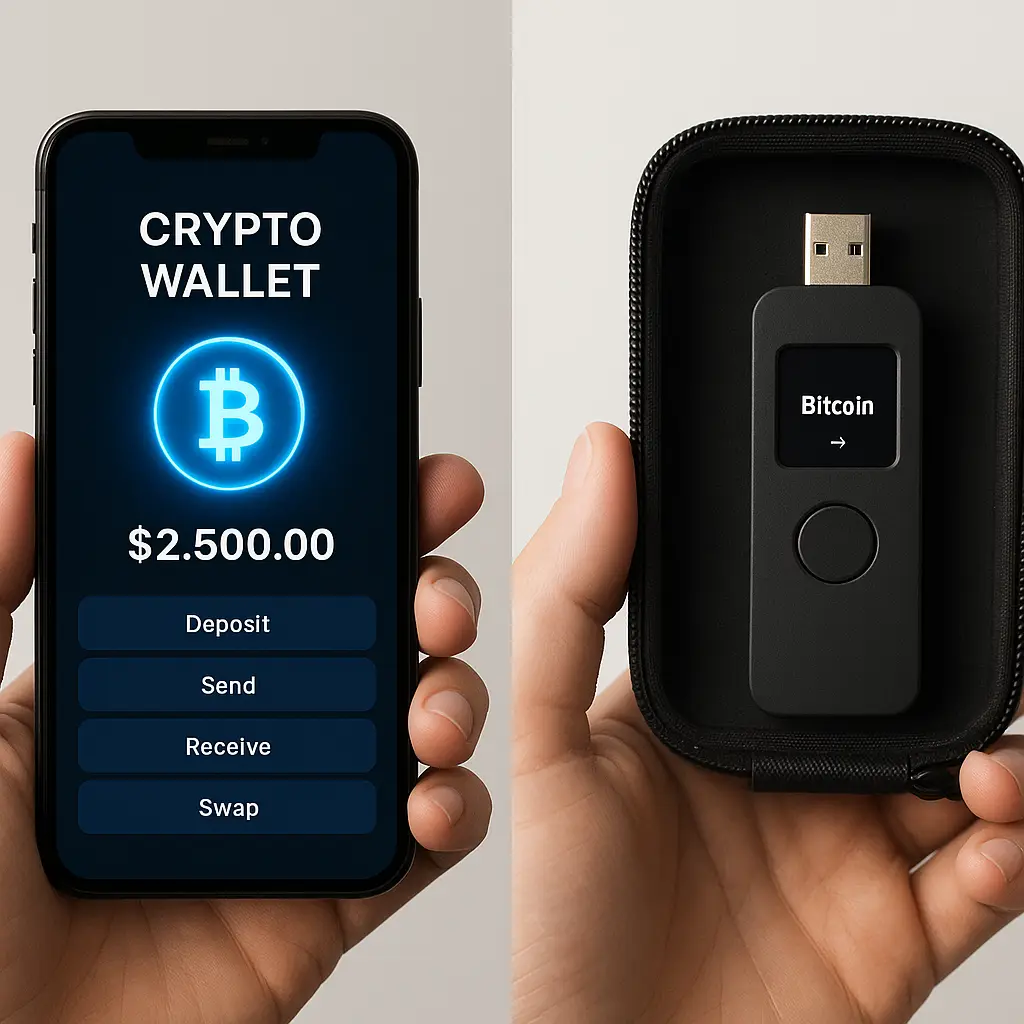
You own cryptocurrency. Now you need to store it somewhere. The choice breaks down to two architectures: hot wallets and cold wallets. Hot wallets stay connected to the internet. Cold wallets don't. That distinction drives everything else.
The comparison isn't about which wallet is better. It's about which method matches your use case. Hot wallets optimize for access. Cold wallets optimize for security. You trade one for the other. Understanding how each method handles keys, transactions, and recovery lets you choose the right tool for the specific job.
How Hot Wallets Work
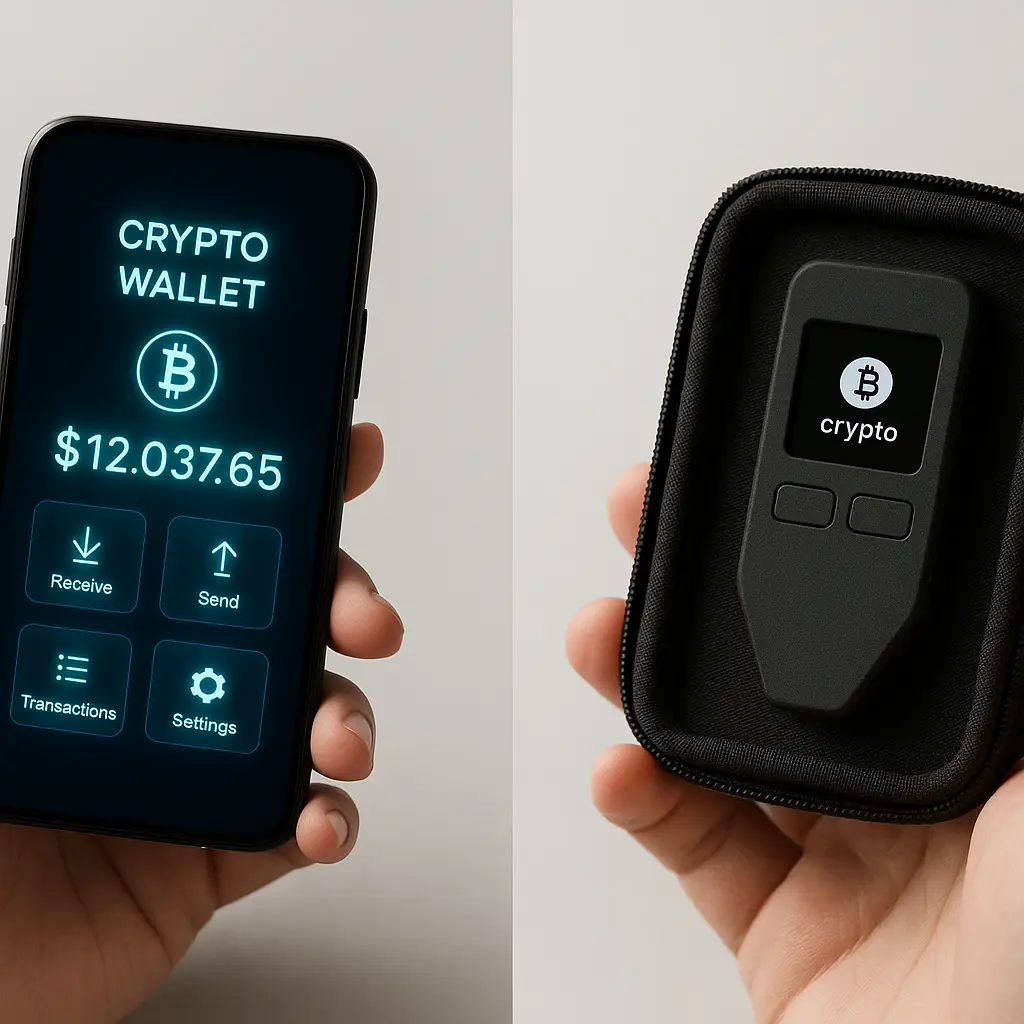
A hot wallet stores your private keys on a device connected to the internet. That device might be your phone, your laptop, or a browser extension. The wallet software generates keys, signs transactions, and broadcasts them to the blockchain, all while maintaining network connectivity.
When you install a mobile wallet app or create an account on an exchange, you're using a hot wallet. The keys live in software, accessible through an interface that talks to blockchain nodes over the internet. You tap a button, the app signs the transaction using your stored key, and the transaction propagates across the network within seconds.
The convenience is real. You can send crypto, receive payments, interact with decentralized apps, and check balances from anywhere with a network connection. Hot wallets handle the complexity of blockchain interaction through user-friendly interfaces. You don't manually construct transactions or manage cryptographic operations.
But that connectivity creates exposure. Any device connected to the internet can be reached by attackers. Malware, phishing sites, compromised apps, and network-level attacks all target hot wallets because the keys are accessible through software running on networked devices.
Hot wallets rely on the security of the host device and the wallet software itself. If your phone gets compromised, the wallet keys become accessible. If the app has a vulnerability, attackers can exploit it. If you enter your seed phrase into a fake website, you've handed over control.
How Cold Wallets Work
A cold wallet stores private keys on a device that never connects to the internet. The most common form is a hardware wallet, a physical device designed specifically to generate, store, and use keys in an offline environment.
When you set up a hardware wallet, it generates your private keys internally using a random number generator. Those keys never leave the device. The hardware wallet displays a seed phrase, usually 12 or 24 words, that you write down and store securely. That phrase is your backup. If the device breaks or gets lost, the seed phrase reconstructs your keys on a replacement device.
To send crypto from a cold wallet, you initiate the transaction on a connected computer or phone, but the signing happens inside the hardware device. The unsigned transaction data transfers to the hardware wallet (usually via USB or Bluetooth), the device signs it using the private key stored internally, and the signed transaction returns to the connected device for broadcasting. The private key never touches the internet-connected machine.
This air gap eliminates entire categories of remote attacks. Malware on your computer can't steal keys that aren't there. Phishing sites can't intercept credentials that never cross the network. Network-level exploits can't reach a device that doesn't connect.
But cold storage introduces friction. Every transaction requires physical access to the hardware device. You can't send crypto from your phone while traveling unless you brought the hardware wallet with you. Interacting with decentralized apps becomes a multi-step process involving device connections and manual confirmations.
Security Comparison
Hot wallets face continuous exposure to network-based threats. Attackers target them through:
- Malware that scans for wallet files or keyloggers that capture passwords
- Phishing sites that mimic legitimate wallet interfaces to steal seed phrases
- Compromised apps that exfiltrate keys during installation or updates
- SIM swap attacks that bypass two-factor authentication to access exchange accounts
- Exploits in wallet software that allow unauthorized transactions
The attack surface is large because the keys exist in software on devices running multiple applications, connecting to various networks, and handling untrusted data constantly.
Cold wallets reduce the attack surface to physical access and supply chain integrity. The main threats become:
- Physical theft of the hardware device if you don't use a PIN
- Supply chain attacks where devices ship pre-compromised
- Loss or damage to the device without a backed-up seed phrase
- Compromised seed phrase storage (writing it digitally, storing it in cloud services, photographing it)
- Social engineering that tricks you into entering the seed phrase into a fake recovery tool
Remote network attacks don't work against properly implemented cold storage. An attacker can't reach keys that never connect. But physical security and operational discipline become critical. If you lose the seed phrase and the device breaks, your funds are gone. If someone finds your seed phrase written on a Post-it note, they own your crypto.
Recovery Mechanisms
Both wallet types use seed phrases as the recovery mechanism, but the operational reality differs.
Hot wallets typically prompt you to write down a seed phrase during setup, then store the keys in software protected by a password or biometric authentication. If you lose access to the device, you enter the seed phrase into a new installation to restore the wallet. The process happens entirely in software on internet-connected devices.
The risk: entering seed phrases into software creates opportunities for compromise. Fake wallet apps, phishing sites, and clipboard malware all target seed phrase entry. Many people store seed phrases digitally, in password managers, cloud notes, or photos, which defeats the purpose if those storage locations get breached.
Cold wallets also use seed phrases, but the recovery process involves physical hardware. You enter the phrase into a replacement hardware device, not into software on a networked computer. The phrase reconstructs the private keys inside the secure element of the new device, where they remain offline.
The discipline required is higher. You must store the seed phrase securely offline, typically written on paper or metal, stored in a safe or safety deposit box. You can't recover funds without both the seed phrase and physical access to a compatible hardware wallet. But that same friction protects against remote theft.
Transaction Speed and Usability
Hot wallets optimize for immediate access. You open the app, enter your PIN or use biometrics, and send crypto within seconds. No cables, no device pairing, no manual confirmations on separate hardware. The entire process happens on one device you already carry.
This speed matters for:
- Daily transactions and payments
- Trading on exchanges
- Interacting with decentralized finance protocols
- Receiving payments when someone's standing in front of you
- Participating in time-sensitive blockchain events
Cold wallets introduce deliberate friction. To send a transaction, you:
- Connect the hardware wallet to a computer or phone
- Open the wallet software on the connected device
- Initiate the transaction (enter recipient address, amount)
- Review transaction details on the hardware wallet screen
- Confirm by pressing physical buttons on the device
- Wait for the signed transaction to broadcast
The process takes longer and requires the hardware device to be physically present. You can't send crypto from a cold wallet while the device sits at home in a safe. You can't quickly respond to market movements or participate in time-sensitive opportunities without planning ahead.
But that friction is the security mechanism. The manual confirmation step on the hardware device prevents malware from authorizing transactions without your knowledge. The physical button press can't be automated by software exploits.
Cost Structure
Hot wallets range from free to low-cost:
- Mobile wallet apps: free (MetaMask, Trust Wallet, Coinbase Wallet)
- Desktop wallets: free (Exodus, Electrum)
- Exchange wallets: free, but you don't control the keys
- Browser extension wallets: free
The only costs are transaction fees paid to the blockchain network, which apply to all wallet types.
Cold wallets require hardware purchase:
- Entry-level hardware wallets: around $50-80 (Ledger Nano S Plus, Trezor One)
- Mid-range devices: around $150-200 (Ledger Nano X, Trezor Model T)
- Advanced options: $200+ (devices with larger screens, additional security features)
The upfront cost buys dedicated security hardware. For someone holding a few hundred dollars in crypto, the hardware cost might exceed the value being protected. For someone holding thousands or tens of thousands, the hardware cost is negligible insurance.
Some people split the difference: hot wallet for spending amounts, cold wallet for savings. The model mirrors how you might carry $100 in your physical wallet but keep larger savings in a bank account.
Custody and Control
Hot wallets come in two forms: custodial and non-custodial.
Custodial hot wallets (exchange accounts) mean the exchange holds your keys. You log in with a username and password, but you don't control the private keys directly. The exchange manages security, but you're trusting them not to lose funds, get hacked, or restrict access. When exchanges fail or freeze accounts, users can't withdraw.
Non-custodial hot wallets give you the keys. You install the app, you control the seed phrase, you sign transactions. The wallet provider doesn't have access to your funds. But you also bear full responsibility for security and recovery.
Cold wallets are always non-custodial by design. The hardware device holds your keys. No company can freeze your access, restrict transactions, or lose your funds through their operational failures. But you also can't call customer support to recover a lost seed phrase.
This distinction matters for:
- Regulatory risk (governments can compel exchanges to freeze accounts)
- Counterparty risk (exchanges can fail, get hacked, or mismanage funds)
- Recovery options (custodial services can reset passwords; non-custodial wallets can't)
- Long-term control (non-custodial means you own it regardless of company status)
Multi-Signature and Advanced Features
Some hot wallets support multi-signature setups where multiple keys must approve a transaction. This adds security by requiring consensus, but the keys still exist in software on networked devices. The multi-sig protection helps against single-device compromise but doesn't eliminate network exposure.
Cold wallets can participate in multi-sig arrangements where one or more signing keys live on hardware devices. This combines the security of offline storage with the protection of requiring multiple parties to authorize transactions. The setup complexity increases, but so does the resistance to both remote and physical attacks.
Advanced cold wallet features include:
- Passphrase support (an additional word added to the seed phrase for plausible deniability)
- Multiple account support (one device managing keys for different blockchains)
- Firmware verification (checking that the device software hasn't been tampered with)
- Secure element chips (dedicated hardware for key storage resistant to physical extraction)
Hot wallets focus on usability features:
- Built-in exchange integration for trading
- DeFi protocol connections for yield farming and lending
- NFT galleries and management
- Portfolio tracking across multiple chains
- Social recovery mechanisms
The feature sets reflect the different priorities. Cold wallets optimize for security at the expense of convenience. Hot wallets optimize for feature richness and ease of use, accepting higher risk exposure.
Backup and Redundancy
Hot wallet backups typically mean storing the seed phrase somewhere. Many people store it in password managers, which creates a single point of failure if the password manager gets compromised. Some store it in cloud notes or email drafts, which defeats the security model entirely.
Best practice for hot wallet seed phrases: write them on paper, store the paper somewhere secure, and never enter them into any software except during initial setup or recovery. But the temptation to store them digitally, for convenience, is strong.
Cold wallet backups require physical redundancy. Common approaches:
- Write the seed phrase on paper, store in a home safe
- Write on metal (fire-resistant, water-resistant), store in safety deposit box
- Split the seed phrase using Shamir's Secret Sharing, distribute pieces to trusted parties
- Keep multiple copies in geographically separated locations
The physical backup requirement creates operational burden but also eliminates digital attack vectors. Your seed phrase can't be stolen through a cloud breach if it only exists on paper in a safe.
Use Case Decision Framework
Choose a hot wallet when:
- You need frequent access for transactions
- You're holding amounts you can afford to lose
- You're actively trading or using DeFi protocols
- You need mobile access without carrying hardware
- You're comfortable with the security tradeoffs
Choose a cold wallet when:
- You're holding significant value long-term
- You rarely need to move funds
- You want maximum protection against remote attacks
- You can manage physical device security
- You're willing to accept reduced convenience for increased security
Most people with substantial crypto holdings use both: hot wallet for operational funds, cold wallet for savings. The split limits exposure while maintaining usability. You might keep 5-10% in a hot wallet for daily use and 90-95% in cold storage for long-term holding.
The analogy: you carry some cash in your physical wallet for daily purchases, but you don't carry your entire net worth. The same logic applies to crypto storage.
In Office Space, Peter Gibbons and his coworkers skim fractions of pennies from transactions, routing them to an account the company doesn't monitor. The scheme works because the money sits in a place designed for accessibility, not security. Cold storage is the opposite architecture: you sacrifice accessibility for the security that comes from isolation. The money doesn't move quickly, but it also doesn't leak slowly through a thousand small compromises.
Supply Chain and Device Trust
Cold wallets introduce supply chain risk. If you buy a hardware wallet that ships pre-compromised, with modified firmware or pre-generated seed phrases, the attacker controls your funds from day one.
Mitigation strategies:
- Buy directly from the manufacturer, not third-party sellers
- Verify packaging seals and tamper-evident features
- Check firmware signatures against manufacturer-published hashes
- Initialize the device yourself (never use a device that comes with a pre-written seed phrase)
- Update firmware immediately after purchase using verified sources
Hot wallets face similar supply chain risks through app stores and software downloads. Fake wallet apps, malicious browser extensions, and compromised software updates all target users who don't verify what they're installing.
Both wallet types require trust in the software/hardware provider at some level. Open-source wallets allow code review, but most users don't audit the code themselves. Hardware wallets with secure elements use proprietary chips that can't be fully audited. You're trusting the manufacturer's security engineering.
Regulatory and Legal Considerations
Custodial hot wallets (exchanges) must comply with financial regulations. That means:
- Know Your Customer (KYC) requirements for account creation
- Transaction monitoring and reporting to authorities
- Ability to freeze accounts or reverse transactions under legal pressure
- Geographic restrictions on who can use the service
Non-custodial wallets, both hot and cold, don't have these requirements because no company controls your funds. But that also means no legal recourse if you lose access. No regulator can compel a hardware wallet manufacturer to restore your funds if you lose your seed phrase.
Some jurisdictions require reporting of crypto holdings above certain thresholds. Cold wallets make enforcement difficult because holdings aren't visible to third parties. Hot wallets on exchanges create automatic reporting because the exchange knows your balance and identity.
The Hybrid Approach
The most common real-world setup among people who hold significant crypto:
- Cold wallet (hardware device) for 80-95% of holdings
- Hot wallet (mobile app) for 5-20% of holdings
- Separate hot wallet for experimental or high-risk activities
The cold wallet holds long-term savings. You interact with it rarely, maybe monthly or quarterly to rebalance or take profits. The seed phrase lives in a safe or safety deposit box. The hardware device might stay in the same safe, only coming out for planned transactions.
The primary hot wallet holds operational funds for regular transactions, DeFi participation, or trading. You accept the higher risk because the amounts are manageable and the accessibility matters.
The experimental hot wallet gets used for new protocols, airdrops, or interactions with less-trusted contracts. If it gets compromised, the damage is contained. You might fund it with $100-500 and treat it as disposable.
This three-tier approach balances security, usability, and risk tolerance. It's not perfect, but it's practical.
What Doesn't Get Compared Often Enough
Most hot wallet vs cold wallet comparisons focus on hacking risk. That's valid, but it misses other failure modes:
Inheritance and estate planning: Cold wallets create problems when you die. If your heirs don't know about the seed phrase or can't access the safe, your crypto disappears. Hot wallets on exchanges at least have account recovery processes, though accessing a deceased person's account involves legal complexity.
Operational errors: Cold wallets protect against remote attacks but not against user mistakes. Sending to the wrong address, approving a malicious transaction, or losing the seed phrase all result in permanent loss. Hot wallets have the same risks but often include warnings, address books, and transaction previews that reduce error rates.
Time value of access: If a market crash happens and your funds are in cold storage at home while you're traveling, you can't act. Hot wallets let you respond to time-sensitive situations. The question is whether that responsiveness is worth the security tradeoff.
Complexity and learning curve: Hardware wallets require understanding how to verify addresses on the device screen, how to update firmware safely, and how to store seed phrases securely. Hot wallets are more forgiving of learning mistakes, though those mistakes might cost you money later.
Recovery Phrase Security Is the Weak Link
Both wallet types depend on seed phrase security. The difference is where the attack surface lives.
Hot wallets face digital seed phrase theft through:
- Phishing sites that ask you to "verify" your wallet
- Fake recovery tools that promise to restore access
- Malware that scans for text files containing seed phrases
- Cloud storage breaches if you stored the phrase digitally
- Compromised password managers if you stored it there
Cold wallets face physical seed phrase theft through:
- Home burglary if you stored it in an obvious location
- Safety deposit box access by bank employees or legal process
- Discovery by family members or household guests
- Loss during natural disasters if you didn't create redundant copies
- Inheritance complications if heirs don't know it exists
The seed phrase is the master key regardless of wallet type. Protecting it matters more than the wallet architecture in some scenarios. A cold wallet with a seed phrase written on a Post-it note stuck to your monitor is less secure than a hot wallet with a properly stored seed phrase.
The Question You Should Ask
The comparison isn't "which wallet is safer" in absolute terms. It's "which threat model matches my situation."
If you're holding crypto you can't afford to lose and you rarely need to move it, cold storage makes sense. The reduced access is the feature, not the bug.
If you're actively using crypto for payments, trading, or DeFi, and you're holding amounts that wouldn't devastate you if lost, a hot wallet is the practical choice. The convenience enables the use case.
If you're holding significant value and need occasional access, the hybrid approach splits the difference.
The choice depends on:
- How much you're holding
- How often you need access
- Your operational security discipline
- Your risk tolerance
- Your technical comfort level
There's no universal right answer. The architectures exist because different people have different needs. Understanding how each method handles keys, transactions, recovery, and security lets you make the choice that fits your actual situation, not the theoretical ideal.