Why some governments want backdoors in encryption, and what that means for your privacy
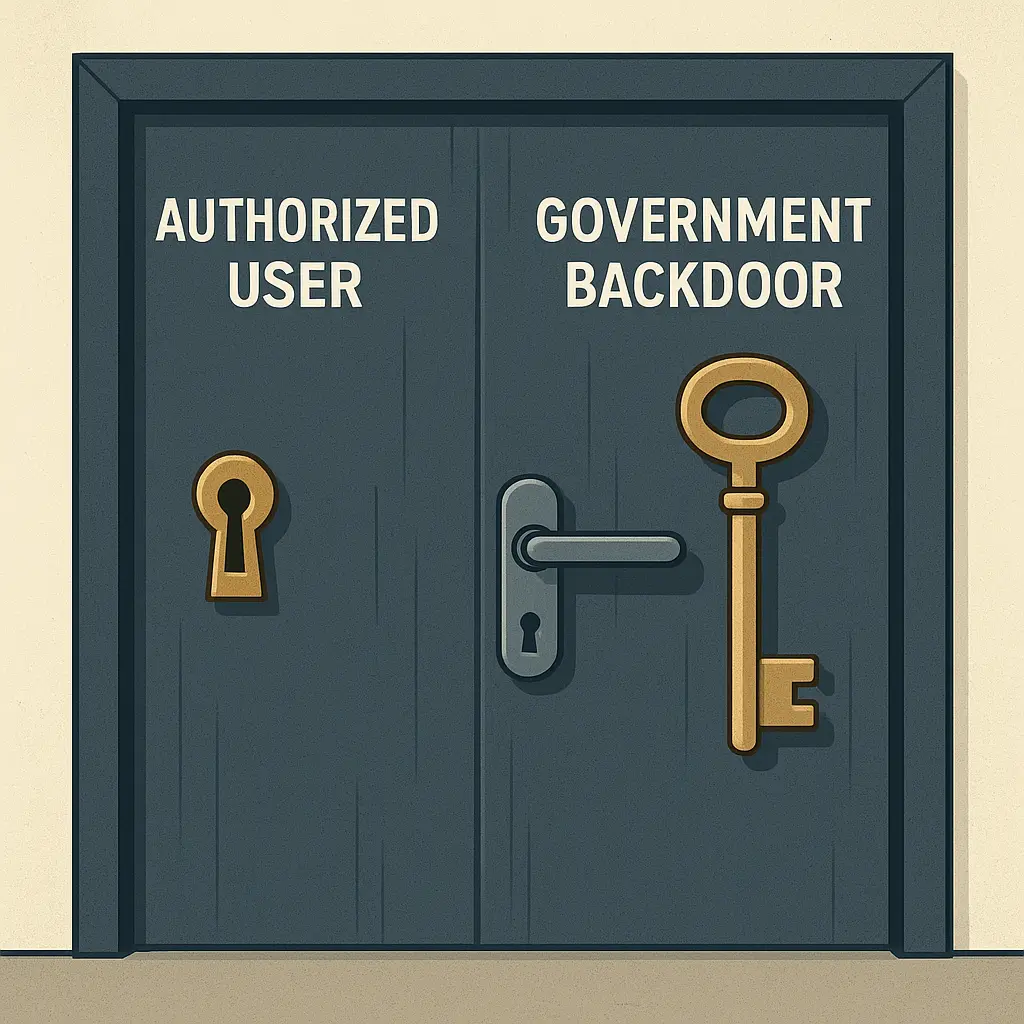
The phrase "encryption backdoor" sounds technical and abstract until you understand what it actually means: a government wants to read your private messages, and they want tech companies to build a way for them to do it.
This isn't hypothetical. Multiple governments have proposed or implemented laws requiring encryption backdoors. The Federal Trade Commission tracks privacy and security enforcement as part of its consumer protection mandate, and encryption policy sits at the center of that work. The debate touches banking, healthcare, messaging, cloud storage, and every system that protects data from unauthorized access.
Here's how encryption backdoors work, why governments want them, what they actually break, and what it means for your privacy.
What encryption does in the first place
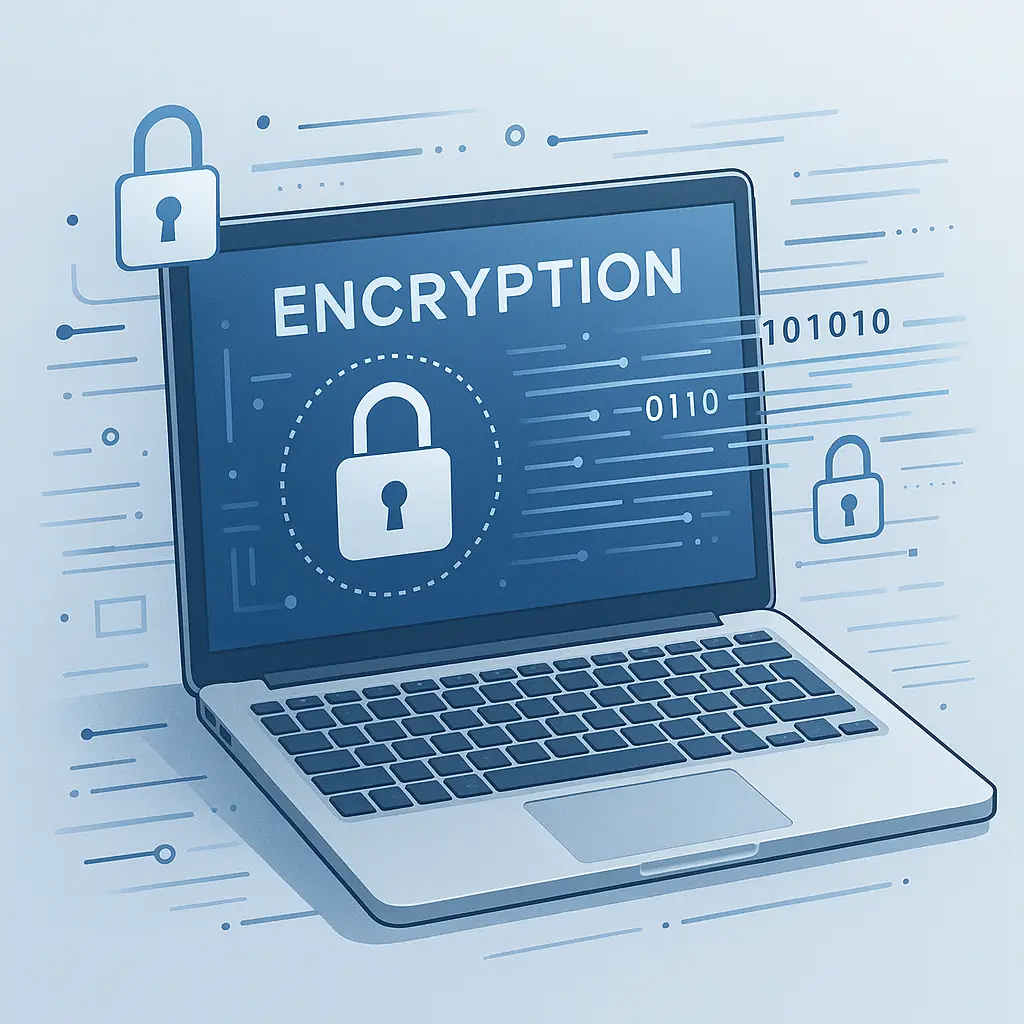
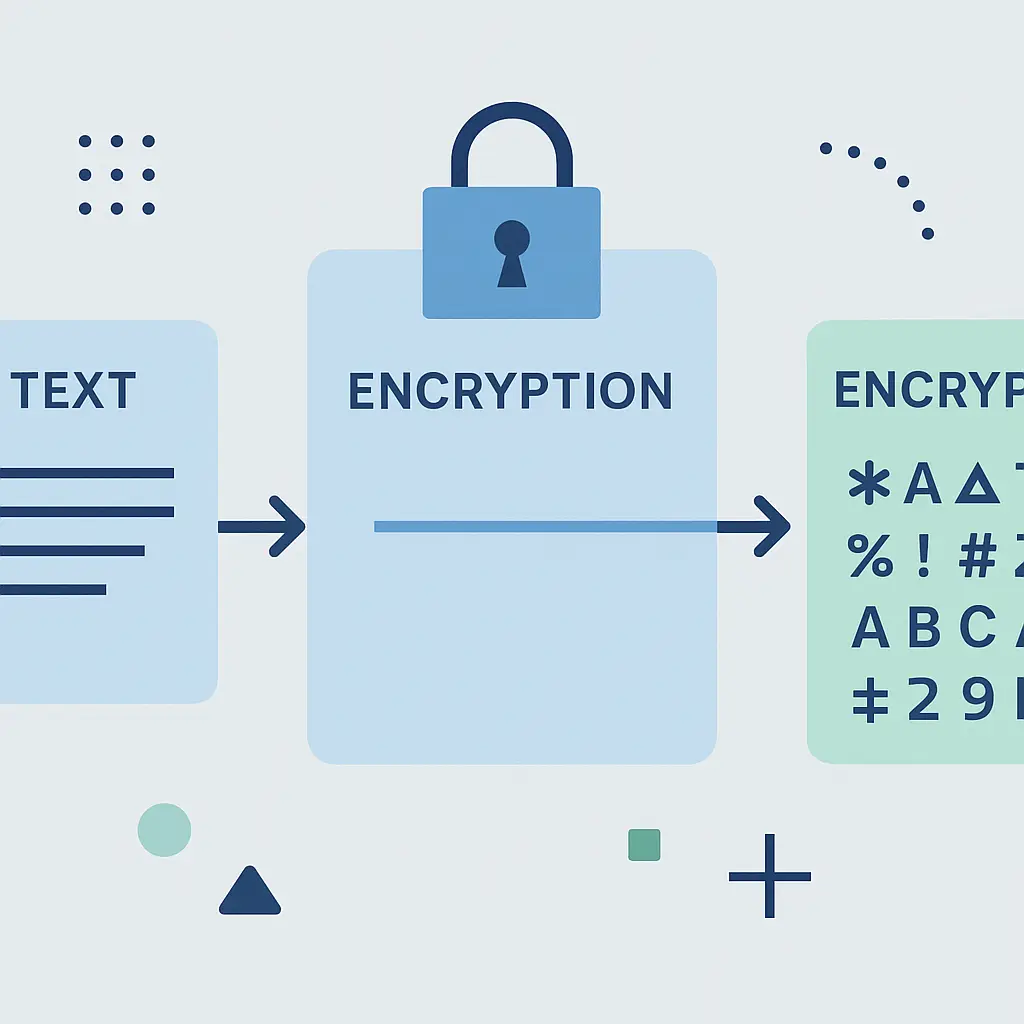
Encryption is the mathematical process that scrambles data so only someone with the correct key can read it. When you send a message through Signal or WhatsApp, the app encrypts the text on your device, transmits the scrambled version, and the recipient's device decrypts it. No one in between can read the plaintext, including the company running the service.
This is called end-to-end encryption. The "ends" are you and the recipient. The middle is everyone else: the app developer, the network operator, your internet service provider, anyone intercepting the connection, and any government demanding access.
End-to-end encryption protects more than messaging. It secures online banking, medical records, cloud storage, video calls, and the infrastructure that runs power grids, water systems, and transportation networks. Encryption is the reason you can trust that the login page you're looking at actually belongs to your bank, not an attacker impersonating it.
The cryptographic mechanism is mathematically sound. When implemented correctly, modern encryption is effectively unbreakable without the key. That's not marketing. That's the current state of mathematics. Breaking AES-256 encryption through brute force would take longer than the age of the universe with all the computing power currently available on Earth.
What a backdoor actually is
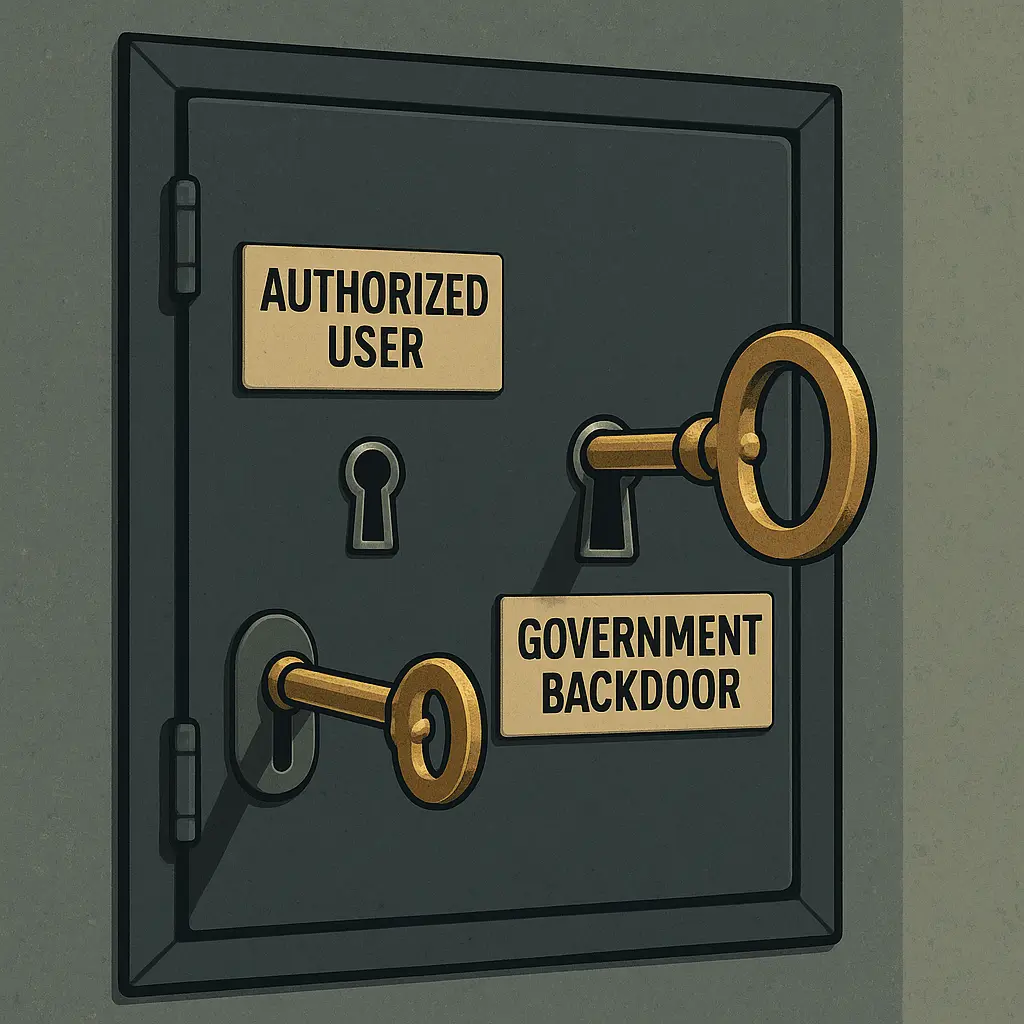
An encryption backdoor is a deliberate weakness. It's a way to bypass the encryption and access the plaintext without the user's key.
The term "backdoor" comes from physical security. If you lock the front door but leave the back door unlocked, anyone who knows about the back door can get in. The same principle applies to encryption. A backdoor is a second way in that doesn't require the user's cooperation.
Governments proposing backdoor laws typically frame them as "lawful access" or "exceptional access." The terminology varies, but the mechanism is the same: tech companies would be required to build systems that let authorized parties decrypt user data on demand.
This might work through key escrow, where a copy of every encryption key gets stored with a trusted third party who releases it to law enforcement with proper legal authorization. It might work through a master key that can decrypt any user's data. It might work through a weakness in the encryption algorithm itself that only the government knows how to exploit.
The specifics differ, but every proposal shares one characteristic: the system is designed to let someone other than the user read data that encryption is supposed to protect.
Why governments want this
The argument from law enforcement and intelligence agencies is straightforward: criminals and terrorists use encryption to hide their communications, and investigators can't access evidence even with a warrant.
This is called "going dark." The phrase describes a situation where lawful surveillance becomes technically impossible because the data is encrypted and the service provider can't decrypt it. In the past, if police had a warrant to wiretap a phone line, the phone company could comply. With end-to-end encryption, the company running the messaging service can't comply because they don't have the keys.
Governments argue that this creates a public safety problem. They point to cases where encrypted communications contained evidence of serious crimes that investigators couldn't access. They argue that the balance between privacy and security has shifted too far toward privacy, and that some mechanism for lawful access is necessary.
The debate intensified after high-profile incidents where encrypted devices or communications played a role in investigations. The 2015 San Bernardino shooting led to a legal battle between the FBI and Apple over unlocking an iPhone. Similar debates have occurred in the UK, Australia, and the European Union.
Some proposals focus on messaging apps. Others target device encryption. Some apply only to specific categories of crime. Others create broader mandates. The common thread is the belief that encryption without backdoors gives criminals an unacceptable advantage.
The technical problem with backdoors
Here's the part where the analogy to Ocean's Eleven fits. In the film, the crew spends most of the runtime figuring out how to bypass the casino vault's security. The vault has multiple layers of protection, but the team finds a way through each one. The vault's designers didn't intend for the crew to get in, but once a vulnerability exists, someone clever enough will exploit it.
Encryption backdoors create the same dynamic. You can't build a backdoor that only works for the intended party. Any backdoor is a vulnerability that adversaries can discover and exploit.
The technical term for this is "key management." If you create a master key that can decrypt anyone's data, you've created a single point of failure. Whoever holds that key becomes a target. If the key leaks, gets stolen, or falls into the wrong hands, every system protected by that encryption is compromised.
This isn't theoretical. In 2010, researchers discovered that Chinese hackers had breached Google's systems and accessed a tool the company had built to comply with lawful wiretap requests. The backdoor designed for law enforcement became an entry point for foreign intelligence.
Key escrow systems face similar problems. Storing copies of encryption keys creates a database that's extremely valuable to attackers. The database has to be secured, but perfect security doesn't exist. Every system has vulnerabilities, and a key escrow database is a high-value target that will be attacked relentlessly.
Cryptographers have studied this problem for decades. The consensus is clear: you can't build a secure backdoor. Any mechanism that allows one party to bypass encryption creates a vulnerability that other parties can exploit. The math doesn't care about intentions.
What backdoors break beyond privacy
The privacy argument against backdoors is straightforward: if governments can read your messages, your messages aren't private. But the consequences extend beyond individual privacy.
Encryption secures critical infrastructure. Power grids, water systems, transportation networks, and financial systems all rely on encryption to protect against attacks. A backdoor in encryption algorithms or key management systems creates vulnerabilities that hostile nations and criminal organizations can exploit.
Backdoors undermine trust in technology. If users can't trust that their communications are secure, they'll seek alternatives. This might mean using foreign services that don't comply with domestic laws, or it might mean using weaker, unregulated encryption tools that are harder to audit and potentially less secure than mainstream options.
Backdoors create economic costs. Companies operating in jurisdictions with backdoor mandates face competitive disadvantages. Customers concerned about security will choose providers in countries without such mandates. This creates pressure for companies to relocate or avoid markets with backdoor requirements.
The security research community opposes backdoors almost unanimously. In 2015, a group of prominent cryptographers and security experts published a paper titled "Keys Under Doormats," analyzing the technical risks of exceptional access systems. Their conclusion: the costs far outweigh the benefits, and the technical challenges are insurmountable.
What actually happens when backdoors get mandated
Australia passed the Assistance and Access Act in 2018, requiring tech companies to provide law enforcement with access to encrypted communications. The law avoids the word "backdoor" but creates mechanisms for compelling companies to assist investigations, including by building capabilities to decrypt data.
The practical impact has been mixed. Some security researchers argue that the law's broad language creates uncertainty about what companies can be compelled to do. Others point out that global companies can't build different versions of their products for different markets, so mandates in one country affect users everywhere.
The UK's Investigatory Powers Act includes provisions for requiring companies to remove encryption protections when served with a technical capability notice. The law includes safeguards and oversight, but critics argue that the underlying mechanism still creates vulnerabilities.
The European Union has debated similar measures. Proposals have focused on client-side scanning, where encrypted messages are scanned for illegal content on the user's device before encryption occurs. This approach attempts to preserve end-to-end encryption while still allowing detection of specific content. Security researchers argue that client-side scanning undermines the fundamental security properties of encryption and creates new attack surfaces.
In practice, companies with end-to-end encryption have resisted building backdoors. Signal has stated it would leave markets rather than compromise its encryption. Apple has argued that creating backdoors would make all users less secure. WhatsApp has threatened to withdraw from the UK if forced to weaken encryption.
The result is a standoff. Governments want access. Companies refuse to build it. Users are caught in the middle, uncertain about what protections they can actually rely on.
The alternative law enforcement already has
Backdoors aren't the only way investigators access encrypted communications. Law enforcement has other tools that don't require weakening encryption for everyone.
Endpoint compromise targets the device, not the encryption. If police can access your phone, they can read your messages before encryption or after decryption. This requires physical access or malware, but it's technically feasible and doesn't break encryption for everyone else.
Metadata analysis examines information about communications rather than the content. Even with end-to-end encryption, metadata reveals who you talk to, when, how often, and for how long. This information is often sufficient for investigations.
Informants, undercover operations, and traditional investigative techniques still work. Encryption doesn't prevent someone in a group chat from cooperating with law enforcement. It doesn't stop investigators from infiltrating criminal organizations. It doesn't eliminate physical evidence.
Cloud backups often aren't encrypted end-to-end. Many messaging apps back up to cloud services like iCloud or Google Drive, and those backups are accessible with legal process. Users who enable cloud backup often don't realize they're creating an unencrypted copy of their messages.
Researchers have documented that law enforcement successfully investigates crimes involving encrypted communications using these methods. The "going dark" problem is real in specific cases, but it's not an insurmountable barrier to all investigations.
What you can actually control
You can't control what laws your government passes, but you can control which tools you use and how you use them.
If you're concerned about government access to your communications, use end-to-end encrypted messaging apps that have stated they won't build backdoors. Signal is the most prominent example. The company's architecture makes it technically difficult to comply with backdoor mandates, and the organization has said it would shut down rather than weaken encryption.
Understand that no system is perfectly secure. Even without backdoors, endpoint compromise, physical access, and legal compulsion create risks. Encryption protects data in transit and at rest, but it doesn't protect against every threat.
Be aware of backup settings. If your encrypted messages back up to a cloud service that isn't end-to-end encrypted, you've created a copy that's accessible without breaking encryption. Disable cloud backup if you need stronger protection.
Recognize that metadata leaks even with strong encryption. Who you communicate with and when reveals information that investigators can use. Encryption protects content, not patterns.
Use devices and software that receive security updates. Endpoint security matters more than ever when encryption is strong. If your device is compromised, encryption won't protect you.
Why this matters even if you have nothing to hide
The "nothing to hide" argument is common in backdoor debates. If you're not doing anything wrong, why do you care if the government can read your messages?
The answer is that security isn't just about hiding things. It's about protecting systems from all threats, not just law enforcement. A backdoor designed for police is also a backdoor for foreign intelligence services, criminal organizations, and anyone else who discovers it.
Your bank uses encryption to protect your account. Your hospital uses encryption to protect your medical records. Your employer uses encryption to protect business communications. Weakening encryption to enable government access weakens all of these systems.
Privacy matters even when you're not hiding anything. The ability to communicate without surveillance is a prerequisite for free expression, political organizing, journalism, and activism. Backdoors create a chilling effect where people self-censor because they know someone might be watching.
The balance between security and liberty is real, but backdoors don't strike that balance. They weaken security for everyone to enable surveillance of specific individuals. The costs are borne by all users. The benefits accrue to investigators in specific cases.
The debate isn't going away
Encryption backdoors will remain a policy debate for years. Technology evolves. Threats change. Governments will continue to argue that lawful access is necessary for public safety. Security researchers will continue to argue that backdoors are technically unsound and create more problems than they solve.
The Electronic Frontier Foundation advocates for privacy protections and opposes backdoor mandates. Mozilla publishes privacy principles that emphasize user control and security. These organizations provide resources for understanding encryption policy and advocating for stronger protections.
You don't need to be a cryptographer to participate in this debate. You need to understand what's at stake. Encryption protects your data from unauthorized access. Backdoors create authorized access that becomes unauthorized when the wrong people find it. The technical reality is that you can't have both strong encryption and guaranteed government access. You have to choose.
The choice your government makes affects your security, your privacy, and the safety of the systems you rely on every day. That's why it matters.