Card Fraud After Travel: Protect Your Accounts When You're Home
You're home. Bags unpacked, laundry started, jet lag fading. Your credit card sat in your wallet through airport security lines, hotel check-ins, restaurant meals, and ATM withdrawals across time zones. Now it's time to check what happened while you were gone.
Card fraud after travel isn't rare. It's predictable. Travel creates opportunities for compromise that don't exist in your daily routine. You used your card at unfamiliar merchants. You connected to networks you didn't control. You handed your card to people you'll never see again. Some of those transactions were legitimate. Some weren't.
The week after you return home is when fraud surfaces. Thieves wait. They test stolen cards with small charges to verify they work. They sell card data in bulk to buyers who make larger purchases days or weeks later. They exploit the chaos of travel spending patterns, where irregular charges blend into legitimate ones.
Here's the exact process to inspect your accounts, catch fraud early, and minimize damage when you're back from a trip.
Check Every Card You Brought
Start with the cards you actually used. Log into each account, credit cards, debit cards, prepaid travel cards, and review transactions from the day you left until today.
Look for charges you don't recognize. Not just the obvious ones (a $500 purchase in a country you didn't visit), but the small ones. A $2.99 charge from an unfamiliar merchant. A $1 authorization that never cleared. A subscription trial you didn't sign up for. Thieves test stolen cards with small amounts to verify they work before making larger purchases. If the small charge goes through, bigger fraud follows.
Check the merchant names carefully. Card processors often display names that don't match the storefront. A restaurant might appear as "ABC Holdings LLC" instead of the name on the sign. A hotel charge might route through a parent company you've never heard of. If you're unsure, search the merchant name online or call the number on the back of your card to verify.
Look at the dates. Fraudulent charges often appear while you're still traveling or within 48 hours of your return. Thieves exploit the window when you're distracted, tired, and less likely to check accounts daily. But fraud can also surface weeks later as stolen data moves through criminal markets. Don't assume you're safe just because the first few days look clean.
Check pending transactions. Pending charges sometimes represent fraud attempts that haven't fully processed. If you see a pending charge you don't recognize, call your card issuer immediately. They can block the transaction before it posts.
Review international transaction fees. If you see foreign transaction fees for purchases you didn't make abroad, that's a red flag. Some merchants process domestic transactions through foreign banks to reduce fees, but unexpected international charges warrant investigation.
Look for Patterns, Not Just Individual Charges
Card fraud rarely appears as a single obvious transaction. It shows up as patterns.
Multiple small charges from different merchants in quick succession often indicate a stolen card being tested. Thieves verify the card works, then sell the data or use it for larger purchases. If you see three $1-5 charges from merchants you don't recognize within a 24-hour window, that's a pattern worth investigating.
Charges in locations you didn't visit are obvious fraud, but pay attention to charges in places you did visit that don't match your itinerary. If you flew into Paris on Tuesday but see a charge from a Paris restaurant on Monday, someone else used your card. If you checked out of a hotel on Friday but see a minibar charge posted on Saturday, verify it with the hotel.
Duplicate charges for the same amount from the same merchant sometimes represent legitimate processing errors, but they can also indicate a compromised terminal that's running cards multiple times. If you see duplicates, call the merchant first. If they can't explain it, dispute the charge.
Recurring charges that started during your trip are worth scrutiny. Free trial subscriptions, membership renewals, or services you don't remember signing up for often originate from compromised card data. Thieves sign up for trials using stolen cards, banking on the assumption that you won't notice a $9.99 monthly charge until months later.
Check Your Debit Card Separately
Debit card fraud is different. Credit card fraud is the bank's money. Debit card fraud is your money, pulled directly from your checking account. The legal protections differ. The timeline to report differs. The impact on your ability to pay rent, buy groceries, or cover bills differs.
If you used a debit card while traveling, especially at ATMs, check your checking account balance and transaction history immediately. Look for unauthorized withdrawals, point-of-sale purchases you didn't make, and ATM transactions in locations you didn't visit.
The FTC explains that debit card fraud liability depends on how quickly you report it. If you report within two business days of discovering the fraud, your liability caps at $50. If you wait longer than two days but less than 60 days, liability can reach $500. After 60 days, you might be liable for all unauthorized transactions. Credit cards cap liability at $50 regardless of timing, and most issuers waive that entirely under zero-liability policies.
Check for skimming. If you used ATMs abroad, especially standalone machines in tourist areas, gas stations, or convenience stores, your card might have been skimmed. Skimmers are devices that thieves install over legitimate card readers to capture card data and PINs. The transaction appears normal, but your card details are stolen.
Signs of skimming-related fraud include multiple ATM withdrawals in quick succession, withdrawals from locations you didn't visit, and withdrawals that exceed your typical amounts. If you see these patterns, call your bank immediately. Debit card fraud moves fast. Thieves drain accounts within hours of obtaining card data.
Review Your Credit Card Statements for Travel-Related Merchants
Hotels, airlines, car rentals, and tour operators process charges differently than retail purchases. They often place authorization holds that don't post immediately, then adjust the final charge days or weeks later. This creates confusion and opportunities for fraud to hide.
Check hotel charges carefully. Hotels routinely place holds for incidentals, minibar, room service, parking, damage deposits, that exceed your actual charges. When you check out, they're supposed to release the excess hold and charge only what you owe. Sometimes they don't. Sometimes they charge you twice: once for the hold, once for the final bill. Sometimes they charge you for services you didn't use.
If you see a hotel charge that's higher than expected, call the hotel directly (not the booking platform) and request an itemized bill. Compare it to your receipt. If the amounts don't match, dispute the charge with your card issuer.
Check airline charges for baggage fees, seat upgrades, or in-flight purchases you didn't authorize. Budget airlines sometimes add fees at checkout that you didn't explicitly approve. If you see charges that don't match your itinerary, contact the airline and request a refund.
Check car rental charges for fuel, tolls, damage claims, or late return fees. Rental companies are notorious for adding charges after you return the vehicle. If you see a charge you don't recognize, request documentation. Rental companies must provide evidence of damage or toll violations before charging your card.
Look at Your Email for Receipts and Confirmation Numbers
Your email contains a record of every purchase you made online while traveling. Search your inbox for confirmation emails, receipts, and booking confirmations from the dates you were away. Compare those records to your credit card statements.
If you see a charge on your card but no corresponding email receipt, investigate. Legitimate merchants send confirmation emails. If you don't have one, either you didn't make the purchase, or someone else did.
If you see a receipt in your email but no charge on your card, that's also worth investigating. It might indicate a failed transaction that the merchant plans to retry, or it might indicate that someone used your email address to make a purchase on a different card.
Check spam and trash folders. Phishing emails disguised as travel receipts often arrive during or immediately after trips. Scammers know you're expecting hotel confirmations, flight updates, and car rental receipts. They send fake emails with malicious links, hoping you'll click without scrutinizing the sender. If you see a receipt for a purchase you didn't make, don't click any links in the email. Go directly to the merchant's website or call their customer service line.
Check for Account Takeover Attempts
Card fraud isn't the only threat after travel. Account takeover, where someone gains access to your online banking or credit card account, often follows trips because thieves target travelers.
Log into each financial account and review recent login activity. Most banks and credit card issuers show a list of recent logins, including dates, times, and IP addresses or locations. If you see logins from locations you didn't visit or times when you weren't online, your account might be compromised.
Check for changes to your account settings. Thieves who gain access to your account often change your email address, phone number, or mailing address to intercept communications and delay detection. If your contact information changed without your authorization, call your bank immediately.
Check for new authorized users or linked accounts. Some account takeover schemes involve adding a secondary user to your account, then using that access to make purchases or transfer funds. If you see names or accounts you don't recognize, report it.
Check your security questions and password reset options. If someone gained access to your account, they might have changed your security questions or added new recovery methods to lock you out. If you can't log in using your usual credentials, or if your password reset emails aren't arriving, your account might be compromised.
Run a Credit Report Check
Travel sometimes leads to identity theft, not just card fraud. If your wallet was lost, stolen, or out of your sight for any period during your trip, someone might have used your information to open new accounts.
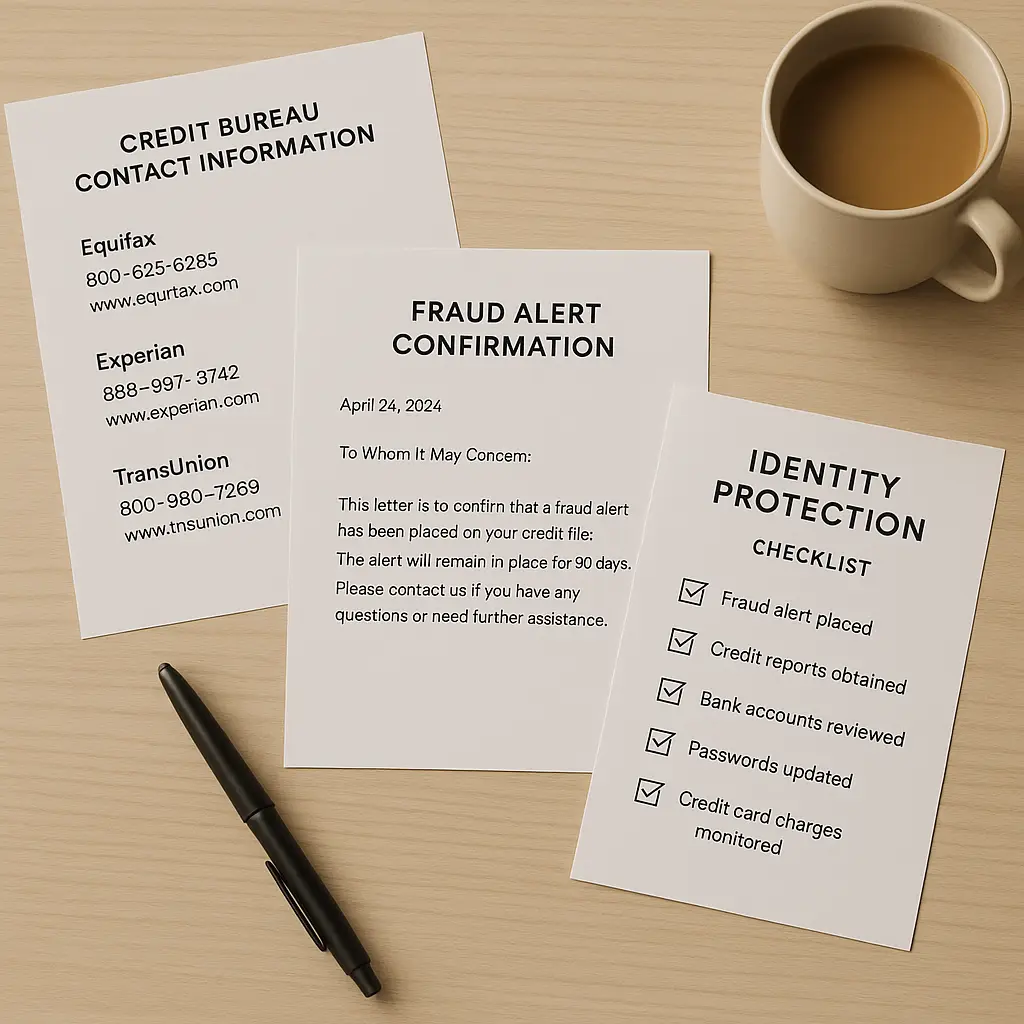
Pull your credit report from all three bureaus, Equifax, Experian, and TransUnion. You're entitled to one free report per bureau per year through AnnualCreditReport.com. Check for new accounts you didn't open, hard inquiries you didn't authorize, and addresses or employers you don't recognize.
Look at the dates. New accounts opened during or immediately after your trip are red flags. Identity thieves move fast. They open credit cards, take out loans, or apply for services using stolen data while you're distracted.
If you see accounts you didn't open, file a dispute with the credit bureau and contact the creditor directly. The FTC's identity theft recovery process walks you through the steps to freeze your credit, file reports, and close fraudulent accounts.
Set Up Fraud Alerts on All Accounts
Most banks and credit card issuers offer real-time fraud alerts via text, email, or app notification. If you didn't enable these before your trip, enable them now.
Fraud alerts notify you immediately when your card is used, when a large transaction posts, when your card is used in a new location, or when suspicious activity is detected. The alerts give you a chance to confirm or deny transactions before fraud escalates.
Configure your alert thresholds carefully. If you set the threshold too high, small fraudulent charges slip through. If you set it too low, you'll get alerts for every coffee purchase. A reasonable threshold is around $50 for credit cards and $25 for debit cards, with location-based alerts enabled for any transaction outside your home area.
Enable alerts for online purchases, card-not-present transactions, and international charges. These transaction types carry higher fraud risk, especially after travel.
Dispute Fraudulent Charges Immediately
If you find charges you didn't authorize, dispute them immediately. Don't wait. Don't assume the charge will reverse itself. Don't hope it was a mistake.
Call the number on the back of your card. Explain that you're disputing a fraudulent charge. Provide the transaction date, amount, and merchant name. The issuer will open a dispute, issue a provisional credit (usually within 10 business days), and investigate.
Follow up in writing. Most issuers require written confirmation of fraud disputes within a specific timeframe, often 60 days from the statement date. Send a letter or email documenting the fraudulent charges, the date you reported them, and any supporting evidence (receipts, emails, itineraries showing you weren't in the location where the charge occurred).
Keep records. Save copies of your dispute letters, emails from your card issuer, and any documentation related to the fraud. If the issuer denies your dispute, you'll need this evidence to escalate.
Don't pay disputed charges while the investigation is ongoing. Federal law prohibits issuers from requiring payment on disputed amounts until the investigation concludes. If your issuer pressures you to pay, cite the Fair Credit Billing Act and escalate to a supervisor.
Replace Compromised Cards
If you confirmed fraud on any card, request a replacement immediately. Don't wait for the dispute to resolve. Don't keep using the compromised card for legitimate purchases.
Your card issuer will cancel the old card, issue a new one with a different number, and mail it to you within 5-10 business days. Some issuers offer expedited shipping for fraud cases.
Update your recurring payments. When your card number changes, any subscriptions, utilities, or automatic payments linked to the old card will fail. Make a list of recurring charges before you cancel the card, then update each one with your new card number when it arrives.
Update your digital wallets. If you stored the compromised card in Apple Pay, Google Pay, Samsung Pay, or any other digital wallet, remove it and add the new card when it arrives.
Monitor Accounts Daily for Two Weeks
Fraud rarely stops with a single charge. If your card was compromised during travel, expect follow-up attempts. Thieves test cards, sell data, and coordinate with other criminals to maximize the value of stolen information.
Check your accounts daily for the first two weeks after you return. Look for new fraudulent charges, additional account takeover attempts, and any suspicious activity across all your financial accounts, not just the card you know was compromised.
After two weeks, shift to weekly monitoring for 60 days. Fraud can surface weeks after the initial compromise as stolen data moves through criminal markets. Criminals buy and sell card data in bulk, and the buyer might not use your card immediately.
Set calendar reminders. It's easy to forget to check accounts when life returns to normal. A recurring reminder keeps monitoring on your radar.
Consider a Credit Freeze
If you experienced fraud after travel, or if you lost your wallet, had your bag stolen, or suspect your information was compromised, consider freezing your credit.
A credit freeze prevents anyone, including you, from opening new credit accounts in your name. It doesn't affect existing accounts, credit scores, or your ability to use current cards. It just locks down new account creation.
To freeze your credit, contact all three bureaus: Equifax, Experian, and TransUnion. Each bureau has an online freeze request form. The process takes about 10 minutes per bureau. Freezes are free and can be lifted temporarily or permanently when you need to apply for credit.
A freeze doesn't stop all fraud. It won't prevent someone from using your existing card numbers. It won't stop account takeover on current accounts. But it does stop identity thieves from opening new credit cards, taking out loans, or applying for services using your personal information.
Review Your Travel Security Setup for Next Time
Card fraud after travel isn't inevitable, but it's common enough that prevention matters. Before your next trip, take steps to reduce your exposure.
Notify your card issuers before you travel. Many banks flag foreign transactions as suspicious and freeze your card if you don't tell them you're leaving the country. A simple notification prevents legitimate purchases from triggering fraud alerts.
Use credit cards instead of debit cards whenever possible. Credit card fraud is the bank's problem. Debit card fraud is your problem. The liability protections differ, and the impact on your checking account balance is immediate and painful.
Avoid using your card at high-risk locations. Standalone ATMs in tourist areas, gas station pumps in unfamiliar countries, and small merchants without chip readers carry higher skimming risk. Use bank-operated ATMs inside branches when possible.
Use contactless payments when available. Tap-to-pay generates a one-time token instead of transmitting your actual card number. Even if the terminal is compromised, the token is useless for future fraud.
Enable transaction alerts before you leave. Real-time notifications let you catch fraud while you're still traveling, when the timeline to report and dispute is most favorable.
Consider a dedicated travel card. Some travelers use a separate credit card exclusively for trips, keeping their primary cards at home. If the travel card is compromised, the fraud is contained to one account, and updating recurring payments becomes unnecessary.
What to Do If You Can't Resolve Fraud with Your Issuer
Most fraud disputes resolve in your favor. Card issuers investigate, verify that you didn't authorize the charges, and issue credits. But sometimes disputes fail. The issuer sides with the merchant, claims you authorized the charge, or denies the dispute for procedural reasons.
If your issuer denies a legitimate fraud dispute, escalate. Ask to speak to a supervisor. Request a written explanation of the denial. Cite the Fair Credit Billing Act, which requires issuers to investigate disputes and provide documentation supporting their decision.
If escalation fails, file a complaint with the Consumer Financial Protection Bureau. The CFPB investigates consumer complaints against banks and credit card issuers. Filing a complaint doesn't guarantee a resolution, but it creates a paper trail and sometimes prompts issuers to reconsider.
Consider filing a police report. If the fraud involved significant amounts or identity theft (not just card charges), a police report strengthens your case with creditors, credit bureaus, and your card issuer. Some issuers require a police report for disputes over a certain dollar threshold.
If the fraud involved identity theft, someone opened new accounts in your name, not just unauthorized charges on an existing card, follow the FTC's identity theft recovery plan. The process involves filing an identity theft report, placing fraud alerts on your credit, and working with creditors to close fraudulent accounts.
The Reality Behind Post-Travel Fraud
Card fraud after travel isn't sophisticated. It's opportunistic. Thieves target travelers because travel creates predictable vulnerabilities: unfamiliar merchants, distracted cardholders, irregular spending patterns that mask fraud, and a window of time when you're less likely to check accounts daily.
The fraud itself often comes from low-tech sources. A skimmer installed on a hotel minibar checkout terminal. A restaurant server who writes down your card number. A compromised point-of-sale system at a souvenir shop. A public WiFi network that intercepts your online banking session. These aren't Ocean's Eleven heists. They're crimes of opportunity that succeed because travelers let their guard down.
The defense is equally low-tech: check your accounts when you get home, dispute charges immediately, and monitor for follow-up fraud. No special software required. No security expertise needed. Just consistent attention to your statements and a willingness to act when something looks wrong.
Most travelers never experience card fraud. But enough do that the inspection process outlined here is worth the 20 minutes it takes to complete. You've already invested time and money in your trip. Spend a few more minutes protecting what you brought home.