Synthetic Identity Fraud Explained: How Criminals Build Fake People from Real Data
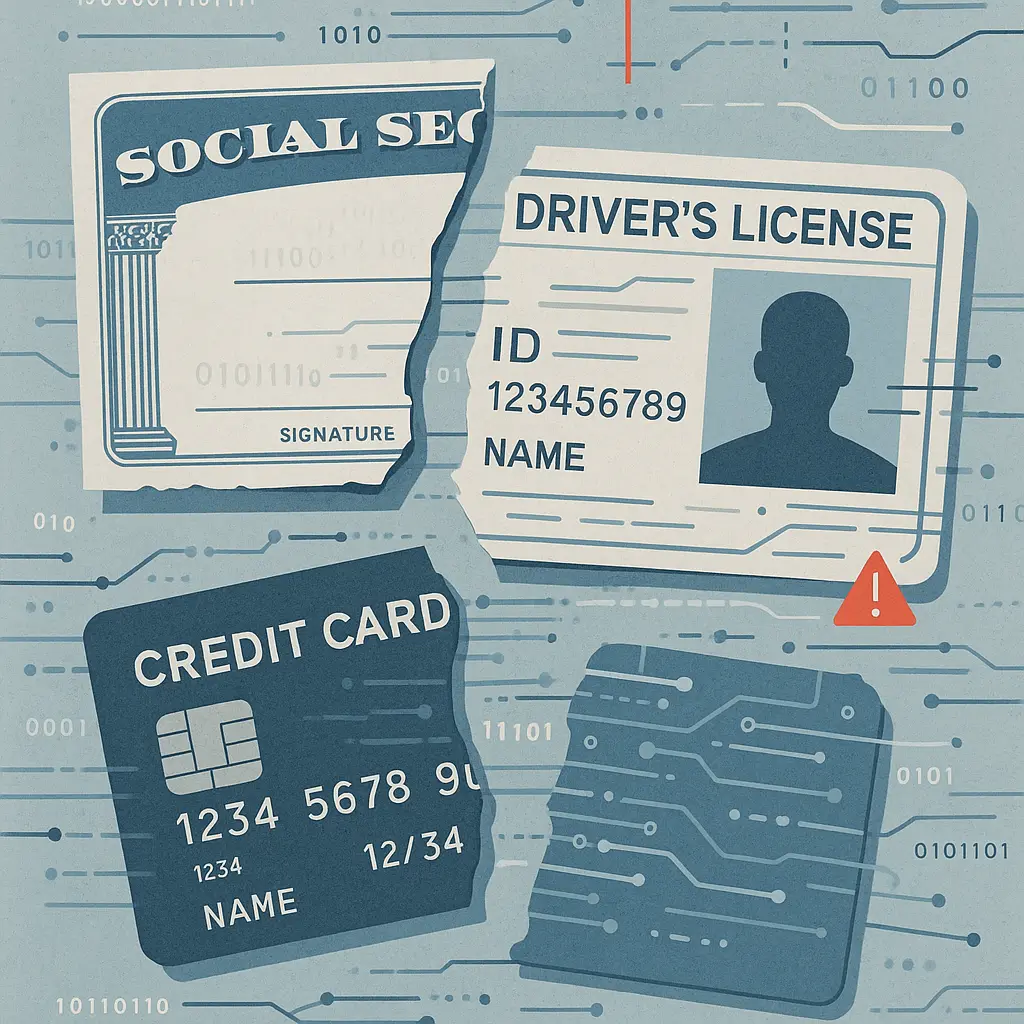
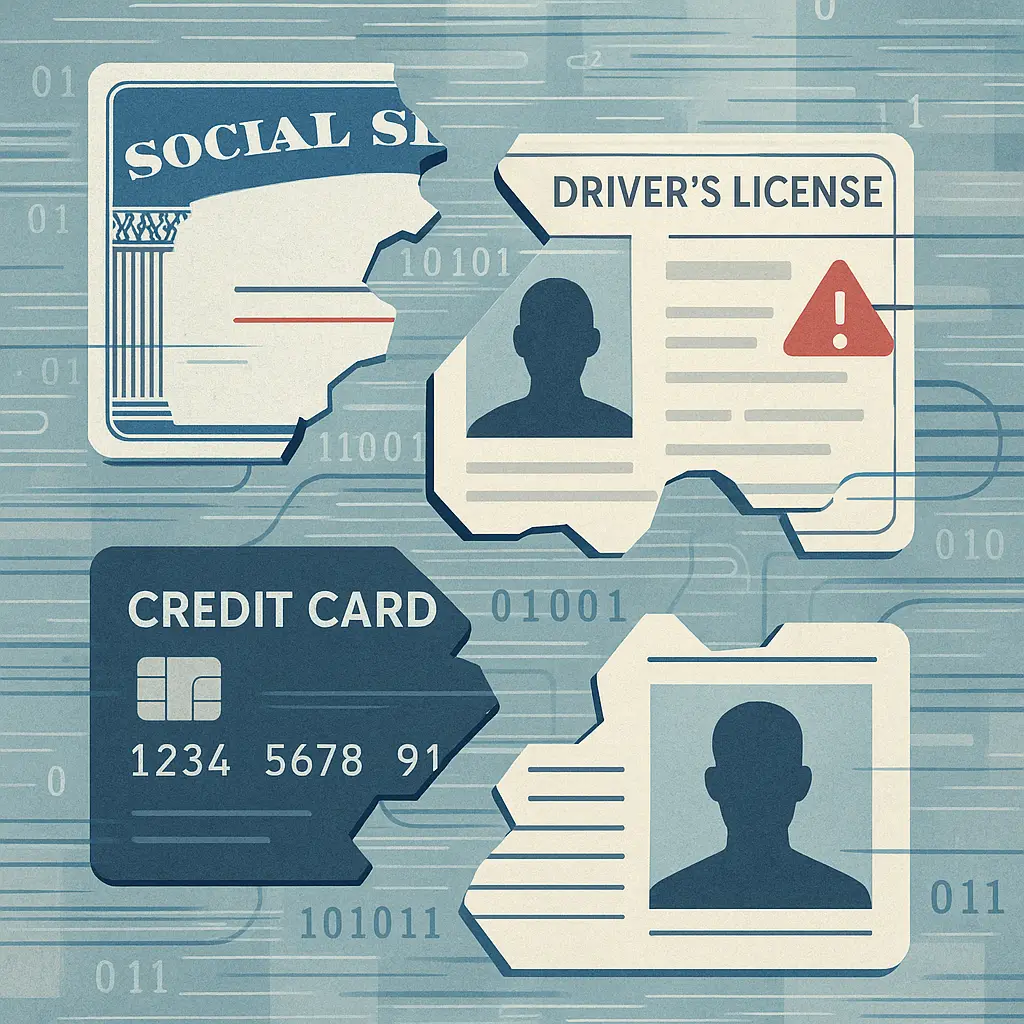
Synthetic identity fraud is the construction of a fake person using real parts. A criminal takes a legitimate Social Security number, pairs it with a fabricated name and address, and builds credit history over months or years. The result is an identity that passes verification checks, accumulates debt, and vanishes before anyone realizes it never existed.
This is not traditional identity theft. When someone steals your entire identity, you notice quickly because charges appear on your accounts or credit applications get denied. Synthetic fraud is harder to spot because the synthetic identity operates independently. The real owner of the Social Security number often has no idea their number is being used. The fabricated name and address don't belong to anyone. The fraud sits in a gap between verification systems.
Financial institutions lose billions to synthetic identity fraud annually. The Federal Trade Commission tracks identity theft complaints, but synthetic fraud often goes unreported because victims don't know they're victims. Children are common targets because their Social Security numbers have clean credit histories and the fraud can run for a decade before detection.
Here's how the mechanism works, why it succeeds, and what you can actually do about it.
The Construction Process
Synthetic identity fraud starts with a Social Security number. Criminals obtain SSNs through data breaches, the dark web, or by generating random nine-digit sequences and testing which ones validate. A valid SSN that isn't currently associated with credit activity is ideal. Children's SSNs fit this profile perfectly.
The criminal pairs the SSN with a fake name, a real or fake address, and a birthdate that makes the identity appear to be an adult. They apply for credit. The first application usually gets denied because the SSN has no credit history, but the application creates a credit file. That file is the foundation.
Over the following months, the criminal applies for additional credit, often starting with retail store cards or subprime lenders that approve applicants with thin credit files. Each approval adds a tradeline. The synthetic identity makes small purchases and pays them off on time. Credit scores rise. The identity looks legitimate.
This is the cultivation phase. It can last months or years. The criminal is building credibility with the credit system. Once the synthetic identity has a credit score in the 600s or 700s, it qualifies for larger credit lines, auto loans, or personal loans. That's when the bust-out happens.
The criminal maxes out every available credit line, takes cash advances, and disappears. The creditors eventually realize the debt is uncollectible, but by then the synthetic identity has no traceable connection to a real person. The name is fake. The address is fake. The only real piece is the Social Security number, and its owner had no involvement.
Why Verification Systems Fail
Credit bureaus and lenders verify identities by cross-referencing data. A typical verification check looks for consistency: does the name match the SSN, does the address match the name, does the birthdate make sense? Synthetic identities pass these checks because the data is internally consistent even though it's fabricated.
The SSN validates because it's real. The name and address don't contradict the SSN because the SSN has no prior credit history to contradict. The system sees a new applicant with a thin file, which is normal for young adults or immigrants establishing credit for the first time. There's no red flag.
Some verification systems check public records, looking for driver's licenses, utility bills, or voter registration tied to the name and address. Synthetic identities can pass these checks too. Criminals use mail drops, rent addresses temporarily, or use the addresses of vacant properties. They create utility accounts in the synthetic identity's name. Each piece of supporting documentation makes the identity more convincing.
The fundamental problem is that verification systems assume the SSN belongs to the person presenting it. They're designed to catch mismatches, not fabrications. A synthetic identity doesn't mismatch because every piece of data is chosen to fit together.
The Child SSN Problem
Children are disproportionately targeted for synthetic identity fraud because their Social Security numbers are clean. A child's SSN has no credit file, no employment history, and no reason to be monitored. Parents don't check their children's credit reports because children shouldn't have credit activity.
Criminals exploit this gap. They use a child's SSN to create a synthetic identity, build credit over years, and bust out before the child turns 18. The fraud often goes undetected until the now-adult child applies for student loans, a credit card, or an apartment and discovers a credit file full of delinquent accounts they never opened.
By that point, the damage is extensive. The victim has to prove the accounts are fraudulent, dispute them with each credit bureau, and potentially spend years cleaning up their credit file. The Identity Theft Resource Center provides a recovery plan, but the process is slow and bureaucratic.
Parents can freeze their children's credit to prevent this. A credit freeze blocks new credit applications, which stops synthetic identity fraud before it starts. The freeze stays in place until the child is old enough to manage their own credit and requests it be lifted. It's a simple preventive measure that most parents don't know exists.
The Bust-Out
The bust-out is the endgame. After months or years of building credit, the synthetic identity has high credit limits across multiple accounts. The criminal maxes them all out in a short window, often within days or weeks. Cash advances, wire transfers, purchases of easily resold goods. The goal is to extract as much value as possible before the fraud collapses.
Then the payments stop. The accounts go delinquent. Creditors attempt to contact the synthetic identity at the listed address and phone number. The address is a mail drop or a vacant property. The phone number is disconnected. Collection agencies get involved, but they're chasing a ghost.
Eventually, the creditors write off the debt as a loss. The synthetic identity's credit file shows a pattern of sudden delinquency across all accounts, which is a clear fraud indicator in hindsight. But by the time that pattern is visible, the criminal has moved on.
The SSN owner, if they ever discover the fraud, faces a difficult recovery process. They have to prove they didn't open the accounts, which is harder than it sounds when the accounts have been active for years and show a history of payments. Credit bureaus and creditors are skeptical of fraud claims that come years after the accounts were opened.
Detection Challenges
Financial institutions struggle to detect synthetic identity fraud because it mimics legitimate behavior for most of its lifecycle. A synthetic identity that makes on-time payments for 18 months looks like a responsible borrower. The bust-out is the only obvious fraud signal, and it comes too late.
Some lenders use behavioral analytics to flag suspicious patterns. Rapid credit line increases, multiple applications in a short window, or addresses associated with known fraud rings can trigger additional scrutiny. But these signals are probabilistic, not definitive. Plenty of legitimate borrowers exhibit similar patterns.
Cross-referencing SSNs with public records helps, but it's not foolproof. A synthetic identity with utility bills, a driver's license, and a rental agreement looks legitimate even if the underlying identity is fake. Criminals know what documentation lenders check and create it proactively.
The most effective detection method is time. Synthetic identities that maintain accounts for years without busting out are rare. Most criminals want a return on investment within 12 to 24 months. Lenders that monitor long-term account behavior can identify synthetic identities by their eventual bust-out pattern, but that's a reactive approach. The fraud has already succeeded.
The Victim's Perspective
If your Social Security number is used in a synthetic identity, you're unlikely to know until something breaks. You won't see unfamiliar charges on your credit card because the synthetic identity has its own accounts. You won't get collection calls because the accounts aren't in your name. The fraud operates in parallel to your real identity.
The break comes when the synthetic identity's credit file gets mixed with yours. This happens when a credit bureau merges files that share the same SSN but have different names. Suddenly, your credit report shows accounts you didn't open, addresses you've never lived at, and a credit history that doesn't match your actual financial behavior.
At that point, you file an identity theft report with the FTC, dispute the fraudulent accounts with each credit bureau, and request a fraud alert or credit freeze. The process is the same as traditional identity theft recovery, but proving the accounts are fraudulent is harder because they've been active for months or years.
Some victims never discover the fraud. If the credit files never merge, the synthetic identity's activity stays separate from the victim's credit report. The victim's credit remains clean. The only indicator might be an IRS notice about unreported income if the synthetic identity was used for employment fraud, but that's a separate issue.
Children as Long-Term Targets
Children's SSNs are valuable to synthetic identity fraudsters because the fraud can run for a decade without detection. A criminal who creates a synthetic identity using a 10-year-old's SSN has roughly eight years before the child is old enough to apply for credit and discover the problem.
During those eight years, the synthetic identity can be cultivated slowly, building a credit history that looks legitimate by the time it busts out. The long runway gives the criminal time to establish multiple tradelines, qualify for higher credit limits, and extract maximum value.
Parents typically don't check their children's credit reports because they assume children have no credit activity. That assumption is correct for legitimate activity but leaves a blind spot for fraud. Checking a child's credit report annually or placing a credit freeze on their credit file closes that blind spot.
The Social Security Administration doesn't proactively monitor SSN misuse. If a child's SSN is being used fraudulently, the SSA won't notify the parents. The first indication is usually a credit denial when the child applies for their first credit card or student loan as a young adult.
The Frankenstein Analogy
In Mary Shelley's Frankenstein, Victor Frankenstein assembles a creature from parts of different corpses. Each piece is real, but the whole is something that never existed in nature. The creature walks, talks, and interacts with the world, but it's fundamentally a construction.
Synthetic identity fraud works the same way. The SSN is real, taken from a living person. The name, address, and birthdate are fabricated or borrowed from other sources. The combination creates an identity that functions in the financial system but corresponds to no actual person. It passes verification checks because each piece is individually valid, even though the whole is a fabrication.
The creature in Frankenstein eventually turns on its creator. Synthetic identities turn on the financial system that validated them. They accumulate debt, default, and leave institutions holding losses with no one to pursue. The analogy isn't perfect, but it captures the core mechanism: something constructed from real parts that behaves as if it's real until it collapses.
What You Can Do
You can't prevent someone from using your Social Security number in a synthetic identity, but you can detect it early and minimize damage. Start by checking your credit reports annually at all three bureaus. Look for unfamiliar accounts, addresses you've never used, or inquiries you didn't authorize.
If you have children, check their credit reports too. You'll need to contact each credit bureau individually to request a child's credit report, and the process requires documentation proving you're the parent or legal guardian. If a credit file exists for your child, that's a red flag. Children shouldn't have credit files unless you've specifically opened accounts in their name, which is rare and usually inadvisable.
Consider freezing your children's credit. A credit freeze prevents new accounts from being opened, which stops synthetic identity fraud before it starts. The freeze is free, and you can lift it when your child is old enough to apply for credit themselves. Each credit bureau has its own freeze process, so you'll need to contact Equifax, Experian, and TransUnion separately.
If you discover fraudulent accounts on your credit report, file an identity theft report at IdentityTheft.gov. The report generates an Identity Theft Affidavit, which you can use to dispute fraudulent accounts with creditors and credit bureaus. You'll also want to place a fraud alert on your credit file, which requires lenders to verify your identity before opening new accounts.
Monitor your credit regularly. Free credit monitoring services alert you to new accounts, inquiries, or significant changes to your credit file. These alerts give you a chance to catch fraud early, before it escalates.
Why This Fraud Persists
Synthetic identity fraud persists because it exploits structural gaps in the credit system. Credit bureaus, lenders, and verification services all operate on the assumption that a valid SSN belongs to the person presenting it. That assumption works most of the time, but it creates a vulnerability that synthetic fraud exploits.
Fixing the problem would require fundamental changes to identity verification. Some proposals involve biometric authentication, real-time SSN validation with the Social Security Administration, or blockchain-based identity systems. Each approach has technical, privacy, and cost challenges that prevent widespread adoption.
In the meantime, financial institutions absorb the losses, which get passed on to consumers through higher interest rates and fees. Industry reports estimate synthetic identity fraud costs lenders billions annually, but exact figures are hard to pin down because much of the fraud goes undetected or unreported.
The fraud also persists because it's profitable and relatively low-risk for criminals. Building a synthetic identity takes time, but the payoff can be substantial. A well-cultivated synthetic identity with high credit limits can yield tens of thousands of dollars in a single bust-out. The risk of prosecution is low because the fraud is hard to trace back to the perpetrator.
The Long Game
Synthetic identity fraud is a long game for both criminals and victims. Criminals spend months or years building credit before cashing out. Victims often don't discover the fraud until years after it started, and recovery can take months or longer.
The slow timeline makes the fraud hard to detect and hard to stop. By the time the fraud becomes obvious, the damage is done. The synthetic identity has accumulated debt, defaulted, and disappeared. The victim is left disputing accounts that have been active for years, which makes creditors and credit bureaus skeptical.
This is why prevention matters more than detection. Freezing children's credit, monitoring your own credit reports, and responding quickly to unfamiliar activity are the most effective defenses. Once synthetic identity fraud is established, stopping it is difficult.
The Credit System's Blind Spot
The credit system is built on trust. It assumes that people applying for credit are who they say they are, and it verifies that assumption by cross-referencing data. But the verification process checks for consistency, not authenticity. A synthetic identity that presents consistent data passes verification even though the identity itself is fake.
This blind spot is structural. Credit bureaus don't have direct access to authoritative identity databases. They rely on self-reported information from credit applications, which they cross-reference against their own records and public data sources. If the self-reported information is internally consistent and matches public records that the criminal has fabricated, the system has no way to flag it as fraudulent.
Closing this blind spot would require real-time verification against authoritative sources like the Social Security Administration, state DMV databases, or utility companies. Some of these integrations exist, but they're not universal. Many lenders still rely on credit bureau data alone, which creates the gap that synthetic fraud exploits.
What Happens After the Bust-Out
After a synthetic identity busts out, the accounts go into collections. Collection agencies attempt to contact the synthetic identity using the phone number and address on file, but both are usually dead ends. The phone is disconnected. The address is a mail drop or vacant property. The identity has no traceable connection to a real person.
Eventually, the creditors write off the debt. The synthetic identity's credit file shows a pattern of simultaneous delinquency across all accounts, which is a clear fraud indicator. But by that point, the criminal has moved on. The money is gone. The identity is abandoned.
If the synthetic identity's SSN ever gets linked to the real owner's credit file, the real owner discovers a credit history full of delinquent accounts. They have to prove the accounts are fraudulent, which requires filing an identity theft report, disputing each account individually, and potentially providing documentation that they didn't open the accounts.
The process is slow. Credit bureaus investigate disputes, which can take 30 days per account. Creditors may resist removing the accounts if they show a long history of payments before the bust-out. The victim may need to escalate disputes, file complaints with the Consumer Financial Protection Bureau, or seek legal help.
The Role of Data Breaches
Data breaches fuel synthetic identity fraud by providing criminals with valid Social Security numbers. A breach that exposes SSNs, names, and birthdates gives criminals the raw material to construct synthetic identities. The SSNs are real. The names and birthdates can be mixed and matched with fabricated details to create identities that pass verification.
Children's SSNs are particularly valuable because they're less likely to be monitored. A breach that exposes a child's SSN can enable years of fraud before detection. Parents often don't know their child's information was compromised until the child applies for credit as a young adult and discovers fraudulent accounts.
Have I Been Pwned tracks breaches and allows you to check if your email or phone number has been exposed, but it doesn't track SSNs. The Social Security Administration doesn't notify individuals when their SSN appears in a breach. The only way to know if your SSN is being misused is to monitor your credit reports and watch for unfamiliar activity.
The Industry Response
Financial institutions are developing better detection tools, but synthetic identity fraud remains a step ahead. Machine learning models analyze account behavior, looking for patterns that suggest synthetic fraud. Rapid credit line increases, multiple applications in a short window, and addresses associated with fraud rings all trigger additional scrutiny.
But these models are reactive. They detect fraud after it's already in progress. By the time an account is flagged as suspicious, the synthetic identity may have been active for months and accumulated significant debt. The fraud has already succeeded, even if the institution catches it before the final bust-out.
Some lenders are experimenting with real-time SSN validation, cross-referencing SSNs against Social Security Administration records to verify that the SSN matches the name and birthdate provided. This approach can catch synthetic identities that use valid SSNs with fabricated names, but it requires integration with government databases, which raises privacy concerns and implementation challenges.
The most effective long-term solution is probably multi-factor identity verification that combines something you know (SSN, birthdate), something you have (a phone number or email that can receive verification codes), and something you are (biometric data like a fingerprint or facial recognition). But implementing this across the entire credit system would require coordination among thousands of lenders, credit bureaus, and verification services.
What This Means for You
If you're an adult with an established credit history, synthetic identity fraud is unlikely to affect you directly. Your SSN is already associated with your credit file, which makes it less useful for synthetic fraud. Criminals prefer SSNs with no credit history because they're easier to manipulate.
If you have children, synthetic identity fraud is a real risk. Their SSNs are clean, which makes them attractive targets. Freezing their credit is the most effective preventive measure. It takes an hour or two to set up, and it protects them until they're old enough to manage their own credit.
If you discover fraudulent accounts on your credit report, act quickly. File an identity theft report, dispute the accounts, and place a fraud alert or credit freeze on your credit file. The sooner you respond, the easier it is to contain the damage.
Synthetic identity fraud is a structural problem with the credit system, but individual actions still matter. Monitoring your credit, protecting your children's SSNs, and responding quickly to fraud can limit the damage even if they can't prevent the fraud entirely.