Children's Credit Reports: Yes, They Exist—Here's the Underlying Mechanism
Your eight-year-old doesn't have a bank account, a credit card, or a job. But they might have a credit report.
Around 1 million children in the U.S. have credit files before they turn 18, according to research cited by consumer protection literature. Most of those files shouldn't exist. They're artifacts of identity theft, data errors, or administrative mismatches that link a child's Social Security number to credit activity they never initiated.
Here's how the mechanism works, why it happens, and what you can do about it.
How Credit Files Form for Minors
Credit bureaus, Equifax, Experian, and TransUnion, don't automatically create files for every person born in the United States. They create files when they receive data.
When a lender reports a new account, they send the bureau a record containing a name, address, date of birth, and Social Security number. The bureau checks whether a file already exists for that SSN. If one does, they add the account to that file. If not, they create a new file and attach the account.
The system doesn't verify age. It doesn't check whether the SSN belongs to a minor. It processes the incoming data and builds the file accordingly.
This design works fine when the data is accurate and the person opening credit is an adult acting on their own behalf. It breaks down in two scenarios: fraud and error.
Scenario One: Identity Theft
A thief obtains a child's Social Security number, often from a data breach, a stolen document, or a family member with access to records. They use that SSN to open a credit card, apply for a loan, or establish utility service.
The lender runs a credit check. No file exists, so the application looks clean. The account opens. The lender reports the new account to the bureaus. The bureaus create a file under the child's SSN and attach the fraudulent account.
The child doesn't receive bills. The thief uses a different address. The account ages. Late payments accumulate. Collections notices go to the wrong address. The fraud continues undetected, sometimes for years.
Parents often discover the problem when the child applies for student loans, a first credit card, or a driver's license that requires identity verification. By that point, the fraudulent file has existed for a decade.
Scenario Two: Data Mismatch
A parent and child share the same name, John Smith Sr. and John Smith Jr., or Maria Garcia and her daughter Maria. The parent applies for credit. The lender's system pulls the wrong SSN or transposes digits during data entry. The bureau receives a record linking the child's SSN to the parent's credit activity.
The bureau creates a file. The parent's accounts appear under the child's SSN. The error persists because no one notices. The parent's credit report looks normal under their own SSN. The child's file grows with accounts they didn't open and activity they didn't authorize.
This isn't fraud. It's a clerical error. But the result is the same: a credit file that shouldn't exist.
Less commonly, someone with a similar name and SSN applies for credit, and the bureau merges the records incorrectly. This happens more often than you'd expect in a country with around 330 million people and a nine-digit identifier system that's been in use since 1936.
Why Children's SSNs Are Valuable to Thieves
A child's Social Security number is a blank slate. No credit history means no red flags. No existing accounts means no fraud alerts. No one monitoring means no immediate detection.
Thieves can open multiple accounts, max them out, and disappear before anyone notices. The fraud can continue for years because children don't check their credit. They don't receive bills. They don't apply for loans. The first sign of trouble often comes a decade later.
In The Fellowship of the Ring, Gandalf tells Frodo that the Ring has been quiet, causing no trouble, precisely because no one was looking for it. The same dynamic applies here. A stolen child identity sits undisturbed because no one expects it to be active.
Child identity theft also enables synthetic identity fraud. Thieves combine a real child's SSN with a fake name and date of birth to create a new identity. They build credit slowly, making small purchases and paying them off. After a year or two, the synthetic identity has a clean credit file and a decent score. Then they apply for larger credit lines, max them out, and vanish.
The child's SSN is now linked to a fraudulent identity with a different name. When the child eventually applies for credit under their real name, the bureaus may flag the application as suspicious or merge the records incorrectly.
How to Check Whether Your Child Has a Credit File
The three major credit bureaus don't offer online credit checks for minors. You can't log into a website and pull your child's report the way you'd pull your own.
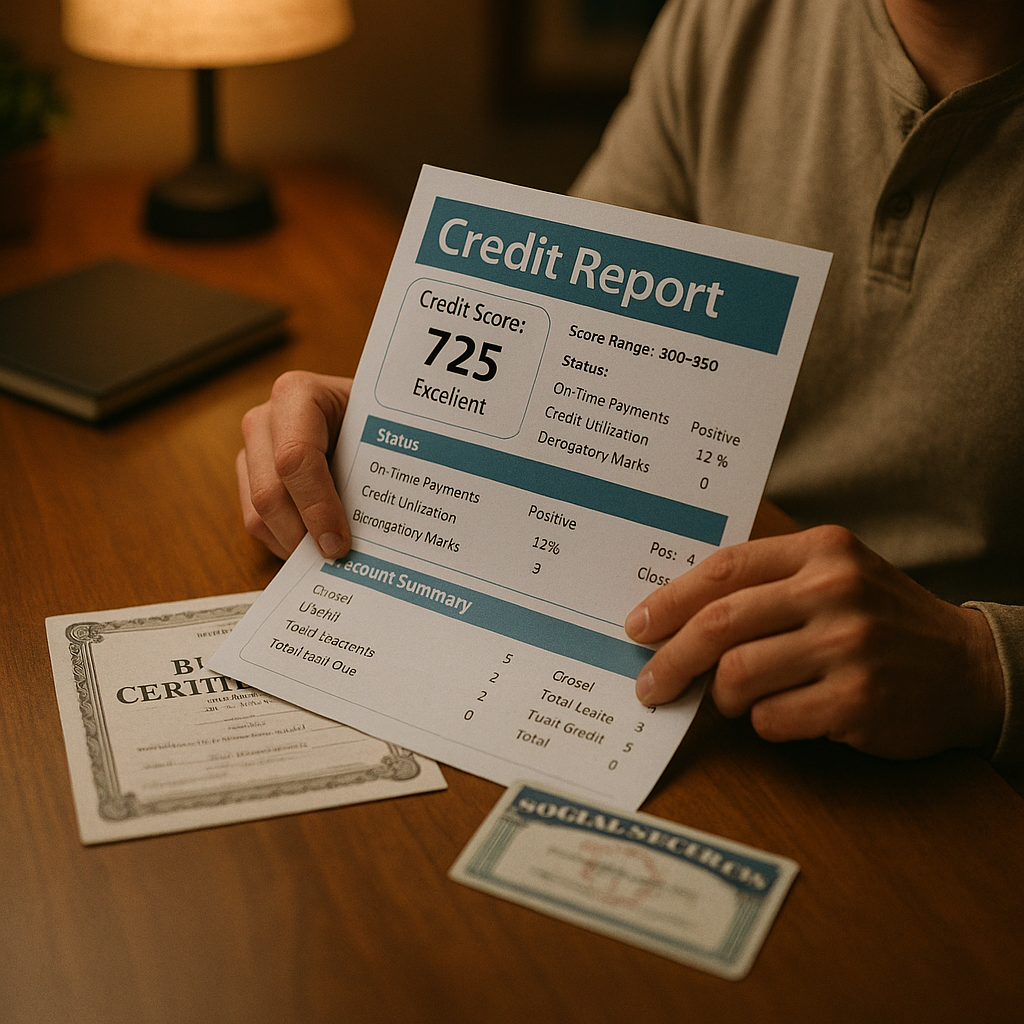
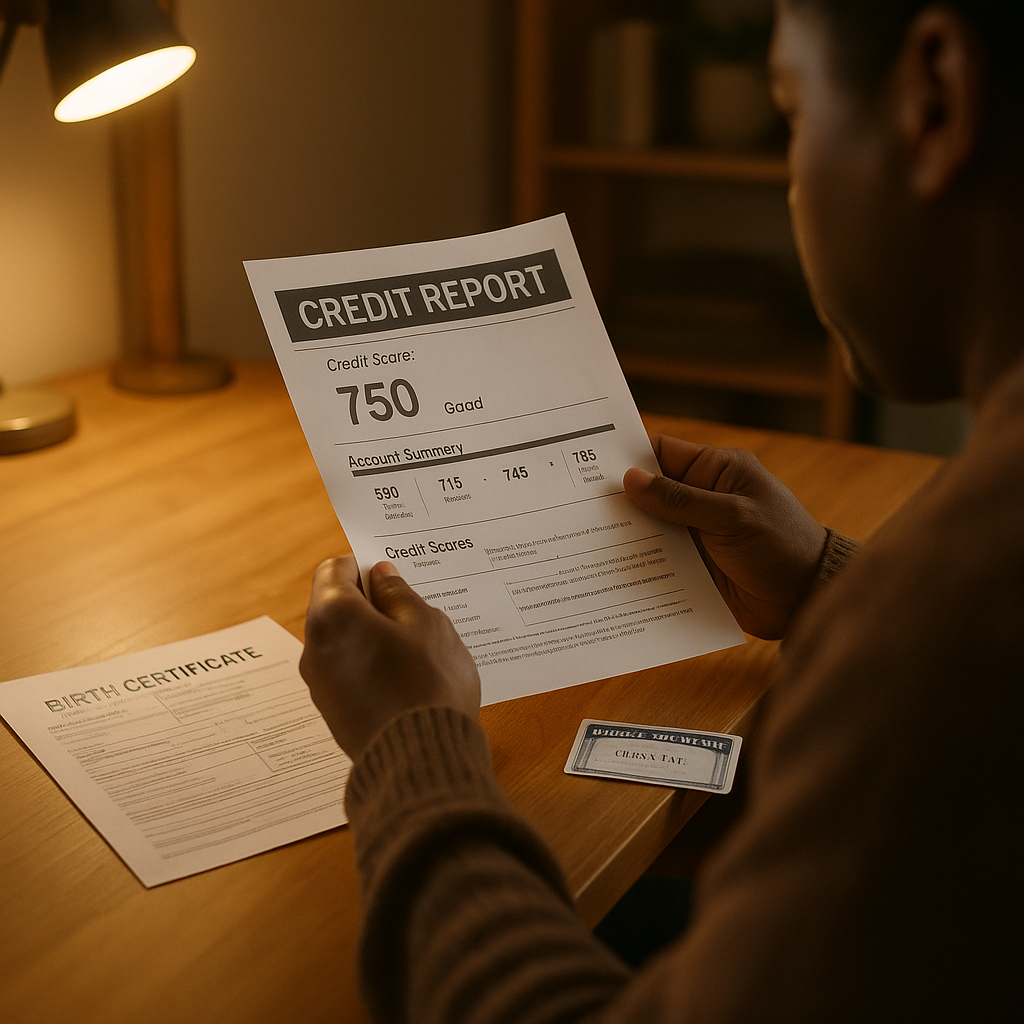
Instead, you contact each bureau individually and request a manual search. This requires mailing a written request along with documentation proving your identity and your relationship to the child.
Each bureau has slightly different requirements, but the standard documents include:
- A copy of your government-issued ID (driver's license or passport)
- A copy of your child's Social Security card
- A copy of your child's birth certificate
- Proof of your address (utility bill or bank statement)
- A signed letter requesting the credit check, including your child's full name, date of birth, and Social Security number
Mail these documents to each bureau separately. The addresses are listed on their websites under sections for minor credit checks or identity theft for children.
If no file exists, the bureau will send a letter confirming that. If a file exists, they'll send a copy of the report.
This process is slower than checking your own credit online, but it's the only method available for minors.
What to Do If Your Child Has a Fraudulent File
If the report shows accounts your child didn't open, you're looking at identity theft. Here's the step-by-step response.
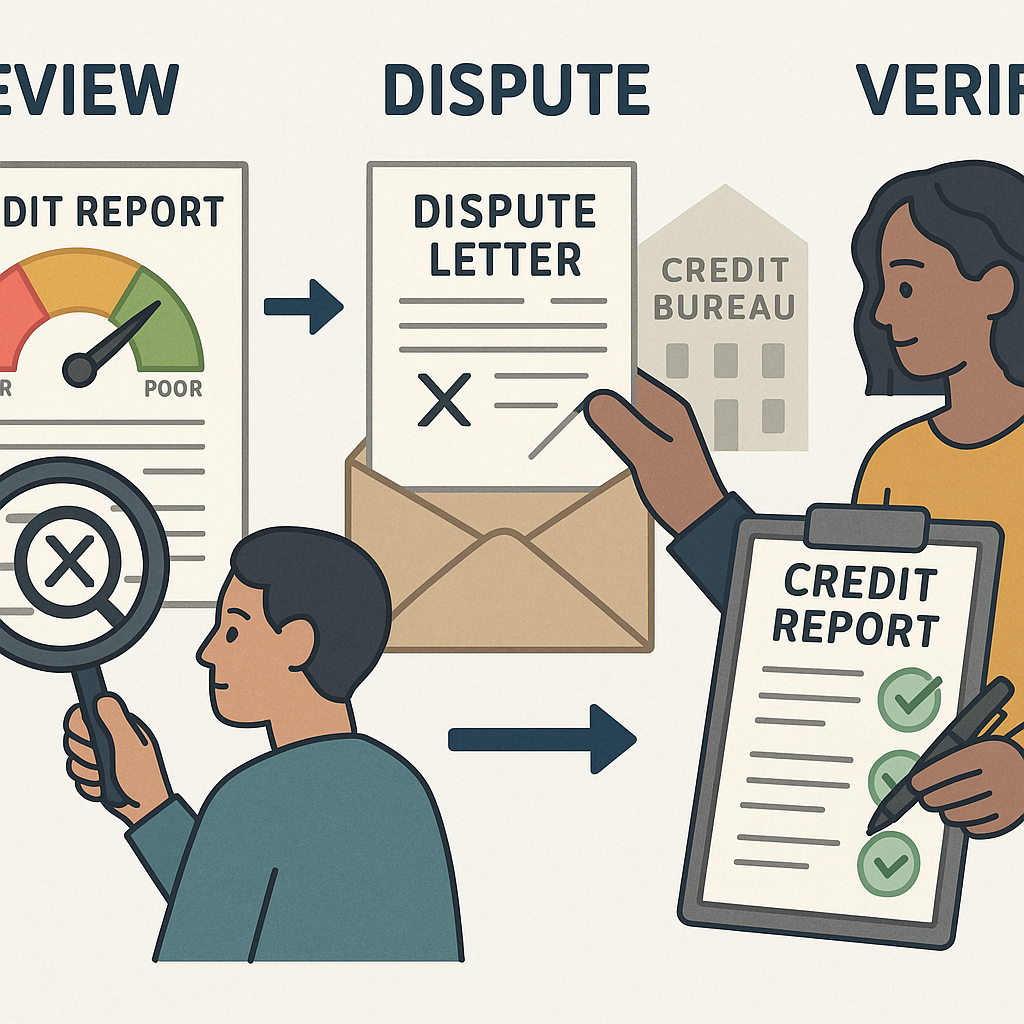
First, file an identity theft report at IdentityTheft.gov. This is the FTC's official reporting tool. It generates a personalized recovery plan and creates an official identity theft affidavit you can use when disputing fraudulent accounts.
Second, dispute each fraudulent account with the credit bureaus in writing. Send a letter to each bureau listing the accounts that don't belong to your child. Include a copy of the identity theft report, your child's birth certificate, and your government-issued ID. Request that the bureaus remove the fraudulent accounts and place a fraud alert on the file.
Third, contact the companies that opened the fraudulent accounts. Send them a copy of the identity theft report and a letter explaining that the accounts were opened using a minor's stolen identity. Request that they close the accounts, stop reporting them to the bureaus, and cease all collection activity.
Fourth, request a credit freeze for your child at all three bureaus. A freeze prevents new accounts from opening without your explicit authorization. Even if the fraudulent accounts get removed, the freeze protects against future fraud using the same SSN.
Fifth, consider filing a police report. Some creditors and bureaus require a police report before they'll process fraud disputes. Even if they don't, a police report creates an official record that can help if the fraud escalates or if you need documentation for legal proceedings.
Keep copies of every letter you send, every response you receive, and every document you submit. Identity theft disputes can take months to resolve, and you may need to re-submit documentation multiple times.
The Freeze Decision: Proactive Protection
You don't need to wait until fraud happens to freeze your child's credit. You can request a freeze even if no file exists.
When you request a freeze for a minor with no existing file, the bureau creates a frozen file. This file contains your child's name, date of birth, and Social Security number, but no accounts. The freeze prevents anyone from opening new credit using that SSN.
This is proactive protection. If a thief tries to open an account using your child's SSN, the lender's credit check will hit the freeze and the application will be denied.
The tradeoff: when your child turns 18 and wants to open their first credit card, apply for student loans, or rent an apartment, they'll need to lift the freeze first. That requires contacting each bureau, verifying their identity, and requesting a temporary or permanent lift.
Some parents freeze their children's credit as a precaution. Others wait until the child is older and more likely to be targeted. There's no universal right answer. The decision depends on your threat model and your tolerance for administrative overhead.
What Happens to the File When Your Child Turns 18
A credit freeze remains in place until the person, or their legal guardian, requests removal. When your child turns 18, they become legally able to manage their own credit. At that point, they can contact the bureaus, verify their identity, and lift the freeze themselves.
If fraud occurred and was resolved, the fraudulent accounts should be gone. The file will exist, but it should be clean. Your child can start building credit from scratch.
If the file contains legitimate accounts that were incorrectly linked due to a data mismatch, those accounts may need to be disputed again once your child reaches adulthood. The bureaus sometimes resist removing accounts that appear to have legitimate payment history, even when the SSN doesn't match the account holder's age.
This is where documentation matters. If you kept records of the original dispute, the identity theft report, and the bureau's responses, you have evidence to support a second round of disputes if necessary.
Why the System Allows This
The credit reporting system was designed in an era when identity theft was rare and Social Security numbers were less widely known. The bureaus built their infrastructure around the assumption that people applying for credit were who they claimed to be.
That assumption no longer holds. Data breaches have exposed hundreds of millions of Social Security numbers. Thieves have access to children's SSNs through compromised hospital records, school databases, and government systems.
The bureaus have added fraud detection tools, but the core mechanism hasn't changed. They still create files based on incoming data without verifying the applicant's age or cross-checking against birth records.
Legislation has improved some protections. The FTC now requires bureaus to offer free credit freezes for all consumers, including minors. Some states have passed laws allowing parents to freeze their children's credit more easily.
But the fundamental vulnerability remains: a Social Security number is enough to create a credit file, and children's SSNs are valuable precisely because they're not being monitored.
The Administrative Burden
Checking your child's credit, disputing fraud, and maintaining a freeze all require paperwork. You can't do this online. You can't automate it. Each bureau has different forms, different mailing addresses, and different processing times.
If you have multiple children, you repeat the process for each one. If you move, you update your address with each bureau. If your child's freeze needs to be lifted temporarily for a legitimate purpose, you contact each bureau separately.
This is friction by design. The bureaus make money when credit files are active and accessible. Freezes reduce that activity. The administrative burden discourages people from freezing credit unless they have a specific reason.
I'm not saying the bureaus are malicious. I'm saying the system wasn't built with proactive child protection in mind, and the current process reflects that.
What About Credit Monitoring Services for Kids
Some identity theft protection services offer credit monitoring for children. These services claim to alert you if a credit file is created in your child's name or if suspicious activity appears.
The mechanism: the service contacts the bureaus periodically and checks whether a file exists under your child's SSN. If a file appears, they notify you.
This can work, but it's not real-time protection. The monitoring happens on a schedule, daily, weekly, or monthly, depending on the service. If fraud occurs between checks, you won't know until the next scan.
Credit freezes, by contrast, block the fraud before it happens. A freeze prevents the account from opening in the first place. Monitoring tells you after the fact.
Some parents use both: a freeze for prevention and monitoring as a backup. Others skip monitoring and rely on the freeze alone.
If you do use a monitoring service, read the terms carefully. Some services only check one or two bureaus, not all three. Some require you to provide your child's SSN, which creates its own risk if the service's database gets breached.
The Role of Schools and Healthcare Providers
Schools and healthcare providers collect children's Social Security numbers for enrollment, insurance, and record-keeping. These institutions are common breach targets.
In 2024, researchers have found that education and healthcare sectors continue to experience significant data breaches affecting millions of records. When a school district's database gets compromised, every student's SSN in that system becomes available to whoever stole the data.
You can't prevent schools from requiring your child's SSN. Federal and state laws often mandate it for specific purposes. But you can ask how the information is stored, whether it's encrypted, and what the institution's breach notification policy looks like.
Most schools won't have good answers. That's not a criticism of individual administrators. It's a reflection of the fact that many school districts operate with limited IT budgets and outdated systems.
Healthcare providers face similar constraints. HIPAA requires certain protections, but breaches still happen. If your child's SSN was included in a breach notification, that's a signal to check their credit sooner rather than later.
When Family Members Are the Threat
Around 30% of child identity theft cases involve a family member, according to estimates cited in consumer protection literature. A parent, grandparent, or older sibling uses the child's SSN to open accounts they can't qualify for under their own name.
This is harder to detect because the family member has legitimate access to the child's documents. They know the SSN, the date of birth, and the address. They can intercept mail. They can explain away questions if anyone asks.
The fraud often continues for years because the child trusts the family member and doesn't question why bills are arriving in their name or why they're being asked to sign documents they don't understand.
If you discover that a family member committed the fraud, the decision about whether to report it becomes complicated. Filing a police report can lead to criminal charges. Disputing the accounts without a police report is harder because the creditors may resist removing accounts that appear to have legitimate payment history.
Some families resolve this privately: the family member agrees to pay off the fraudulent accounts and the victim doesn't file charges. Others pursue full legal remedies.
I can't tell you which path to take. That's a decision that involves legal, financial, and personal factors I'm not qualified to weigh. What I can tell you is that the credit bureaus and creditors will require documentation, and the more official that documentation is, the easier the dispute process becomes.
The Long-Term Impact on Your Child
A fraudulent credit file doesn't just create immediate problems. It can follow your child into adulthood.
Even after the fraudulent accounts are removed, the file itself remains. The bureaus keep records of disputes, fraud alerts, and account removals. Future lenders may see a history of disputes and become more cautious about approving credit.
Some employers run credit checks as part of background screening. A history of fraud, even fraud that wasn't the applicant's fault, can raise questions. You can explain what happened, but the explanation becomes part of every job application, every apartment rental, every major financial decision.
This isn't universal. Many people resolve child identity theft cleanly and move forward without long-term consequences. But the risk exists, and it's worth understanding before you decide how aggressively to pursue proactive protection.
What You Can Do Right Now
If you want to check whether your child has a credit file, start by contacting Equifax, Experian, and TransUnion. Request a manual search. Gather the required documents. Mail them in.
If you want to freeze your child's credit proactively, the same process applies. You'll send the same documents, but your letter will request a freeze instead of a credit check.
If you discover fraud, file a report at IdentityTheft.gov and follow the recovery plan it generates. Dispute the accounts in writing. Request a freeze. Keep copies of everything.
If you're not ready to take those steps yet, at least store your child's Social Security card in a secure location. Don't carry it in your wallet. Don't leave it in an unsecured drawer. Treat it the way you'd treat your own passport: locked up, accessible only when needed, and never shared unless absolutely necessary.
The system wasn't designed to protect children's credit. It was designed to facilitate lending. Those two goals don't always align. Understanding the mechanism helps you decide how much friction you're willing to tolerate to protect your child from a problem that might never happen, but that, if it does, can take years to resolve.